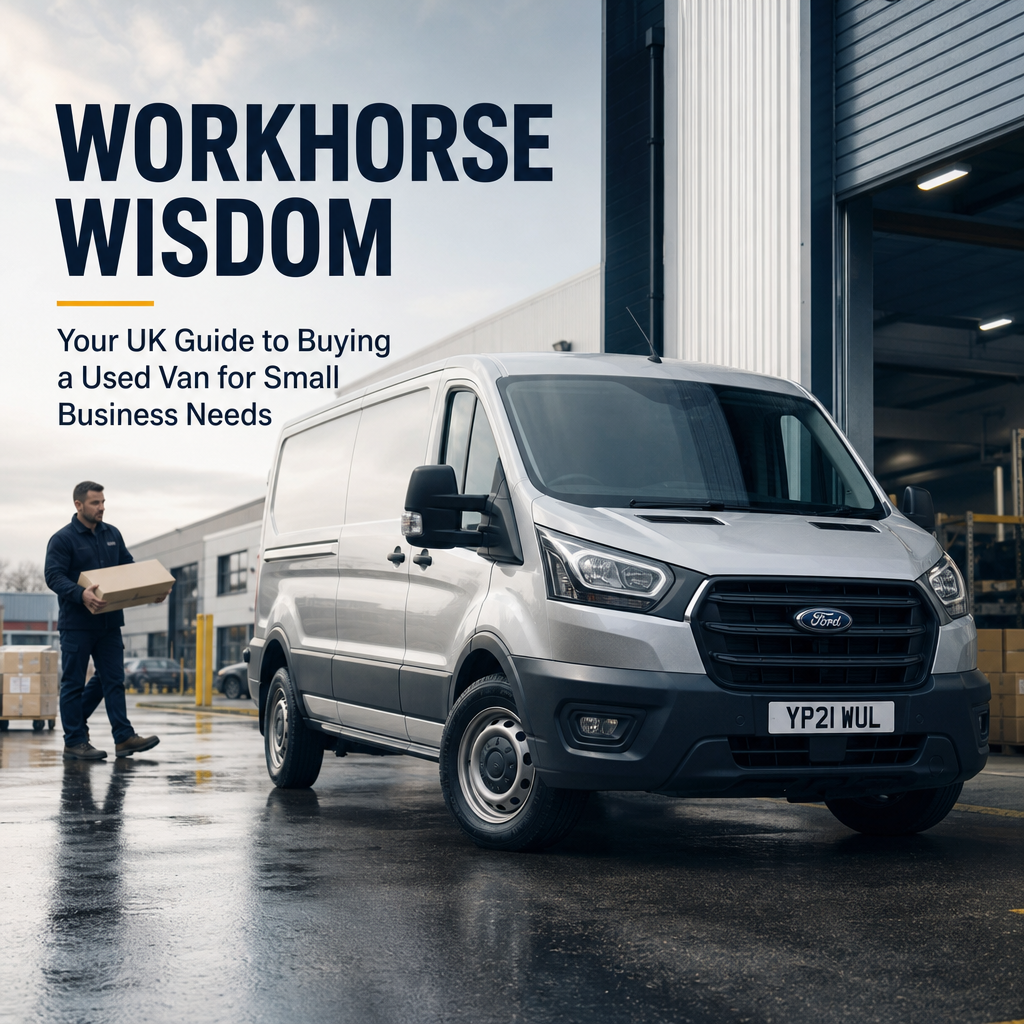
Workhorse Wisdom: Your UK Guide to Buying a Used Van for Small Business Needs
For countless small businesses across the UK, a van isn't just a vehicle; it's the beating heart of their operations. From delivering precious goods to hauling essential tools and materials, a reliable workhorse is indispensable. But with so many options on the used market, navigating the purchase of a pre-owned van can feel daunting.
At CarsLink.ai, we understand the unique demands placed on commercial vehicles. This comprehensive guide is designed to equip you with the knowledge needed to make an informed, practical, and cost-effective decision when buying a used van for your small business. We’ll cover everything from matching the van to your specific business needs to understanding the financial implications, ensuring your next used van is a true asset, not a liability.
1. Pinpointing Your Payload and Cargo Needs
Before you even start browsing listings, the most crucial step is to accurately assess what your business needs the van to do. Guesswork here can lead to an expensive mistake, either by buying a van too small for the job or one unnecessarily large and costly to run.
Payload: This is perhaps the most critical metric. Payload refers to the maximum weight your van can legally carry, including its driver, passengers, fuel, and, crucially, your cargo. It's calculated by subtracting the van's kerb weight (its weight when empty) from its Gross Vehicle Weight (GVW – the maximum authorised weight when fully loaded). Overloading is illegal, unsafe, and can invalidate your insurance.
- Practical Example: A mobile mechanic might carry a heavy toolkit, spare parts, and diagnostic equipment, requiring a substantial payload. In contrast, a florist delivering bouquets might need less payload but more secure volume for delicate arrangements.
- Actionable Tip: Take an inventory of your heaviest tools, materials, or typical stock. Weigh them if possible, or estimate conservatively. Don't forget any internal racking or modifications you plan to add, as these contribute to the payload calculation.
Cargo Volume and Dimensions: Beyond weight, how much space do you need? This is where understanding terms like L1H1, L2H2, etc., becomes essential.
L1, L2, L3, L4: Refer to the load length, with L1 being the shortest and L4 the longest.
H1, H2, H3: Refer to the roof height, with H1 being the lowest.
Practical Example: A plumber transporting long copper pipes will need a van with sufficient load length (L2 or L3 perhaps), while a delivery driver handling multiple parcels might prioritise width and height (H2) for stacking, even if the individual items aren't excessively long.
Consider Access: Do you need side-loading doors for convenience in tight spaces? Will rear barn doors or a single tailgate suit your loading patterns better? Think about pallet access if relevant.
Future-Proofing: While your current needs are paramount, consider your business’s potential growth. Will you be carrying more or larger items in a year or two? A slightly larger van now might save you from needing to upgrade sooner.
2. Decoding Van Types: The Right Tool for the Job
The UK used van market offers a diverse array of types, each designed for specific tasks. Choosing the right configuration is vital for efficiency and practicality.
Panel Van: This is the quintessential van, offering a fully enclosed, secure cargo area. They range from compact models like the Ford Transit Connect or Vauxhall Combo Cargo, perfect for urban deliveries and smaller trades, to larger vehicles like the Ford Transit, Mercedes Sprinter, or VW Crafter, which are workhorses for builders, couriers, and anyone needing serious load space. They offer excellent versatility for custom internal racking and security.
Combi Van (or Crew Van): These vans offer a flexible layout, combining a row of rear seats with a reduced cargo area. The rear seats are often foldable or removable, allowing you to switch between transporting a small team and maximising load space.
- Suitability: Ideal for businesses that need to transport both staff and equipment, such as small construction teams, landscapers, or event organisers. Popular models include the Ford Transit Custom DCIV (Double Cab-in-Van) or Vauxhall Vivaro Combi.
Tipper Van: Built on a chassis cab, these vans feature an open-back bed with a hydraulic mechanism that lifts and tilts the bed to dump its contents.
- Suitability: Indispensable for trades like landscaping, building waste removal, tree surgery, or aggregate delivery. They excel at transporting loose materials quickly and efficiently. Payload is crucial here, as is the robustness of the tipping mechanism.
Luton Van: Characterised by a distinctive box-shaped body that extends over the cab, Luton vans offer maximum cargo volume on a light commercial vehicle chassis.
- Suitability: Primarily used for removals, furniture delivery, or transporting large, bulky, but not necessarily heavy items. Their high roof makes them excellent for standing tall items upright. Be mindful of their increased height and potential for reduced fuel economy due to aerodynamics.
Pickup Truck (with Canopy): While technically a light commercial vehicle, a pickup truck with a hardtop canopy can function similarly to a van.
- Suitability: Offers excellent versatility, often with 4x4 capability, making them popular with farmers, utility companies, or trades that work off-road. The open bed can be less secure than a van, but a robust canopy mitigates this, providing weather-protected storage.
3. The Nitty-Gritty: Essential Mechanical Checks
A van that's been a workhorse will have endured more stress than a typical family car. Thorough mechanical inspection is paramount to avoid costly downtime and repairs. If you're not mechanically inclined, seriously consider a professional pre-purchase inspection.
Engine Health:
- Start-up: Listen for unusual noises – knocks, rattles, or excessive ticking. Look for smoke from the exhaust: blue usually indicates burning oil, black often means poor combustion (fuel issues), and thick white smoke can signal a head gasket issue.
- Under the Bonnet: Check for oil and coolant leaks. Examine the coolant reservoir – is the fluid level correct and free of oil contamination? Look for signs of regular servicing, especially a cambelt/timing chain history, as these are expensive repairs if overlooked.
- Test Drive: Does the engine pull strongly and smoothly across the rev range?
Gearbox and Clutch:
- Manual: During the test drive, shift through all gears. It should be smooth, without crunching or excessive force. The clutch pedal should feel firm but not excessively heavy, and the biting point should be clear and not too high. Any slipping or juddering indicates a worn clutch.
- Automatic: Shifts should be seamless and quiet. Watch for any jerking, lagging, or harsh changes.
Brakes:
- Test Drive: Apply the brakes firmly but safely. The van should stop in a straight line without pulling to one side. The pedal should feel firm, not spongy or rock hard.
- Visual Check: If possible, look at the brake discs for deep scoring or excessive lipping, and check the pads for remaining material.
Suspension and Steering:
- Test Drive: Drive over speed bumps and rough patches. Listen for knocks, creaks, or excessive bouncing, which could indicate worn shock absorbers or suspension bushes.
- Steering: Should feel precise and responsive, without excessive play or grinding noises when turning.
Tyres: Check all five tyres (including the spare) for sufficient tread depth (legal minimum 1.6mm across the central three-quarters). Look for uneven wear, which can point to alignment or suspension issues. Crucially, ensure the tyres have the correct load rating for a commercial vehicle – marked on the sidewall – as this is vital for safety and legality when carrying heavy loads.
Undercarriage and Bodywork: Given their working life, vans are prone to bumps and scrapes. Look for significant dents, rust (especially around arches, sills, and chassis members), or signs of poor previous repairs. Check the undercarriage for any impact damage, bent components, or excessive corrosion, which could compromise structural integrity.
Electrics: Test all lights (headlights, indicators, brake lights, reverse lights, interior lights), wipers, horn, radio, air conditioning, and electric windows.
History Check: Always perform an HPI check to ensure there's no outstanding finance, that the vehicle hasn't been stolen or written off, and to verify mileage. Crucially, scrutinise the van's MOT history on GOV.UK – this reveals past advisories that can highlight recurring issues or neglect.
4. The Financial Side: VED, Insurance & VAT
Beyond the purchase price, understanding the ongoing costs and potential tax benefits is crucial for budgeting your used van.
Vehicle Excise Duty (VED - Road Tax): Commercial vehicles (vans) are generally taxed differently from cars in the UK. Light Goods Vehicles (LGVs) up to 3,500kg Gross Vehicle Weight (GVW) typically pay a flat rate of VED, which is often significantly cheaper than the emissions-based tax for many cars. Check the current rates on the GOV.UK website, but anticipate a consistent annual cost rather than one that fluctuates based on CO2 output.
Insurance: You cannot insure a commercial vehicle on a standard car policy. You'll need specific "Commercial Vehicle Insurance" or "Goods in Transit" cover. Factors influencing your premium include:
- The type of goods you'll be transporting.
- Your annual mileage.
- The van's value and security features.
- Your driving history and age.
- Where the van is parked overnight.
- Actionable Tip: Always obtain multiple quotes from specialist commercial vehicle insurers. Be absolutely clear about your business use to ensure your policy is valid.
VAT Reclaim on Used Commercial Vehicles: If your business is VAT registered, you can generally reclaim the VAT charged on the purchase of a commercial vehicle, provided it's used solely for business purposes.
- Crucial Caveat: This only applies if the seller is VAT registered and has charged VAT on the vehicle's sale price. Many used vans are sold by private individuals or smaller dealerships who are not VAT registered, meaning no VAT will have been added, and therefore none can be reclaimed. Always confirm the VAT status with the seller before purchase if this is a key consideration for you.
- Disclaimer: Tax rules can be complex and subject to change. Always consult with a qualified accountant for advice specific to your business circumstances.
Fuel Costs & ULEZ/CAZ: Most commercial vans run on diesel, which historically offers better fuel economy for heavier loads and higher mileage. However, with the proliferation of Ultra Low Emission Zones (ULEZ), Clean Air Zones (CAZ), and Low Emission Zones (LEZ) across UK cities, check if an older diesel van will incur daily charges in your operational areas. Petrol and electric van options are becoming more prevalent on the used market, offering alternatives for city-based businesses.
Conclusion
Buying a used van for your small business is a significant investment, but with the right approach, it can be one of the smartest decisions you make. By meticulously assessing your payload and cargo needs, understanding the different van types, conducting thorough mechanical checks, and being fully aware of the financial implications, you’re well on your way to securing a reliable workhorse.
An informed decision saves money, reduces downtime, and ensures your business remains on the move. So, take your time, do your homework, and let CarsLink.ai help you find the perfect used van to drive your business forward.