The UK Van Market in 2026: Key Purchasing Patterns
UK businesses in 2026 are prioritising electric vans, smaller payload vehicles, and flexible finance arrangements over traditional diesel workhorses. The commercial vehicle landscape has shifted dramatically, with environmental regulations, running cost pressures, and changing business models driving purchasing decisions. Small and medium enterprises now account for the majority of used van transactions, whilst fleet operators increasingly favour shorter replacement cycles to access newer technology.
The traditional assumption that businesses automatically choose diesel vans with maximum payload capacity no longer holds. Instead, buyers are matching vehicle specifications more precisely to actual operational requirements, often discovering that lighter, more efficient models reduce total running costs whilst meeting day-to-day needs. This trend towards right-sizing reflects both economic pressures and improved access to vehicle data that helps businesses make evidence-based decisions.
Electric Van Adoption Accelerates Across Business Sectors
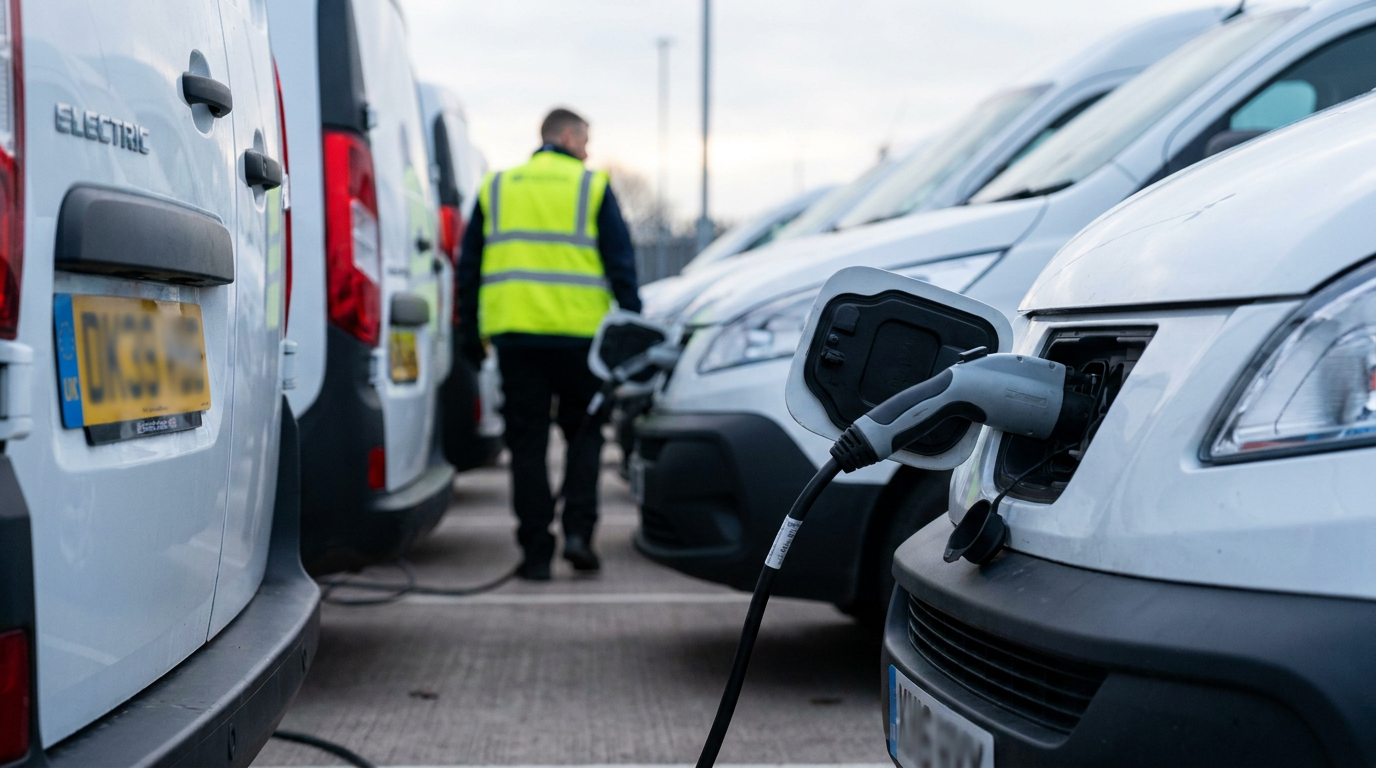
Electric vans now represent the fastest-growing segment of the UK commercial vehicle market. Businesses are moving beyond pilot programmes to full operational deployment, particularly in urban delivery, trade services, and local authority fleets. The shift is driven by Clean Air Zone charges, fuel cost savings, and improved electric van range that now comfortably exceeds 200 miles for many models.
Small businesses report that electric vans reduce daily operating costs by approximately 60-70% compared to diesel equivalents when charging overnight at business premises. This calculation changes the total cost equation significantly, even when accounting for higher purchase prices. The availability of used electric vans has improved markedly, creating opportunities for businesses that previously considered electric models financially out of reach.
Government incentives continue to influence purchasing decisions, though the focus has shifted from direct purchase grants to infrastructure support and tax advantages. Businesses benefit from 100% first-year capital allowances on new electric vans and significantly lower Benefit-in-Kind rates for employees using electric commercial vehicles. These fiscal advantages make electric vans particularly attractive for businesses operating in higher tax brackets.
Body Type Preferences Reflect Operational Specialisation
Panel vans remain the dominant choice for UK businesses, but purchasing patterns show increasing specialisation by sector. Courier and parcel delivery operators favour compact panel vans with optimised load bay configurations, whilst construction trades increasingly specify crew vans that combine passenger capacity with secure tool storage. The generic "one van fits all" approach has given way to more nuanced matching of body type to business requirements.
Luton vans and box vans have gained market share among removal companies and furniture retailers, driven by the growth of home delivery services. The additional height and straight-sided load bays offer cubic capacity advantages that justify the slightly higher running costs for businesses where volume rather than weight determines load capacity. Tail-lift specifications have become standard rather than optional for many of these applications.
Tipper vans and dropside variants continue to serve construction and landscaping sectors, though buyers now prioritise models with lower unladen weights to maximise legal payload within modern gross vehicle weight restrictions. This focus on weight optimisation reflects stricter enforcement of overloading regulations and the commercial risks associated with operating over-weight vehicles.
Payload and Size: The Shift Towards Right-Sizing
Businesses are increasingly choosing vans based on actual operational requirements rather than defaulting to maximum payload capacity. Analysis of real-world usage patterns reveals that many operators rarely utilise full 1,000kg payload capacity, making lighter vans with better fuel economy and lower running costs more appropriate. This right-sizing trend particularly affects small businesses replacing older vehicles, where historical purchasing decisions may have over-specified capacity.
Compact vans in the 600-800kg payload range have seen strong growth, particularly among urban operators, sole traders, and service businesses carrying tools rather than heavy materials. These vehicles offer significant advantages in congested environments, including easier parking, better manoeuvrability, and reduced operating costs. The perception that "bigger is always better" in commercial vehicles has shifted towards total cost of ownership calculations.
Medium wheelbase vans continue to represent the sweet spot for many businesses, offering practical load capacity without the parking and handling challenges of long-wheelbase variants. The popularity of medium wheelbase models in the used market reflects their versatility across multiple business applications, from plumbing and electrical contractors to small-scale logistics operations.
Finance Models Evolve to Match Business Cash Flow
Flexible finance arrangements have become central to van purchasing decisions in 2026. Businesses increasingly favour solutions that align vehicle costs with revenue patterns, moving away from traditional hire purchase towards more adaptable structures. This shift reflects both economic uncertainty and the recognition that vehicle finance represents a significant monthly overhead that must be managed carefully.
Lease purchase arrangements have gained popularity among established businesses seeking to preserve working capital whilst building vehicle equity over time. These structures typically require lower deposits than hire purchase whilst offering eventual ownership, creating a middle ground between outright purchase and operating lease arrangements. The ability to structure payments around seasonal business patterns adds further appeal for companies with variable cash flow.
For businesses comparing finance options, understanding the total cost implications of different structures remains essential. Untangling hire purchase versus lease purchase helps clarify which approach best suits specific business circumstances, particularly when considering tax treatment and balance sheet impact.
Regional Variations in Van Purchasing Patterns
Van buying behaviour varies significantly across UK regions, reflecting local economic conditions, industry concentrations, and regulatory environments. London and major metropolitan areas show the strongest electric van adoption rates, driven by Ultra Low Emission Zone requirements and the operational suitability of electric vehicles for short-distance urban work. In contrast, rural areas maintain higher diesel van preferences due to longer journey distances and less developed charging infrastructure.
Southeast England demonstrates the highest concentration of premium van purchases, with businesses favouring newer models and higher specifications. This pattern reflects both the region's economic profile and the competitive pressure to maintain professional fleet appearance in client-facing industries. Northern regions show stronger demand for robust, high-mileage workhorses where reliability and low purchase cost take priority over specification levels.
Regional pricing variations create opportunities for businesses willing to source vehicles from different areas. Regional vehicle pricing trends reveal that identical van models can vary by several thousand pounds depending on local supply and demand dynamics, making it worthwhile for businesses to expand their search beyond immediate geographic areas.
Mileage and Age: Changing Replacement Cycles
Businesses are replacing vans more frequently than in previous years, with average replacement cycles shortening from five years to approximately three to four years. This acceleration reflects rapid technological advancement, particularly in electric and hybrid powertrains, and the recognition that older vehicles incur higher maintenance costs and reduced reliability. Fleet operators report that the total cost of ownership often favours earlier replacement, even when accounting for depreciation.
Acceptable mileage thresholds have shifted upwards as modern van reliability improves. Businesses now routinely consider vehicles with 60,000 to 80,000 miles that would previously have been dismissed as too high-mileage. This change reflects both improved manufacturing quality and better maintenance regimes, with comprehensive service histories becoming the critical factor rather than absolute mileage figures.
The used van market shows strong demand for three to five-year-old vehicles that have completed initial depreciation but retain substantial service life. These vehicles offer the best value proposition for cost-conscious businesses, combining proven reliability with significantly lower purchase costs than new equivalents. For guidance on selecting appropriate commercial vehicles, workhorse wisdom for small business van buying provides practical frameworks.
Tax and Regulatory Factors Influencing Decisions
Vehicle Excise Duty structures significantly influence van purchasing decisions in 2026. Electric vans benefit from zero road tax, creating an annual saving that accumulates substantially over typical ownership periods. This advantage becomes particularly pronounced for businesses operating multiple vehicles, where the cumulative tax saving across a small fleet can reach several thousand pounds annually.
Benefit-in-Kind taxation for employees using company vans has become increasingly favourable for electric models, creating an additional incentive for businesses providing vehicles to staff. The differential between electric and diesel van BIK rates means that employees face significantly lower tax liabilities when using electric commercial vehicles, making them more attractive as part of employment packages.
Clean Air Zones in major cities continue to expand, with non-compliant vehicles facing daily charges that quickly erode operating margins for businesses working in affected areas. This regulatory pressure has accelerated the retirement of older diesel vans and increased demand for Euro 6 compliant or electric alternatives. Businesses planning vehicle purchases now routinely factor in current and anticipated Clean Air Zone requirements to avoid premature obsolescence.
Technology and Connectivity Requirements
Modern businesses expect commercial vehicles to integrate with digital fleet management systems, telematics platforms, and mobile connectivity solutions. This requirement influences purchasing decisions, with buyers favouring vans that support retrofit telematics installation or include factory-fitted connectivity options. The ability to track vehicle location, monitor driver behaviour, and schedule maintenance proactively has become a standard operational requirement rather than a premium feature.
Reverse cameras, parking sensors, and advanced driver assistance systems have transitioned from luxury specifications to expected standard equipment. Businesses recognise that these features reduce accident rates, lower insurance premiums, and improve driver confidence, particularly for less experienced operators. The total cost benefits of accident avoidance justify the modest additional purchase cost for safety-equipped vehicles.
Smartphone integration through Apple CarPlay and Android Auto has become a standard requirement, reflecting the need for drivers to access navigation, communication, and business applications whilst maintaining legal compliance. Vehicles lacking these connectivity options face reduced demand in the used market, creating a specification gap that affects resale values.
Dealer Direct Purchasing Gains Market Share
Businesses increasingly prefer buying directly from dealers rather than through third-party classified platforms that retain traffic and insert additional steps in the purchasing process. This shift reflects the desire for direct relationships with sellers, transparent pricing, and immediate access to vehicle history and preparation standards. Dealers report that buyers value the ability to discuss specific business requirements and negotiate terms directly without platform intermediaries.
The traditional model of browsing classified listings has been supplemented by natural language search tools that allow buyers to describe requirements in plain English rather than navigating complex filter systems. This approach proves particularly effective for businesses with specific operational needs that don't fit standard category structures, enabling more precise matching between requirements and available stock.
Transparency around total costs, including preparation fees, delivery charges, and any additional dealer services, has become a key factor in purchasing decisions. Businesses favour dealers who provide comprehensive cost breakdowns upfront rather than revealing additional charges late in the transaction process. This preference for transparency drives better buyer-seller relationships and reduces transaction friction.
Future-Proofing Business Vehicle Investments
Businesses now evaluate van purchases through a future-proofing lens, considering how regulatory changes, fuel availability, and resale values might evolve over the ownership period. This forward-looking approach favours vehicles that maintain compliance with anticipated emissions standards and retain operational flexibility as business requirements change. The rapid pace of regulatory change in the commercial vehicle sector makes this consideration increasingly important.
Resale value projections play a larger role in purchasing decisions than in previous years, with buyers recognising that depreciation represents a significant component of total ownership cost. Electric vans face particular scrutiny regarding residual values, with businesses balancing current tax advantages against uncertainty about used electric vehicle demand in three to five years. This calculation requires careful analysis of total cost rather than focusing solely on purchase price.
Modular vehicle specifications that allow future adaptation, such as removable racking systems and flexible load bay configurations, appeal to businesses anticipating operational changes. The ability to reconfigure a van for different purposes extends useful life and protects against premature obsolescence when business models evolve. This adaptability consideration reflects the dynamic nature of modern small business operations.
Frequently Asked Questions
Are electric vans suitable for all business types in 2026?
Electric vans work exceptionally well for businesses with predictable daily routes under 150 miles and access to overnight charging facilities. Urban delivery services, local trade contractors, and municipal fleets achieve the best results with electric vans due to their operating patterns. However, businesses requiring long-distance travel, remote area operation, or maximum payload capacity may still find diesel vans more practical until charging infrastructure and battery technology advance further.
How do businesses calculate the right payload capacity?
Businesses should audit actual loads over a representative period, weighing typical cargo rather than estimating. Most operators discover they use 60-70% of maximum payload capacity regularly, meaning a lighter van with better fuel economy serves their needs adequately. Factor in driver weight, fuel, tools, and equipment when calculating required capacity, as these reduce available payload from the manufacturer's maximum figure.
What finance option suits small businesses best?
The optimal finance structure depends on cash flow patterns, tax position, and planned ownership duration. Businesses with strong cash reserves often benefit from outright purchase to avoid interest costs, whilst those preserving working capital favour lease purchase or hire purchase arrangements. Seasonal businesses should explore finance structures with flexible payment schedules that align with revenue patterns rather than fixed monthly amounts.
How important is van specification for resale value?
Specification significantly affects resale values, with air conditioning, parking sensors, and connectivity features commanding premium prices in the used market. Electric vans and Euro 6 diesel models retain value better than older emission standard vehicles due to regulatory compliance. However, highly specialised conversions or unusual colour choices can restrict the potential buyer pool and reduce resale appeal.
Should businesses buy locally or search nationally?
National searching typically yields better value and wider choice, particularly for businesses seeking specific specifications or less common models. Regional price variations can be substantial, making it worthwhile to consider vehicles from different areas even when accounting for collection costs. However, local purchases offer advantages for viewing, test driving, and establishing ongoing service relationships with the selling dealer.