The Rise of Hydrogen: What Used Car Buyers Need to Know About Fuel Cell Vehicles in the UK
As the UK pushes towards a net-zero future, electric vehicles (EVs) have taken centre stage, but there's another emissions-free technology quietly bubbling beneath the surface: hydrogen fuel cell vehicles (FCEVs). While less common than battery electric vehicles (BEVs), FCEVs offer a unique proposition, blending the environmental benefits of electric power with the rapid refuelling times we're accustomed to from petrol or diesel cars. For used car buyers, understanding this nascent technology is crucial, not least because the UK market presents a distinct set of opportunities and challenges. Here at CarsLink.ai, we delve into what FCEVs could mean for your next used car purchase.
How Hydrogen Fuel Cell Vehicles Work and Their Environmental Benefits
At its core, a hydrogen fuel cell vehicle is an electric car, but instead of drawing power solely from a large battery charged from the grid, it generates its own electricity onboard. This magic happens within the "fuel cell stack," where hydrogen gas (stored in high-pressure tanks) reacts with oxygen from the air. This electrochemical process produces electricity, which powers an electric motor to drive the wheels, and the only by-product is pure water vapour, often seen harmlessly dripping from the exhaust pipe.
Think of it as a rolling power station. The hydrogen fuel cell acts as a converter, transforming chemical energy into electrical energy. A small battery pack is usually also present, acting as a buffer to store energy for acceleration and recapture braking energy, much like in a hybrid car. This elegant system completely eliminates harmful tailpipe emissions such as nitrogen oxides (NOx), particulate matter, and carbon dioxide (CO2), contributing directly to cleaner air, especially in urban environments. Furthermore, if the hydrogen used is "green hydrogen" – produced by electrolysing water using renewable energy sources – the entire lifecycle of the fuel can be virtually carbon-free, offering a truly sustainable motoring solution.
Current Availability and the Developing Refuelling Infrastructure in the UK
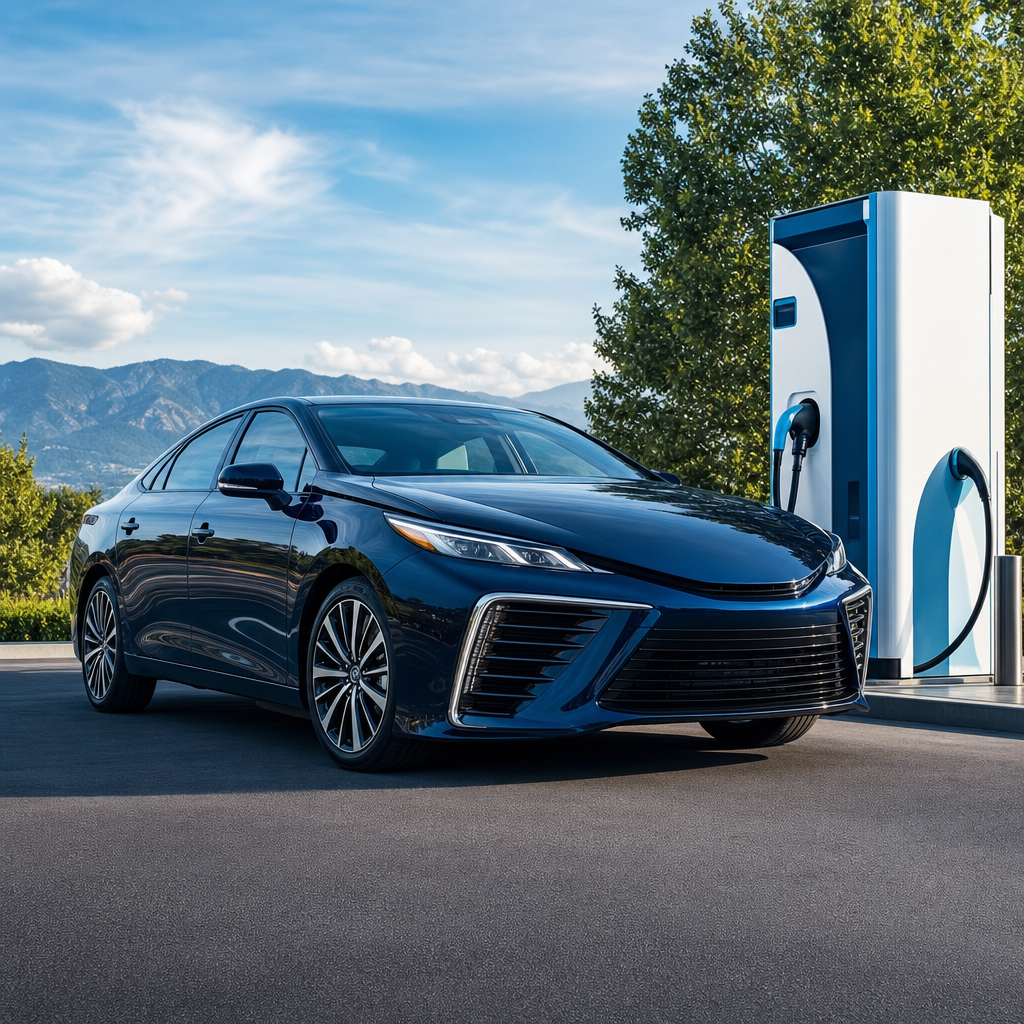
For the used car buyer in the UK, the most immediate reality regarding FCEVs is their extreme rarity. Unlike the burgeoning market for used BEVs, hydrogen cars have been sold in very limited numbers directly to consumers or fleets. The most prominent examples seen on UK roads are the Toyota Mirai and the Hyundai Nexo. These have typically been sold or leased to specific corporate or public sector clients, often those involved in hydrogen development projects or government initiatives. Consequently, finding a used FCEV for sale on the open market is, at present, like finding a needle in a haystack. CarsLink.ai listings for such vehicles are virtually non-existent, reflecting their niche status.
This scarcity is intrinsically linked to the nascent state of the UK's hydrogen refuelling infrastructure. While progress is being made, the network of public hydrogen stations is severely underdeveloped compared to the extensive EV charging network. As of early 2024, there are only a handful of public access hydrogen refuelling stations across the entire country, concentrated in specific regions. Major hubs include sites in London, Aberdeen, Sheffield, and parts of the Teesside industrial cluster. Many of these are still relatively new or primarily cater to commercial fleets (buses, lorries) rather than private passenger vehicles. The "chicken and egg" scenario – lack of cars due to lack of infrastructure, and vice versa – is a significant hurdle. While the government's UK Hydrogen Strategy aims to boost hydrogen production and deployment, the focus for transport has largely been on heavy-duty vehicles, leaving passenger car infrastructure playing catch-up.
Pros and Cons for a Used FCEV Buyer
Despite the infrastructure challenges, FCEVs do present some compelling advantages that could appeal to certain drivers, alongside some significant drawbacks.
Pros:
- Rapid Refuelling: This is perhaps the biggest draw. Unlike BEVs which can take 20 minutes to several hours to charge, refuelling an FCEV is akin to filling a petrol or diesel car – typically taking just 3-5 minutes to achieve a full tank.
- Long Range: FCEVs generally offer ranges comparable to traditional internal combustion engine (ICE) vehicles, often exceeding 300 miles on a single fill, reducing range anxiety for longer journeys.
- Zero Tailpipe Emissions: As mentioned, they produce only water vapour, contributing to local air quality improvements.
- Quiet and Smooth Drive: Like BEVs, FCEVs deliver a quiet, smooth, and instantly responsive driving experience thanks to their electric motors.
- Potential for Longevity: The fuel cell stack itself is a durable component, and the overall system is designed for a long service life.
Cons:
- Acquisition Cost: Even on the used market, if you could find one, FCEVs are likely to command a premium due to their advanced technology and scarcity. New models were significantly more expensive than comparable BEVs or ICE vehicles.
- Refuelling Inconvenience: This is the elephant in the room. With so few stations, owning an FCEV outside of a few specific corridors or cities would be impractical, if not impossible. Planning journeys around sparse refuelling points is a major logistical headache.
- Hydrogen Price: The price of hydrogen per kilogram can fluctuate and, at present, is generally higher per mile than electricity for BEVs or even petrol/diesel in some cases.
- Specialised Maintenance: While robust, should a specialised component like the fuel cell stack or high-pressure hydrogen tank require attention, finding qualified technicians and parts could be challenging and potentially expensive.
- Depreciation Uncertainty: Given the nascent market and evolving technology, predicting depreciation rates for used FCEVs is difficult. Early adopters might face significant drops, though extreme rarity could also stabilise values somewhat.
- Safety Perceptions: Despite rigorous safety testing (hydrogen tanks are incredibly strong, designed to withstand extreme impacts and even fire without rupturing), public perception around storing highly flammable gas can be a psychological barrier.
Future Outlook for Hydrogen Technology and Government Support in the UK Automotive Sector
The future of hydrogen in the UK's automotive sector is multifaceted. While the government's "UK Hydrogen Strategy" clearly outlines ambitions to position the UK as a leader in hydrogen production, especially green hydrogen, the immediate focus for transport remains heavily skewed towards heavy industry, rail, buses, and maritime applications. The rationale is that for these sectors, battery electric solutions are either too heavy, too slow to refuel, or lack the required range.
Significant public and private investment is being channelled into developing hydrogen production facilities (e.g., in Teesside, Scotland), improving distribution networks, and scaling up refuelling infrastructure, albeit primarily for commercial vehicles. For passenger cars, while manufacturers like Toyota and Hyundai continue to invest in FCEV technology, a broader market push seems less imminent compared to their BEV strategies.
Technological advancements are ongoing, aiming to reduce the cost of fuel cells, improve hydrogen storage density, and enhance overall system efficiency. However, the sheer momentum behind BEVs, coupled with the rapid expansion of charging infrastructure, means hydrogen passenger cars are likely to remain a niche proposition in the short to medium term. Government support for private FCEV ownership, such as grants or specific incentives, has also been less prominent compared to those offered for BEVs.
Conclusion
For the UK used car buyer contemplating a hydrogen fuel cell vehicle, the reality is that the future is still very much in development. While FCEVs offer an undeniably appealing blend of zero emissions and rapid refuelling, the practicalities of ownership in 2024 are extremely challenging due to the scarcity of both vehicles and refuelling stations.
If you happen to live or work very close to one of the few existing hydrogen stations, and a used FCEV becomes available at a compelling price, it might offer a unique and environmentally conscious motoring experience. However, for the vast majority of drivers across the UK, the practical hurdles – particularly the severe lack of refuelling infrastructure – make a used FCEV an impractical choice for daily motoring at this stage.
Hydrogen certainly has a vital role to play in the UK's decarbonisation journey, especially in industrial applications and heavy transport. For passenger cars, however, while the technology is fascinating and promising, it appears we're still some years away from seeing FCEVs become a mainstream contender on the used car market. For now, BEVs remain the most accessible and practical emissions-free option for the average used car buyer.