Range Anxiety Busting: Top Used Electric Cars for UK Long-Distance Journeys
For many prospective electric vehicle (EV) owners in the UK, the thought of purchasing a used EV often comes with a nagging concern: range anxiety. The fear of running out of charge miles from a charger, particularly on longer journeys, is a common barrier. However, the landscape of electric motoring is evolving rapidly, and today's used EVs are far more capable than many give them credit for, especially when it comes to tackling the UK's motorways and A-roads.
At CarsLink.ai, we understand these concerns. That’s why we’re here to bust the myth that used EVs are only suitable for urban pottering. With the right knowledge, the right car, and a dash of savvy planning, long-distance electric travel in a pre-owned EV is not only achievable but often surprisingly relaxed and cost-effective. This guide will equip you with the insights to confidently choose a used EV for those extended trips, covering everything from understanding range figures to highlighting top models and offering practical tips for maximising your miles.
Decoding EV Range: WLTP vs. Real World for Used Cars
When you start browsing used EVs, you'll inevitably encounter a range figure listed, most commonly based on the Worldwide Harmonised Light Vehicle Test Procedure (WLTP). This figure is designed to provide a standardised comparison across different vehicles under controlled laboratory conditions, simulating a mix of urban and extra-urban driving. It’s a useful benchmark, but it’s crucial to understand its limitations, especially for used cars.
What WLTP doesn't fully capture for a used EV:
- Real-world variability: Factors like driving style, speed, temperature, and terrain are not fully replicated.
- Battery Degradation: While modern EV batteries are remarkably robust and designed to last for hundreds of thousands of miles, all batteries experience a small degree of degradation over time. This means a used EV, even one a few years old, might have a slightly reduced total capacity compared to when it was brand new. However, for most well-maintained used EVs, this degradation is often only a few percentage points and rarely a deal-breaker. Many manufacturers offer warranties on battery health, often guaranteeing a certain percentage of capacity (e.g., 70% or 80%) for 8 years/100,000 miles.
Our Rule of Thumb for Used EVs: As a general guideline, expect a real-world range of 70-80% of the advertised WLTP figure for mixed driving conditions in a used EV. In colder winter months or at sustained motorway speeds (70 mph), this figure might drop further, perhaps to 60-70%. Conversely, in optimal conditions (mild weather, gentle driving), you might even exceed the 80% mark. Always review the specific used car's service history for any battery health reports, if available, or consider a pre-purchase inspection.
Factors That Really Impact Range on UK Journeys
Understanding how various elements influence your EV's range is key to successful long-distance travel. These factors apply to all EVs, new or used, but being mindful of them helps alleviate range anxiety:
- Temperature: This is arguably the biggest external factor. Cold weather significantly impacts battery performance, reducing its efficiency and therefore your available range. Additionally, heating the cabin uses a substantial amount of energy, further depleting the battery. Conversely, very hot weather can also affect efficiency, though less dramatically, due to air conditioning use.
- Driving Style: How you drive is paramount. Aggressive acceleration and harsh braking are major energy guzzlers. Smooth, consistent driving, anticipating traffic, and making the most of regenerative braking (where the motor acts as a generator to return energy to the battery when you lift off the accelerator or brake) will dramatically extend your range.
- Speed: The faster you go, the more energy your EV consumes. Sustained high speeds on motorways (e.g., 70 mph) are notoriously inefficient compared to driving at 50-60 mph. Reducing your motorway cruising speed by just 5-10 mph can yield significant range benefits.
- Terrain: Uphill climbs demand more power and thus reduce range. Downhill stretches, however, can partially replenish the battery through regenerative braking, helping to offset the energy expended on the ascent.
- Load: The heavier your car, the more energy it needs to move. Passengers, luggage, or even roof racks can incrementally reduce your range.
- Tyre Pressure: Under-inflated tyres increase rolling resistance, forcing the motor to work harder and reducing efficiency. Regularly checking your tyre pressures is a simple yet effective way to maintain optimal range.
- Ancillaries: While less impactful than speed or temperature, features like air conditioning, heating, headlights, and infotainment all draw power from the battery. Using them judiciously, especially heating/cooling, can offer minor range benefits.
Top Used EVs for Long-Haul UK Driving
When considering a used EV for regular long-distance journeys across the UK, you’ll want a model known for a healthy real-world range, decent cruising efficiency, and crucially, reliable rapid charging capabilities (preferably CCS standard for the broadest network access). Here are some excellent contenders you'll find on CarsLink.ai:
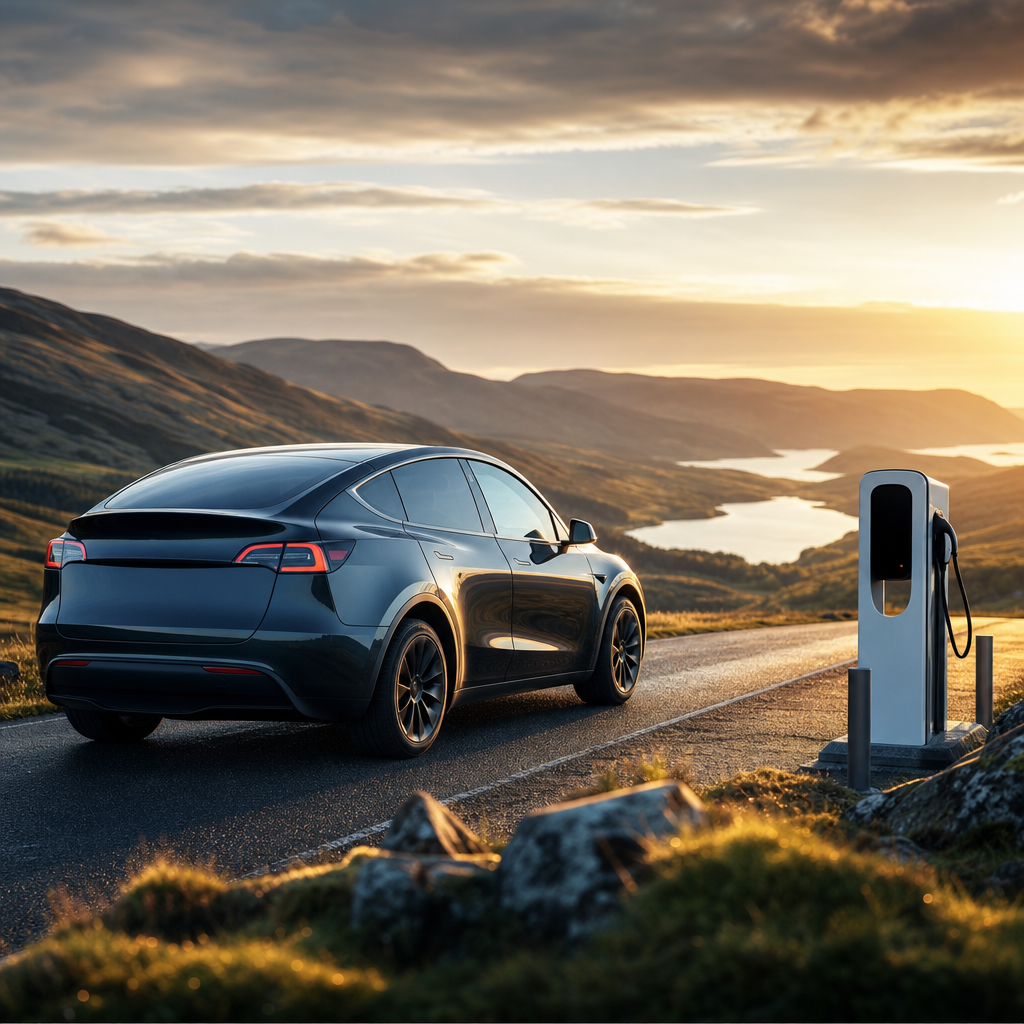
- Tesla Model 3 / Model Y (Long Range variants):
- Why they're great: Tesla's efficiency is legendary, even on used models. The Long Range variants typically offer well over 250 miles of real-world range. Their access to the expansive and incredibly reliable Tesla Supercharger network is a game-changer for long trips – often just 'plug and play'. Performance is exhilarating, and the infotainment system is top-notch for route planning.
- What to look for: Used Model 3 Long Range (available from around 2019 onwards) or Model Y Long Range (from 2021) offer excellent value.
- Hyundai Kona Electric / Kia e-Niro (now Niro EV) (64kWh/62kWh models):
- Why they're great: These Korean cousins are champions of real-world efficiency and deliver exceptional range for their compact SUV/crossover segments. The 64kWh (Kona) or 62kWh (e-Niro) battery versions consistently impress, often achieving 200-250 miles in mixed driving. They come with CCS rapid charging as standard and are known for robust reliability, making them superb used buys.
- What to look for: The 64kWh Kona Electric and 62kWh e-Niro have been on sale since 2018/2019, meaning plenty of well-priced used options are available.
- Volkswagen ID.3 / ID.4 (Pro Performance / Pro S variants):
- Why they're great: VW's ID range, particularly models with the larger 77kWh (net) battery pack, offers competitive range figures (often 200-250 miles real-world) and comfortable cruising. They also utilise CCS rapid charging, and the interiors are spacious and practical for families. The ID.4 offers an SUV form factor, while the ID.3 is a more compact hatchback.
- What to look for: Used ID.3 Pro Performance (58kWh battery) and ID.4 Pro Performance (77kWh battery) are becoming more prevalent from 2020 onwards. The 77kWh battery is best for long distances.
- Polestar 2 (Long Range Single/Dual Motor):
- Why they're great: Offering a premium experience with robust build quality, the Polestar 2 Long Range variants (available with both single and dual motor powertrains) provide competitive range figures, often in the 200-250 mile real-world bracket. They also feature rapid CCS charging and an excellent Google Android Automotive OS infotainment system for navigation and charging station finding.
- What to look for: Used Polestar 2 models from 2021 onwards offer strong residual values and a refined driving experience.
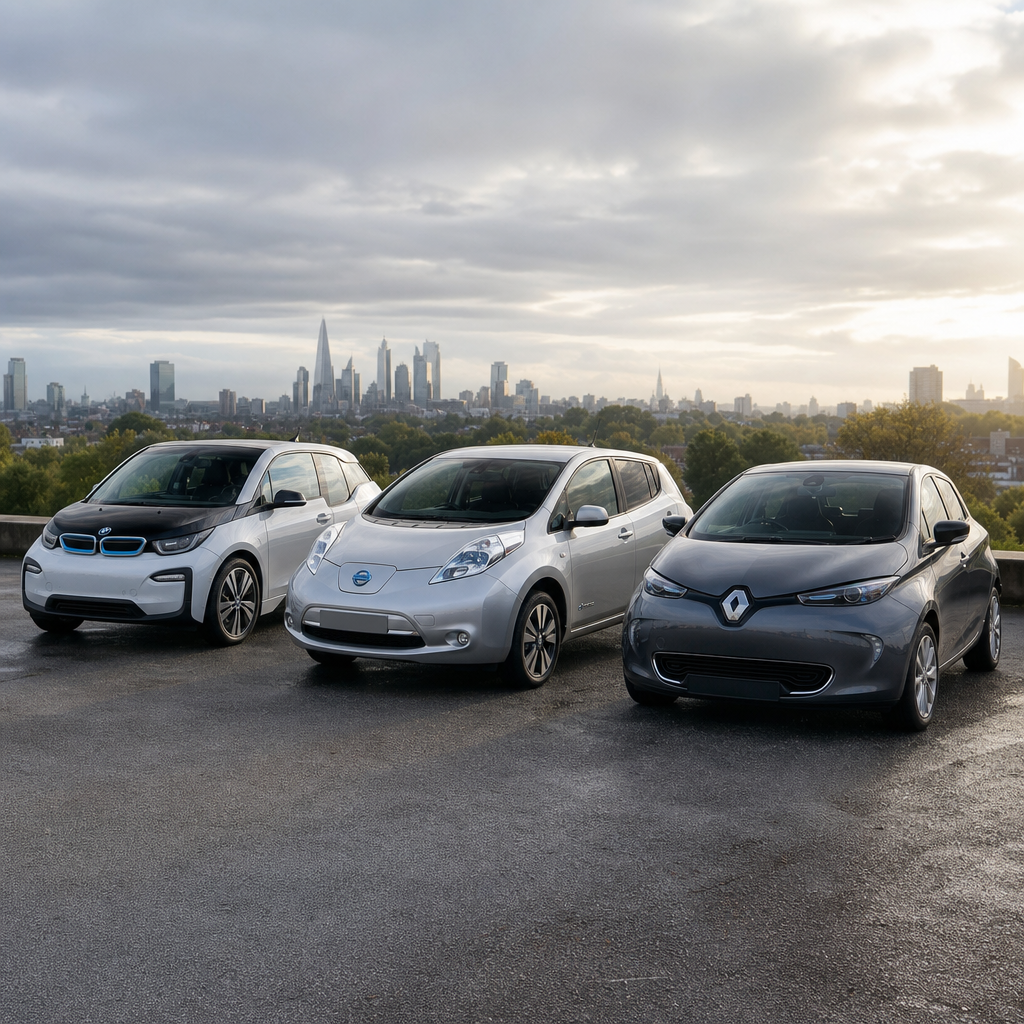
- Nissan Leaf e+ (62kWh battery):
- Why it's great: While earlier Leaf models had more modest ranges, the 62kWh Leaf e+ (introduced in 2019) significantly boosts its long-distance credentials. It offers a respectable real-world range of around 180-200 miles. It's a comfortable and practical hatchback, often available at a keen price point in the used market.
- What to look for: Crucially, seek out the "e+" models specifically, as these have the larger 62kWh battery. Be aware that the Leaf uses the CHAdeMO rapid charging standard, which is less prevalent than CCS in newer public infrastructure, though still widely available.
Maximising Your Range and Planning UK Journeys
With the right used EV, the next step is mastering the art of electric travel. Here are our top tips:
- Pre-Condition While Plugged In: In cold weather, heat your car's cabin (and sometimes the battery) while it’s still plugged into a charger at home or work. This uses grid electricity rather than your battery's charge, meaning you start your journey with maximum available range.
- Drive Smoothly: Anticipate traffic, avoid harsh acceleration and braking, and embrace regenerative braking. On motorways, consider dropping your speed slightly – maintaining 60-65 mph instead of 70 mph can noticeably extend your range.
- Monitor Tyre Pressure: Correctly inflated tyres reduce rolling resistance and are crucial for optimal efficiency.
- Strategic Charging: Don't feel you always need to charge to 100% at rapid chargers. Charging from 20% to 80% is usually the fastest part of the rapid charging curve. Plan to charge to 80% and only top up further if absolutely necessary, as the final 20% takes significantly longer.
- Utilise Smart Apps: Essential apps like Zap-Map, PlugShare, and A Better Routeplanner (ABRP) are your best friends.
- Zap-Map and PlugShare show you all available charging points, their speeds, types (CCS, CHAdeMO, Type 2), and real-time availability/status. Crucially, check recent user comments for reliability.
- ABRP (A Better Routeplanner) is invaluable for planning long journeys. You input your car model, current charge, desired destination, and even your driving style, and it will suggest charging stops, estimated charging times, and arrival charge levels.
- Build in a Buffer: Always aim to arrive at your next charging stop or destination with 10-20% charge remaining. This buffer accounts for unexpected diversions, closed chargers, or misjudged range estimates.
- Consider Destination Charging: If staying overnight, look for accommodation with EV charging facilities. A slow overnight charge (Type 2, 7kW) can fully replenish your battery, setting you up perfectly for the next day.
Conclusion
Range anxiety in a used EV is largely a perception issue from an earlier era of electric motoring. Modern used EVs, especially those highlighted above, offer substantial real-world range and reliable rapid charging capabilities that make long-distance UK journeys perfectly feasible and enjoyable.
By understanding how range is calculated, being mindful of driving factors, selecting a capable used model, and embracing smart planning tools, you can confidently embark on any journey. The economic and environmental benefits of owning a used EV are compelling, and with the right approach, those long trips across the country are well within reach. Explore the fantastic selection of capable used electric cars at CarsLink.ai today and start your journey towards anxiety-free electric adventures!