The Long Haul: Essential Maintenance for Older Used EVs and Hybrids in the UK
As the UK races towards an electrified future, more and more drivers are discovering the joys – and the savings – of electric vehicles (EVs) and hybrids. While brand-new models often steal the headlines, a burgeoning market for used electrified vehicles, many now five years old or more, is offering an affordable entry point for thousands. These aren’t just shiny new pieces of tech; they're becoming the workhorses of the future, offering lower running costs and a quieter, smoother drive.
However, owning an older EV or hybrid isn't quite the same as running a petrol or diesel car. While many common maintenance tasks remain, these vehicles bring their own unique considerations to the garage forecourt. Dispelling myths and understanding the specific needs of an ageing electrified powertrain is crucial for long-term reliability and cost-effective motoring. Let's delve into what UK owners of older used EVs and hybrids need to know to keep their cars running in peak condition.
Beyond the Battery: Unique Wear-and-Tear Components
One of the most appealing aspects of an EV or hybrid is the perceived simplicity of its powertrain compared to a complex internal combustion engine (ICE). While true that many traditional service items like spark plugs, oil changes, and fuel filters are eliminated or greatly reduced, it's a mistake to think these vehicles are maintenance-free. Certain components experience different, and sometimes greater, stresses.
Firstly, suspension and tyres often bear a heavier burden. EVs, particularly those with large battery packs, are significantly heavier than their ICE counterparts. This increased weight can accelerate wear on suspension bushes, shock absorbers, and springs. Owners might find their vehicles requiring suspension checks and component replacements sooner than expected. Similarly, tyres need careful consideration. The instant torque of an electric motor can be demanding on tyre wear, and the extra weight necessitates robust, often EV-specific tyres designed for higher load ratings and lower rolling resistance to optimise range. A vigilant eye on tyre pressure and regular wheel alignment are more important than ever.
Secondly, braking systems operate differently. Regenerative braking, where the electric motor slows the car and converts kinetic energy back into electricity, significantly reduces the mechanical workload on brake pads and discs. While this means pads and discs can last much longer, it can also lead to issues if not managed. Less frequent mechanical braking can cause brake components, particularly the calipers, to seize due to lack of use and ingress of moisture and road salt – a particular concern in the UK’s damp climate. Regular inspection and lubrication of calipers during servicing are therefore essential, as is ensuring brake fluid is changed at recommended intervals to maintain its integrity.
Finally, don't overlook cooling systems. While hybrids and EVs might not have a conventional radiator for an engine, they still have sophisticated thermal management systems. The battery pack, electric motors, and power electronics (inverters) all generate heat that needs to be dissipated to maintain optimal operating temperatures and efficiency. This often involves dedicated coolant loops. For example, some early Nissan Leafs had passive cooling, but later models and virtually all other modern EVs, like the Tesla Model 3, employ complex liquid cooling. Owners should ensure these coolant systems are checked and serviced according to manufacturer guidelines, with coolant levels and condition being paramount. A failing cooling system for the battery or electronics can drastically reduce performance, range, and longevity. Furthermore, the 12V auxiliary battery, often overlooked, is crucial for powering the car's control systems and starting the high-voltage system; it still needs regular testing and occasional replacement.
The Digital Heartbeat: Software, Diagnostics, and Performance
Modern vehicles are essentially computers on wheels, and this is exponentially true for EVs and hybrids. The performance, efficiency, and overall health of these vehicles are intrinsically linked to their software and electronics. Regular attention to these digital aspects is not merely a convenience but a critical maintenance requirement.
Software updates are paramount. Manufacturers continually release updates to optimise battery management, improve motor efficiency, enhance safety features, and even fix previously identified bugs. While some vehicles, particularly newer EVs, benefit from convenient over-the-air (OTA) updates, many older models, and critical system updates across the board, still require a visit to a dealership or specialist garage. Ensuring your vehicle's software is current can unlock better range, smoother power delivery, and improved battery longevity. It’s akin to updating the operating system on your smartphone – crucial for optimal performance and security.
Equally important are specialist diagnostic tools. When a warning light appears, or performance dips, standard OBD-II scanners can offer basic fault codes, but they often scratch only the surface. Dealer-level or high-end aftermarket diagnostic equipment can delve deep into the complex interplay of battery modules, inverters, charging systems, and vehicle control units. These tools can provide detailed insights into battery State of Health (SoH), identify specific failing modules, or pinpoint subtle electrical anomalies. For popular models like the Nissan Leaf, third-party apps like 'Leaf Spy' offer valuable insights into battery health for owners, but comprehensive diagnostics still typically require professional equipment. Regular diagnostic checks, even without apparent faults, can help identify potential issues before they become costly problems.
The sophisticated interplay of hardware and software means that even issues seemingly unrelated to the powertrain might be rooted in software glitches or sensor malfunctions. Maintaining the "digital heartbeat" of your electrified vehicle ensures all systems are communicating effectively and operating as designed, maximising both performance and safety.
Navigating the Service Landscape: Finding Qualified Specialists
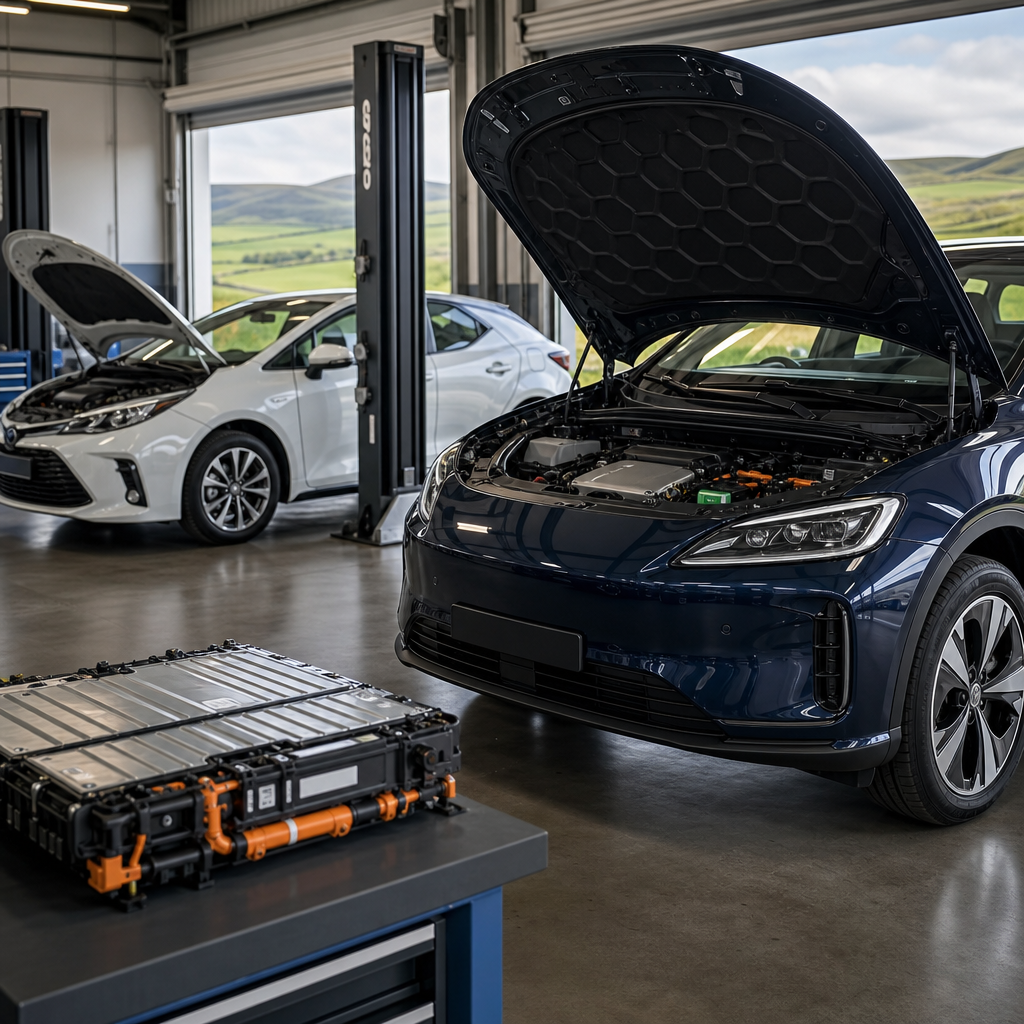
As the UK’s electrified fleet expands, so too does the need for skilled technicians capable of servicing these complex machines. Finding a qualified specialist garage for your older EV or hybrid is arguably more important than for a conventional car, given the high-voltage systems involved.
Your initial port of call might naturally be the main dealer network. Dealerships typically have brand-specific diagnostic equipment, access to all software updates, and technicians trained directly by the manufacturer. For specific, complex issues or warranty work (if applicable), they often remain the safest bet. However, dealer servicing can be more expensive, and for older vehicles, owners might seek more cost-effective independent options.
Thankfully, the independent garage sector is rapidly upskilling. When choosing an independent specialist, look for clear indicators of expertise. The Institute of the Motor Industry (IMI) offers a robust accreditation scheme for EV and hybrid technicians, with qualifications ranging from Level 2 (Hazard Awareness) to Level 4 (Diagnosis and Repair of HV Systems). A garage advertising "IMI Level 3/4 High Voltage Qualified" technicians instills confidence that their staff are trained to work safely and competently on your vehicle's high-voltage systems.
Don't be afraid to ask questions:
- "Do you have technicians specifically qualified to work on high-voltage vehicles, and what are their qualifications?"
- "What diagnostic equipment do you use for [your car's make and model]?"
- "Are your technicians equipped with appropriate personal protective equipment (PPE) and insulated tools for high-voltage work?"
A reputable independent specialist will be transparent about their capabilities and investments in the necessary training and equipment. The network of qualified independents is growing year on year, making specialist servicing more accessible and competitively priced across the UK. Using an unqualified garage risks not only incorrect diagnosis and repair but also serious safety hazards due to the high voltages present.
Myth vs. Reality: Long-Term Reliability and Costs
Misconceptions about the long-term reliability and cost of ownership for older electrified vehicles persist, often deterring potential buyers. Let's address some common myths with a dose of reality.
Myth 1: The battery will die quickly and cost a fortune to replace. Reality: While battery degradation is a natural process, it's typically gradual. Many EV and hybrid batteries demonstrate remarkable longevity, often exceeding 100,000 miles with sufficient capacity for daily use. Manufacturers often provide lengthy warranties (typically 8 years/100,000 miles for the battery), and a significant number of older vehicles are still within or just beyond this period. While full battery replacement can be expensive (though costs are falling), often only individual modules within the pack fail, which can be repaired or replaced by specialists for significantly less. Proactive battery care, such as avoiding frequent deep discharges and extremely fast charging, also helps.
Myth 2: EVs and hybrids are maintenance-free. Reality: As discussed, they require different maintenance, not no maintenance. While traditional ICE service items are reduced, components like suspension, brakes, tyres, and cooling systems still need attention. Overall, the routine servicing costs for an EV or hybrid are often lower than an ICE equivalent over its lifetime, but they are not zero. The savings primarily come from reduced fuel costs and often lower road tax.
Myth 3: Parts for EVs are unobtainable or prohibitively expensive. Reality: General wear-and-tear items (tyres, brake pads, suspension components) are often shared with ICE counterparts or readily available. EV-specific components, like electric motors or inverters, are engineered to be highly robust and typically have very long lifespans. While they can be expensive if they do fail, such failures are statistically rare compared to ICE engine or gearbox issues. The growing used parts market also helps for components no longer readily available new.
The true cost of ownership for an older EV or hybrid can be surprisingly attractive. Factoring in lower "fuel" costs (electricity is generally cheaper per mile than petrol/diesel), reduced road tax (many are Band A or B), and potentially lower routine servicing labour, the overall running costs can significantly undercut a comparable ICE vehicle. The key is to be an informed owner, understanding the specific maintenance needs and committing to proactive, specialist care.
Conclusion
Owning an older used EV or hybrid in the UK is a smart and increasingly popular choice, offering environmental benefits and substantial running cost savings. However, it's not a set-and-forget proposition. Embracing the unique maintenance requirements of these advanced vehicles – from diligent attention to suspension and cooling systems, to prioritising software updates and seeking out qualified high-voltage specialists – is paramount. By understanding the true mechanics behind the myths and committing to proactive care, your older electrified vehicle can provide many more years of reliable, efficient, and enjoyable motoring on British roads. Drive smart, maintain well, and enjoy the long haul.