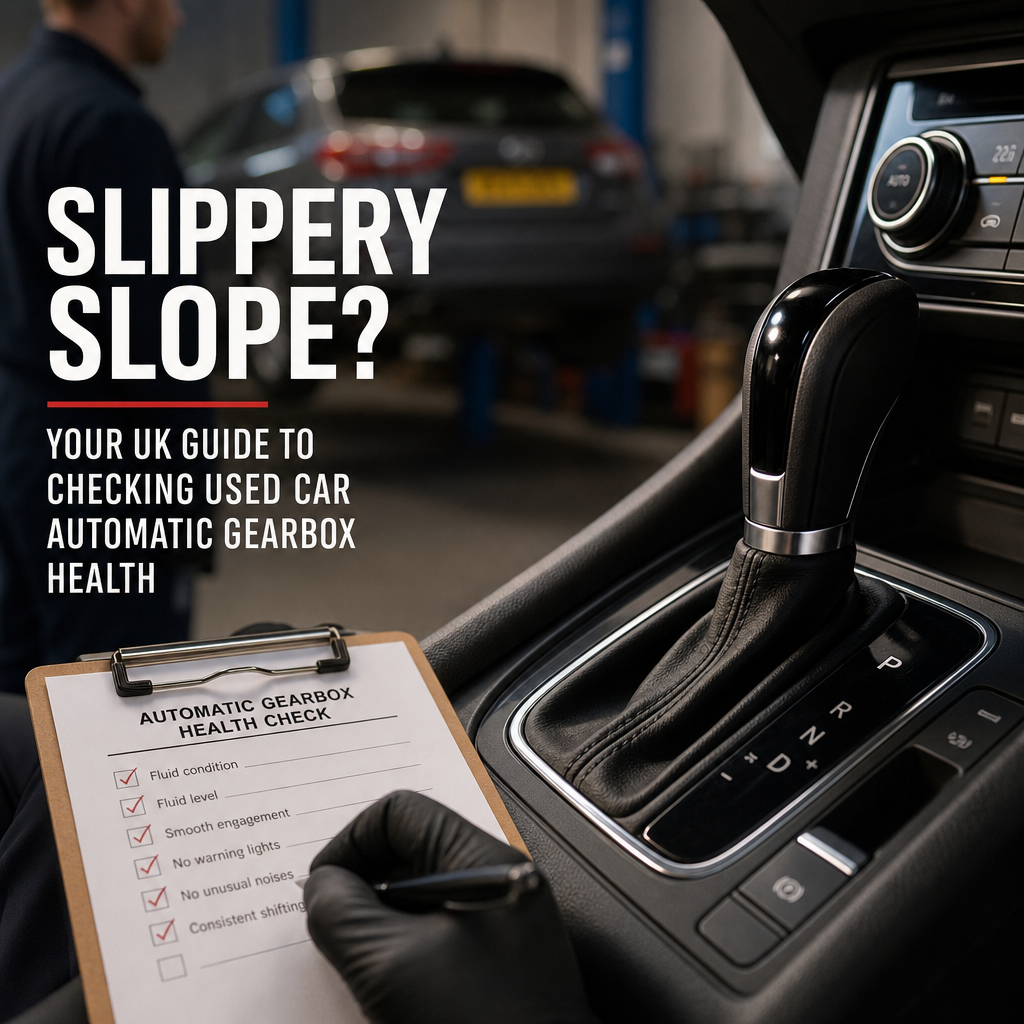
Slippery Slope? Your UK Guide to Checking Used Car Automatic Gearbox Health
The allure of a used car with an automatic gearbox is undeniable. In the stop-start traffic common across the UK, and for many drivers seeking a smoother, less fatiguing experience, an auto is often the preferred choice. With more and more new cars being sold without a manual option, the used market is increasingly populated by automatics, from traditional torque-converter units to modern dual-clutch transmissions (DCTs) and continuously variable transmissions (CVTs).
However, while offering unparalleled convenience, automatic gearboxes are complex pieces of engineering. If neglected or faulty, they can quickly turn your dream car into a financial nightmare, with repair bills often running into thousands of pounds. For the savvy used car buyer on CarsLink.ai, understanding how to assess an automatic gearbox's health is paramount. This guide will arm you with the knowledge to spot potential issues and make an informed decision, ensuring your journey isn't plagued by a "slippery slope" of transmission troubles.
Red Flags on the Test Drive: Identifying Hesitation, Jerky Shifts, or Strange Noises
The test drive is your best opportunity to listen, feel, and observe the gearbox in action. Don't rush it; treat the transmission like a critical component that it is.
- Hesitation/Delay in Engagement: When you select 'D' (Drive) or 'R' (Reverse) from 'P' (Park) or 'N' (Neutral), there should be a smooth, almost instantaneous engagement of the gear, accompanied by a slight drop in engine RPM. If there's a noticeable delay (more than a second or two), or a clunk or jolt when the gear finally engages, it could indicate low fluid levels, a worn valve body, or internal clutch issues.
- Jerky or Harsh Shifts: As you accelerate and decelerate through the gears, pay close attention to the transitions. Shifts should be smooth and barely perceptible in a well-maintained automatic. Any noticeable clunks, bangs, jolts, or harshness, especially when changing between specific gears (e.g., 1st to 2nd, or downshifting under braking), is a serious warning sign. This can point to worn clutch packs, solenoid issues, or problems with the mechatronics unit (common in many modern DCTs like VW Group's DSG).
- Slipping: This is perhaps one of the most concerning symptoms. If you press the accelerator and the engine revs increase significantly, but the car's speed doesn't increase proportionally or takes an unusually long time to catch up, the gearbox is "slipping." This usually indicates severe wear on the internal clutch packs or a failing torque converter. It’s akin to driving a manual car with a completely worn-out clutch – a very expensive fix.
- Strange Noises: Listen carefully for any unusual sounds emanating from the transmission area.
- Whining or Humming: A continuous whine that changes pitch with engine speed could indicate worn bearings or pump issues within the gearbox.
- Grinding or Clunking: These can signal internal gear damage, worn synchronisers (in some automated manuals), or severe issues with the differential within the gearbox casing.
- Clicking/Tapping: Might point to problems with drive shafts or CV joints, which, while not strictly gearbox issues, are related to the drivetrain and worth investigating.
- Unusual Vibrations: Any persistent vibrations felt through the steering wheel, floor, or seat that are not tyre or suspension related could potentially be traced back to the torque converter or other internal gearbox components.
Remember to test the car from a cold start and after it has reached operating temperature, as some issues only manifest under specific conditions. Drive at various speeds, including motorway speeds if possible, and test it under load (e.g., uphill) to properly stress the transmission.
Fluid Levels and Condition (Where Accessible) and Understanding Their Importance
Automatic transmission fluid (ATF) is the lifeblood of your gearbox. It lubricates moving parts, cools the transmission, and acts as a hydraulic medium for gear changes. Its condition can tell you a lot about the gearbox's health.
- The "Sealed for Life" Myth: Many modern manufacturers claim their automatic gearboxes are "sealed for life" and do not require fluid changes. While this might be true for the expected service life of the first owner, it's often a contentious claim for long-term ownership. Most transmission specialists in the UK recommend ATF changes every 40,000-60,000 miles, especially for high-performance cars, those used for towing, or stop-start city driving.
- Checking the Fluid (If Possible): Many newer automatics do not have a dipstick, requiring specialist tools to check the level. However, if the car you're viewing does have one, it's a valuable diagnostic tool:
- Location & Procedure: Consult the car's manual for the correct checking procedure. It usually involves parking on a level surface with the engine warm and running, and the gear selector in 'P' or 'N'.
- Colour: Healthy ATF is typically bright red or pink and translucent. If it's dark brown, black, or opaque, it indicates severe degradation.
- Smell: Sniff the dipstick. Healthy ATF should have a slightly sweet, oily smell. A strong, burnt smell is a major red flag, indicating overheating and severe internal wear.
- Level: The fluid should be between the 'Min' and 'Max' marks. Both overfilling and underfilling can cause serious problems.
If the car has a "sealed for life" gearbox and there's no visible way to check the fluid, the service history becomes even more critical.
Common Automatic Gearbox Faults and Potential Repair Costs
Understanding common failure points can help you identify what you might be facing. Automatic gearbox repairs are notoriously expensive.
- Mechatronics Unit/Valve Body Issues: Predominant in many modern transmissions, especially VW Group's DSGs (Direct Shift Gearbox) and some BMW/Mercedes units. This complex electronic and hydraulic control unit directs the fluid flow to engage clutches and gears. Symptoms include rough shifts, delayed engagement, specific gear lockouts, or complete failure. Costs: £1,000 - £3,000+, potentially more for dealer-only parts.
- Torque Converter Problems: Found in traditional automatics, the torque converter acts like a fluid coupling. A failing unit can cause shuddering (especially at steady speeds), whining noises, overheating, or a complete lack of drive. Costs: £800 - £2,000+, as it often requires removing the gearbox to replace.
- Clutch Pack Wear: Internal clutch packs engage different gears. Wear leads to slipping, delayed shifts, and eventually a loss of drive. Often a symptom of neglected fluid changes or hard driving. Costs: Often requires a gearbox rebuild, £1,500 - £4,000+.
- Solenoid Failures: Solenoids are electronic valves that control the flow of ATF. A faulty solenoid can cause erratic shifting, harsh engagement, or failure to select certain gears. Costs: £400 - £1,000+, depending on accessibility and how many need replacing.
- CVT (Continuously Variable Transmission) Belt/Pulley Wear: CVTs, common in many Japanese cars (e.g., Nissan, Honda), use belts and pulleys instead of fixed gears. Wear can lead to slipping, shuddering, or a 'rubber band' feeling during acceleration. Costs: Full CVT replacement can be £2,000 - £5,000+.
In the worst-case scenario, a full gearbox rebuild or replacement can easily exceed £2,500 and often climbs to £5,000 or even £6,000 for more premium models – a cost that can quickly outweigh the value of a used car.
The Critical Role of a Full Service History for Transmission Longevity and Warranty
For an automatic gearbox, the service history isn't just important; it's absolutely vital.
- Evidence of ATF Changes: Look for specific invoices or stamps in the service book detailing automatic transmission fluid and filter changes. For many manufacturers, despite the "sealed for life" claims, a recommended service interval for the transmission fluid exists (e.g., every 40k-60k miles for many ZF 8-speed autos, or specific intervals for DSG gearboxes). If these haven't been done, it's a significant gamble.
- Specialist Garages: Evidence that the transmission has been serviced or inspected by an automatic gearbox specialist, rather than just a general mechanic, is a huge bonus. These specialists have the specific knowledge and tools required.
- Proof of Proactive Maintenance: A history showing regular and timely servicing suggests an owner who understood the importance of maintaining this expensive component. Conversely, a patchy or non-existent history for the gearbox itself is a massive red flag, implying potential neglect.
- Warranty Implications: If you're buying from a dealer with a warranty, a full service history is often a prerequisite for any transmission-related claims. Without it, your warranty might be voided for powertrain issues, leaving you footing the bill.
Knowing When to Walk Away: Signs of Major Gearbox Issues That Make a Car a Bad Buy
Sometimes, despite your best efforts, the car you're looking at simply isn't worth the risk.
- Multiple Red Flags: If you've noted several of the test drive issues (e.g., hesitation, harsh shifts, and strange noises), you're likely looking at a car with significant, potentially cumulative, transmission problems.
- Illuminated Warning Lights: Any transmission-specific warning light on the dashboard (often a cog icon, or sometimes the general 'Check Engine' light if related to the powertrain) is an immediate reason to be wary. Even if the seller claims it's "just a sensor," it requires professional diagnosis and is a clear indicator of an underlying issue.
- Lack of Transmission Service History: For automatics, especially those known for specific issues (e.g., early generation DSGs, certain CVT units, or high-mileage premium cars), a complete absence of documented transmission servicing should be a deal-breaker. It's a gamble few can afford to lose.
- Evasiveness from the Seller: If the seller becomes defensive, evasive, or dismissive when you ask detailed questions about the gearbox, its service history, or any observed symptoms, it's a strong sign they might be hiding something.
- Trust Your Gut: If something just doesn't feel right during the test drive, or you have a lingering sense of unease about the car's transmission, walk away. There are plenty of other used cars on CarsLink.ai.
- The Pre-Purchase Inspection (PPI): For any automatic car you're seriously considering, especially if it's a higher-value model or one with a known history of gearbox complexities, invest in an independent pre-purchase inspection by a reputable mechanic or automatic transmission specialist. Their expert eye can spot issues you might miss and provide peace of mind – or save you from a huge mistake.
Conclusion
Automatic gearboxes offer a truly convenient and comfortable driving experience, a key reason for their increasing popularity on UK roads. However, their complexity means they demand a higher level of scrutiny when buying used. By being vigilant during the test drive, understanding the importance of fluid condition, knowing common fault symptoms, and rigorously checking the service history, you can significantly reduce your risk.
Don't let the convenience of an automatic lead you down a "slippery slope" of unexpected costs. Be informed, be thorough, and don't hesitate to walk away if the signs point to a troubled transmission. Your diligence will pay off, helping you find a reliable automatic that brings joy, not despair, to your driving experience.