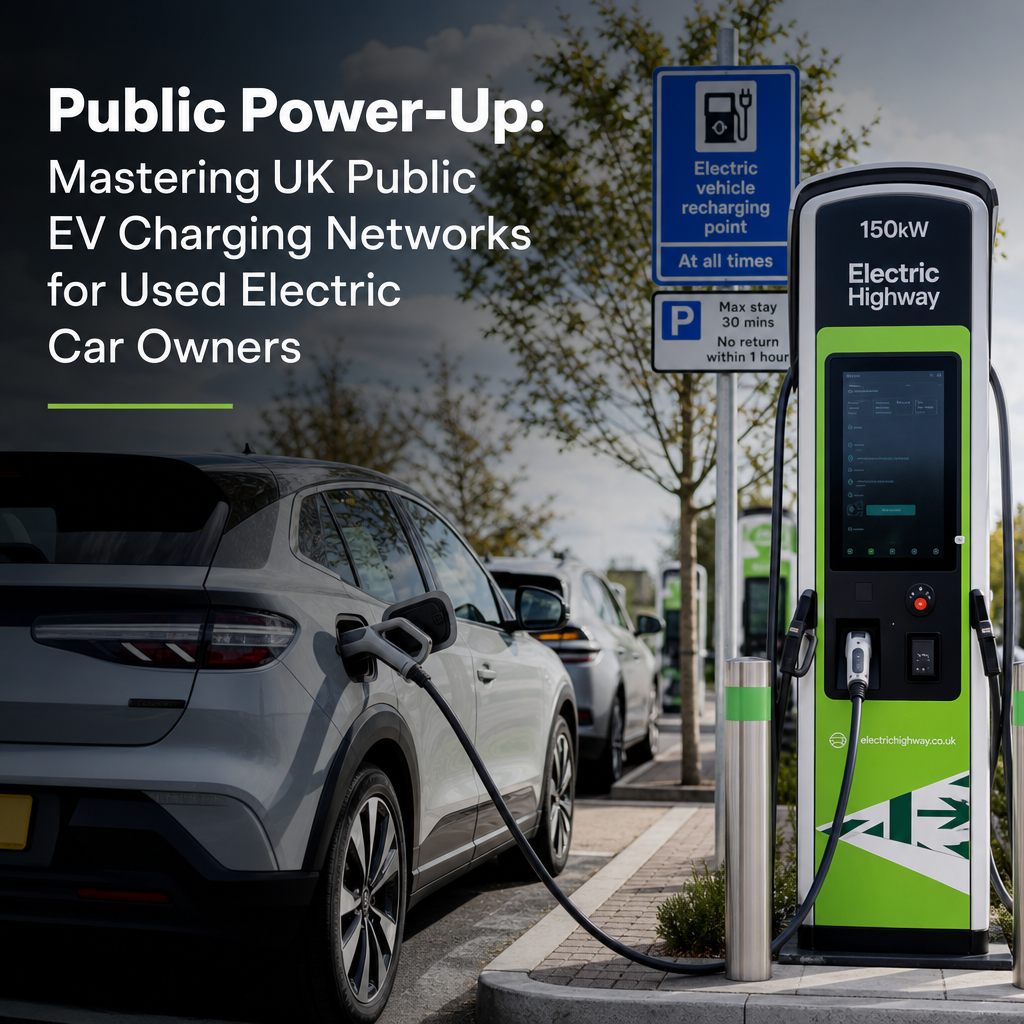
Public Power-Up: Mastering UK Public EV Charging Networks for Used Electric Car Owners
The market for used electric vehicles (EVs) in the UK is booming, offering fantastic value and a greener way to drive. But for many potential buyers, especially those new to the electric world, the prospect of public charging can seem a daunting maze of different networks, plugs, and payment methods. Fear not! As your guide at CarsLink.ai, I'm here to demystify the UK's public charging landscape, ensuring your used EV ownership experience is as smooth and stress-free as possible.
With a little knowledge and preparation, navigating the UK's expanding charging infrastructure is straightforward. Let's plug in!
The UK's Charging Landscape: Who's Who on the Grid
The UK's public charging network is a vibrant, growing ecosystem, featuring a mix of national giants, regional specialists, and smaller, rapidly expanding players. Understanding the key operators will help you identify reliable charging options wherever your journey takes you.
- Gridserve: A major player, especially visible on the motorway network. Gridserve has been transforming former 'Electric Highway' sites into modern "Electric Forecourts" and "Electric Hubs," boasting multiple high-power rapid and ultra-rapid chargers, often with comfortable waiting areas. They're a solid choice for longer journeys.
- Instavolt: Known for its reliability and user-friendliness, Instavolt typically installs 50kW and 125kW+ rapid chargers, often found at retail parks, restaurants, and hotels. Their standout feature has long been simple contactless payment, meaning no apps or RFID cards are usually required – just tap and charge.
- Pod Point: One of the most widespread networks, you'll find Pod Point chargers in supermarket car parks (Tesco being a prime example), at shopping centres, and various destinations. They offer a mix of fast (7kW, 22kW) and rapid (50kW+) chargers. Payment is usually via their app, though some newer units accept contactless.
- BP Pulse: An established network, BP Pulse has a vast number of charge points, ranging from slower AC units to rapid DC chargers. Historically, they required an RFID card or app, but are now upgrading their network with more reliable units and integrating contactless payment options.
- Shell Recharge: As the name suggests, often found at Shell petrol stations, providing convenient rapid and ultra-rapid charging options. Their network is growing, and they aim for simple payment through their app or RFID card, with contactless becoming more common.
- GeniePoint: Operated by Equans, GeniePoint chargers are found across the UK, often at local authority sites, retail parks, and public car parks. They offer a mix of fast and rapid chargers, typically activated via their app or an RFID card.
- Regional Networks: Don't forget local networks like ChargePlace Scotland, which covers a significant portion of Scotland, and Source London for the capital. These often have specific apps or RFID cards required for access.
While the number of networks might seem daunting, most EV drivers quickly develop their favourites based on location, reliability, and ease of payment.
Plugs and Power: Getting Connected and Charged
One of the most common questions from new EV owners revolves around connector types and charging speeds. Matching your car's capabilities to the right charger is key to an efficient power-up.
Connector Types:
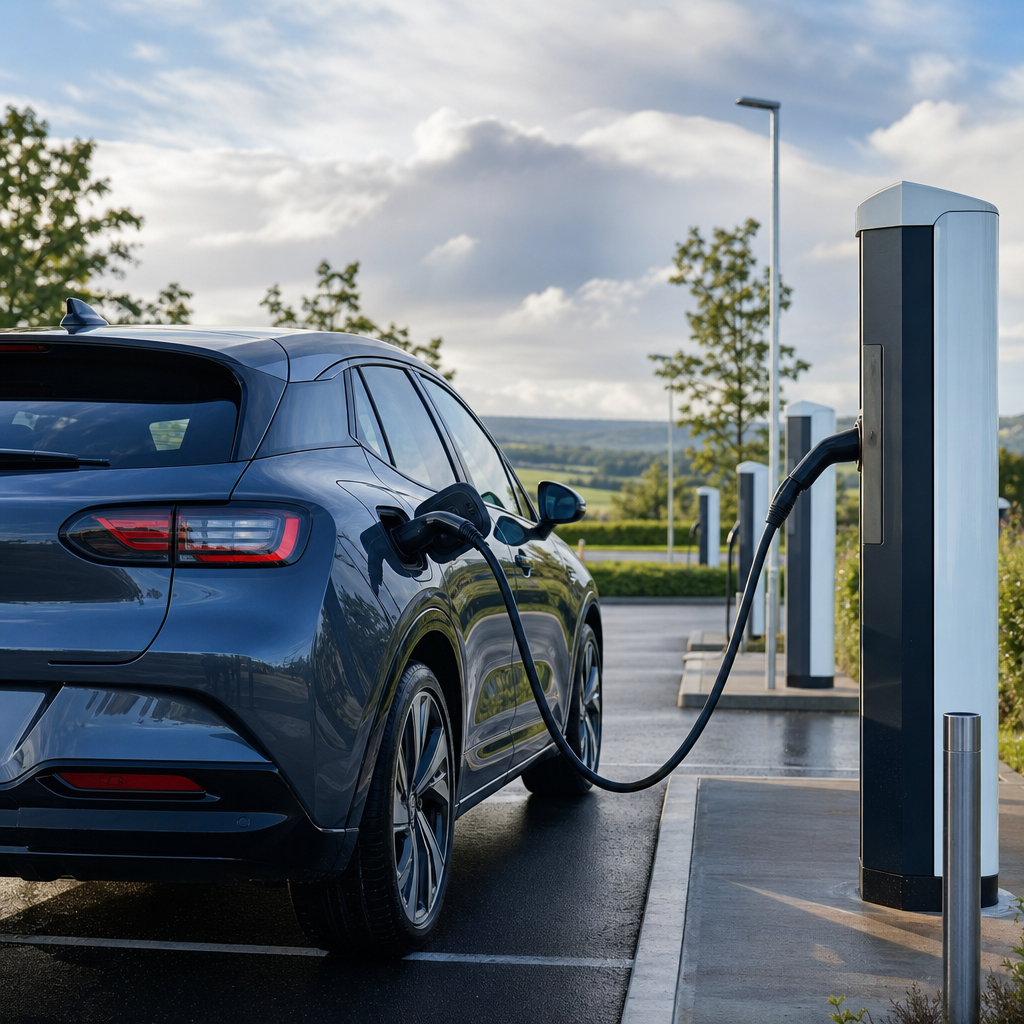
- Type 2 (AC - Alternating Current): This is the standard European connector for slow and fast charging. Your used EV will almost certainly have a Type 2 inlet. You'll use this for home charging (3-7kW), workplace charging, and many public destination chargers (7kW, 11kW, 22kW). Most public Type 2 points are "untethered," meaning you'll need to use your own Type 2 cable (which should come with your used EV, or is easily purchased).
- CCS (Combined Charging System - DC - Direct Current): This is the European standard for rapid and ultra-rapid DC charging. It essentially combines a Type 2 inlet with two additional pins for DC power. Most modern EVs (e.g., Tesla Model 3/Y, VW ID.3/ID.4, Kia e-Niro, Hyundai Kona Electric) use CCS for rapid charging. CCS chargers are always "tethered," meaning the cable is attached to the charging unit.
- CHAdeMO (DC - Direct Current): Predominantly found on older Japanese EVs, such as the Nissan Leaf (up to 2017/2018 models) and Mitsubishi Outlander PHEV. Like CCS, CHAdeMO chargers are tethered. While newer rapid chargers are increasingly CCS-only, there are still plenty of CHAdeMO points available, vital for owners of compatible used EVs. Always double-check your vehicle's charging port type.
Charging Speeds:
- Slow (3-6kW): Typically home charging overnight. Expect 10-20 miles of range per hour.
- Fast (7-22kW): Common at supermarkets, car parks, and hotels. A 7kW charger will add around 25 miles of range per hour, while a 22kW unit (if your car can accept it, many can't beyond 11kW AC) could add up to 75 miles per hour.
- Rapid (50kW): The workhorse of public DC rapid charging. A 50kW rapid charger can take most EVs from 20% to 80% in 30-60 minutes, adding roughly 150-180 miles of range per hour of charging (though charging slows significantly after 80%).
- Ultra-Rapid (100kW+): The newest generation of DC chargers, offering 100kW, 150kW, 350kW, or even higher. These are for EVs with larger batteries and advanced charging architectures (e.g., Porsche Taycan, Audi e-tron, Hyundai Ioniq 5/6, Kia EV6). They can significantly reduce charging times, but remember your car will only draw what it can handle.
Always check your EV's maximum charging rate (both AC and DC) to avoid disappointment. No point plugging a car that maxes out at 50kW into a 350kW charger expecting quicker results!
Paying Your Way: From RFID to Contactless
Payment methods have historically been a source of frustration for EV drivers, but the landscape is rapidly improving towards simplicity.
- RFID Cards: Many networks, particularly older ones like BP Pulse and ChargePlace Scotland, still offer dedicated RFID cards. You simply tap the card on the charger to initiate and stop a session. While convenient for frequent users of a single network, carrying a multitude of cards for different networks quickly becomes cumbersome.
- Dedicated Apps: Most charging networks have their own smartphone apps. These allow you to find chargers, check real-time availability, start/stop charging sessions, and manage payments (usually linked to a debit/credit card or a topped-up wallet). Apps are great for managing your account and often offer more features, but downloading several apps just to charge can be annoying.
- Contactless Payment (Debit/Credit Card): This is the gold standard and, thankfully, becoming increasingly prevalent, especially on rapid chargers. Networks like Instavolt have always offered it, and government regulations now mandate new rapid chargers to include this option. It's the simplest method: just tap your card or phone/watch, and you're good to go. Always check for the contactless symbol on the charger screen.
- Roaming Solutions: A promising development is the rise of roaming agreements and aggregator apps. Services like Zap-Pay (integrated into Zap-Map) allow you to pay for charging across multiple networks through a single platform. Similarly, some network apps, like Shell Recharge's, allow you to activate and pay for chargers on other networks, streamlining the process. This interoperability is set to improve further.
Our advice? Prioritise contactless-enabled chargers when you can. For other networks, having their app downloaded and set up before you need to charge is a sensible strategy.
Smart Charging: Planning, Finding, and Troubleshooting
Maximising your public charging experience comes down to good planning and knowing how to handle common scenarios.
Journey Planning & Finding Chargers:
- Essential Apps: Your best friends for public charging will be Zap-Map and PlugShare. These incredibly detailed apps show virtually every public charger in the UK. You can filter by:
- Connector Type: Ensure it matches your car (CCS, CHAdeMO, Type 2).
- Charging Speed: Select rapid, ultra-rapid, fast, or slow.
- Network: Focus on your preferred networks.
- Availability: Crucially, many chargers show real-time availability (though this isn't always 100% accurate, user reports help).
- User Reviews & Photos: These are invaluable! Drivers often post updates on charger functionality, queues, or issues. Always check recent comments.
- Plan Ahead: For longer journeys, identify primary and secondary charging stops. Don't rely solely on your car's in-built navigation for charger availability – dedicated apps are often more up-to-date.
- "Buffer" Charging: Aim to arrive at a rapid charger with at least 20% battery remaining, and plan to leave with enough charge to comfortably reach your destination or an alternative charger. Don't run your battery down to single digits before attempting to charge, as you might stress if the first charger is unavailable.
Troubleshooting Common Issues:
- Charger Unavailable/Faulty: The most common issue.
- Check the App: See if Zap-Map or PlugShare shows it as out of order or if there are recent user comments.
- Try Another Bay: If at an Electric Hub, simply try a different unit.
- Reboot: Some chargers have a clear "emergency stop" button; pressing it and then resetting (if instructions are clear) can sometimes fix minor glitches.
- Contact Helpline: There will always be a customer service number on the charger. Call them! They can often reset the unit remotely or provide guidance.
- Move On: If all else fails, consult your planning app and head to your backup charger.
- "ICEing" (Internal Combustion Engine) or "PHEV Blocking": An ICE car or even a Plug-in Hybrid (PHEV) not charging parked in an EV-only bay. Frustrating, but usually unavoidable. If it's a dedicated EV charging bay, you can sometimes report it to the site owner, but your best bet is to find an alternative.
- Cable Stuck: This can happen. Follow any instructions on the charger screen or in your car's manual. Often, locking and unlocking your car, or pressing the stop button multiple times, will release it. If not, call the network helpline.
- Cold Weather: Be aware that in colder temperatures, your EV's range might be slightly reduced, and charging (especially rapid charging) can be slower, particularly until the battery warms up.
The Electric Future is Bright
Owning a used electric car is an incredibly rewarding experience, offering lower running costs, a smoother drive, and a significantly reduced environmental impact. While the initial thought of public charging might seem complex, the reality is that the UK's networks are rapidly improving in reliability and user-friendliness.
By familiarising yourself with the major players, understanding connector types, embracing contactless payments, and utilising smart planning tools like Zap-Map, you'll master public charging in no time. So, go forth, charge up, and enjoy the silent, powerful ride of your used electric vehicle!