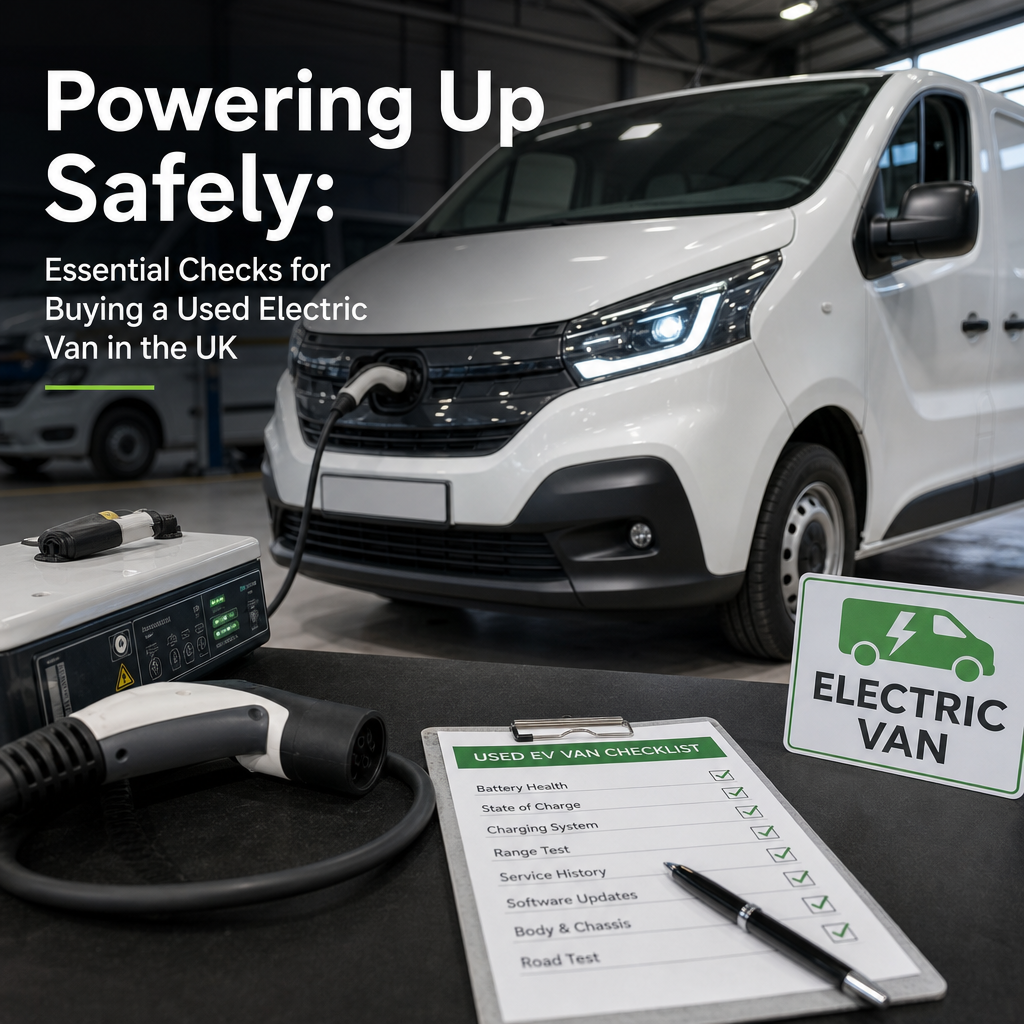
Powering Up Safely: Essential Checks for Buying a Used Electric Van in the UK
The electric revolution isn't just for cars; it's rapidly transforming the commercial vehicle sector across the UK. For businesses, switching to an electric van offers significant advantages, from lower running costs and reduced emissions to exemption from ULEZ and Clean Air Zone charges. While buying a new electric van might be a stretch for some budgets, the burgeoning used market presents a fantastic opportunity.
However, purchasing a pre-owned electric commercial vehicle requires a different approach to its petrol or diesel counterparts. The unique characteristics of EV technology, particularly the battery, demand a thorough and informed inspection process. At CarsLink.ai, we understand the practicalities and challenges faced by UK businesses, which is why we've compiled this essential guide to help you navigate the used electric van market safely and smartly.
Decoding Battery Health: The Heart of Your Electric Van
The battery is arguably the most critical and expensive component of an electric van. Its health directly impacts the vehicle's range, payload capacity, and long-term viability. When buying used, understanding the battery's condition is paramount.
The most reliable indicator of battery health is the State of Health (SOH), usually expressed as a percentage of the original capacity. An SOH of 80% or above is generally considered good, indicating a well-maintained battery that still offers practical range. Below 70-75%, you might start noticing significant reductions in usable range, potentially impacting your daily operations.
How to check SOH:
- Request a Battery Health Certificate: Reputable dealers selling used electric vans should be able to provide an SOH certificate, often generated using specialist diagnostic tools. This is the gold standard for assessment.
- Specialist Diagnostic Scan: If a certificate isn't available, consider arranging a pre-purchase inspection by an EV specialist or a garage with the correct diagnostic equipment. They can perform a comprehensive scan and provide an SOH reading.
- Dashboard Readings and Telematics: While less precise, check the van's dashboard for any warning lights or messages related to the battery. If the van has integrated telematics, ask if historical data on charging cycles and range depletion is accessible, as this can offer clues.
- Test Drive Observation: Pay close attention during your test drive. Does the displayed range drop unusually quickly? Does it feel consistent, or are there sudden, unexplained drops in charge? Observe how it charges if possible – does it reach 100% reliably, and does the charging speed appear consistent?
Remember, battery degradation is a natural process, but excessive or premature degradation in models like the Nissan e-NV200 or older Renault Kangoo E-Tech could signify neglect or heavy fast-charging use.
Powering Your Business: Commercial Charging Infrastructure
Commercial users have distinct charging needs compared to private car owners. High mileage, time-sensitive deliveries, and multiple vehicle depots mean that effective charging infrastructure is not just a convenience, but a business imperative.
Before committing to a used electric van, thoroughly assess your charging strategy:
- Depot Charging Capability:
- AC Charging (Slow/Fast): Most businesses will rely on AC charging overnight at their depot. Standard 7kW chargers are common, requiring a single-phase supply, taking 6-8 hours for a full charge on a typical 40-60kWh van. For faster overnight charging, 22kW AC chargers are available, but these require a three-phase electricity supply, which not all businesses have. Check your existing electrical infrastructure.
- DC Rapid Charging: If you need to top up during the day or have tight schedules, DC rapid charging (50kW, 100kW+) is essential. Ensure the van you're considering has a CCS (Combined Charging System) port, which is becoming the dominant standard in the UK. Older models might use CHAdeMO, which is less prevalent now.
- Public Charging Network: Map out your typical routes. Are there sufficient public rapid chargers compatible with the van's charging port along these routes? Consider signing up for various public charging network apps and RFID cards to ensure seamless access.
- Installation Costs and Grants: Factor in the cost of installing appropriate chargers at your business premises. Crucially, eligible businesses in the UK can apply for the Workplace Charging Scheme (WCS), an OZEV (Office for Zero Emission Vehicles) grant that provides up to £350 per charging socket, for up to 40 sockets across multiple sites. This can significantly offset installation costs.
Understanding your daily energy requirements and matching them with a reliable and cost-effective charging solution is key to a smooth transition to electric.
The Balancing Act: Payload, Range, and Your Business Needs
One of the most common oversights when buying a used electric van is failing to adequately consider the interplay between its payload capacity, real-world range, and your specific business operations. Batteries are heavy, and this weight can impact both payload and range.
- Payload Capacity:
- Check the GVW: Always check the Gross Vehicle Weight (GVW) and the unladen weight specified on the vehicle's documentation (V5C). The net payload is the difference.
- EV vs. ICE Comparison: Electric vans often have a slightly lower payload capacity than their diesel equivalents due to the weight of the battery pack. For example, a Ford E-Transit Custom might have a marginally lower payload than a diesel Transit Custom of the same body style.
- Real-World Load: Think about your typical load, including tools, equipment, and any interior racking. Ensure the van's actual payload capacity, not just the manufacturer's maximum, can comfortably handle it. Overloading an EV will significantly impact its range and potentially compromise safety.
- Real-World Range:
- Beyond WLTP: Manufacturer-quoted WLTP (Worldwide Harmonised Light Vehicle Test Procedure) range figures are a useful starting point, but real-world conditions significantly affect them.
- Factors Affecting Range:
- Payload: A heavily loaded van will consume more energy and reduce range.
- Driving Style: Aggressive driving, rapid acceleration, and high speeds deplete the battery faster.
- Temperature: Cold weather can reduce range by 20-30% as the battery operates less efficiently and energy is used for cabin heating.
- Terrain: Hilly routes require more energy.
- Auxiliaries: Heating, air conditioning, and any powered tools used from the van's auxiliary battery will draw power from the main traction battery.
- "Usable Range" Calculation: Calculate your typical daily mileage, then add a buffer of at least 20-30% to account for these factors. Ensure the used van's actual battery SOH provides this usable range.
Choose a van whose battery size and resulting range/payload are appropriate for your specific routes and cargo. Don't pay for a larger battery than you need, as it adds cost, weight, and charging time.
Warranty Wonders: Protecting Your Used Electric Van Investment
Used vehicle warranties are always important, but for electric vans, they take on an added layer of complexity due to the specialised components.
- Manufacturer Battery Warranty: This is the most crucial warranty to investigate. Most manufacturers offer a long warranty on the high-voltage battery, typically 8 years or 100,000 miles (whichever comes first) from new, guaranteeing a minimum SOH (e.g., 70% or 75%).
- Transferability: Crucially, check if this warranty is transferable to subsequent owners. Most major brands (Vauxhall, Peugeot, Ford, VW, etc.) do allow transfer, but confirmation is vital.
- Active Period: Calculate how much of this warranty period or mileage is remaining on the used van you're considering.
- EV Powertrain Warranty: Separate from the battery warranty, this covers components like the electric motor, inverter, and on-board charger. This might be shorter than the battery warranty but still provides important protection.
- General Vehicle Warranty: This covers the rest of the van (chassis, bodywork, interior, non-EV specific components). This is usually the shortest part of any manufacturer warranty.
- Dealer/Third-Party Warranties: If the manufacturer warranty has expired, a dealer or third-party warranty might be offered. Read the terms and conditions very carefully. Many third-party warranties have specific exclusions for electric vehicle batteries, degradation, or other critical EV components. Ensure any offered warranty provides meaningful cover for the high-voltage system.
- Full Service History: A complete and verifiable service history from an authorised dealer or EV specialist is paramount. Without it, any remaining manufacturer warranties could be invalidated.
Always clarify what is covered, for how long, and what the claims process entails before signing on the dotted line.
Conclusion
Embracing a used electric van for your UK business is a forward-thinking and economically sensible decision. However, the path to a successful purchase lies in diligence and understanding the unique aspects of electric vehicle technology. By meticulously checking the battery's health, planning your charging infrastructure, aligning payload and range with your operational needs, and understanding the warranty landscape, you can make an informed choice that will serve your business well for years to come.
Do your homework, ask the right questions, and don't hesitate to seek expert advice. A well-chosen used electric van isn't just a vehicle; it's a strategic asset that will help you save costs, boost your green credentials, and future-proof your fleet. Explore the fantastic range of used electric vans on CarsLink.ai with confidence, knowing you're equipped with the knowledge to make a savvy decision.