Powering Up: Choosing and Installing a Home Charger for Your Used UK EV
The excitement of bringing home a new-to-you electric vehicle is palpable – the instant torque, the silent running, and the prospect of significantly reduced fuel bills. But for many, the final piece of the puzzle to truly unlock the EV dream is a reliable home charging setup. It transforms your driveway into a personal filling station, offering unparalleled convenience and often the most cost-effective way to power your daily journeys.
However, navigating the world of home chargers can seem daunting. What type do you need? Will your house cope? Are there grants available? And how can you make sure you’re charging at the lowest possible cost? Here at CarsLink.ai, we understand these questions are common for UK used EV owners. This guide will demystify the process, helping you choose and install the perfect home charger for your needs, ensuring a seamless and economical EV experience.
Decoding Home Charger Types: Tethered vs. Untethered & Power Ratings
When it comes to home charging, your first decision will likely revolve around the charger’s physical design and its power output.
Tethered vs. Untethered:
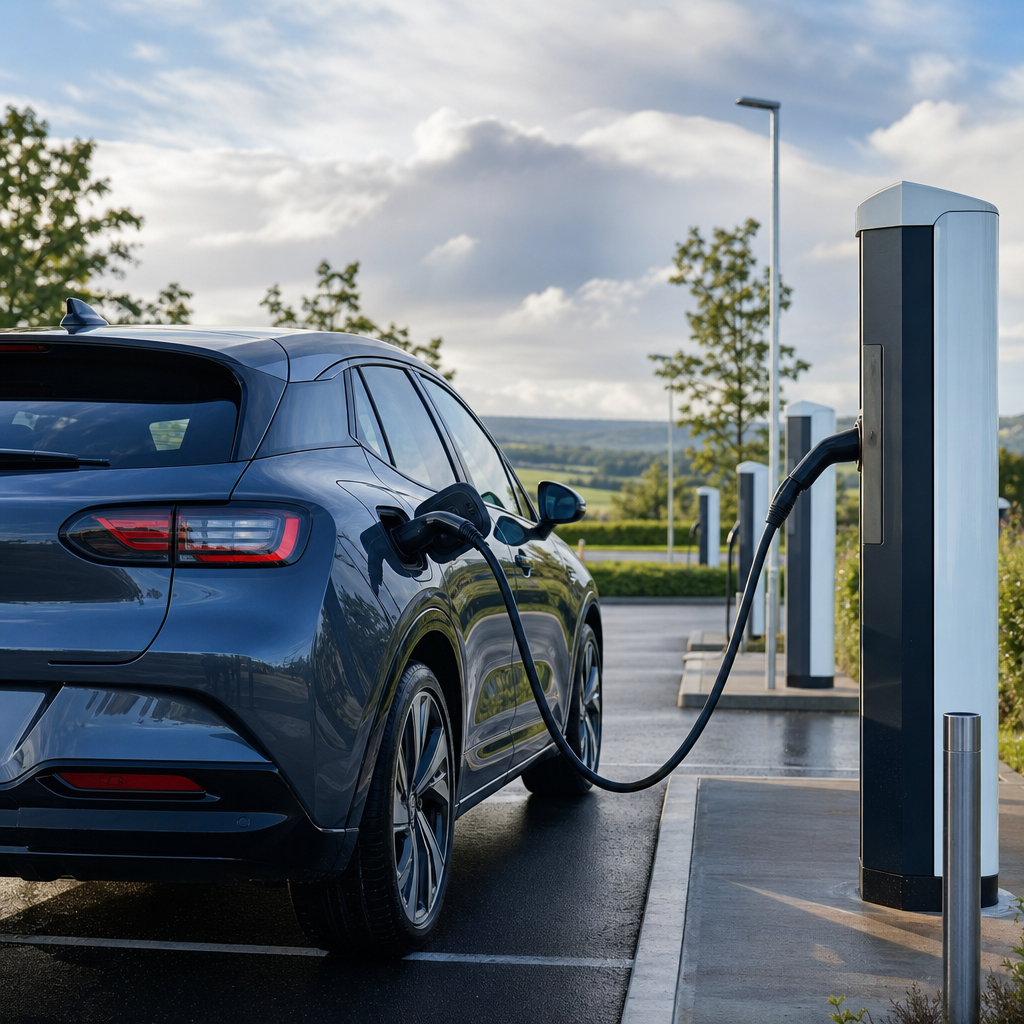
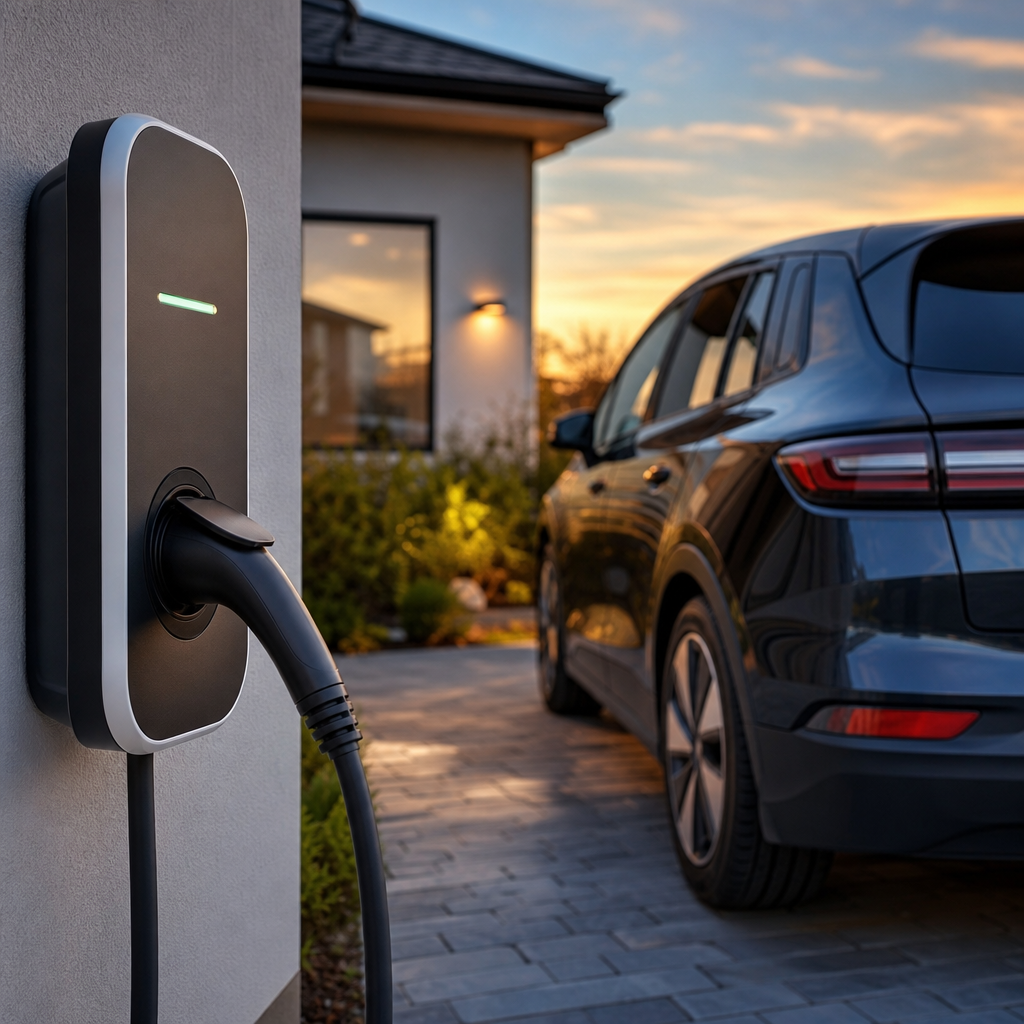
- Tethered Chargers: These come with a permanently attached cable, much like a petrol pump hose. This means the cable is always there, ready to plug into your EV. The biggest advantage is convenience – no fumbling in the boot for your charging cable, especially in the rain. However, the cable will have a specific connector type (almost always Type 2 for modern UK EVs) and a fixed length. If you upgrade your EV to one with a different connector in the distant future (unlikely for Type 2 in the UK, but theoretically possible), or need a longer cable, you might face limitations.
- Untethered Chargers: These feature a universal socket (again, typically Type 2 in the UK) into which you plug your own separate charging cable. The primary benefit here is flexibility. You can use different length cables if your parking spot changes, and if your EV has a different connector, you just need a new cable, not a new charger. The downside is the minor inconvenience of retrieving and stowing your cable each time you charge.
For most UK users, a tethered Type 2 charger offers excellent day-to-day convenience, matching the vast majority of EVs on our roads, from a used Nissan Leaf to a Tesla Model 3.
Power Ratings: 7kW vs. 22kW:
The power rating dictates how quickly your EV will charge.
- 7kW Chargers: This is by far the most common and practical option for UK homes. A 7kW charger uses a single-phase electricity supply, which is standard for residential properties. It delivers approximately 32 Amps of current. For most EVs, a 7kW charger will fully replenish a typical battery overnight. For instance, a 60kWh battery (common in many popular used EVs like the MG4 EV or Hyundai Kona Electric) would take around 8-9 hours to charge from empty to full. This is perfect for plugging in when you get home and waking up to a fully charged car.
- 22kW Chargers: These significantly faster chargers require a three-phase electricity supply. Three-phase power is generally found in commercial properties or larger, newer detached homes. Most standard UK residential properties are supplied with single-phase power, meaning upgrading to three-phase is a substantial, costly, and often complex undertaking, typically running into thousands of pounds, and requiring DNO (Distribution Network Operator) involvement. Furthermore, not all EVs can even accept a full 22kW AC charge; many are limited to 7kW or 11kW AC. While 22kW can charge a 60kWh battery in under 3 hours, the practical and financial hurdles make it unsuitable for the vast majority of UK homeowners.
Recommendation: For almost all used EV owners in the UK, a 7kW charger (either tethered or untethered, depending on your preference for convenience vs. flexibility) is the sensible and cost-effective choice.
Assessing Your Home's Electrical Infrastructure: Is Your House Ready?
Before you even think about installing a charger, it's crucial to understand your home’s electrical capacity and ensure it can safely support the additional load. This is not a DIY job; you must use a qualified, accredited installer.
Here’s what they’ll assess:
- Main Fuse Rating: Your home has a main fuse (usually located near your electricity meter) that determines the maximum current your property can draw. Common ratings in UK homes are 60 Amps (A) or 100A. A 7kW charger draws approximately 32A. While a 100A supply will comfortably handle this alongside your other household appliances, a 60A supply might require an upgrade from your DNO, or at the very least, careful load management (e.g., avoiding using the oven, shower, and EV charger simultaneously). Your installer will check this and advise.
- Consumer Unit (Fuse Box): Your existing consumer unit needs to have a spare way for a new dedicated circuit breaker for the EV charger. It also needs to be a modern unit with appropriate RCD (Residual Current Device) protection to ensure safety against electrical faults. If your consumer unit is old, it might need upgrading, which adds to the installation cost.
- Earthing Arrangements: This is a critical safety aspect. Most UK homes use a PME (Protective Multiple Earthing, also known as TN-C-S) earthing system. While generally safe, connecting an EV charger to a PME system requires specific protective devices to prevent a dangerous voltage rise if the main incoming neutral cable fails. This usually involves a PEN fault device integrated into the charger or a separate earth rod installation. Your installer will determine the correct approach based on your property’s earthing.
- Cable Run: The distance and route from your consumer unit to where you want the charger installed will affect the complexity and cost of the installation. A long cable run, or one requiring significant trenching or going through multiple walls, will naturally be more expensive.
A professional installer will conduct a site survey to evaluate these factors and provide a detailed quote and safety recommendations. Never cut corners on electrical safety.
Navigating the Financial Landscape: Grants and Incentives
The UK government has been proactive in encouraging EV adoption through various support schemes, some of which can significantly reduce the cost of installing a home charger.
The primary grant currently available to private individuals for home charging is the EV Chargepoint Grant, administered by the Office for Zero Emission Vehicles (OZEV).
Key details of the EV Chargepoint Grant:
- Who is it for? This grant is specifically for flat owners and people living in rental properties (whether a flat or a house). Unfortunately, it is no longer available to homeowners in single-unit properties (unless they are also landlords installing chargers for their tenants).
- What does it cover? It provides 75% off the cost of purchasing and installing a single chargepoint, up to a maximum of £350 per eligible household.
- Eligibility Criteria:
- You must own or rent a property with designated off-street parking.
- You must own an eligible EV or plug-in hybrid vehicle (or have one on order).
- The chargepoint must be installed by an OZEV-authorised installer.
- You can only claim one grant per eligible vehicle and household.
It's important to note that the previous "Electric Vehicle Homecharge Scheme (EVHS)" is now largely superseded for homeowners, but the spirit of supporting those who might face greater challenges (like renters needing landlord permission, or flat owners dealing with shared parking) continues through the EV Chargepoint Grant. Always check the latest OZEV guidance on the GOV.UK website, as schemes can evolve.
While local authority grants are less common for individual home chargers, it's worth a quick check of your local council's website just in case they offer any specific regional incentives. When you receive quotes from OZEV-authorised installers, they will typically handle the grant application process on your behalf, deducting the grant amount from your final bill.
Smart Charging & Energy Tariffs: Optimising Your EV's Running Costs
One of the biggest advantages of home charging is the ability to intelligently manage your energy consumption and drastically reduce your running costs. This is where "smart charging" and specific energy tariffs come into play.
What is Smart Charging?
A smart charger is essentially a Wi-Fi enabled device that can communicate with an app on your smartphone, or directly with your energy provider. This allows you to:
- Schedule Charging: Set specific times for your EV to charge, typically overnight when electricity is cheaper.
- Monitor Energy Usage: Track how much electricity your EV is consuming and the associated costs.
- Remote Control: Start, pause, or stop charging from anywhere using your phone.
- Load Management: Some smart chargers can monitor your home's total electricity demand and temporarily reduce the charge rate to your EV if it detects you’re approaching your main fuse limit, preventing blackouts.
Optimising with Energy Tariffs:
The true power of smart charging is unleashed when combined with a time-of-use (ToU) energy tariff. These tariffs offer cheaper electricity rates during off-peak hours (typically overnight, e.g., 00:30 to 04:30), and more expensive rates during peak hours.
Popular examples in the UK include:
- Octopus Energy Go / Intelligent Octopus Go: These tariffs are designed specifically for EV drivers, offering significantly reduced rates (often less than 10p/kWh) during a dedicated overnight window. Intelligent Octopus Go takes it a step further, integrating directly with your EV or smart charger to automatically schedule charging at the cheapest times, even reacting to grid demand.
- OVO Energy Charge Anytime: Similar to Octopus, this tariff offers a very low flat rate for all EV charging, provided you use an eligible smart charger.
Impact on Your Bills:
By utilising these tariffs, you can charge your used EV for a fraction of the cost of public rapid charging and significantly less than a standard flat-rate home tariff. For example, fully charging a 60kWh EV battery on a standard tariff might cost £15-20 (at £0.25-0.33/kWh), whereas on an off-peak tariff at £0.09/kWh, the cost plummets to just £5.40. Over a year, these savings can amount to hundreds of pounds, making smart charging a game-changer for EV ownership.
When choosing a smart charger, check its compatibility with leading energy providers and their specific EV tariffs to ensure you can maximise your savings.
Conclusion
Embracing home charging is arguably the single most important step you can take to make your used EV ownership experience truly seamless and cost-effective. While the initial outlay for a charger and installation might seem significant, the convenience and long-term savings – especially when combined with government grants and smart charging tariffs – quickly outweigh the expense.
Remember, a 7kW smart charger, either tethered or untethered, is the practical choice for almost all UK homes. Always prioritise safety by using an OZEV-accredited installer who will correctly assess your home’s electrical system and guide you through any available grant applications. By making an informed decision, you'll ensure your used EV is always charged, ready for your next adventure, and running at the lowest possible cost. Happy motoring!