PHEV Power Play: Making Sense of Used Plug-in Hybrid Ownership in the UK
The automotive landscape in the UK is shifting rapidly, with electric vehicles increasingly common on our roads. But for many, the leap to a full battery electric vehicle (BEV) still feels a step too far, often due to range anxiety, charging infrastructure concerns, or the upfront cost. This is where the Plug-in Hybrid Electric Vehicle (PHEV) steps in, offering a compelling bridge technology. Combining a conventional petrol engine with an electric motor and a larger battery that can be externally charged, PHEVs promise the best of both worlds.
But what about the used market? A pre-owned PHEV can offer significant value, bringing advanced technology within reach for many more drivers. However, buying a used PHEV isn't quite the same as picking up a second-hand petrol or diesel car. It demands a realistic understanding of its unique advantages and specific considerations. At CarsLink.ai, we’re here to help you navigate the nuances of used PHEV ownership in the UK, ensuring you make an informed decision that truly powers your journey.
The Best of Both Worlds? Used PHEVs vs. the Alternatives
A used PHEV occupies a fascinating middle ground, blending attributes of conventional internal combustion engine (ICE) cars, traditional hybrids, and full BEVs. Understanding where it fits is key to knowing if it's the right choice for you.
Advantages of Used PHEVs:
- Cost-Effective Entry: Used PHEVs typically come with a significantly lower purchase price than a new equivalent, or often even a comparable used BEV. This makes advanced, fuel-efficient technology more accessible.
- Electric-Only Commuting: Many PHEVs offer a genuine 20-40 miles of electric range, perfect for daily commutes, school runs, or local errands. This means silent, smooth, and zero-tailpipe-emission driving for the majority of your weekly mileage, mirroring a BEV experience without the cost.
- Zero Range Anxiety: For longer journeys, the petrol engine seamlessly kicks in, eliminating any concerns about finding a charger or running out of power miles from home. You can head off on a trip from London to Edinburgh without a second thought.
- Lower Running Costs (Potentially): If you charge diligently, you'll use significantly less petrol, leading to substantial fuel savings, especially if most of your driving is electric.
- ULEZ/CAZ Compliance: Most PHEVs meet the emission standards for Clean Air Zones and Ultra Low Emission Zones (ULEZ) across the UK, saving you daily charges in cities like London, Birmingham, and Glasgow.
- Well-Equipped: Many PHEVs were originally sold as premium models or higher trim levels, meaning used examples often come loaded with desirable features like sat-nav, advanced safety tech, and heated seats.
Challenges and Considerations:
- Weight Penalty: PHEVs carry two powertrains, making them heavier than equivalent ICE or even conventional hybrid models. This can impact handling and, if not charged, fuel economy on longer runs.
- Charging Discipline is Key: To reap the benefits, you must charge regularly. A PHEV that's rarely plugged in is essentially a heavier, less fuel-efficient conventional hybrid or even an ICE car.
- Complex Powertrain: The combination of petrol engine, electric motor, battery, and sophisticated control systems means there's more to potentially go wrong, though modern systems are robust.
- Reduced Boot Space: The battery pack can sometimes intrude on boot space compared to the ICE equivalent, so always check practicalities if luggage capacity is a priority.
Compared to a full BEV, a PHEV offers freedom from range anxiety and often a lower purchase price, but you still burn fossil fuels on longer trips. Against a conventional hybrid, the PHEV provides a much greater electric-only range, assuming you charge it. And versus a pure petrol or diesel car, the PHEV brings significant fuel savings for short trips and local emission benefits, albeit with a higher initial purchase price and more complexity.
Real-World Electric Range, Charging & Fuel Consumption
The official WLTP (Worldwide Harmonised Light Vehicle Test Procedure) figures for a PHEV's electric range can be enticing, often promising 30-60 miles on a single charge. However, real-world performance is, unsurprisingly, a little more nuanced.
Understanding Real-World Electric Range: Just like any electric vehicle, a PHEV's electric range is influenced by several factors:
- Temperature: Cold weather significantly reduces battery efficiency, often shaving 10-20% off the range. Heating the cabin also draws power.
- Driving Style: Aggressive acceleration and high speeds drain the battery faster. Gentle driving, effective use of regenerative braking, and avoiding motorways will maximise your miles.
- Terrain: Uphill climbs consume more power.
- Ancillaries: Using air conditioning, heated seats, or infotainment systems will incrementally reduce range.
A PHEV with an official 30-mile range might deliver a consistent 20-25 miles in typical UK conditions, especially in winter or on faster roads. It's crucial to consider if this practical range covers your daily needs. For example, a Kia Niro PHEV might quote 40 miles, but in reality, you might get closer to 30-35 on a typical suburban commute.
Charging Habits are Crucial: A PHEV is only as good as your charging habits. If you can't plug in regularly, much of its benefit is lost.
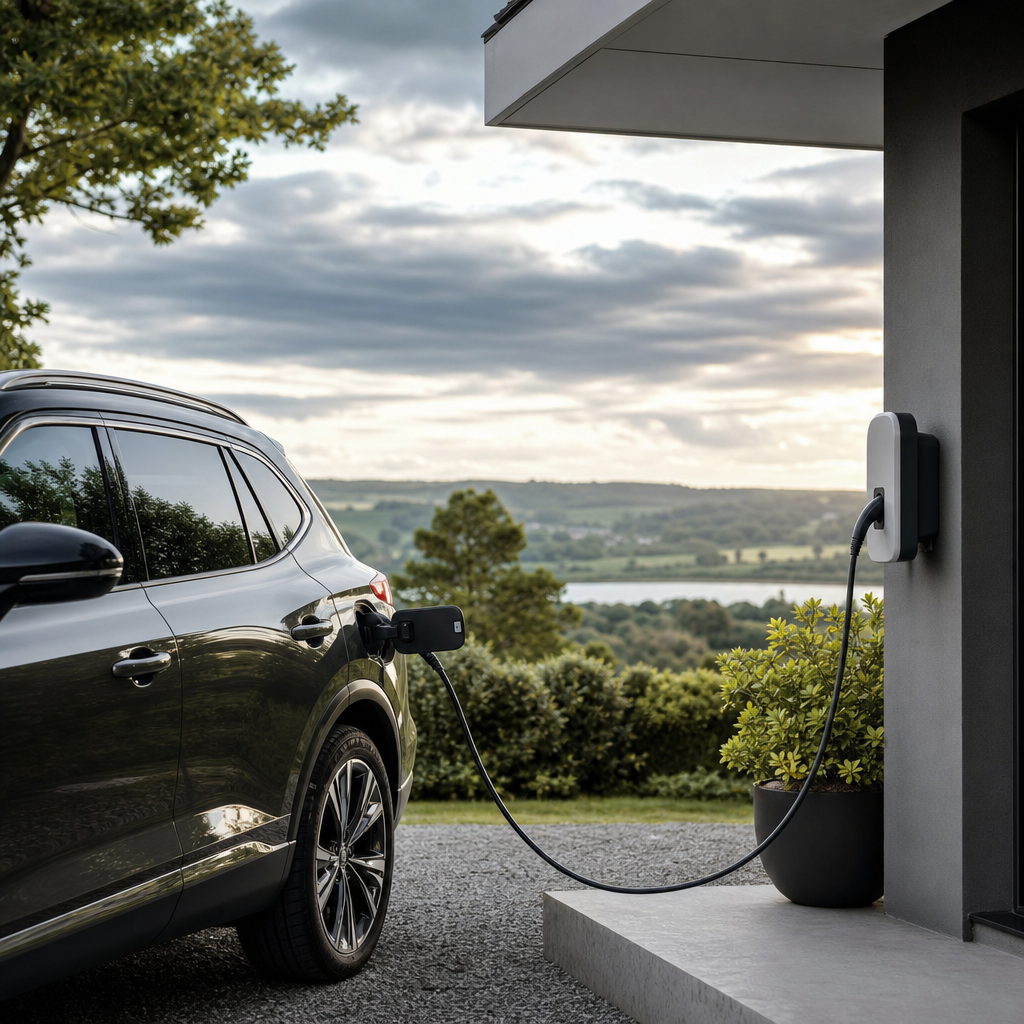
- Home Charging (Ideal): This is where PHEVs truly shine. Installing a dedicated 7kW home wallbox (Type 2 connector) allows for convenient, relatively fast charging – typically 2-4 hours for a full battery, often overnight. While OZEV grants for home charge points are now largely for new BEVs, the convenience of a home charger is paramount for PHEV ownership. Smart chargers can also help you take advantage of cheaper off-peak electricity tariffs.
- Workplace Charging: If available, this is another excellent option, allowing you to top up while you work.
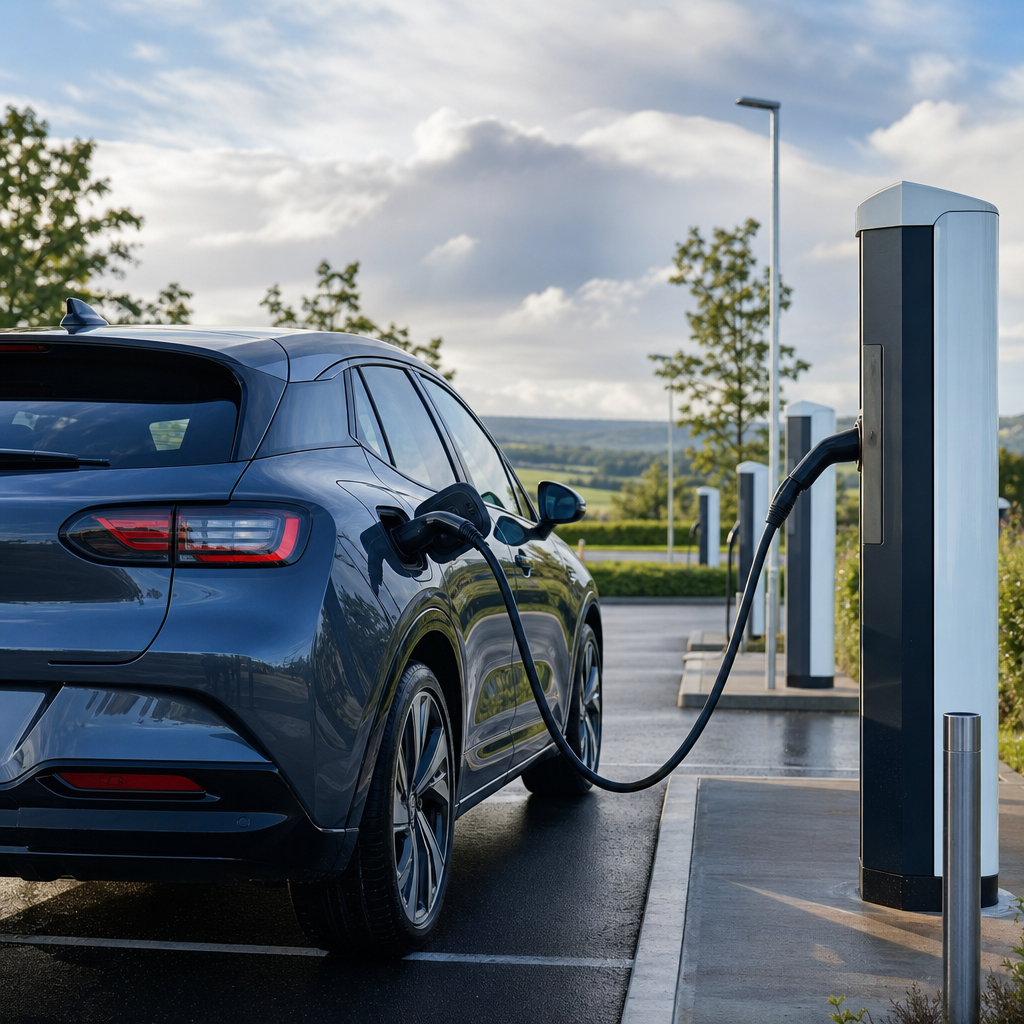
- Public Charging: Public AC charge points (often 7kW or 22kW) are suitable for PHEVs, topping up in a few hours. However, rapid DC charging is less common for PHEVs, and many don't support it at high speeds, as their smaller batteries don't benefit as much. Relying solely on public charging can be more expensive and less convenient than home charging.
Real-World Petrol Consumption: Manufacturer figures of 100mpg+ for PHEVs are technically achievable if you drive almost exclusively on electric power. However, if you rarely charge, or frequently undertake long motorway journeys, your petrol consumption will be much higher. Without charge, a PHEV becomes a heavy conventional hybrid, and its petrol engine will be working harder to carry the extra weight of the battery and motor, potentially making it less fuel-efficient than a comparable, lighter ICE car on long, uncharged runs. For example, a Mitsubishi Outlander PHEV might claim over 150mpg, but if you do 200-mile trips without charging, you're likely to see figures closer to 35-40mpg.
Essential Checks When Buying a Used PHEV
Purchasing a used PHEV requires all the usual due diligence you’d apply to any second-hand car, plus a few specific checks related to its hybrid powertrain.
High-Voltage Battery Health: This is arguably the biggest concern for many used PHEV buyers.
- Service History: Look for a comprehensive service history, ideally from a main dealer. Many manufacturers perform battery health checks as part of their regular service schedule.
- Warranty: Check if any part of the original battery warranty is still valid. Most manufacturers offer an 8-year/100,000-mile warranty on the high-voltage battery (e.g., Hyundai, Kia, BMW). This provides significant peace of mind.
- Test Drive: During a test drive, observe the actual electric range displayed after a full charge. Does it seem reasonable for the car's age and mileage, given the real-world factors mentioned above? Pay attention to how quickly the battery depletes under normal driving conditions.
- Warning Lights: Ensure no 'Check Hybrid System' or 'Battery Warning' lights are illuminated on the dashboard. A professional pre-purchase inspection from a specialist hybrid mechanic can also use diagnostic tools to assess battery health more accurately.
Engine and Hybrid System Integration:
- Seamless Transitions: During the test drive, pay close attention to the transitions between electric power and the petrol engine kicking in. These should be smooth, quiet, and imperceptible. Any jerking, hesitation, or unusual noises could indicate an issue.
- Engine Service History: Don't forget the petrol engine still needs its regular oil changes, spark plugs, and filter replacements. Ensure this maintenance has been carried out according to the manufacturer's schedule.
- Brakes: PHEVs use regenerative braking, which extends the life of conventional brake pads. However, still inspect the brake discs and pads for wear and ensure the brakes feel consistent and strong.
Charging Port and Cables:
- Physical Inspection: Carefully check the charging port(s) for any signs of damage, corrosion, or wear. Ensure the cap fits securely.
- Included Cables: Confirm that all necessary charging cables are included and in good condition. This typically means a Type 2 Mode 3 cable for public/wallbox charging and a 3-pin 'granny charger' for domestic sockets. Replacing these can be costly.
Software Updates: Modern PHEVs rely heavily on software. Check if the car has received all its recommended software updates, as these can improve efficiency, performance, and resolve potential bugs. A main dealer can verify this.
Calculating Real-World Running Costs & Emissions Benefits in the UK
One of the primary appeals of a PHEV is the promise of lower running costs and reduced environmental impact. However, a realistic assessment is essential.
1. Fuel Costs: Electricity vs. Petrol
Electricity Costs:
- Home Charging: This is by far the cheapest option. At an average UK electricity price of, say, 28p/kWh, charging a 13kWh battery (common in many PHEVs) would cost around £3.64 for a full charge, giving you 20-40 miles of range. If you're on an off-peak tariff (e.g., 8p/kWh), this drops to just £1.04. This equates to pence per mile costs significantly lower than petrol.
- Public AC Charging: More expensive, often 40-70p/kWh. A full charge could be £5.20 - £9.10.
- Petrol Costs: For longer journeys, you'll still be buying petrol. Calculate this based on your expected mileage and the car's real-world MPG on petrol (e.g., if you drive 2,000 petrol miles at 40mpg with petrol at £1.50/litre, that's approximately £340).
Example Calculation: If you drive 10,000 miles a year, and 7,000 are electric (charged at home, 8p/kWh, 3 miles/kWh efficiency) and 3,000 are petrol (45mpg, £1.50/litre):
- Electricity: (7,000 miles / 3 miles/kWh) * £0.08/kWh = £186.67
- Petrol: (3,000 miles / 45 mpg) * £6.82/gallon (approx £1.50/litre) = £454.67
- Total Fuel: ~£641.34 – significantly less than a purely petrol car doing 10,000 miles at 45mpg (£1,023).
2. VED (Vehicle Excise Duty - Road Tax):
- Registered before April 2017: Many PHEVs in this category benefit from very low or even £0 VED due to their low CO2 emissions (often under 50g/km). This is a substantial saving.
- Registered after April 2017: Most PHEVs will pay the standard rate of VED (currently £180/year). Crucially, if the car had a list price over £40,000 when new, it will also incur the £390 'premium car' supplement for years 2-6 of its registration. Unlike full BEVs, PHEVs are not exempt from this supplement, even with very low CO2 emissions. This is a vital point to check for higher-end used PHEVs like a Volvo XC60 Recharge or BMW 330e.
3. Maintenance: While the engine might see less use, PHEVs still require regular servicing for both the petrol engine and the hybrid system. However, regenerative braking often means brake pads and discs last longer. Overall maintenance costs can be similar to complex conventional cars, though specialist hybrid knowledge might be needed for certain repairs.
4. Emissions Benefits:
- Local Air Quality: For urban driving, PHEVs produce zero tailpipe emissions when running on electric power, contributing to cleaner air in populated areas. This also makes them compliant with ULEZ and CAZ, saving you daily charges of £12.50 or more.
- Overall Carbon Footprint: If you charge your PHEV consistently using renewable energy tariffs, your overall carbon footprint will be significantly lower than a petrol or diesel car.
5. Insurance: Insurance premiums for PHEVs can sometimes be slightly higher due to the complexity and cost of replacing specific hybrid components if damaged. It's always wise to get an insurance quote before committing to a purchase.
Conclusion
A used PHEV offers a genuinely compelling proposition for UK drivers who want to dip their toes into electric motoring without the full commitment of a BEV. They provide the serenity and efficiency of electric power for daily commutes, coupled with the peace of mind of a petrol engine for longer journeys.
However, PHEVs are not a 'fit all' solution. To truly unlock their value and efficiency, regular charging must be an integral part of your routine. Without this discipline, a PHEV can become a less efficient, heavier version of its petrol counterpart.
Thorough research, meticulous checking of service history, a detailed inspection of key hybrid components, and a realistic understanding of real-world running costs are paramount. By doing your homework, a used PHEV could be the shrewd, sustainable, and satisfying choice that perfectly suits your driving habits and budget, proving to be a true power play for savvy used car buyers in the UK.