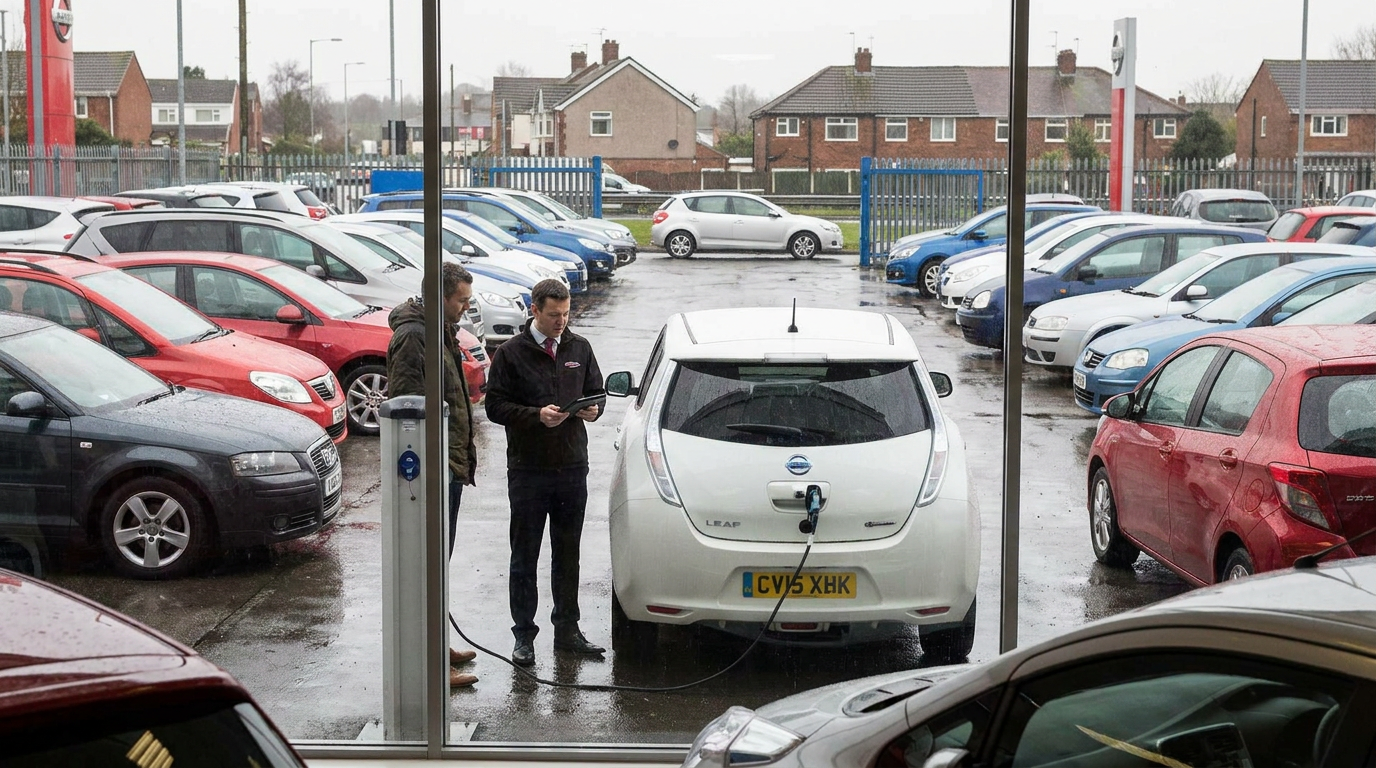
How Electric Vehicles Are Reshaping Dealer Stock Composition
Electric vehicles are fundamentally altering the stock composition of UK used car dealers, with EVs now representing a growing segment that demands different expertise, infrastructure, and pricing strategies compared to traditional petrol and diesel vehicles. Dealers must balance increasing buyer interest in electric models against practical challenges including battery health assessment, charging infrastructure knowledge, and slower stock turnover rates for higher-priced EVs. The shift is not uniform across all dealership types, with urban dealers experiencing stronger EV demand whilst rural locations continue to see predominantly petrol and hybrid enquiries.
The transformation extends beyond simply adding electric models to existing forecourts. Dealers now require specialist knowledge to answer buyer questions about range anxiety, charging times, and battery degradation. This knowledge gap represents both a barrier and an opportunity, as dealers who invest in EV expertise can differentiate themselves in an increasingly competitive market.
The Growing Demand for Used Electric Vehicles
Buyer interest in used electric vehicles has accelerated significantly since 2022, driven by rising petrol prices, expanding charging infrastructure, and improved EV range capabilities in newer models. First-time EV buyers frequently search for affordable entry points into electric motoring, with particular interest in models under £15,000 that offer practical range for daily commuting. This demographic shift means dealers can no longer treat EVs as niche products reserved for early adopters or premium buyers.
The first EV on a budget segment has become particularly active, with buyers seeking three to five-year-old models from manufacturers like Nissan, Renault, and MG. These vehicles offer sufficient range for typical UK driving patterns whilst avoiding the depreciation hit of new EVs. Dealers who stock appropriate entry-level electric models report consistent enquiries, though conversion rates depend heavily on the dealer's ability to address charging concerns and demonstrate total cost of ownership benefits.
Younger buyers, particularly those aged 25-40, show markedly higher interest in electric vehicles compared to older demographics. This generational divide influences stock decisions, as dealers targeting family buyers or first-time purchasers increasingly prioritise electric and hybrid options over traditional fuel types.
Stock Sourcing Challenges for Electric Vehicles
Acquiring quality used electric vehicle stock presents distinct challenges compared to conventional vehicles, primarily because the used EV market remains smaller and more fragmented than the petrol and diesel sectors. Auction availability of electric models is improving but still limited, particularly for desirable models in good condition with verifiable service histories. Dealers competing for the same limited pool of stock often face inflated trade prices that compress profit margins.
Alternative stock sourcing strategies become essential for dealers building EV inventory. Direct purchases from private sellers, part-exchange programmes, and relationships with leasing companies returning end-of-contract EVs all provide routes to stock. However, each channel requires careful due diligence, particularly regarding battery health and charging history, factors that significantly affect resale value but may not be immediately apparent during initial inspection.
The absence of standardised battery health reporting across manufacturers complicates stock assessment. Unlike conventional vehicles where mileage and service history provide reliable condition indicators, EVs require battery health assessment using diagnostic tools that many smaller dealers lack. This knowledge gap can result in either overpaying for vehicles with degraded batteries or missing opportunities on well-maintained examples.
Pricing Strategy and Depreciation Patterns
Electric vehicles exhibit different depreciation curves compared to petrol and diesel equivalents, with steeper initial depreciation followed by more stable values once the vehicle reaches three to four years old. This pattern reflects both the rapid pace of EV technology improvement, which makes older models less desirable, and the stabilisation of battery performance data that reduces buyer uncertainty about longevity.
Dealers must account for these depreciation patterns when pricing used vehicles competitively, as traditional valuation guides may not fully capture EV-specific factors. Battery capacity retention, available range, charging speed capability, and software update history all influence value but rarely appear in standard pricing databases. Dealers who develop expertise in these areas can identify undervalued stock and justify premium pricing for well-maintained examples.
The relationship between new EV prices and used values creates additional complexity. Government incentives for new electric vehicles, manufacturer discounting strategies, and the introduction of new models at lower price points all exert downward pressure on used values. A dealer holding three-year-old EV stock may find their margin eroded by a new model launched at a similar price point with superior range and features.
Infrastructure and Expertise Requirements
Successfully retailing used electric vehicles requires infrastructure and knowledge investments that extend beyond traditional dealership capabilities. At minimum, dealers need access to charging facilities for stock preparation and customer test drives, understanding of different charging connector types, and familiarity with public charging networks that buyers will use. More sophisticated operations invest in diagnostic equipment for battery health testing and staff training on EV-specific technical questions.
Customer enquiries about electric vehicles differ substantially from conventional vehicle questions. Buyers want to understand real-world range under various conditions, charging times using different equipment types, and battery warranty coverage. Dealers unable to answer these questions confidently lose sales to competitors who invest in EV expertise. The knowledge requirement extends to understanding EV charging connectors and being able to explain the practical implications of CCS, CHAdeMO, and Type 2 standards.
Test drive protocols also require adaptation. Unlike petrol vehicles where a brief drive around local roads suffices, EV test drives benefit from longer routes that allow buyers to experience regenerative braking, assess real-world range consumption, and understand how driving style affects efficiency. Dealers who facilitate meaningful test drive experiences report higher conversion rates, but this approach demands more time per customer interaction.
Balancing Stock Mix Between Fuel Types
Determining the optimal balance between electric, hybrid, petrol, and diesel stock remains one of the most challenging decisions facing used car dealers in 2024. Pure-play EV strategies carry risk given the still-developing charging infrastructure and range limitations that deter some buyers, whilst ignoring electric vehicles entirely leaves dealers vulnerable as buyer preferences shift. Most successful independent dealers adopt a graduated approach, maintaining majority petrol and hybrid stock whilst steadily increasing EV representation.
Regional factors significantly influence optimal stock mix. Urban dealers with customers who have access to home charging and shorter average journey distances can support higher EV percentages, sometimes reaching 20-30% of total stock. Rural dealers serving areas with limited charging infrastructure and longer typical journeys maintain lower EV percentages, often below 10%, focusing instead on hybrid models that offer electric capability without range anxiety.
The compact car segment shows particularly strong EV adoption, as smaller electric vehicles offer adequate range for urban and suburban driving whilst commanding more accessible price points. Dealers specialising in city cars and superminis find electric variants increasingly viable, with models like the Renault Zoe, Peugeot e-208, and Vauxhall Corsa-e generating consistent interest.
Marketing and Presenting Electric Vehicle Stock
Effectively marketing used electric vehicles requires different messaging compared to conventional vehicles, emphasising total cost of ownership, environmental benefits, and driving experience rather than traditional selling points like engine performance or fuel economy figures. Buyers researching EVs typically conduct extensive online research before visiting dealerships, meaning stock listings must provide comprehensive information including battery capacity, available range, charging capabilities, and service history.
Photography and descriptions that highlight EV-specific features perform better than generic vehicle presentations. Images showing the charging port, interior technology screens displaying range information, and any included charging cables help buyers visualise ownership. Descriptions that explicitly state battery health status, remaining manufacturer warranty coverage, and compatible charging networks address the primary concerns that prevent EV purchases.
The rise of AI-powered search platforms means dealers must optimise listings for natural language queries like "affordable electric car with 150-mile range" or "used EV with fast charging under £12,000". Traditional filter-based search systems struggle with these nuanced requirements, but platforms designed for conversational search can match specific buyer needs with appropriate stock.
Financial and Regulatory Considerations
The financial aspects of stocking electric vehicles extend beyond purchase price and depreciation. Insurance costs for EV stock can exceed conventional vehicles due to higher repair costs and specialist technician requirements. Workshop capabilities also require consideration, as many common maintenance tasks differ from petrol and diesel vehicles, whilst high-voltage system work demands certified technicians that smaller dealers may not employ.
Regulatory changes continue to reshape the EV landscape, with various new regulations affecting UK used car dealers throughout 2024 and 2025. Clean Air Zones in major cities, potential future restrictions on diesel vehicles, and evolving emissions standards all influence long-term stock strategy. Dealers must anticipate regulatory direction when making inventory decisions, as vehicles that face future restrictions will experience accelerated depreciation.
Financing options for used EVs also require attention. Some lenders offer preferential rates for electric vehicles, whilst others remain cautious about battery longevity and resale values. Dealers who establish relationships with EV-friendly finance providers can offer more competitive packages, improving conversion rates on higher-value electric stock.
The Role of Hybrid Vehicles as Transition Stock
Hybrid vehicles occupy an increasingly important middle ground in dealer stock strategies, offering electric capability without the range limitations and charging infrastructure dependence of pure EVs. Self-charging hybrids and plug-in hybrids appeal to buyers interested in reducing fuel costs and emissions but not yet ready to commit fully to electric motoring. This transitional demand makes hybrids particularly valuable stock, often turning faster than equivalent pure EVs whilst commanding better margins than conventional petrol models.
Plug-in hybrids present specific opportunities and challenges. When well-maintained with functioning batteries, they offer genuine electric-only range for short journeys whilst retaining petrol capability for longer trips. However, many used plug-in hybrids have rarely been charged by previous owners, resulting in degraded batteries and disappointing real-world electric range. Dealers must assess plug-in hybrid condition carefully, as battery replacement costs can eliminate profitability on what initially appears to be attractively priced stock.
The self-charging hybrid segment, dominated by Toyota and Lexus models, generally presents fewer complications. These vehicles require no charging infrastructure, appeal to a broad buyer demographic, and demonstrate strong reliability records that support confident retailing. For dealers building experience with electrified vehicles, self-charging hybrids often provide a lower-risk entry point than pure EVs.
Future-Proofing Stock Strategy
Developing a sustainable long-term stock strategy requires dealers to monitor evolving buyer preferences, regulatory changes, and technological developments whilst maintaining profitability in the present market. The pace of change in the electric vehicle sector means strategies that work in 2024 may require significant adjustment by 2026, as battery technology improves, charging infrastructure expands, and new models enter the used market.
Forecasting demand for specific models becomes more complex when electric vehicles are involved, as factors beyond traditional considerations like brand reputation and reliability now influence desirability. Battery chemistry, charging speed capability, software update support, and compatibility with emerging charging standards all affect long-term value retention in ways that have no equivalent in the conventional vehicle market.
Dealers who invest in understanding these factors position themselves advantageously as the market continues its transition toward electrification. This investment need not require immediate wholesale stock changes, but rather a commitment to gradual capability building, staff education, and infrastructure development that enables confident EV retailing as buyer demand increases.
Frequently Asked Questions
What percentage of dealer stock should be electric vehicles?
The optimal EV percentage varies by location and customer base, but most independent dealers currently maintain 10-20% electric or plug-in hybrid stock in urban areas, with lower percentages in rural locations. This balance allows dealers to serve growing EV interest whilst maintaining turnover on conventional vehicles that still dominate buyer demand. Monitor your local market enquiries and adjust gradually rather than making dramatic stock shifts.
How do you assess battery health on used electric vehicles?
Battery health assessment requires either manufacturer diagnostic equipment or third-party tools that connect to the vehicle's OBD port and read battery management system data. Professional battery health evaluation should report state of health as a percentage, charge cycle count, and any cell degradation issues. Vehicles showing below 85% state of health after three years may have reduced value, whilst those maintaining above 90% command premium pricing.
Are electric vehicles harder to source than conventional stock?
Yes, used EV availability remains more limited than petrol and diesel vehicles, particularly for desirable models in good condition. Auction volumes are improving but still represent a smaller proportion of total stock compared to conventional vehicles. Diversifying sourcing channels becomes essential, including direct purchases, part-exchanges, and relationships with leasing companies.
Do electric vehicles require different insurance for dealer stock?
Electric vehicles typically incur higher insurance premiums for dealer stock policies due to increased repair costs, specialist parts requirements, and higher vehicle values. Consult your insurance provider about EV-specific coverage, as some policies exclude high-voltage system damage or require additional premiums for electric models. Factor these costs into your margin calculations when pricing EV stock.
How long does used EV stock typically take to sell?
Used electric vehicles generally experience longer forecourt time compared to equivalent petrol models, averaging 45-60 days versus 30-45 days for conventional vehicles. However, well-priced examples with verified battery health and comprehensive specifications can turn as quickly as mainstream stock. Pricing competitively and providing detailed EV-specific information accelerates sales by addressing buyer concerns upfront.