Demystifying EV Charging Connectors: A UK Guide for Used Electric Car Owners
The world of electric vehicles (EVs) is becoming increasingly accessible, with a fantastic array of used models available on platforms like CarsLink.ai. However, for many first-time EV owners, one of the initial hurdles can be deciphering the various charging connectors. Will my car plug into any charger? Do I need an adapter? What’s the difference between Type 2 and CCS?
Fear not! As your trusted UK automotive journalist, I’m here to simplify the jargon and equip you with the knowledge to confidently charge your used electric car anywhere in the UK. Understanding the different connector types is fundamental to a smooth and stress-free EV ownership experience. Let's plug in and get started.
The Big Three: Type 2, CCS, and CHAdeMO – What They Are and Where You Find Them
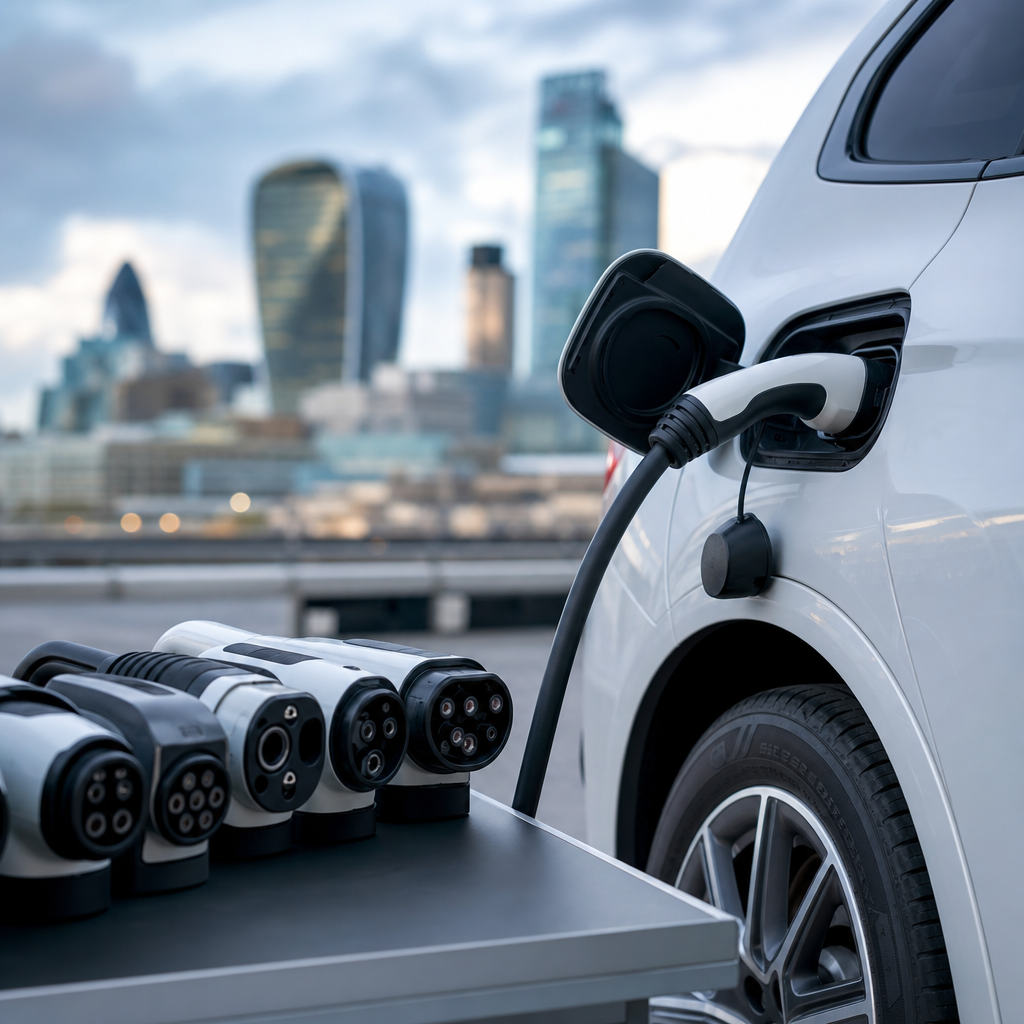
When navigating the public charging network in the UK, you’ll primarily encounter three main connector types. Each serves a distinct purpose, delivering either slower AC (Alternating Current) or rapid DC (Direct Current) power to your vehicle.
1. Type 2 (Mennekes)
- What it is: This is the standard AC (Alternating Current) charging connector for most European EVs and is ubiquitous across the UK for slower charging. It's often referred to as a "Mennekes" connector.
- Power: Typically delivers up to 22 kW AC, though home wallboxes often provide 7 kW. This is ideal for overnight charging, workplace top-ups, or destination charging while you’re parked for a few hours.
- Appearance: Recognisable by its distinctive 7-pin, rounded top design.
- Where you find it: Almost all public AC charging points, including those at supermarkets, hotels, car parks, and home wallboxes, will feature a Type 2 socket. Many public rapid chargers also include a Type 2 socket alongside their DC connectors.
- Used EV examples: The AC input on virtually every modern EV, including popular models like the Renault Zoe, BMW i3, VW e-Golf, and even Tesla vehicles (for AC charging). Most used EVs will have a Type 2 inlet for AC charging.
2. CCS (Combined Charging System)
- What it is: CCS is the dominant DC (Direct Current) rapid charging standard in Europe and North America. It ingeniously combines the Type 2 AC connector with two additional larger DC power pins below, creating a single, versatile port on your car.
- Power: This is where the serious power comes in. CCS chargers can deliver anywhere from 50 kW (rapid) up to 350 kW and beyond (ultra-rapid), allowing for significantly faster charging times – often achieving an 80% charge in 20-40 minutes, depending on the car and charger.
- Appearance: Essentially a Type 2 connector on top, with a larger, two-pin section attached underneath. Your car will have a single port that accepts either a Type 2 (for AC) or the full CCS connector (for DC).
- Where you find it: The vast majority of new rapid and ultra-rapid chargers across the UK, operated by networks such as Gridserve, InstaVolt, Osprey, BP Pulse, and increasingly, Tesla Superchargers.
- Used EV examples: Most modern European and Korean EVs, including the VW ID.3/ID.4, Hyundai Kona Electric, Kia e-Niro, Porsche Taycan, Audi e-tron, and newer Tesla models (Model 3/Y, and later Model S/X). Many older models like the BMW i3 and e-Golf also feature CCS.
3. CHAdeMO
- What it is: CHAdeMO is a Japanese-developed DC rapid charging standard, primarily found on older Japanese and some French EVs. While still present, its prevalence is declining as CCS becomes the universal standard.
- Power: Typically delivers up to 50 kW, though some newer CHAdeMO chargers offer higher outputs. It’s a rapid charging standard, similar in speed to lower-power CCS options.
- Appearance: A distinctively large, round, single-piece connector, very different from the Type 2/CCS combination.
- Where you find it: Many older rapid charging stations across the UK will still feature a CHAdeMO connector alongside CCS. Newer ultra-rapid sites are less likely to include it.
- Used EV examples: Most notably, the hugely popular Nissan Leaf (both first and second generation models) for its DC rapid charging, and the Mitsubishi Outlander PHEV (for DC rapid charging). Some early Kia Soul EVs and Citroën/Peugeot models also used CHAdeMO.
Compatibility with Different Used EV Models and Charging Networks
Understanding which connector your used EV uses is the first step. Here's a quick compatibility guide for some popular used models:
- Nissan Leaf (all generations): Uses CHAdeMO for rapid DC charging and Type 2 for AC charging.
- Renault Zoe: Primarily uses Type 2 for AC charging, often capable of higher power AC (e.g., 22kW). It does not have a DC rapid charging option, relying solely on AC.
- BMW i3: Early models typically feature Type 2 for AC and some had a specific rapid charging option. Later models adopted CCS for rapid DC charging and Type 2 for AC. Always check the specific year.
- VW e-Golf, VW ID.3/ID.4: Use CCS for rapid DC charging and Type 2 for AC charging.
- Hyundai Kona Electric, Kia e-Niro/Soul EV: Use CCS for rapid DC charging and Type 2 for AC charging. (Note: very early Kia Soul EVs for some markets had Type 1 AC and CHAdeMO DC, but UK models are typically Type 2 AC and CCS DC).
- Tesla (UK Models):
- Model 3 & Y: Native CCS for rapid charging (including Superchargers) and Type 2 for AC.
- Older Model S & X (pre-mid-2019): Used Tesla's proprietary connector for Superchargers and Type 2 for AC. These cars can use third-party CCS rapid chargers or newer CCS-enabled Superchargers with a Tesla CCS Adapter (purchased separately).
- Newer Model S & X (mid-2019 onwards): Native CCS for rapid charging (including Superchargers) and Type 2 for AC.
Charging Networks: Most public rapid charging hubs (e.g., Gridserve Electric Forecourts, InstaVolt, Osprey) will provide both CCS and CHAdeMO cables, along with a Type 2 AC socket, ensuring broad compatibility. However, ultra-rapid chargers (150kW+) are predominantly CCS only. Destination chargers (at supermarkets, hotels, workplaces) are almost exclusively Type 2.
Understanding the Role of Adapters and When They're Necessary (or Not)
The topic of adapters can be a source of confusion, so let’s clear it up.
Crucial Point: You Cannot Adapt Between Rapid DC Charging Standards. This is vital to remember. Your car is built to accept either a CCS or a CHAdeMO rapid charge, but not both interchangeably via an adapter. A CHAdeMO-equipped car cannot use a CCS rapid charger, and vice-versa. The charging protocols and internal electronics are fundamentally different.
Where Adapters Are Necessary (and Useful):
Type 2 to Type 1 Adapter: If you own an older used EV that was originally designed with a Type 1 AC charging inlet (common on some early imported Nissan Leaf models, Kia Soul EV, or Mitsubishi Outlander PHEV from certain markets), you will need a Type 2 to Type 1 adapter cable to use the widely available public Type 2 AC charging points in the UK. Without this, you'd be limited to your 'granny charger' at home or specific Type 1 AC points (which are rare publicly).
Tesla CCS Adapter (for older UK Teslas): As mentioned, older UK Tesla Model S and Model X vehicles (pre-mid-2019 production) have a proprietary Tesla charging port. To utilise the growing number of third-party CCS rapid chargers, or the CCS cables now found at many Tesla Superchargers, these specific Tesla owners will need to purchase an official Tesla CCS adapter. Newer Model 3/Y/S/X have native CCS compatibility and do not need this adapter.
Domestic 3-Pin Plug (Granny Charger) to Car Inlet: While not strictly an "adapter" between public charging types, nearly all EVs come with a cable that plugs into a standard domestic 3-pin UK socket at one end and into your car's AC inlet (Type 2 or Type 1) at the other. This is your slowest charging option (typically 2.3kW) and is primarily for emergencies or when no other option is available. It's essential to have, but not for regular public charging.
When Adapters are Not Necessary: If your used EV has a Type 2 AC inlet and a CCS rapid charging inlet, you generally won't need any adapters for public charging. The charging stations themselves will provide the correct tethered cables (for rapid DC charging) or offer a Type 2 socket for you to plug in your own Type 2 to Type 2 cable (for AC charging).
Tips for Finding and Using the Correct Charging Point on the Go Across the UK
Navigating the UK's charging infrastructure is straightforward once you know your car.
Know Your Car's Connectors: This is paramount. Open your charging flap(s) and consult your owner's manual. Does it have Type 2 and CCS? Or Type 2 and CHAdeMO? Is it AC-only (like many Renault Zoes)?
Utilise Charging Apps: Essential tools like Zap-Map, PlugShare, and Electromaps are your best friends.
- Filter by Connector: Crucially, these apps allow you to filter by connector type (CCS, CHAdeMO, Type 2). When planning a journey, always filter for your specific rapid charging connector to avoid frustration.
- Check Status and Comments: Always double-check the live status of a charger and read recent user comments. This can save you a wasted trip to an out-of-order unit.
Onboard Navigation Systems: Many modern used EVs have integrated navigation that can locate charging points and even filter by connector type. Tesla's Supercharger network is seamlessly integrated into their navigation, for instance.
Understand Charger Labelling: Charging stations are usually clearly labelled. Look for the "CCS," "CHAdeMO," or "Type 2" signs next to the physical connectors.
Cable Management:
- Rapid/Ultra-Rapid Chargers (CCS/CHAdeMO): These almost always have the cables tethered (attached) to the unit. Simply select your payment method, plug in, and start charging.
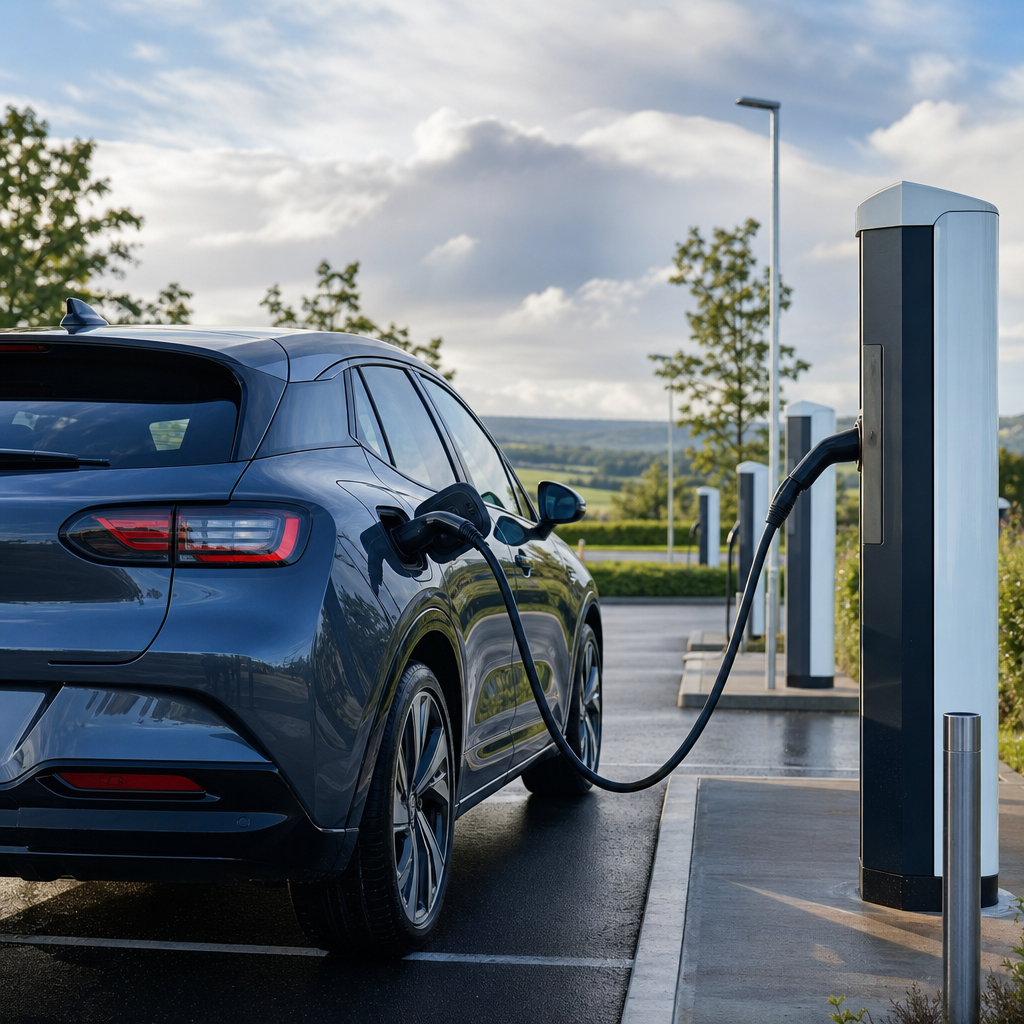
- AC Chargers (Type 2): Most public Type 2 AC chargers are "untethered," meaning they only have a socket. You'll need to bring your own Type 2 to Type 2 cable (often supplied with your used EV) to connect your car to the charger. Always keep this cable in your boot!
Payment Methods: Be prepared. Charging networks often require their own app, an RFID card, or offer contactless payment options. It's a good idea to set up accounts with the major networks you plan to use.
Conclusion
Demystifying EV charging connectors doesn't have to be a daunting task. By understanding the fundamental differences between Type 2, CCS, and CHAdeMO, knowing your specific used EV's compatibility, and leveraging the excellent digital tools available, you’ll be confidently plugging in and enjoying seamless electric motoring across the UK.
So, go forth, explore, and enjoy the silent, swift journey of electric driving. And remember, for your next used EV adventure, CarsLink.ai is always here to help you find the perfect electric companion.