Power Up Your Used EV: A UK Buyer's Guide to Home Charging Solutions
The allure of a used electric vehicle (EV) is stronger than ever for UK motorists. With a growing second-hand market offering more affordable entry points, many drivers are making the switch, embracing lower running costs and a cleaner commute. But to truly unlock the full potential of your pre-loved EV, efficient and convenient home charging is an absolute necessity.
Think of it this way: you wouldn't buy a smartphone without a charger, nor would you expect to run a petrol car without regular access to a fuel station. For an EV, your home becomes your personal charging hub, drastically simplifying ownership and maximising savings. This guide from CarsLink.ai will navigate the world of home charging for your used EV, covering everything from basic plugs to smart wallboxes, installation costs, and how to make the most of your electricity tariff.
The Cornerstone of EV Ownership: Why Home Charging Matters
The convenience offered by home charging cannot be overstated. Imagine returning home after a long day, plugging in your car, and waking up to a fully charged battery every morning, ready for whatever the day throws at you. No detours to public charging stations, no waiting in queues, and no range anxiety – just effortless power on demand.
Beyond convenience, home charging is fundamentally more cost-effective than relying solely on the public charging network. While rapid chargers are great for long journeys, their per-kilowatt-hour (kWh) rates are significantly higher than typical domestic electricity prices. By primarily charging at home, especially during off-peak hours, you can dramatically reduce your running costs, often paying just a few pence per mile. This consistent, controlled charging environment also contributes to better battery health over the long term, helping to preserve your used EV's most valuable component.
Choosing Your Charger: 3-Pin Sockets vs. Dedicated Wallboxes
When it comes to charging your EV at home, you essentially have two main options:
The Standard 3-Pin Socket (Mode 2 / "Granny Charger"): Almost all EVs come with a cable that allows you to plug into a regular 13-amp domestic socket. This is often referred to as a "granny charger" because it's typically for emergency or occasional use. It delivers around 2.3kW of power, which is incredibly slow. To put it in perspective, a typical 60kWh EV battery could take over 24 hours to charge from empty to full using a 3-pin plug. While it requires no special installation and can be handy for a top-up when visiting friends or family, it's generally unsuitable for regular primary charging due to its slow speed and the potential strain on older domestic wiring if used frequently.
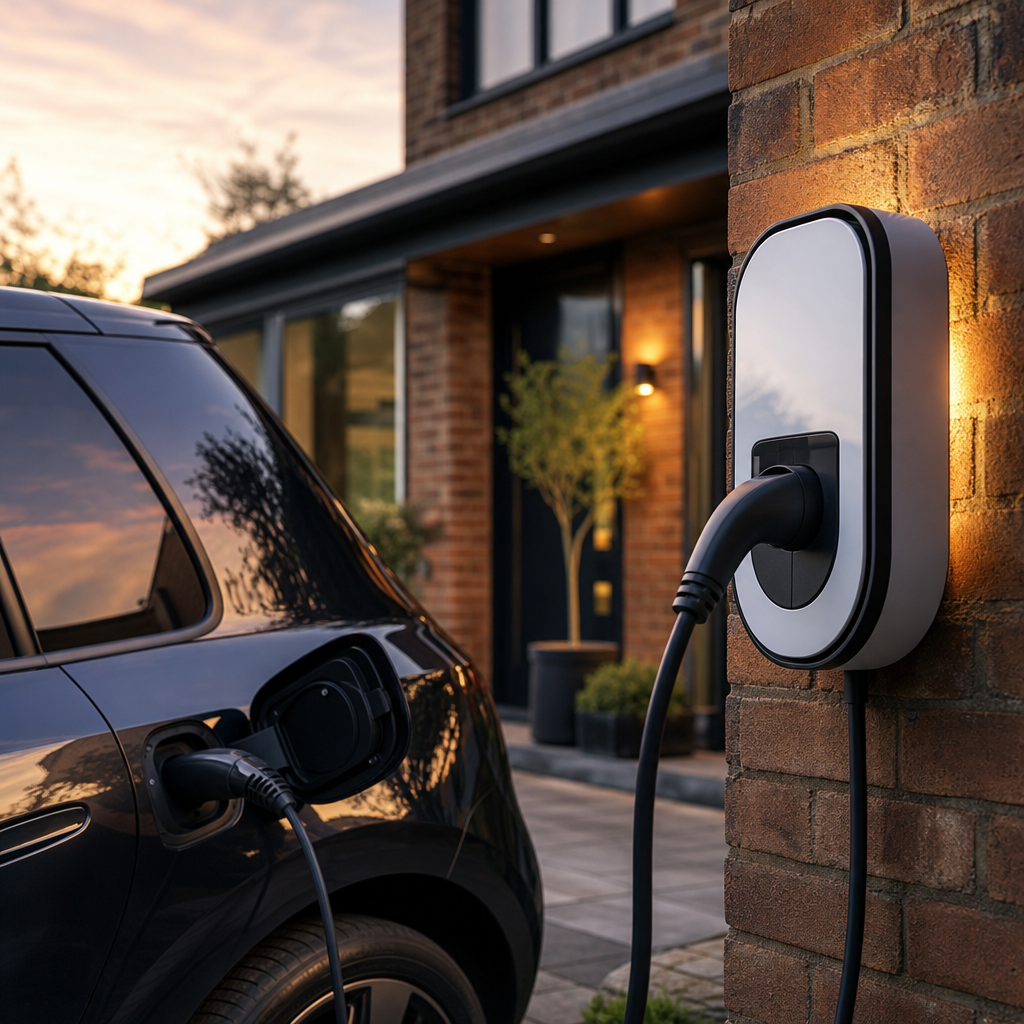
The Dedicated Smart Wallbox (Mode 3 / Type 2): This is the recommended solution for any EV owner. A wallbox is a purpose-built charging unit, hardwired into your home's electrical supply, providing a much faster and safer charging experience. Most modern wallboxes in the UK utilise a Type 2 connector, which is standard for almost all European EVs, including popular used models like the Nissan Leaf, Renault Zoe, Tesla Model 3, and VW ID.3.
- 7kW Wallboxes: These are by far the most common domestic option for single-phase UK homes. A 7kW charger can replenish a typical EV battery in 6-10 hours, making it perfect for overnight charging. You'll plug in when you get home and wake up to a full battery.
- 22kW Wallboxes: These are significantly faster but require a three-phase electricity supply, which is rare in standard UK residential properties. If you live in a new build, a large property, or have specifically requested a three-phase connection, this might be an option, but for most used EV buyers, a 7kW unit will be the practical choice.
Dedicated wallboxes are weatherproof, built with safety features like RCD protection, and offer "smart" capabilities that transform your charging experience (more on this later).
Installation, Costs, and Navigating the Grants Landscape
Installing a dedicated wallbox involves more than just plugging it in. It requires a certified electrician to assess your home's electrical system, often necessitating a dedicated circuit directly from your fuse box.
The Installation Process:
- Survey & Quote: A qualified installer will visit your home (or conduct a remote survey) to assess your existing electrical supply, fuse box capacity, and the proposed location for the charger. They'll also handle the necessary notification to your Distribution Network Operator (DNO) to ensure your local grid can handle the extra demand.
- Installation: The electrician will install the unit, run the necessary cabling, and perform all electrical connections. This can take several hours, depending on the complexity of the job.
- Testing & Certification: Once installed, the unit will be thoroughly tested, and you'll receive an electrical installation certificate, ensuring it meets all safety standards.
Typical Costs: The overall cost of a home wallbox consists of the unit itself and the installation fee.
- Wallbox Unit: Expect to pay between £400 and £1,200 for a reputable 7kW smart charger from brands like Zappi, Ohme, Pod Point, or Andersen. Prices vary based on features, design, and brand.
- Standard Installation: A straightforward installation, where the charger is mounted near your fuse box with minimal cable run, typically costs between £500 and £1,000. More complex installations (e.g., long cable runs, groundworks, fuse box upgrades) can incur higher charges.
- Total: Without any grants, you're looking at an outlay of roughly £900 to £2,200.
OZEV Grants (Government Support): A Crucial Update It's vital for UK used EV buyers to understand the current status of government grants for home charging:
- The Electric Vehicle Homecharge Scheme (EVHS) for homeowners (those living in detached, semi-detached, or terraced properties) ended on 31 March 2022. This means if you own a house, you will likely need to fund the entire cost yourself.
- However, grants are still available for:
- People living in flats and rented properties: You can still apply for a grant to reduce the cost of purchasing and installing a charge point by up to £350.
- Landlords: Landlords can apply for grants to install charge points on their properties.
Always check the latest eligibility criteria on the Gov.uk website (search for "OZEV EV charge point grants") or consult with your chosen installer, as they are typically approved to handle the grant application process.
Smarter Charging for Smarter Savings
The real magic of modern wallboxes comes with their "smart" features, which can significantly enhance convenience and save you money.
Off-Peak Electricity Tariffs: This is perhaps the biggest money-saver. Many UK energy suppliers offer specific EV tariffs (e.g., Octopus Go, British Gas EV Tariff, EDF GoElectric) that provide significantly cheaper electricity rates during specific overnight hours, typically between 12 am and 5 am.
- Example: While a standard tariff might cost 25-30p per kWh, an off-peak EV tariff could drop to as low as 7.5-10p per kWh. Charging a 60kWh battery could cost £15-£18 on a standard rate, but just £4.50-£6 on an off-peak tariff! Smart wallboxes allow you to schedule charging to automatically begin during these cheaper windows, ensuring you always charge at the lowest possible cost.
Load Balancing: A smart feature that monitors your home's total electricity consumption and dynamically adjusts the charging speed of your EV to prevent overloading your main fuse and tripping your household's power. This is particularly useful in homes with many high-draw appliances.
Remote Monitoring & Control: Most smart wallboxes come with a dedicated smartphone app. This allows you to start/stop charging remotely, monitor your charging history, track costs, and set schedules, all from the palm of your hand.
Integration with Renewables: Some advanced wallboxes, like the Zappi, can integrate with home solar panel systems or battery storage. They can intelligently prioritise charging your EV using surplus self-generated electricity, further reducing your reliance on grid power and saving you money.
These smart capabilities transform your home charger from a simple power outlet into an intelligent energy management device, optimising your EV's charging schedule to suit your lifestyle and your wallet.
Conclusion
Investing in a dedicated home charging solution is arguably the most impactful upgrade you can make to enhance your used EV ownership experience. It provides unparalleled convenience, dramatically reduces your running costs, and offers peace of mind. While the initial outlay for a wallbox and installation might seem significant, the long-term savings on fuel and the sheer convenience quickly justify the expense.
As you embark on your used EV journey, make home charging a top priority. Research different wallbox models, get quotes from certified installers, and explore smart features and off-peak tariffs to truly maximise the benefits of electric motoring. With the right home charging setup, you'll be able to enjoy your used EV with ultimate confidence, knowing that reliable, affordable power is always just a plug away.