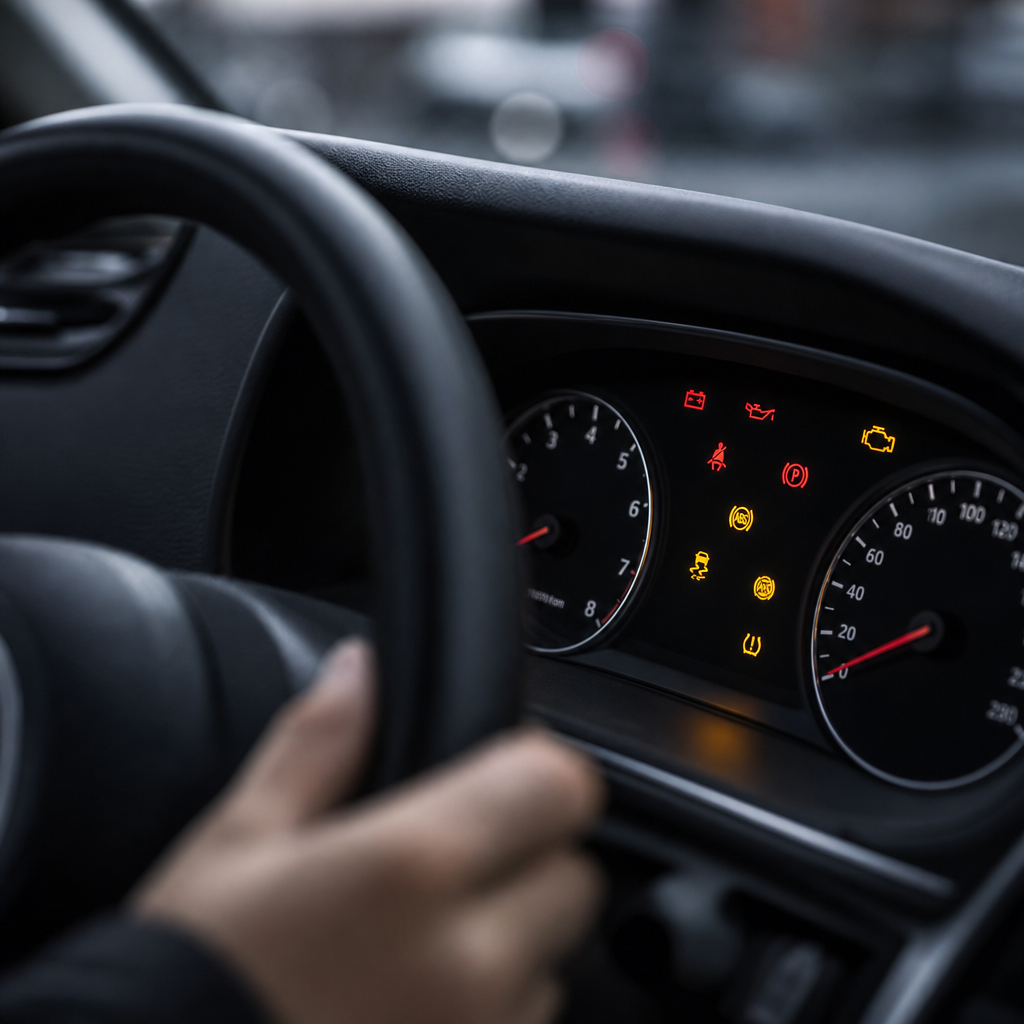
Decoding the Dashboard: Understanding Warning Lights in Your Used UK Car
Buying a used car from CarsLink.ai is an excellent way to get fantastic value and reliability on the road. However, unlike a brand-new vehicle, a used car comes with a history – and that history is sometimes subtly communicated through the array of lights on your dashboard. Far from being mere decorative elements, these warning lights are your car's critical communication system, alerting you to everything from minor issues to urgent, potentially dangerous faults. Understanding what they mean and how to react is paramount for safety, maintaining your vehicle's health, and ensuring it remains compliant with UK road standards.
Ignoring a warning light is akin to silencing a smoke alarm; it might seem convenient in the short term, but it invites far greater trouble down the line. This guide will help you decipher the most common dashboard warnings, empowering you to respond appropriately and keep your pre-loved vehicle running smoothly and safely.
The Traffic Light System: Red, Amber, Green (and Blue/White)
Think of your dashboard warning lights as a traffic light system, each colour signalling a different level of urgency and importance. While the exact symbols can vary slightly between manufacturers, the colour coding is a universal language designed to guide your immediate actions.
Red Lights: Stop Safely, Act Immediately. These are the critical warnings that demand your immediate attention. A red light signifies a serious problem that could either endanger you, other road users, or cause severe, irreversible damage to your vehicle. If you see a red warning light illuminate while driving, you should safely pull over, switch off the engine, and investigate the issue or call for professional assistance.
- Common Red Examples:
- Oil Pressure Warning: Often depicted as an old-fashioned oil can. This is critical. It means your engine isn't getting adequate lubrication, which can quickly lead to catastrophic engine failure. Stop immediately.
- Engine Temperature Warning: Usually a thermometer dipped in fluid. Indicates the engine is overheating. Pull over immediately to prevent severe damage.
- Brake System Warning: A circle with an exclamation mark, sometimes with "P" (handbrake) or "BRAKE". This can indicate low brake fluid, a fault in the braking system, or that the handbrake is still engaged. Do not drive if this light is on and the handbrake is off.
- Battery/Charging System Warning: A battery symbol. Means your car isn't charging its battery, usually due to an alternator fault. Your car will only run until the battery depletes.
- Airbag (SRS) Warning: A person with a deployed airbag. Indicates a fault in the Supplemental Restraint System (SRS). The airbags may not deploy in an accident, making it a serious safety concern.
- Common Red Examples:
Amber/Yellow Lights: Caution, Check Soon. Amber lights are cautionary signals. They indicate a fault or an issue that needs attention in the near future, but generally doesn't require you to stop driving immediately, provided the vehicle feels and sounds normal. However, prolonged driving with an amber light illuminated can lead to more serious problems or system failures.
- Common Amber Examples:
- Engine Management Light (EML) / Malfunction Indicator Lamp (MIL): Often a stylised engine outline. This is one of the most common and versatile amber lights. It can indicate anything from a loose fuel cap to a serious sensor malfunction or catalytic converter issue. Get this checked as soon as possible.
- Anti-lock Braking System (ABS) Warning: The letters "ABS" in a circle. Means there's a fault with the ABS. Your normal brakes will still work, but the anti-lock function won't be available, potentially affecting braking performance in an emergency.
- Electronic Stability Programme (ESP) / Traction Control Warning: Often a car skidding symbol. Indicates a fault with the ESP or traction control system. Drive with extra care, especially in adverse conditions.
- Tyre Pressure Monitoring System (TPMS) Warning: An exclamation mark inside a cross-section of a tyre. Alerts you to low tyre pressure in one or more tyres. Check and adjust your tyre pressures promptly.
- Low Fuel Warning: A petrol pump icon. Simply means you're running low on fuel – a reminder, not a fault!
- Common Amber Examples:
Green, Blue, and White Lights: Information, System Active. These lights are generally informational and indicate a system is active or functioning as intended. Examples include headlights on (green), full beam activated (blue), indicators flashing (green), or cruise control engaged (green/white). They are not warning lights in the traditional sense.
Critical vs. Cautionary: Knowing When to Stop (and When to Call for Help)
Distinguishing between a critical, stop-driving-now warning and a cautionary, get-it-checked-soon indicator is crucial for both your safety and your wallet.
Critical Warnings (Red): Immediate Action Required When a red warning light illuminates, your primary concern should be safety.
- Action: Safely pull over to the side of the road as soon as possible. Switch off the engine.
- Why: Continuing to drive with a critical fault can lead to catastrophic mechanical failure, rendering your vehicle unsafe or causing irreparable damage. For example, ignoring an oil pressure light can seize your engine, turning a potentially minor repair into a complete engine replacement costing thousands of pounds. Driving with a brake system warning could mean significantly reduced stopping power, posing an immediate danger to life.
- Next Steps: Consult your vehicle's owner's manual (often found in the glovebox or available online) for specific advice related to that warning. In most red light scenarios, it's safest to call a breakdown recovery service rather than attempting to drive further, even to the nearest garage.
Cautionary Warnings (Amber/Yellow): Prompt Attention Needed Amber lights typically indicate a non-immediate but important issue.
- Action: While you don't usually need to stop driving instantly, you should reduce your speed, drive cautiously, and plan to get the issue checked as soon as practically possible.
- Why: Even minor amber warnings can mask bigger problems. For instance, an Engine Management Light could signify anything from a faulty oxygen sensor (which, if ignored, can damage your catalytic converter) to a misfiring cylinder. An ABS or ESP light means these safety systems are deactivated; while your regular brakes still work, you lose a vital safety net in emergency braking or slippery conditions.
- Next Steps: Schedule an appointment with a trusted mechanic or garage. Note down any changes in the car's behaviour (e.g., strange noises, loss of power, unusual smells) as this information will be valuable for diagnosis.
Beyond the Bulb: The Power of Professional Diagnostics
While warning lights tell you something is wrong, they rarely tell you exactly what. This is where professional diagnostic checks come into play. Modern vehicles are equipped with On-Board Diagnostics (OBD-II) systems, which store fault codes whenever a sensor detects an anomaly.
When you take your car to a garage, technicians use specialised diagnostic tools (often referred to as 'code readers' or 'scanners') to connect to your car's OBD-II port. These tools read the specific fault codes (e.g., "P0420 - Catalytic Converter System Efficiency Below Threshold") which pinpoint the area of concern.
- Why Professional Diagnostics are Essential:
- Accuracy: They move beyond guesswork, directly identifying the system or component that's faulting.
- Efficiency: Instead of replacing parts speculatively, diagnostics allow for targeted repairs, saving you time and money.
- Root Cause Identification: A warning light might be a symptom. Diagnostics help find the underlying cause. For example, an engine management light might come on due to a faulty sensor, but the sensor might be faulty because of a wiring issue.
- Preventative Measures: Early and accurate diagnosis can prevent a small, inexpensive problem from escalating into a major, costly repair.
While a cheap generic OBD-II reader can give you a basic fault code, interpreting these codes correctly and determining the actual fix often requires professional expertise and more advanced diagnostic equipment. Always rely on a reputable garage for a thorough diagnosis.
The Ripple Effect: Safety, Longevity, and MOT Compliance
Ignoring dashboard warning lights isn't just a gamble with your car's health; it has significant implications for your safety, your vehicle's lifespan, and its ability to pass its annual MOT.
- Compromised Safety: This is the most critical concern. A malfunctioning ABS or ESP system, indicated by an amber light, means these vital crash-prevention technologies won't work when you need them most. An airbag warning light means your Supplementary Restraint System (SRS) might not deploy in a collision. Even seemingly minor issues can degrade handling or braking, making your car inherently less safe.
- Reduced Vehicle Longevity and Increased Costs: Small, unaddressed issues tend to snowball. An engine management light ignored could mean your engine is running too rich or too lean, leading to excessive wear, reduced fuel economy, and eventually damage to expensive components like the catalytic converter. A low tyre pressure warning (TPMS) left unaddressed can lead to premature tyre wear, poor handling, and even a dangerous tyre blowout. Procrastination almost always leads to more extensive, and therefore more expensive, repairs down the line.
- MOT Compliance Failure: In the UK, many illuminated dashboard warning lights are an automatic failure point for your MOT test. If your car presents with any of the following lights illuminated during its MOT, it will fail:
- Engine Management Light (MIL/EML): A common MOT failure if on.
- Anti-lock Braking System (ABS) Warning Light: Critical safety system, must be functional.
- Electronic Stability Programme (ESP) / Traction Control Warning Light: Another key safety system.
- Airbag (SRS) Warning Light: Essential for occupant safety.
- Tyre Pressure Monitoring System (TPMS) Warning Light: For vehicles registered after 1st January 2012, an illuminated TPMS light is an MOT failure.
Even if the system appears to be working fine, the presence of an active warning light indicates a fault that makes your vehicle unroadworthy in the eyes of the MOT tester.
Conclusion
Your car's dashboard warning lights are an indispensable part of its safety and maintenance features. Far from being a nuisance, they are proactive alerts designed to protect you, your passengers, and your investment. When you buy a used car from CarsLink.ai, you're investing in reliable transport, and understanding these signals is key to preserving that reliability.
By familiarising yourself with the common symbols and their colour-coded urgency, you empower yourself to react appropriately – whether that's safely pulling over immediately or scheduling a timely garage visit. Always consult your owner's manual for specific details about your vehicle, and never hesitate to seek professional diagnostic help. A proactive approach to dashboard warnings will ensure your used car remains safe, roadworthy, and a pleasure to drive for years to come.