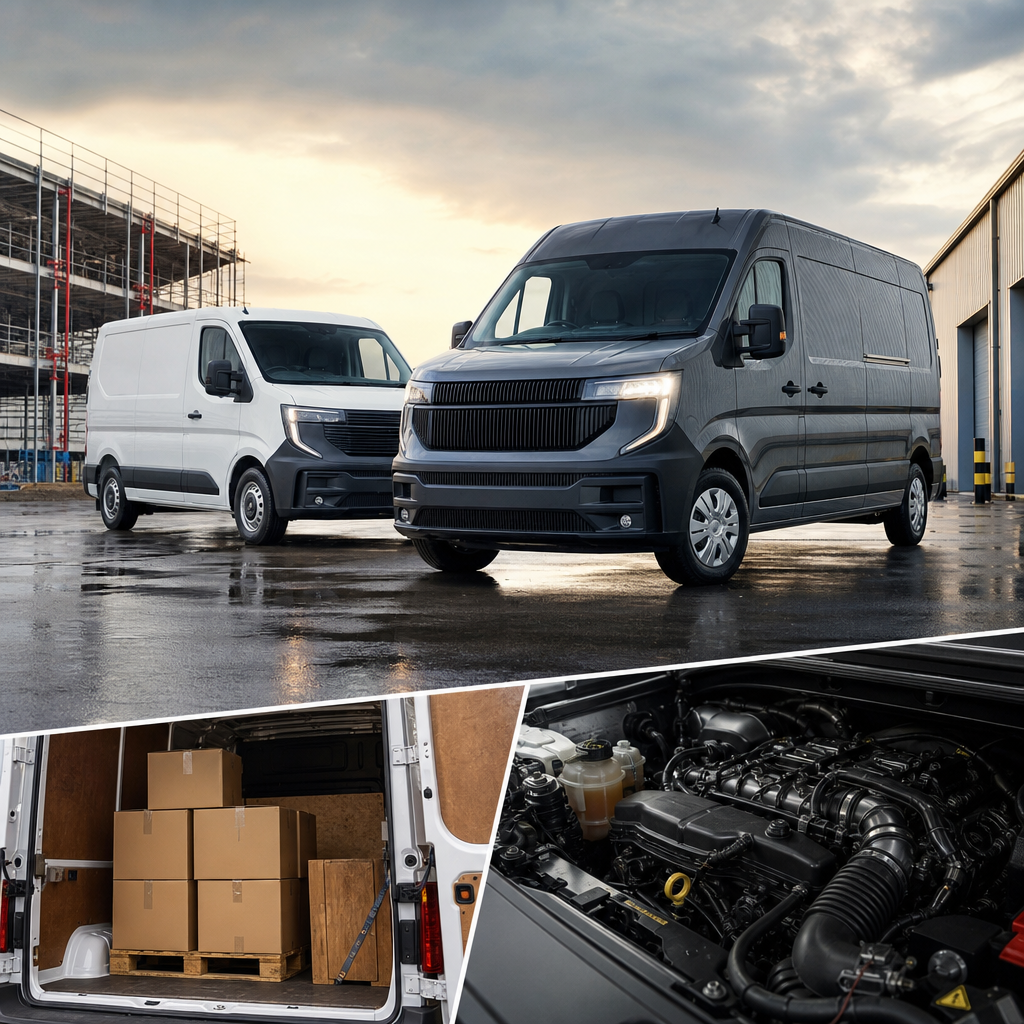
Decoding Euro Emissions Standards: What UK Van Buyers Need to Know for Used Purchases
In the rapidly evolving landscape of UK motoring, understanding Euro emissions standards has become paramount, particularly for those in the market for a used van. Gone are the days when a van was simply a tool for work; now, its environmental credentials can dictate where it can travel, how much it costs to run, and even its long-term viability. With an increasing number of Clean Air Zones (CAZ) and the Ultra Low Emission Zone (ULEZ) expanding across our towns and cities, navigating the jargon of Euro 4, Euro 5, and Euro 6 is no longer optional – it’s essential for making an informed purchase.
Here at CarsLink.ai, we understand that for tradespeople, couriers, and businesses, a van is an investment. This guide aims to demystify Euro emissions standards, helping you make a shrewd decision that future-proofs your business and keeps your running costs predictable.
An Overview of Euro 1 to Euro 6 Standards and Their Significance
Euro emissions standards are a series of European Union regulations designed to limit the release of harmful pollutants from vehicle exhaust. Introduced in 1992, these standards have progressively tightened, requiring vehicle manufacturers to engineer cleaner engines with each new iteration. While the UK is no longer part of the EU, these established standards remain the benchmark for vehicle emissions in our country.
For van buyers, the most relevant standards you'll encounter are Euro 4, Euro 5, and critically, Euro 6. Each standard mandates lower levels of key pollutants, including:
- Nitrogen Oxides (NOx): A significant contributor to air pollution and respiratory issues.
- Particulate Matter (PM): Tiny soot particles, particularly from diesel engines, linked to various health problems.
- Carbon Monoxide (CO): A toxic gas.
- Hydrocarbons (HC): Unburnt fuel.
Key Milestones for Vans:
- Euro 1 (1992) to Euro 3 (2000): Early standards, largely irrelevant for modern used van purchases due to age.
- Euro 4 (2005): Significantly tightened limits, especially for petrol vans. Many petrol vans registered from January 2006 onwards typically meet Euro 4.
- Euro 5 (2009): Introduced a major reduction in particulate matter for diesel vans, leading to the widespread adoption of Diesel Particulate Filters (DPFs). Most diesel vans registered from January 2011 onwards will be Euro 5.
- Euro 6 (2014): The most stringent standard to date, particularly for diesel engines, drastically reducing NOx emissions. This was achieved through technologies like Selective Catalytic Reduction (SCR), which uses AdBlue, and advanced exhaust gas recirculation systems. Most diesel vans registered from September 2016 onwards are typically Euro 6 compliant.
It’s crucial to remember that each standard represents a cleaner vehicle. A Euro 6 diesel van, for instance, produces significantly fewer harmful emissions than its Euro 5 predecessor, making it a more environmentally friendly and, increasingly, a more financially viable choice for urban operation.
Euro Standards and UK Clean Air Zones (CAZ) / ULEZ Access
This is where Euro emissions standards directly impact your wallet and operational flexibility. Across the UK, local authorities are implementing Clean Air Zones (CAZ) and similar schemes like London’s Ultra Low Emission Zone (ULEZ) to improve air quality. These zones charge non-compliant vehicles a daily fee to enter.
The Golden Rules for Van Compliance:
- Diesel Vans: To avoid charges in most CAZs and the ULEZ, diesel vans must generally meet Euro 6 emissions standards.
- Petrol Vans: Petrol vans typically need to meet Euro 4 emissions standards to avoid charges.
Let's look at some examples:
- London ULEZ: Expansive and strictly enforced. A Euro 5 diesel Ford Transit (registered pre-Sept 2016) will incur a daily £12.50 charge. A Euro 6 diesel Transit Custom (registered post-Sept 2016) or a Euro 4 petrol Vauxhall Vivaro (registered post-Jan 2006) would be exempt.
- Birmingham CAZ: Charges non-compliant vehicles. A Euro 5 diesel van would be charged £8 per day, while a Euro 6 would be free.
- Bristol CAZ: Similarly, charges non-compliant vehicles, with the same Euro 6 diesel and Euro 4 petrol thresholds generally applying.
The charges can quickly add up, turning a seemingly good deal on a cheaper, older van into a costly long-term burden if your routes frequently take you into these zones. Before committing to any used van, always consider where you operate and check the specific requirements for any CAZs you might encounter.
How to Verify a Used Van's Euro Emissions Class Before Buying
Given the significant financial implications, verifying a van’s Euro emissions class is a non-negotiable step in the buying process. Don't simply take the seller's word for it; perform your own checks.
Check the V5C Logbook (Registration Document): This is your primary source of information. Look for a section titled "Euro Status" or "Vehicle Emissions". Sometimes, the Euro standard will be explicitly stated (e.g., "Euro 6"). If not, the "Date of First Registration" can offer a strong indication.
- General Guide (Always verify!):
- Petrol vans registered from January 2006 onwards are usually Euro 4.
- Diesel vans registered from September 2015 onwards are usually Euro 6.
- Diesel vans registered between January 2011 and August 2015 are generally Euro 5.
- Important Note: Manufacturers sometimes introduced compliant engines earlier than the mandatory dates, so a van might be Euro 6 even if registered slightly before September 2015. Conversely, some models might have been registered just after a deadline but still feature an older Euro standard engine due to production timings. This is why official checks are vital.
- General Guide (Always verify!):
Use Official CAZ/ULEZ Checkers: This is the most definitive way to determine if a specific vehicle will be charged in a zone.
- For London ULEZ: Visit the Transport for London (TfL) ULEZ checker website (tfl.gov.uk/modes/driving/check-your-vehicle/). Simply enter the van's registration number.
- For other CAZs: Most city councils operating a CAZ (e.g., Birmingham, Bristol, Glasgow, Bradford) have their own online vehicle checkers on their official websites. Many link to the central government's vehicle checker at gov.uk/check-clean-air-zone-charge.
Manufacturer's Documentation/VIN Check: If you're still unsure, the vehicle's VIN (Vehicle Identification Number) can often be used on the manufacturer's website or by contacting a dealer to ascertain its exact Euro class.
Never rely solely on the registration plate year; always perform these checks to confirm the Euro standard and, more importantly, its CAZ/ULEZ compliance.
Future-Proofing Your Van Purchase in a Rapidly Changing Regulatory Landscape
The trend towards cleaner air and stricter emissions regulations is undeniable and irreversible. When buying a used van, it's prudent to consider not just today's rules, but tomorrow's too.
- Expanding CAZs and Stricter Standards: Expect more UK towns and cities to introduce CAZs, and existing zones may become more stringent over time. Investing in a Euro 6 diesel or Euro 4 petrol van now provides a greater degree of flexibility for years to come.
- Resale Value: Non-compliant vans are likely to depreciate faster and become harder to sell as more areas become restricted. A compliant van, particularly a Euro 6 diesel, will hold its value better in the used market.
- The Rise of Electric Vans: While a higher upfront cost, electric vans (EVs) are the ultimate future-proof solution, being zero-emission at the tailpipe. If your budget and operational needs allow, exploring used electric vans could be a savvy long-term move, offering exemption from all emissions charges and often lower running costs. The used EV van market is growing rapidly.
- Consider Your Usage: If your business absolutely never takes you into urban centres or CAZs, a Euro 5 diesel van might still be a viable, more affordable option for rural or long-haul work. However, always factor in potential future contract changes or the need to sell the van.
Making a slightly larger investment now in a compliant vehicle could save you thousands in charges, lost business opportunities, and depreciation further down the line.
Conclusion
Understanding Euro emissions standards is no longer a niche concern for environmentalists; it's a fundamental aspect of buying a used van in the UK. From saving money on daily CAZ charges to securing a better resale value, a diligent approach to checking a van's Euro class is crucial for any shrewd buyer.
By knowing the Euro 6 threshold for diesel vans and Euro 4 for petrol, utilising official checker websites, and verifying information against the V5C, you can confidently navigate the used van market. Choose wisely, and your new-to-you van will be a reliable, cost-effective asset for your business, keeping you on the road and out of trouble with emissions regulations for years to come.