Beyond the A-Roads: Essential Gear for Off-Road Adventures on Your Used UK Motorcycle
The call of the open road is undeniable, but for many UK motorcyclists, the real adventure begins where the tarmac ends. Our green and pleasant land, criss-crossed with ancient byways and unsealed tracks, offers a unique opportunity to explore on two wheels – even on a well-chosen used motorcycle. Venturing off-road opens up a world of stunning scenery, technical challenges, and a sense of freedom that’s hard to beat. However, this isn't simply a case of turning off the main road; proper preparation, the right gear, and an understanding of UK legalities are paramount for a safe and enjoyable experience. This guide from CarsLink.ai will equip you with the essential knowledge to confidently tackle your first (or next) off-road escapade.
Kicking Up Dust: Understanding UK Off-Road Riding
Before you even think about modifying your bike or buying new gear, it's crucial to understand the various types of off-road riding available in the UK. This will help you tailor your setup and expectations.
Green Laning is perhaps the most accessible entry point for motorcycle enthusiasts. This involves riding on public rights of way known as Byways Open to All Traffic (BOATs) and Unsealed Unclassified Roads (UURs). These are legal for motor vehicles and typically consist of gravel tracks, dirt roads, and sometimes muddy trails that can get challenging after rain. Green laning focuses on exploration and covering ground, often linking various routes together to create a scenic journey. It generally requires a moderate skill level, suitable for riders comfortable with varied surfaces and basic bike handling.
Trail Riding often implies a more demanding experience, tackling rougher terrain like rocky climbs, deeper ruts, tree roots, and more significant mud sections. While some BOATs can become trail-like, dedicated trail riding often takes place on private land with specific permissions, or during organised events. This type of riding demands higher skill levels, more aggressive tyres, and often a lighter, more purpose-built motorcycle. Beyond these, you have disciplines like Enduro and Motocross, which are competitive sports requiring highly specialised bikes and expert rider skills, typically outside the scope of general used motorcycle off-roading.
Your Armour: Must-Have Protective Gear
Riding off-road inherently carries a higher risk of falls than riding on tarmac. The terrain is unpredictable, grip can vanish in an instant, and impacts with ground, rocks, or trees are a real possibility. Investing in the right protective gear isn't just sensible; it’s non-negotiable.
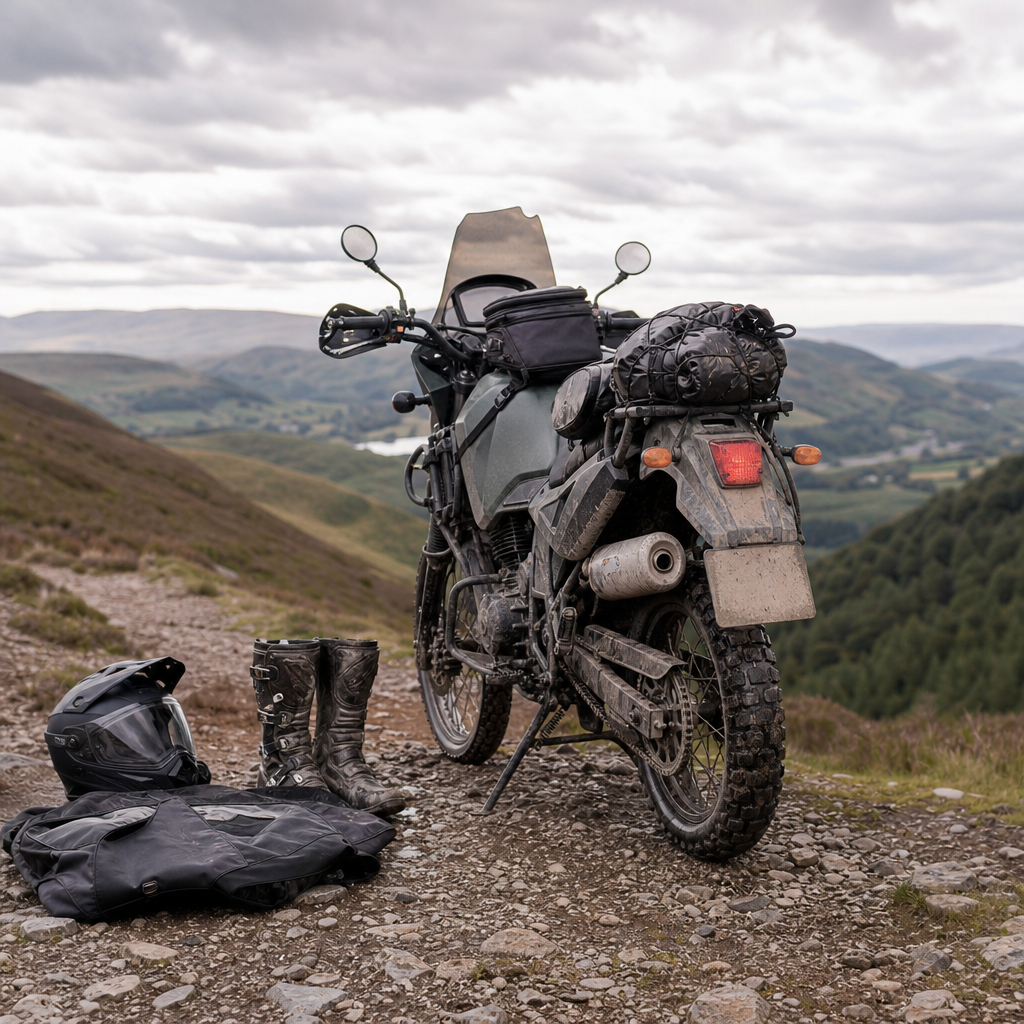
First and foremost is an off-road specific helmet. Unlike a road helmet, these feature a prominent peak to shield from sun and roost (mud/stones kicked up by other bikes), a larger chin bar for better airflow, and an open eye port designed for goggles. Look for helmets that meet ECE 22.06 standards and fit snugly.
Next, off-road boots are arguably the most critical piece of protective gear after your helmet. Street boots simply won't cut it. Off-road boots are much taller, more rigid, and heavily reinforced to protect your ankles and shins from impacts, twisting injuries, and crushing forces. They typically have multiple buckles and a steel shank in the sole for durability and support. Brands like Alpinestars Tech series or Fox Racing Comp boots are good examples.
Body armour is vital. A standalone back protector or one integrated into a pressure suit (which also includes shoulder and elbow pads) will protect your spine and upper body. A separate chest protector guards against handlebar impacts. For your lower body, knee braces or robust knee pads are highly recommended. These protect the crucial knee joint from hyper-extension, twisting, and direct impact, significantly reducing the risk of debilitating injuries. Finally, off-road specific gloves offer good grip and often include knuckle protection, while being breathable enough for active riding.
Navigating the Wild: Tools and Emergency Kit
When you venture off the beaten path, you’re often far from assistance. Being self-sufficient is a key part of the off-road experience. A comprehensive navigation system and an emergency kit are essential.
For navigation, dedicated motorcycle GPS units like the Garmin Zumo XT or TomTom Rider are excellent, offering robust, waterproof designs and the ability to load detailed Ordnance Survey (OS) maps. These allow you to pinpoint your exact location and follow byways accurately. Alternatively, a waterproofed smartphone running apps like OS Maps, ViewRanger, or Komoot can be very effective, provided you download maps for offline use and carry a substantial power bank. However, never underestimate the value of physical OS maps and a compass as a backup; electronics can fail. Learning to read grid references is a useful skill.
Your emergency kit should be tailored for trailside repairs and personal safety. A comprehensive first aid kit is paramount, including items for cuts, grazes, sprains, and even trauma dressings. For the bike, a basic toolkit should include tyre levers, a puncture repair kit (with CO2 canisters or a small pump), a multi-tool, zip ties, duct tape, and any specific spanners your bike might need. A fully charged mobile phone is a must, but in truly remote areas, consider a Personal Locator Beacon (PLB) for satellite-based emergency signalling. Always carry enough water and some high-energy snacks, a small headtorch, and perhaps a survival blanket, especially for longer rides or unpredictable weather.
Bike Prep: Modifications for Off-Road Capability
While many used adventure or trail bikes are capable off-road in stock form, a few key modifications can significantly enhance their performance and durability for UK green laning and trail riding.
The single most impactful upgrade you can make is to your tyres. Road-biased tyres offer almost no grip on mud, gravel, or wet grass. Invest in road-legal knobbly tyres specifically designed for enduro or adventure riding. Tyres like the Michelin Anakee Wild, Metzeler Karoo 3, or Maxxis Maxxcross are excellent choices, offering aggressive tread patterns for traction while still being legal for road sections. Pay attention to tyre pressures; often lower pressures are run off-road for a larger contact patch and better compliance, but this must be balanced with puncture risk and road stability. If your bike has tubeless tyres, consider converting to tubes or using heavy-duty tubes and tyre sealant for better puncture resistance.
Protection for your bike is equally vital. A sturdy sump guard (or bash plate) made from thick aluminium or heavy-duty plastic will protect your engine casing, oil filter, and exhaust headers from impacts with rocks and logs. Handguards (or barkbusters) are essential to protect your levers, master cylinders, and hands from branches and impacts during falls. Radiator guards can prevent expensive damage, and if your bike is a larger adventure model, crash bars can provide added protection for the tank and fairings.
Finally, consider ergonomics and practicality. Bar risers can make standing on the pegs more comfortable and natural, crucial for off-road control. For more technical riding, a small sprocket change to lower the gearing can provide more torque at lower speeds. Lastly, consider soft luggage options like roll bags or tank bags, which are less prone to damage than hard panniers in a fall and allow for easier body movement.
The Rules of the Trail: Legalities and Etiquette
Riding off-road in the UK comes with significant responsibilities. To ensure continued access and positive relationships with other land users, it’s imperative to understand and adhere to the legal framework and trail etiquette.
Legal access is strictly limited to Byways Open to All Traffic (BOATs) and Unsealed Unclassified Roads (UURs). It is illegal to ride motor vehicles on footpaths, bridleways, or restricted byways. Always use detailed OS maps (paper or digital) to identify legal routes, which are usually marked with green dashes (BOATs) or purple dashes (UURs). Resources like the Trail Riders Fellowship (TRF) are invaluable for up-to-date route information and local knowledge. Your motorcycle must be road-legal, meaning it's taxed, insured, and has a valid MOT (if applicable), even when solely riding on BOATs.
Trail etiquette is about respect and minimising impact. Always adhere to the "Tread Lightly" principles: stay on marked trails, don't create new ruts, and avoid riding in overly wet conditions that could cause excessive damage. Respect other users – slow down, give way to walkers, cyclists, and especially horse riders, giving them plenty of space and a friendly greeting. Never litter, and always leave gates as you find them (open or closed). Keep noise levels to a minimum, and ride within your limits. Remember, you are an ambassador for motorcycling; responsible riding helps preserve our access to these wonderful routes for future generations.
Embrace the Adventure
Exploring the UK's green lanes and trails on your used motorcycle offers an unparalleled sense of adventure and connection with the landscape. From the ancient Ridgeway to the muddy tracks of the Lake District, there’s a lifetime of exploration to be had. By investing in the right protective gear, preparing your bike appropriately, understanding essential navigation and emergency procedures, and diligently adhering to legalities and etiquette, you can unlock a whole new dimension of motorcycling enjoyment. So, get your used bike prepped, check your maps, and get ready to discover the incredible world that lies just beyond the A-roads. Happy riding!