Protecting Your Ride: Essential Security Tips for Used UK Motorcycle Owners
For many of us, a motorcycle is more than just transport; it's a passion, a freedom, and a significant investment. Owning a used motorbike in the UK offers fantastic value and a gateway to the open road, but it also places a target on your pride and joy. Motorcycles, by their very nature, are easier to move and hide than cars, making them a prime target for thieves. Each year, thousands of bikes are stolen across the UK, leaving owners heartbroken and out of pocket.
While no security measure is 100% foolproof, a layered and intelligent approach can drastically reduce your bike's vulnerability, making it less appealing to opportunistic criminals and even deterring organised gangs. This article, from your friends at CarsLink.ai, will delve into the essential strategies every used motorcycle owner in the UK should employ to keep their machine safe and sound.
Understanding the Enemy: Common Theft Methods and Effective Deterrents
Before we dive into specific security devices, it's crucial to understand how thieves operate. Knowing their methods allows you to create effective countermeasures.
Common Theft Methods:
- Opportunistic Grab-and-Dash: Many thefts occur when a bike is left unlocked or with minimal security in a public place. A thief simply jumps on and rides away, or quickly breaks the steering lock.
- Lift and Load: This is a prevalent method where thieves use a van, pickup truck, or even a trailer to simply lift a secured bike (often with just a disc lock on) into their vehicle and drive away. This can happen quickly, even in broad daylight.
- Angle Grinder Attacks: More determined thieves will use power tools, particularly angle grinders, to cut through chains, locks, or ground anchors. This usually happens in quieter locations, late at night, or if they have enough time.
- Key Theft/Burglary: Sadly, many bikes are stolen after thieves break into homes to specifically steal motorcycle keys. This bypasses all physical security on the bike itself.
- Lock Picking/Bypassing: Less common for heavy-duty security chains, but sometimes ignition barrels or simpler locks can be picked or forced.
Effective Deterrents – The Philosophy:
The goal isn't necessarily to make your bike absolutely impossible to steal (as that's practically impossible), but to make it:
- Difficult: Require time, effort, and specialist tools.
- Noisy: Attract attention during an attempt.
- Time-Consuming: The longer it takes, the higher the risk for the thief.
- Visible: Make it obvious your bike is well-protected.
A layered approach using multiple types of security is always best. Think about how many obstacles a thief would have to overcome, and how much time it would take them.
The Unbreakable Defence: Physical Security Essentials
Physical security provides the fundamental barrier against theft. Investing in quality, robust items here is non-negotiable.
Heavy-Duty Chains and Locks:
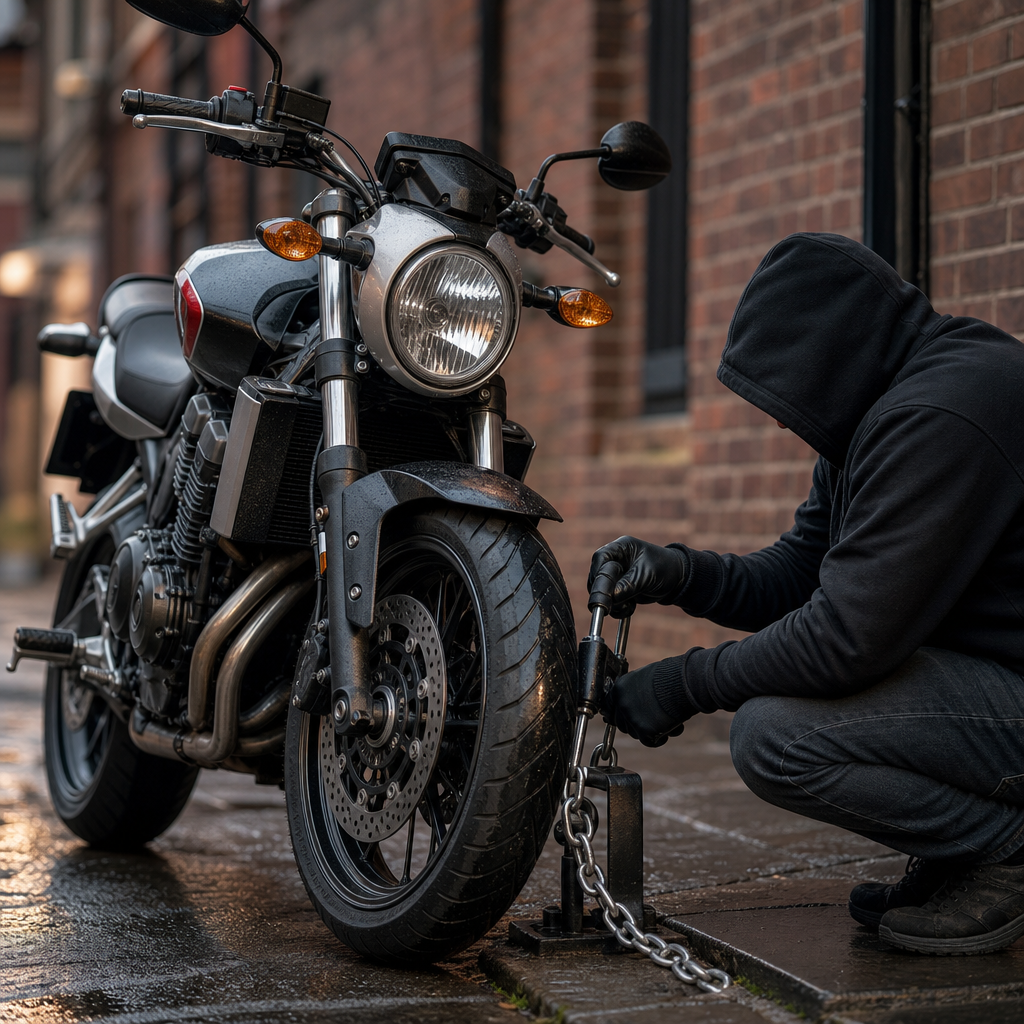
- The Chain: This is your primary defence. Look for hardened alloy steel chains, ideally 16mm or thicker, from reputable brands like Almax, Pragmasis, or Abus. These are designed to withstand angle grinder attacks for a significant amount of time. Always thread the chain through the bike's frame or a sturdy part of the wheel that can’t be easily removed, and then around an immovable object. Never just chain it through the wheel, as the wheel can be removed.
- The Lock: The lock is only as strong as your chain. Use a closed-shackle padlock of equivalent strength, preferably one that is also angle grinder resistant. Keep the chain and lock off the ground to prevent leverage attacks.
- Anchor Point: Ensure your chain is secured to something solid, such as a ground anchor or a lamppost (check local regulations first).
Disc Locks:
- Disc locks are compact and provide a quick deterrent, preventing the wheel from turning. They're excellent for short stops or as part of a multi-layered defence. Many come with integrated alarms that activate if the bike is moved.
- Crucial Tip: Always use a brightly coloured reminder cable from the disc lock to your handlebar. This prevents you from trying to ride off with the lock still attached – a common and costly mistake!
- Limitation: A disc lock alone won't stop a 'lift and load' theft.
Ground and Wall Anchors:
- For home security, a ground or wall anchor is indispensable. These are heavy-duty steel loops securely bolted into concrete or brickwork.
- Installation: Opt for anchors that require drilling into concrete or have shear bolts, making them incredibly difficult to remove. A reputable brand like Oxford, Abus, or Pragmasis will offer certified options.
- Placement: Install it in a garage, shed, or even on a private driveway where your bike can be chained to it securely. This provides the immovable object that your heavy-duty chain needs.
Steering Lock: While standard on most bikes, the steering lock offers minimal protection against a determined thief and is easily defeated. Use it, but never rely on it as your sole security measure.
Smart Security: Alarms and GPS Tracking
Once physical barriers are in place, smart technology can add another layer of defence, offering alerts and the potential for recovery.
Alarm Systems and Immobilisers:
- Alarms: These provide an audible deterrent, drawing attention if the bike is tampered with. Many modern alarms feature motion sensors, tilt sensors, and can be wired directly into the bike’s electrical system. Aftermarket alarms from brands like Datatool and Scorpion often come with remote pagers to alert you directly.
- Immobilisers: Many newer bikes come with factory-fitted immobilisers (often Thatcham Category 2 approved), preventing the engine from starting without the correct key transponder. Aftermarket immobilisers can also be installed. Ensure any system you consider is professionally installed and ideally Thatcham-approved, as this can affect your insurance.
GPS Tracking Devices:
- GPS trackers are invaluable for recovery should your bike be stolen. These small devices are hidden on the bike and transmit its location via GPS.
- Types:
- Subscription-based trackers: Services like Monimoto, BikeTrac, and Datatool Stealth offer professional monitoring and recovery services, often with features like geo-fencing (alerting you if the bike leaves a defined area) and motion alerts. While there's an ongoing cost, their recovery rates are often very high.
- DIY hidden trackers: More affordable options exist, but require careful installation and self-monitoring.
- Benefits: The ability to trace your bike's location can be the difference between a total loss and a successful recovery.
- Installation: For best results and to avoid battery drain, consider professional installation, especially for hardwired systems.
The Insurance Advantage: Security and Your Premiums
Robust security isn't just about protecting your bike; it can also significantly impact your insurance premiums.
- Reduced Risk, Lower Premiums: Insurance companies assess risk. A bike with multiple, high-quality security features is inherently less risky to insure than one left vulnerable. Insurers know that robust physical security, alarms, and tracking systems increase the difficulty of theft and the chances of recovery, reducing their potential payout.
- Thatcham-Approved Devices: Many insurers specifically look for Thatcham-approved security devices. Thatcham Research is a UK organisation that sets standards for vehicle security. A Thatcham Category 1 alarm/immobiliser or a Thatcham Category 2 immobiliser, along with a Thatcham-approved tracking device (Category 6 or 7), can lead to substantial discounts on your policy. Always check with your insurer about their specific requirements and preferred devices.
- Proof of Security: Keep all receipts for security purchases and installation records for trackers and alarms. You may need to provide these to your insurer. Document your security measures with photos too.
- Secure Parking: Where you store your bike plays a huge role. Parking it in a locked garage with a ground anchor will almost always result in lower premiums than parking on the street. Even a secure driveway or a locked shed is better than an open public space.
- Voluntary Excess: With enhanced security, you might feel more comfortable selecting a higher voluntary excess on your policy, which can further reduce your upfront premium.
Conclusion
Protecting your used motorcycle in the UK requires a comprehensive and layered approach. There's no single magic bullet, but by combining physical deterrents with smart technology, you create a formidable defence that will make your bike a less attractive target for thieves.
Invest in high-quality chains, disc locks, and ground anchors for your primary physical security. Supplement these with alarm systems and, crucially, a GPS tracker for peace of mind and the best chance of recovery. Not only will these measures safeguard your cherished machine, but they will also likely put a smile on your face when you see the savings on your insurance premiums. Ride safe, and secure your investment!