ATGATT: Your Guide to Choosing Used Motorcycle Safety Gear in the UK
Riding a motorcycle in the UK offers an unparalleled sense of freedom and exhilaration, whether you’re navigating bustling city streets or carving through scenic country lanes. However, with this freedom comes responsibility – the responsibility to protect yourself. As the adage goes, "All The Gear, All The Time" (ATGATT) isn't just a catchy phrase; it's a lifeline. Your safety equipment is your only real protection against the tarmac, and investing wisely in it, even if you’re on a budget, is non-negotiable.
Here at CarsLink.ai, we understand that finding the right balance between cost and quality is crucial, especially when you’re looking at used bikes and the accompanying gear. This guide will walk you through the essential considerations for choosing used motorcycle safety kit in the UK, from understanding critical safety standards to knowing what to look for – and what to avoid – when buying second-hand.
UK Safety Standards and Certifications – What You Need to Know
Before you even think about trying on a helmet or jacket, you need to understand the fundamental safety standards that govern motorcycle protective equipment in the UK and Europe. These certifications aren't just bureaucratic hurdles; they are your guarantee that the gear has undergone rigorous testing and offers a verified level of protection.
Helmets: ECE and SHARP Ratings For helmets, the most critical certification is ECE 22.05 (or the newer, more stringent ECE 22.06). This standard is legally mandated for all motorcycle helmets sold and used on public roads in the UK and across Europe. It certifies that the helmet meets minimum safety requirements for impact absorption, penetration resistance, chin strap strength, and field of vision. Always look for the ECE label, usually found on a sticker sewn into the chin strap or inside the helmet.
Beyond the legal minimum, the UK's independent SHARP (Safety Helmet Assessment and Rating Programme) offers invaluable additional information. SHARP ratings, from one to five stars, assess a helmet's performance in a wider range of impact tests. A higher star rating indicates better protection. While not legally required, checking a helmet's SHARP rating (available on their website) can help you make a more informed decision about its protective capabilities.
Armour and Protectors: CE Marking (EN 1621) Integrated armour in jackets, trousers, and stand-alone back protectors must also carry a CE mark to indicate compliance with European safety standards. For motorcycle protectors, this is typically EN 1621.
- EN 1621-1 applies to limb protectors (shoulders, elbows, hips, knees).
- EN 1621-2 applies specifically to back protectors.
Within these standards, you'll often see a "Level 1" or "Level 2" designation.
- Level 1 provides a good basic level of protection.
- Level 2 offers significantly enhanced impact absorption and is generally recommended for maximum safety.
High-quality armour from brands like D3O, Sas-Tec, or Knox will clearly display its CE Level. Always ensure any removable armour in used garments is present and correctly rated.
Protective Garments: CE EN 17092 More recently, a new standard, CE EN 17092, has been introduced specifically for motorcycle protective clothing. This standard classifies garments based on their overall protective performance, including abrasion resistance, tear strength, and seam strength.
- Class AAA: The highest level, designed for racing or high-risk riding.
- Class AA: Suitable for touring and general riding.
- Class A: The minimum protective level for urban riding.
- Class B and C: Provide abrasion resistance but require additional impact protectors.
While older used gear may not explicitly state EN 17092 compliance (as it's a newer standard), understanding these classes helps you recognise the level of protection good quality gear should offer. Look for robust materials and strong, double-stitched seams.
The Essential Kit Bag – What to Look For
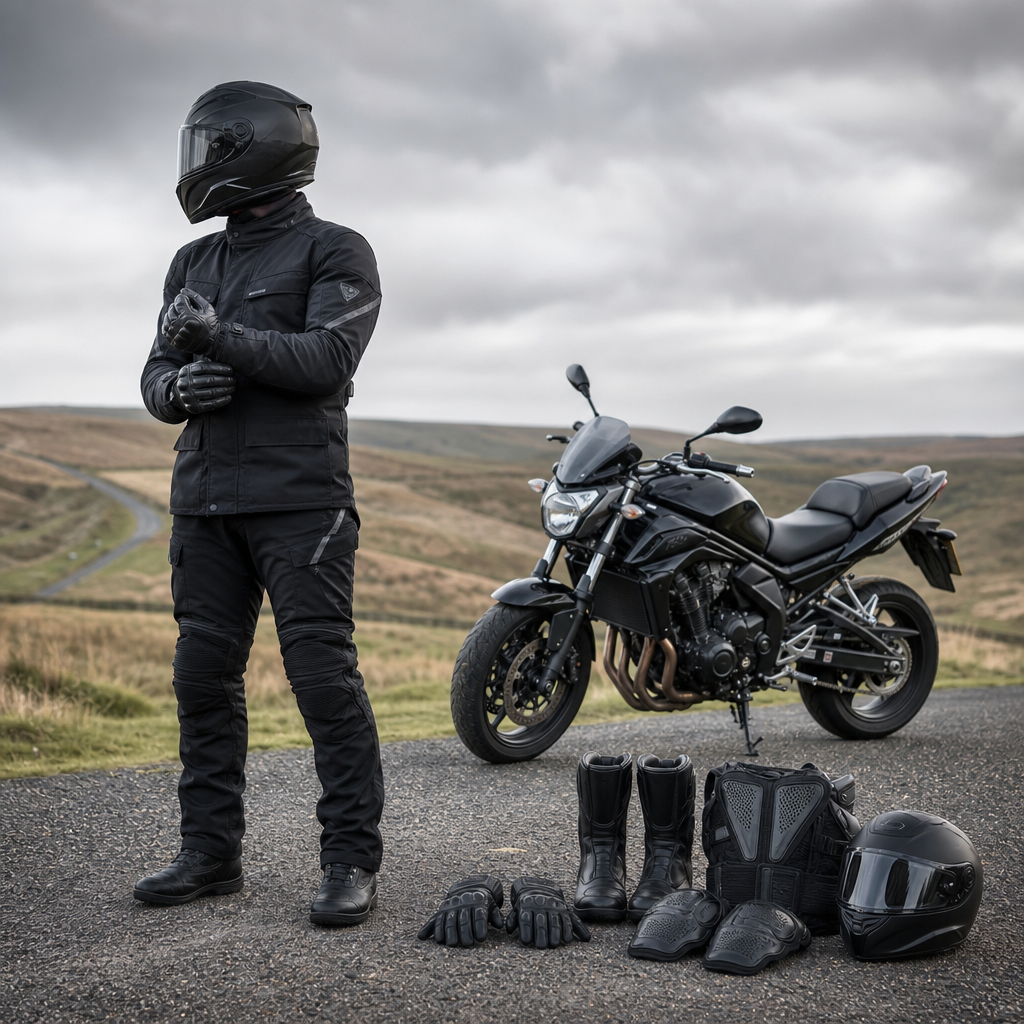
Your ATGATT setup comprises several crucial components, each designed to protect a specific part of your body. When buying used, knowing what specific features and conditions to inspect is key.
Helmets: Fit is king. A helmet should be snug without being painfully tight, with no pressure points. Your cheeks should be slightly compressed, and the helmet shouldn't move independently of your head when you shake it. Check the visor for scratches or cracks that could impair vision. Ensure all vents and fasteners work smoothly. Always opt for a full-face or modular helmet for maximum protection, even if you’re drawn to the style of an open-face.
Jackets & Trousers: The choice between leather and textile often comes down to riding style and budget. Leather offers superior abrasion resistance for sportier riding but can be less versatile in varying UK weather. Textile gear, often incorporating waterproof and breathable membranes like Gore-Tex, is excellent for touring and commuting. Look for CE-rated armour in shoulders, elbows, back, hips, and knees. Zips should be robust and fully functional, especially connection zips that link jacket to trousers, preventing them from riding up in a slide. Check for reflective elements for visibility.
Gloves: Gloves protect your hands from abrasions and impacts. Look for reinforced palms, knuckle protection (often plastic or carbon fibre), and strong stitching. Gauntlet-style gloves that extend over the jacket cuff offer better wrist protection and weather sealing. Ensure they allow for good dexterity, as you need to operate controls effectively.
Boots: Motorcycle boots are vital for protecting ankles and feet, which are surprisingly vulnerable. They should cover your ankles and have a stiff sole to prevent your foot from bending unnaturally. Look for reinforced toe boxes, gear shift pads, and sturdy closure systems (zips, Velcro, buckles). Check the soles for excessive wear, which could compromise grip.
Smart Shopping for Used Gear – Checks and Red Flags
Buying used gear can save you a significant amount, but it requires careful inspection. Some items are safer to buy used than others, while some should be avoided at all costs.
General Checks for All Used Gear:
- Damage: Inspect thoroughly for any tears, deep scuffs, abrasion marks, or compromised stitching. These are clear signs of previous incidents or significant wear that will reduce protection.
- Zips and Fasteners: Test every zip, button, and Velcro strap to ensure they are fully functional. A broken zip can compromise fit and protection.
- Hygiene: Smell the gear. While removable liners can often be washed, persistent odours or visible stains can indicate poor care or simply be off-putting.
- Age: Materials degrade over time. Textiles can lose their waterproofing, leather can dry out and crack, and helmet EPS liners can become less effective. While there's no hard rule, gear older than 5-7 years might be past its best, especially helmets.
Critical Checks for Helmets (AVOID at ALL COSTS if...):
- Any signs of impact: If a helmet shows any external scratches, scuffs, or cracks that suggest it's been dropped or involved in a crash, do not buy it. Even a seemingly minor drop can compromise the internal EPS (Expanded Polystyrene) liner, which is designed to crush on impact to absorb energy. Once compromised, it offers no further protection.
- Unknown History: Unless you implicitly trust the seller, it's safer to avoid. You can't see internal damage.
- Damaged EPS liner: Use a torch to inspect the internal EPS liner (usually under the fabric comfort liner) for any cracks, indentations, or signs of compression.
- Worn or Damaged Straps: The chin strap is crucial. Ensure it's intact, not frayed, and the D-rings or quick-release mechanism works perfectly.
Checks for Used Garments (Jackets, Trousers, Gloves, Boots):
- Armour: Ensure all armour is present, in good condition, and carries a CE rating. Check if it's still pliable – very stiff or crumbly armour might be degraded.
- Waterproofing: While hard to test fully, inspect waterproof membranes (e.g., Gore-Tex liner) for tears or damage.
- Soles (Boots): Check for even wear and sufficient tread.
- Palms (Gloves): Look for excessive wear or holes, especially in critical areas that would hit the ground in a slide.
Budgeting for Protection and Finding Value
Safety should never be compromised, but that doesn't mean you can't be savvy with your spending. Prioritise your budget, starting with the most critical items.
Prioritisation:
- Helmet: Absolutely non-negotiable. Spend as much as you can afford on a new one if possible, or a rigorously inspected used one.
- Back Protector: A quality CE Level 2 back protector is vital, whether integrated into a jacket or a standalone item.
- Boots & Gloves: Protect your extremities.
- Jacket & Trousers: Ensure they offer good abrasion and impact protection.
Where to Find Value:
- Reputable Used Gear Retailers: Some motorcycle shops specialise in or have sections for used gear. They often inspect items more thoroughly.
- Online Marketplaces (eBay, Gumtree): Proceed with caution. Ask for many detailed photos, especially of potential weak points and internal areas. Arrange to see the item in person if possible.
- Motorcycle Forums and Facebook Groups: Often good communities, but still apply rigorous checks.
- End-of-Season Sales: New gear at discounted prices can sometimes rival the cost of quality used items. Keep an eye out for sales from major retailers.
Remember, safety gear is an investment in your well-being, not an expense. A well-chosen used item can offer excellent protection at a fraction of the cost of new, allowing you to ride confidently without breaking the bank.
Conclusion
Embracing ATGATT is the cornerstone of responsible motorcycling. By understanding UK safety standards, meticulously inspecting used gear for damage and wear, and prioritising your budget wisely, you can assemble a protective kit that keeps you safe on the road. While the thrill of two wheels is undeniable, doing so with the right gear ensures you’ll be able to enjoy countless more rides. Ride safe, choose wisely, and enjoy the open road with confidence.