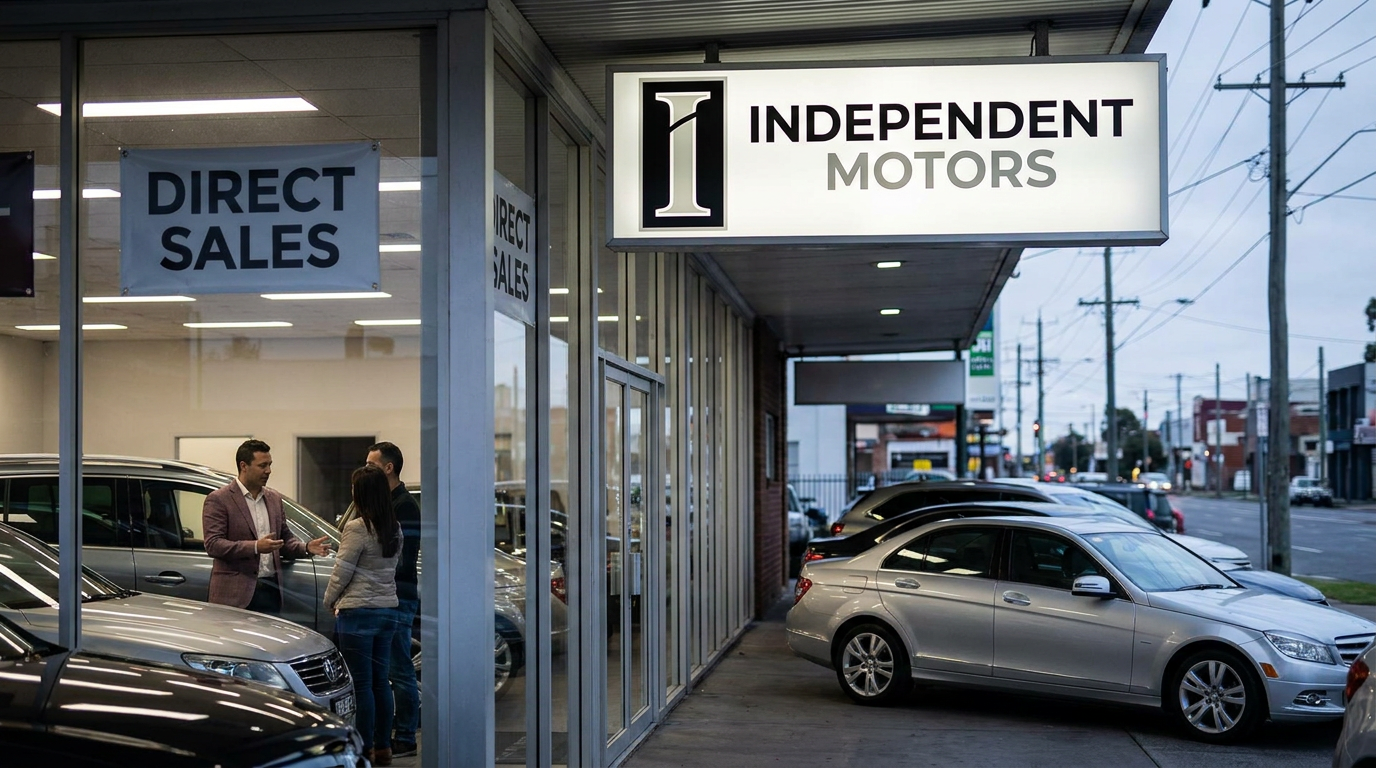
What Direct-to-Dealer Traffic Means for Independent Sellers
Direct-to-dealer traffic refers to potential buyers who land on your dealership's own website rather than interacting with your inventory through a third-party marketplace platform. When a buyer clicks through from a listing service and arrives at your domain, you control the entire customer experience, capture first-party data, and own the relationship from initial browse to final purchase. This contrasts sharply with traditional classified platforms that keep users within their own ecosystem, displaying dealer stock alongside competitors whilst retaining all browsing behaviour data and customer contact information.
For independent vehicle sellers operating without the marketing budgets of franchise networks, this distinction fundamentally changes the economics of customer acquisition. Every visitor to your own site represents an opportunity to build brand recognition, showcase your full inventory, and establish direct communication channels that don't require paying a middleman for each subsequent interaction.
The Hidden Cost of Marketplace-Retained Traffic
Traditional automotive marketplaces generate revenue by keeping buyers on their platforms as long as possible. A prospective customer searching for a used BMW might view your listing, but they'll see it surrounded by competitor vehicles, banner advertisements, and calls-to-action designed to keep them browsing within the marketplace rather than visiting your website. The platform controls the user interface, determines which information appears prominently, and decides whether your contact details are displayed or hidden behind enquiry forms that route through the marketplace's systems.
This model creates a dependency cycle. Dealers pay substantial monthly fees for visibility, yet never build their own audience. When a buyer submits an enquiry through the marketplace, the lead arrives in your inbox alongside dozens of others, often with minimal context about what the customer viewed or how seriously they're considering a purchase. The marketplace owns the relationship, and you're essentially renting access to customers who may not even remember which dealer they contacted by the time you respond.
The financial implications extend beyond the obvious subscription costs. Free vs paid vehicle listing platforms reveals that major UK marketplaces charge between £500 and £3,500 monthly, but these fees only secure you a spot in a crowded directory. You're still competing for attention with every other dealer in your region, and the platform has no incentive to send traffic away from its own domain where it can serve advertisements and upsell premium placement.
Building Brand Equity Through Your Own Digital Property
When buyers visit your dealership website directly, every interaction strengthens your brand rather than a marketplace's. Your site design, messaging, customer testimonials, and service offerings all contribute to a distinct identity that differentiates you from competitors. A well-optimised dealer website becomes a business asset that appreciates over time as you accumulate search engine authority, customer reviews, and returning visitor traffic.
Consider the long-term value of a customer who bookmarks your site after finding exactly what they wanted. When they're ready to purchase their next vehicle in three years, they'll return to a trusted source rather than starting a fresh marketplace search. This repeat business costs nothing to acquire and often converts at higher rates because the relationship already exists. Marketplace platforms, by contrast, treat every search as a new opportunity to insert themselves between dealer and buyer, charging you again for access to someone who might already know your business.
Direct website traffic also enables sophisticated remarketing strategies. When someone browses your inventory but doesn't make contact, you can use standard digital advertising tools to show them relevant messages across the web, reminding them of vehicles they viewed or alerting them when similar stock arrives. Marketplace platforms restrict or prohibit this kind of follow-up marketing because it would reduce their control over the customer relationship.
First-Party Data and Customer Insights
Owning your traffic means owning your data. Analytics from your own website reveal which vehicle types attract the most interest, what price points generate enquiries, how long buyers spend researching before making contact, and which pages cause visitors to leave. This intelligence informs inventory decisions, pricing strategies, and website improvements that compound over time.
Marketplace platforms provide limited reporting, typically showing how many times your listings were viewed and how many enquiries you received. You don't learn whether a buyer also looked at competitor vehicles, what search terms brought them to your listing, or whether they visited multiple times before deciding. The platform guards this valuable data because it represents their competitive advantage, using aggregated insights to optimise their own user experience whilst leaving individual dealers in the dark about customer behaviour patterns.
GDPR-compliant vehicle listing and buyer data handling becomes simpler when you control the entire customer journey. Your privacy policy, cookie consent mechanisms, and data retention practices apply consistently across all interactions. Marketplace platforms introduce complexity by acting as joint data controllers, requiring buyers to consent to multiple privacy policies and creating ambiguity about who's responsible for protecting personal information.
First-party data also future-proofs your business against changes in digital advertising regulations. As third-party cookies disappear and privacy laws tighten, businesses with direct customer relationships and permission-based marketing lists maintain their ability to reach audiences. Dealers dependent on marketplace traffic have no such buffer, they're entirely reliant on platforms that may change their terms, increase prices, or alter algorithms at any time.
Lower Customer Acquisition Costs Over Time
The economics of direct traffic improve with scale. Initial investment in search engine optimisation, content creation, and website development requires time and budget, but these assets continue generating returns long after the work is complete. A well-ranking blog post about buying used vans in your region can drive qualified traffic for years without ongoing costs. Compare this to marketplace advertising where every click, impression, or lead carries a marginal cost that never decreases regardless of how long you've been a customer.
Independent dealers who build organic search visibility reduce their dependence on paid advertising channels. When your dealership website ranks prominently for local vehicle searches, buyers discover you without any intermediary taking a cut. The customer acquisition cost for organic traffic approaches zero once you've achieved strong search positions, creating a sustainable competitive advantage that compounds as your domain authority grows.
Why direct dealer connections benefit both buyers and sellers explains how this model creates value on both sides of the transaction. Buyers appreciate transparent access to dealer information and inventory without navigating through marketplace interfaces designed to maximise engagement rather than facilitate quick decisions. Sellers benefit from higher-intent traffic, lower acquisition costs, and the ability to present their full value proposition rather than competing purely on price within a standardised listing format.
Control Over Customer Experience and Conversion Optimisation
Your website is your sales floor. You decide which vehicles appear prominently, how financing options are presented, whether customer testimonials are featured, and what calls-to-action guide visitors toward contact. Marketplace platforms impose rigid templates that treat all dealers identically, preventing differentiation based on service quality, warranty offerings, or specialist expertise.
This control enables continuous improvement through conversion rate optimisation. If enquiry forms aren't generating responses, you can test different layouts, reduce required fields, or add trust signals like industry accreditations. When a particular vehicle description format leads to more phone calls, you can apply that learning across your entire inventory. Marketplace platforms offer no such flexibility, dealers must accept whatever interface the platform provides and hope it serves their specific business model.
The ability to cross-sell and upsell also depends on controlling the customer journey. A buyer researching a specific vehicle on your website might notice your finance calculator, read about your warranty packages, or browse related vehicles that better match their needs. These opportunities disappear on marketplace platforms where the primary goal is moving users to the next listing, not deepening engagement with a particular dealer.
Search Engine Visibility and Long-Term Organic Growth
Every page on your dealership website contributes to your overall search engine authority. Vehicle listings, blog content, location pages, and service descriptions all signal relevance to search engines evaluating where your site should rank for automotive queries. Over time, this accumulated authority makes it easier to rank for competitive keywords, creating a virtuous cycle where visibility drives traffic, traffic generates engagement signals, and engagement improves future rankings.
Marketplace listings, whilst they may rank well in search results, send that ranking benefit to the marketplace domain rather than yours. A buyer searching for "used BMW 3 Series Manchester" might find a marketplace page listing your vehicle, but the search engine credits the marketplace for that relevant content. Your dealership receives none of the long-term SEO value despite providing the actual inventory that made the page useful.
How AI search is changing vehicle discovery for UK buyers highlights how emerging search technologies prioritise authoritative sources and direct answers. As AI-powered search engines and voice assistants become more prevalent, they'll increasingly reference dealer websites directly rather than routing users through marketplace intermediaries. Dealers with strong organic visibility and well-structured website content will capture this traffic, whilst those dependent on marketplace platforms risk becoming invisible in AI-mediated search experiences.
Platform Independence and Business Resilience
Relying entirely on marketplace traffic creates existential business risk. Platforms can increase prices, change algorithms that determine listing visibility, alter their business models, or even exit the market entirely. Dealers with diversified traffic sources, including strong direct website visits, can weather these changes without catastrophic revenue impact.
The automotive marketplace landscape has already demonstrated this volatility. Platforms merge, rebrand, and restructure their pricing regularly, leaving dealers scrambling to adjust budgets and marketing strategies. Independence from any single traffic source provides stability and negotiating leverage. When a marketplace raises prices, dealers with thriving organic traffic can choose to reduce or eliminate their marketplace spend rather than accepting unfavourable terms because they have no alternative.
This resilience extends to local market disruptions. A new competitor opening nearby might flood marketplace platforms with inventory, making it harder for your listings to stand out. Your own website traffic remains unaffected by competitor activity, providing a stable baseline of customer enquiries even when marketplace performance fluctuates.
How AI-Powered Search Platforms Enable Direct Traffic
Emerging alternatives to traditional marketplaces recognise that dealer success and platform success aren't mutually exclusive. Services that route traffic directly to dealer websites rather than retaining users create a fundamentally different relationship. Instead of competing with dealers for customer attention, these platforms act as discovery tools that help buyers find the right dealer and then step aside.
This model aligns incentives more naturally. The platform succeeds by helping buyers find vehicles efficiently, and dealers succeed by receiving qualified traffic to their own properties where they control the experience. Neither party benefits from artificially prolonging the search process or inserting unnecessary friction between buyer and seller.
The evolution of vehicle search from classifieds to AI-powered discovery traces how technology enables this shift. Natural language search interfaces can understand buyer intent without requiring them to navigate complex filter hierarchies, whilst API integrations with dealer stock feeds ensure inventory accuracy without manual listing management. The result is a search experience that serves buyers effectively whilst directing them to dealer websites rather than trapping them in a marketplace ecosystem.
For independent dealers, this represents an opportunity to reclaim customer relationships without sacrificing discoverability. Rather than choosing between expensive marketplace visibility and invisible independence, you can maintain a strong web presence whilst benefiting from AI-powered search tools that enhance rather than replace your direct customer channels.
Measuring the Impact of Direct Traffic
Quantifying the value of direct-to-dealer traffic requires looking beyond simple lead counts. Metrics worth tracking include:
- Traffic source diversity: What percentage of website visits come from organic search, direct navigation, referrals, and paid sources? Heavy dependence on any single channel indicates vulnerability.
- Returning visitor rate: How many people visit your site multiple times before making contact? Higher return rates suggest strong brand recognition and consideration.
- Time on site and pages per session: Engaged visitors who explore multiple vehicles and read supporting content are more likely to convert than those who bounce immediately.
- Conversion rate by traffic source: Do visitors from your own marketing efforts convert at different rates than marketplace referrals? This reveals the quality difference between traffic types.
- Customer lifetime value by acquisition channel: Track whether customers acquired through direct channels generate more repeat business and referrals than those who first found you through marketplaces.
These metrics paint a fuller picture than marketplace dashboards that emphasise vanity metrics like impression counts. Understanding the true quality and long-term value of different traffic sources enables smarter allocation of marketing budget and effort.
Practical Steps for Building Direct Traffic
Transitioning from marketplace dependence to diversified traffic sources requires systematic effort across multiple channels:
Invest in technical SEO fundamentals. Ensure your website loads quickly, works flawlessly on mobile devices, uses structured data markup for vehicle listings, and maintains clean URL structures. These technical factors determine whether search engines can effectively crawl and rank your content.
Create location-specific content that answers common buyer questions. Pages targeting "used cars in [your town]" or "best van dealers near [local landmark]" capture high-intent local searches. Include genuine information about your area, not just keyword-stuffed placeholder text.
Optimise individual vehicle listings with detailed descriptions, multiple high-quality photos, and comprehensive specifications. Unique content for each vehicle, rather than manufacturer boilerplate, improves search visibility and provides value to buyers researching specific models.
Build citations and local business listings across Google Business Profile, automotive directories, and local chambers of commerce. Consistent name, address, and phone number information across the web strengthens local search signals.
Encourage satisfied customers to leave reviews on your Google Business Profile and other platforms. Authentic reviews improve local search rankings whilst providing social proof that influences buying decisions.
Dealer signup processes for platforms that route traffic directly to your website complement rather than replace these organic efforts. Listing your inventory on services that send buyers to your domain amplifies your reach without creating the dependency and cost structure of traditional marketplaces.
The Competitive Advantage of Owned Audiences
Independent dealers who successfully build direct traffic create a moat around their business that's difficult for competitors to replicate quickly. A dealership with thousands of monthly organic visitors, an email list of past customers and prospects, and strong local search visibility has fundamentally different economics than one paying for every customer interaction through marketplace fees.
This advantage becomes particularly pronounced during economic uncertainty. When buyers reduce vehicle purchases and competition for remaining customers intensifies, dealers with high fixed marketing costs face pressure to maintain marketplace spending even as return on investment deteriorates. Those with strong organic traffic can reduce variable marketing expenses whilst maintaining baseline enquiry volume, preserving profitability when others struggle.
The shift toward direct traffic also positions independent dealers to compete more effectively with franchise networks. Whilst franchises benefit from manufacturer marketing support and brand recognition, independent dealers with strong local digital presence can capture buyers specifically searching for the makes, models, and price points they stock. Local search intent often outweighs brand preference when buyers are researching specific vehicles rather than browsing generally.
Frequently Asked Questions
How long does it take to build meaningful direct traffic to a dealer website?
Most dealers see initial organic search traffic within three to six months of implementing proper SEO practices, with substantial growth typically occurring between months six and twelve. The timeline depends on your starting point, competition in your local market, and consistency of effort. Technical optimisation and local citations often produce quicker results than content marketing, which builds authority more gradually. Unlike marketplace advertising that stops generating traffic the moment you stop paying, organic search visibility continues improving over time as your domain authority accumulates.
Can small independent dealers compete with large marketplace platforms for search visibility?
Yes, particularly for local and specific vehicle searches. A well-optimised independent dealer website can outrank marketplace listings for queries like "used vans in [town name]" or "[specific model] dealer near me" because search engines recognise the dealer as the authoritative local source. Marketplaces dominate broad national searches, but local intent searches favour businesses with strong geographic relevance and detailed local content. Small dealers should focus on their geographic area and specialist inventory rather than trying to compete nationally.
What happens to marketplace traffic if I focus on building direct visitors?
The two traffic sources aren't mutually exclusive. Many successful dealers maintain selective marketplace presence whilst building organic channels, using marketplace listings strategically for specific vehicle types or during slow periods rather than as their primary customer acquisition method. As direct traffic grows, you gain leverage to negotiate better marketplace terms or reduce spending on underperforming platforms. The goal is diversification and reduced dependence, not necessarily complete marketplace elimination.
How do I measure whether direct traffic converts better than marketplace leads?
Implement tracking systems that record the source of each enquiry and follow it through to sale. Most customer relationship management systems can tag leads by origin (organic search, direct website visit, marketplace referral, etc.) and calculate conversion rates and average transaction values by source. Many dealers discover that whilst marketplaces generate higher lead volumes, direct website enquiries convert at better rates because visitors have already researched the dealership and arrive with higher purchase intent.
Is it worth investing in direct traffic strategies if I'm planning to sell my dealership?
Absolutely. A dealership with strong organic search visibility, an established website receiving consistent traffic, and diversified customer acquisition channels commands a higher sale price than one entirely dependent on marketplace advertising. Buyers value sustainable traffic sources and owned customer relationships because they represent transferable assets that continue generating value under new ownership. Marketplace dependencies, by contrast, represent ongoing costs and risks that reduce business valuation.