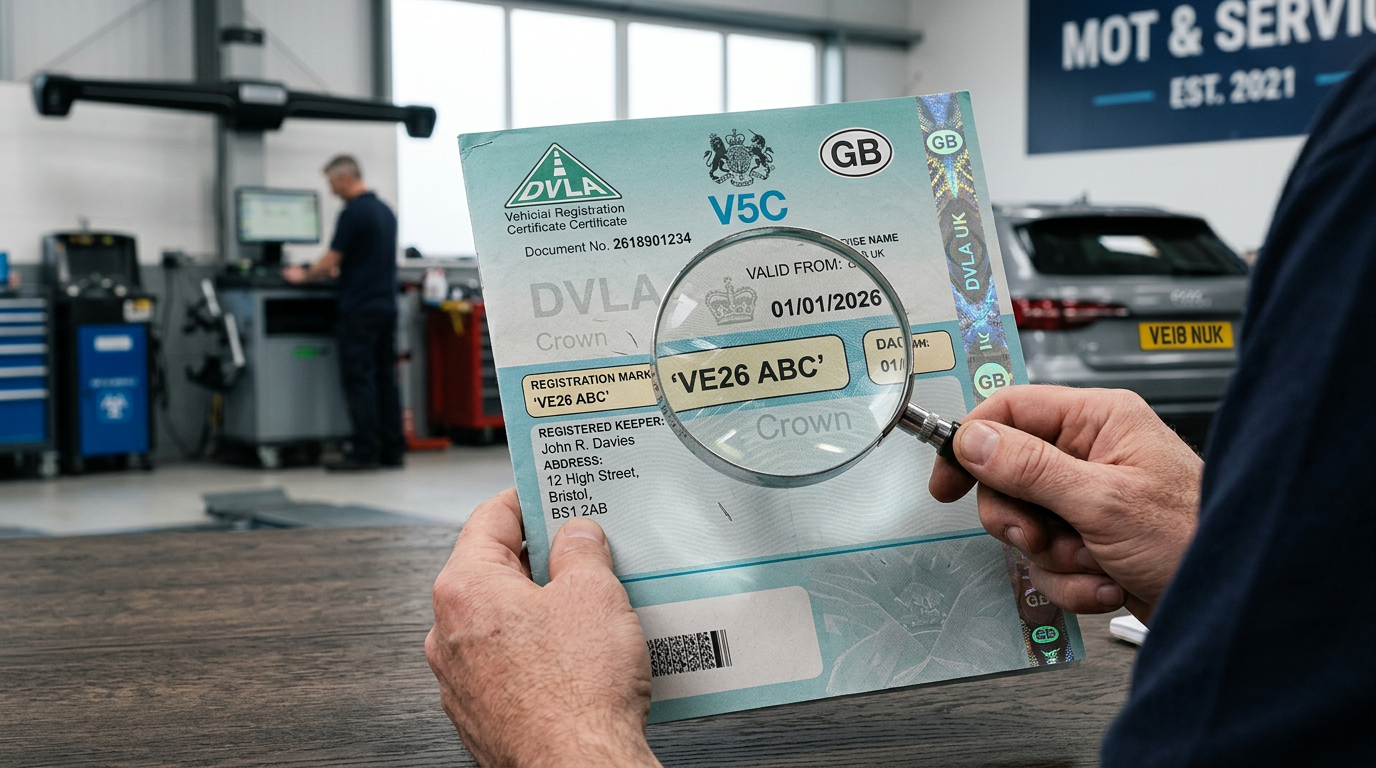
As we move deeper into 2026, the UK automotive market is grappling with a paradox: while vehicles are becoming more technologically advanced, car crime is reverting to high-tech paperwork manipulation. The V5C registration certificate—commonly known as the logbook—remains the "birth certificate" of a vehicle. However, as digital security improves, sophisticated criminal syndicates have evolved their methods. In 2026, the "fake logbook" isn't just a poor photocopy; it is a precision-engineered forgery designed to bypass cursory checks during private sales and even some trade-ins.
Understanding how to validate a V5C is no longer just a recommendation; it is a critical safeguard for your financial security. Whether you are a private buyer hunting for a bargain or a dealer protecting your stock inventory, this guide breaks down the 2026 landscape of document fraud.
The Evolving Threat: High-Tech V5C Forgeries in 2026
The DVLA has introduced several security features over the years, including the transition to the "multicoloured" design and digital-first notifications. However, 2026 has seen the rise of "cloned identities," where a legitimate vehicle’s details are transposed onto a high-quality forged V5C.
Criminals are now using high-resolution thermal transfer printers and genuine-feel paper stocks that mimic the watermark and heat-sensitive ink of authentic DVLA documents. The danger is that these documents often look perfect to the naked eye. The goal is usually to sell a stolen car, a Category S/N write-off that has been poorly repaired, or a vehicle under an active PCP or HP agreement.
Key Red Flags in 2026 Logbook Patterns
When inspecting a V5C in 2026, you must look beyond the basic details. Fraudsters often slip up on the microscopic details:
- The Serial Number Discrepancy: The V5C serial number check 2026 protocols require more than just looking at the number. Check the document reference number (11 digits). It should appear on both the front and the "New Keeper" supplement (V5C/2).
- The Watermark Test: Hold the document up to a strong light. A genuine V5C has a distinct "DVLA" watermark that is embedded within the paper, not printed on top.
- The Heat-Sensitive Ink: Genuine 2026-issue V5Cs contain a small "D" icon in a circle that should disappear or change colour when you rub it with your thumb (body heat).
- The Microtext: Under a magnifying glass, the lines on the document are actually made of tiny, repeating text. Forgeries often show these as solid or blurred lines.
How to Conduct a V5C Serial Number Check in 2026
The most effective way to verify a logbook is to cross-reference it with the DVLA’s digital database. While the physical paper is important, the digital record is the ultimate source of truth.
- Check the Date of Issue: The V5C will state the date the current logbook was issued. Use the DVLA’s "Get vehicle information from DVLA" service. If the date on the screen doesn't match the date on the paper, the document is void.
- Verify the Reference Number: Use an HPI Document Validation service or a similar premium check. These services check if the 11-digit reference number is the most recent one issued by the DVLA. Criminals often try to sell cars using "old" logbooks that were reported lost or stolen.
- The VIN Match: Never trust a V5C in isolation. Ensure the VIN (Vehicle Identification Number) on the logbook matches the one found on the car's dashboard (bottom of the windscreen) and the driver’s side B-pillar or engine bay.
| Security Feature | What to Look For (Genuine) | Red Flag (Fraudulent) |
|---|---|---|
| Document Paper | Rough, high-quality feel with watermark | Smooth, shiny, or overly flimsy paper |
| Reference Number | Matches latest DVLA digital record | Valid number, but from an "older" voided version |
| Vendor Details | Matches seller’s ID and address | Seller "selling for a friend" or address is a PO Box |
| Hologram | Shift-effect colours when tilted | Dull, static, or obviously stuck-on sticker |
The Dealer’s Duty: Consumer Rights Act 2015 and Provenance
For motor traders, the stakes are even higher. Under the Consumer Rights Act 2015 dealer provenance standards, a professional seller is legally responsible for ensuring a vehicle is "as described" and "of satisfactory quality." Selling a car with a fraudulent V5C—even if the dealer was unaware—can lead to mandatory full refunds and potential legal action for negligence.
In 2026, Trading Standards have become increasingly strict. Dealers are expected to use professional-grade verification tools. Relying on a "visual check" is no longer a valid defence in a consumer tribunal. Traders should:
- Perform a full provenance check on every part-exchange.
- Keep a digital scan of the V5C and the seller's driving licence for audit trails.
- Cross-reference the V5C against the mileage history in the MOT database to look for "clocking" discrepancies.
Protecting Yourself in the Private Market
If you are buying privately through platforms like CarsLink.ai, you have fewer protections than buying from a dealer. However, using the right tools can mitigate almost all risk.
Before you even travel to see a car, ask the seller for the V5C reference number. If they refuse to provide it, walk away. A legitimate seller should have nothing to hide. Once you have the number, run it through a comprehensive data check. In 2026, these checks are instantaneous and can tell you if the document belongs to a batch stolen from the DVLA offices (a common tactic where "blank" logbooks are filled in by criminals).
The "Clone" Warning
The most dangerous fraud in 2026 is the "High-End Clone." This is where a car has the correct plates, the correct VIN (tampered), and a genuine-looking V5C, but the physical car is actually a different vehicle entirely. Pro Tip: Look for the "V5C issue date" on the DVLA website. If a car has had a new logbook issued in the last 4 weeks, be extremely cautious. This is a common tactic for quick flips of stolen goods.
Using AI to Spot the Gaps
The 2026 buyer has an advantage: AI-powered search and verification. When using CarsLink.ai to browse for your next vehicle, our platform integrates market data to highlight listings that show inconsistencies in history or paperwork. While the physical V5C check remains your responsibility at the point of sale, starting your journey on a platform that filters for high-quality, verified data reduces your exposure to "too good to be true" scams.
Conclusion: Don't Let Paperwork Be Your Downfall
As vehicle theft and fraud become more sophisticated, the V5C remains the frontline of your defence. By understanding fake DVLA logbooks 2026 patterns and insisting on a thorough HPI Document Validation service check, you can purchase with confidence.
Remember:
- Always check the physical security features (watermark, microtext, heat-sensitive ink).
- Always verify the document reference number against the DVLA digital record.
- Always ensure the person selling the car is the person named on the V5C.
Whether you're a dealer looking to secure your forecourt or a buyer seeking your next car, start your search the smart way. Explore thousands of verified listings and use our integrated tools on CarsLink.ai to find a vehicle with a clean, honest history today.