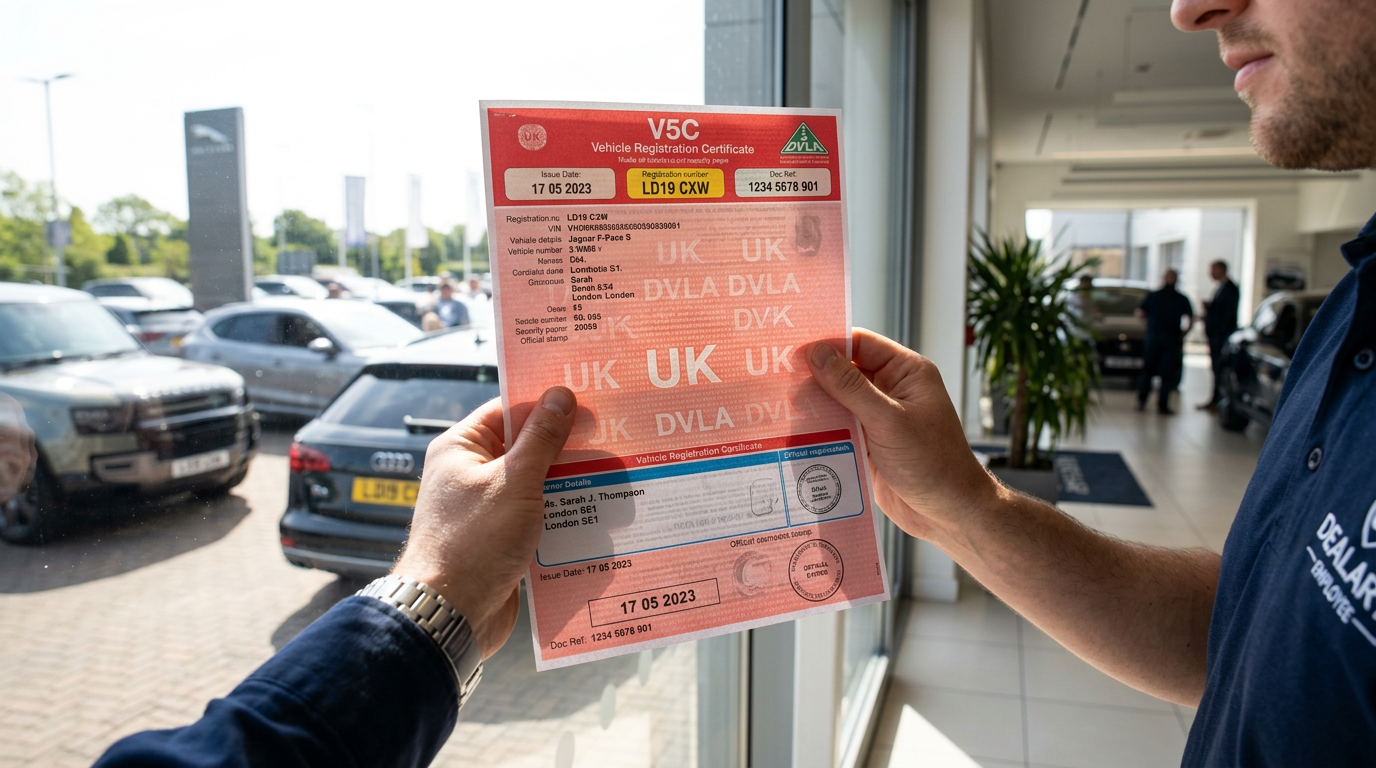
In the high-stakes world of the UK used car market, the V5C vehicle registration certificate—more commonly known as the logbook—remains the most critical piece of paper you will ever handle. Despite the rapid digitisation of the DVLA's services in 2026, the physical V5C is still the primary proof of "registered keeper" status.
However, as car technology has advanced, so too have the techniques of fraudsters. In 2026, car identity theft and "cloning" remain significant threats to buyers. A forged logbook is often the first step in a scam designed to sell a stolen, written-off, or financed vehicle to an unsuspecting buyer. Before you transfer thousands of pounds to a private seller, you must know exactly how to verify the authenticity of the documentation in your hand.
The 2026 V5C: Anatomy of a Genuine Logbook
The DVLA updated the V5C format most recently in 2020, moving to a multi-coloured layout with specific security features. By 2026, these features are the industry standard. When inspecting a logbook, you are looking for more than just the correct name and address; you are looking for physical security markers that are difficult for hobbyist scammers to replicate.
1. The Multi-Tonal Watermark
Hold the document up to a natural light source (a phone torch isn't always enough). You should see a clear "D.V.L.A." watermark that is embedded within the paper, not printed on top. The paper itself should have a specific tactile quality—slightly textured and heavier than standard A4 printer paper.
2. The Serial Number and Issue Date
Every V5C has a unique 11-digit document reference number. In 2026, checking this number is easier than ever via the DVLA’s digital portal. If the paper document shows an issue date of 12/04/2026, but the DVLA’s online database shows the latest V5C was issued in 2024, the paper in your hand is a void document or a forgery.
3. The "C" Watermark and Latent Images
Modern V5Cs contain sophisticated latent images and micro-printing. If you tilt the document, certain elements should change colour or reveal hidden symbols. Many forgeries use high-quality scanners that capture the colour but fail to replicate the light-reflective security ink.
High-Risk Red Flags: What to Look For
If any of the following elements feel "off," walk away from the deal immediately.
- Missing Perforations: A genuine V5C has clean, machine-cut perforations at the tear-off strips. If these edges are rough, hand-cut, or non-existent, it is likely a printed copy.
- Ink Bleeding: Professional DVLA printing uses high-end lithography. If you see "fuzzy" edges around letters or ink that appears to have bled into the paper fibres, it was probably produced on a home inkjet printer.
- The "V5C" Logo: The V5C logo at the top should be crisp. On many fakes, this logo is slightly pixelated or the blue/red hues don't quite match the standard UK Government palette.
Technical Specifications: 2026 Reference Table
To help you cross-reference, here is a breakdown of what a genuine V5C should look like in the current 2026 market.
| Feature | Genuine V5C Marker | Forgery Red Flag |
|---|---|---|
| Paper Weight | Approx 90-100gsm, textured | Thin, smooth 80gsm copier paper |
| Watermark | Visible when held to light | Printed grey ink mimicking a watermark |
| Document Ref No. | 11 digits, matches DVLA online check | Missing digits or mismatch with DVLA records |
| Serial Numbers | Located on the front and on the V5C/2 | Numbers don't match across sections |
| Colour Gradient | Smooth transition from blue to pink | Blocky or "stepped" colour transitions |
How to Verify Vehicle Provenance Digitally
While a physical inspection is vital, it must be paired with a digital verification. The DVLA "View Vehicle Record" service is the most reliable way to confirm if a logbook is current.
- Check the Document Reference Number: Enter the 11-digit number on the GOV.UK website. If the system doesn't recognise it, or it states "This is not the most recent document," the logbook is invalid.
- Verify the VIN (Vehicle Identification Number): Compare the VIN on the V5C with the VIN stamped on the vehicle (usually at the base of the windscreen or on the driver's side door pillar). A mismatch is a definitive sign of car cloning.
- Use AI-Powered Search Tools: When searching for vehicles, using platforms like CarsLink.ai can add a layer of security. Our AI-driven algorithms pre-screen listings and help identify inconsistencies in vehicle history before you even reach the viewing stage.
Protecting Yourself from Car Identity Theft
Forged logbooks are the backbone of car identity theft, where a stolen vehicle is given the identity of a legitimate car. To protect yourself:
- Meet at the Registered Address: Never meet a seller in a car park or a motorway service station. A genuine seller will have no problem with you visiting the address listed on the V5C. If the address doesn't match the seller's home, ask for proof of why.
- Check the MOT History: Use the vehicle’s registration to check its MOT history online. If the mileage jumps significantly or the MOT was "passed" while the car was allegedly off the road, the V5C might be masking a more serious issue.
- Request a HPI or Experian Check: These reports are non-negotiable in 2026. They will tell you if the vehicle is currently subject to outstanding finance, is a recorded write-off (Category S or N), or has been reported stolen.
Advice for Dealers and Traders
For motor traders, the stakes are even higher. Accepting a vehicle with a forged V5C can result in the loss of thousands of pounds and potential legal repercussions from the police.
- Training Staff: Ensure your sales team knows the "feel" of a genuine V5C. Most forgeries are caught by tactile inspection before the digital check is even performed.
- Verification Protocols: Implement a mandatory two-step verification for every trade-in: a physical V5C security check and a real-time DVLA database API pull.
- V5C/2 Sensitivity: Pay close attention to the V5C/2 (the green New Keeper's slip). Scammers often provide a forged V5C/2 to hide the fact that they don't actually possess the main logbook.
Summary: Trust Your Instincts
The sophistication of forgeries in 2026 is impressive, but they are rarely perfect. If a dealer or private seller seems rushed, or if the "deal" seems too good to be true, it likely is.
Before you commit to a purchase, take a breath. Carry out a physical check of the V5C watermarks and serial numbers, and always cross-reference this data with the latest UK government records. By being meticulous, you turn yourself from a target into an informed buyer.
Ready to find your next car with confidence? Use CarsLink.ai to browse thousands of verified listings across the UK, using the power of AI to filter out the noise and find the safest deals on the market.
[Browse Secure Used Car Listings on CarsLink.ai Today]