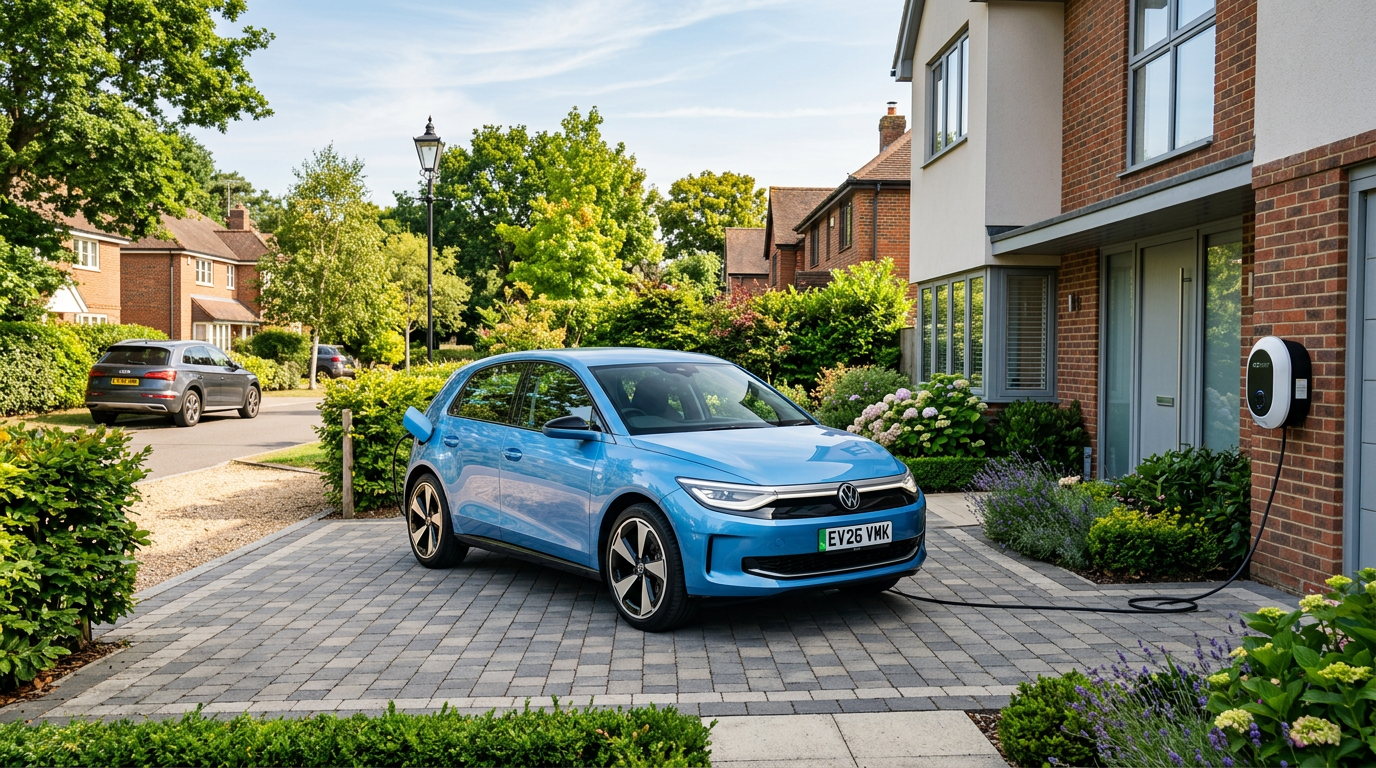
When Volkswagen first unveiled the ID.2all concept, they promised a "car for the people" that would bring electric mobility to the masses. Now, in mid-2026, the first wave of used VW ID.2 models is hitting the UK market. As the cost-of-living crisis of the early 2020s recedes into history, the appetite for high-quality, cheap electric cars in the UK has never been higher.
The ID.2 has quickly established itself as a successor to the legendary Polo, offering a blend of retro-inspired design, modern tech, and a price point that makes internal combustion engines (ICE) look increasingly redundant.
Why the VW ID.2 is the 2026 Used EV Hero
In 2026, the used EV hatchback market is no longer dominated solely by the Renault Zoe or the Nissan Leaf. The ID.2 changed the game by offering a 280-mile range (on top-spec models) and a cabin that fixed the ergonomic complaints of the earlier ID.3 and ID.4.
If you are looking for a compact car that is ULEZ-compliant across all UK zones, easy to park in London or Manchester, and cheap to run, the ID.2 is currently the benchmark.
Key Specifications at a Glance
| Feature | ID.2 Standard (38kWh) | ID.2 Pro (56kWh) |
|---|---|---|
| Approx. Used Price (2026) | £16,500 - £18,500 | £21,000 - £23,500 |
| WLTP Range | 180-190 miles | 270-285 miles |
| 0-62 mph | 7.5 seconds | 6.9 seconds |
| Charging (10-80%) | ~25 mins (DC) | ~20 mins (DC) |
| Tax (VED) | £10/year (Post-2025 rates) | £10/year (Post-2025 rates) |
What to Look for When Buying a Used VW ID.2
Buying a used EV requires a slightly different checklist than a traditional petrol car. At CarsLink.ai, we recommend focusing on three main pillars: Battery Health, Software Version, and Physical Trim.
1. Battery State of Health (SoH)
By 2026, most ID.2s on the used market will be 1 to 2 years old. While lithium-iron-phosphate (LFP) batteries (found in the entry-level models) are incredibly durable, you should still request a battery health certificate. A car with 95% health or above is ideal. Remember, VW’s original warranty covers the battery for 8 years or 100,000 miles, so you should still be well within the 'safety zone.'
2. Software Updates
Early ID models were plagued by laggy infotainment systems. By the time the ID.2 launched, VW had moved to version 5.0 software. Ensure the car you are viewing has the latest 'Over-The-Air' (OTA) updates installed. Check for the physical buttons—VW listened to customers and reintroduced tactile switches on the ID.2 steering wheel, making it much more user-friendly than the 2022-era ID.3.
3. The V5C and Service History
Even though EVs have fewer moving parts, the DVLA V5C logbook must be present to prove ownership. Check the service history for brake fluid changes and cabin filter replacements. Since the ID.2 doesn't require oil changes, the "service" is largely a diagnostic check and a look at the suspension and tyres.
The Ownership Experience: Road Tax and Insurance
As of April 2025, electric vehicles are no longer exempt from Vehicle Excise Duty (Road Tax). However, as a small hatchback, the ID.2 sits in a lower bracket than luxury SUVs. You’ll likely be paying the standard rate (around £10-£20 for the first year, then the standard flat rate thereafter), which remains significantly lower than many petrol equivalents when ULEZ and Congestion Charges are factored in.
Insurance groups for the ID.2 are competitive. The entry-level model typically sits in Group 15-18, making it an excellent choice for younger drivers or city dwellers looking to keep annual premiums down.
Driving Dynamics: Is it a "Real" Volkswagen?
The ID.2 is front-wheel drive, a departure from the rear-wheel-drive ID.3. This allowed VW to create a massive 490-litre boot—bigger than a Golf! On the road, it feels punchy and agile. Because the batteries are mounted low in the chassis, the centre of gravity is excellent, making it feel more planted on dual carriageways than a petrol Polo.
Common Myths Hurdles for 2026 Buyers
- "Public charging is too expensive": While rapid hub prices have fluctuated, 2026 has seen a massive increase in "community charging" schemes. If you have a driveway, charging at home on an EV-specific tariff remains the cheapest way to "fuel" a car in the UK.
- "The battery will die in 5 years": Modern thermal management in the ID.2 means these batteries are designed to outlast the car's bodywork. Data from 2026 suggests minimal degradation in cars with under 50,000 miles.
How to Finance Your Used ID.2
In 2026, PCP (Personal Contract Purchase) remains the most popular way to bag a used ID.2. With interest rates stabilising, many dealers are offering "Used EV Incentives." Alternatively, HP (Hire Purchase) is a great shout if you plan to keep the car for the next decade, as the ID.2’s build quality suggests it’s a "keeper."
Before you sign anything, use CarsLink.ai to compare local dealer stock and check the latest market valuations. Our platform uses AI to track depreciation patterns, ensuring you don't overpay for your next hatchback.
Summary: The Verdict
The VW ID.2 is the "Used EV Hatchback" we’ve been waiting for. It combines the practicality of a SUV with the footprint of a city car.
Pros:
- Huge boot space (490L).
- Tactile interior buttons.
- Reliable 180-280 mile range.
- Competitive second-hand pricing.
Cons:
- Entry-level trim (38kWh) might feel small for long motorway trips.
- Infotainment still requires a slight learning curve.
If you want a car that feels premium but fits a realistic UK budget, the ID.2 is the smart choice for 2026.
Ready to find your perfect electric match? Browse the latest listings for a Used VW ID.2 on CarsLink.ai today and join the electric revolution without breaking the bank.