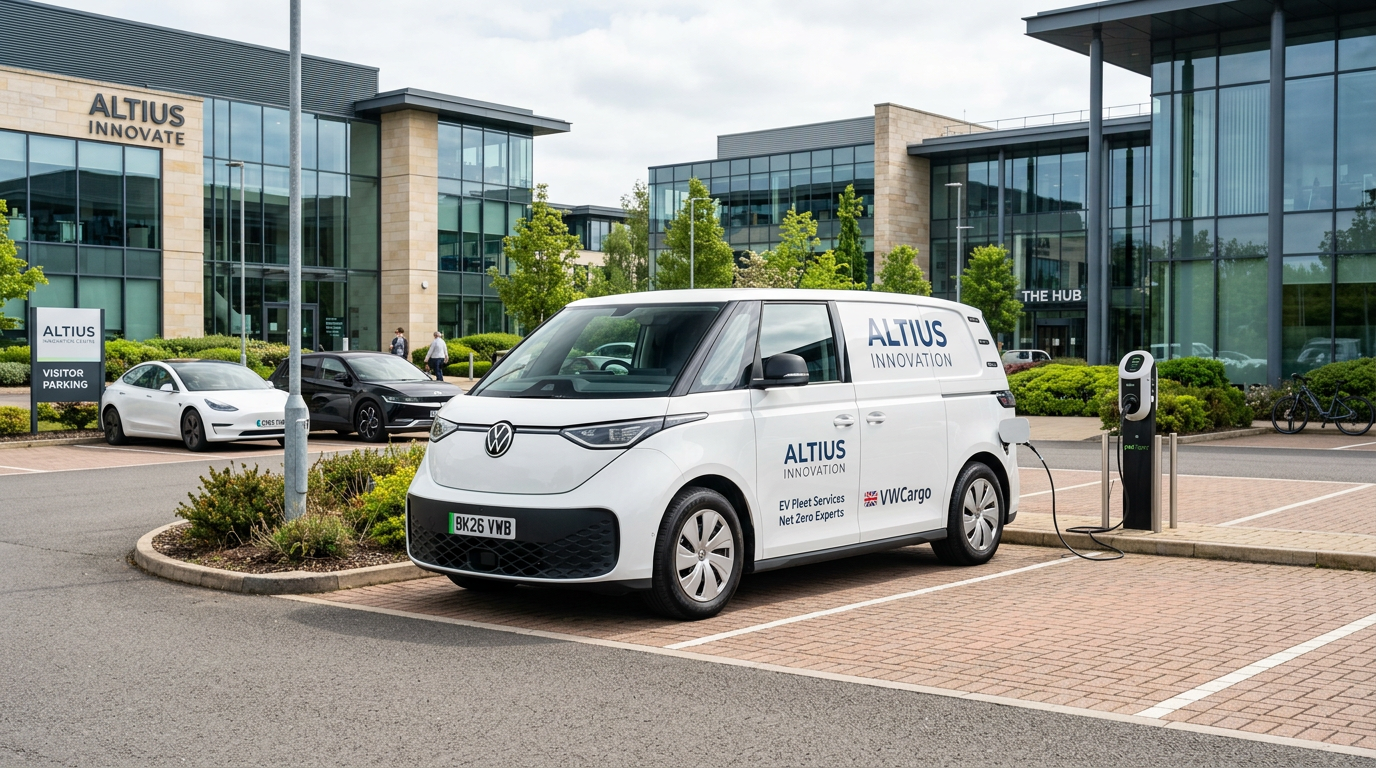
In the landscape of modern commercial vehicles, few vans have made as big a splash as the Volkswagen ID. Buzz Cargo. By 2026, this retro-futuristic workhorse has firmly established itself on the UK’s used market, transitioning from a ‘lifestyle’ novelty to a legitimate, zero-emission tool for savvy business owners.
If you are looking to swap your diesel Transporter for something that avoids the daily sting of London’s ULEZ or Birmingham’s CAZ, the ID. Buzz Cargo is likely at the top of your list. Here is everything you need to know about buying a used model in 2026.
The Appeal of the ID. Buzz Cargo in 2026
Traditional panel vans are functional, but the ID. Buzz Cargo adds a layer of brand prestige and driver satisfaction that is hard to find elsewhere. Built on VW’s dedicated MEB electric platform, it offers a car-like driving experience, a tight turning circle, and—perhaps most importantly for businesses—an incredible mobile billboard for your brand.
By 2026, the first wave of three-year PCP and business lease deals have returned to the market, meaning there is now a healthy supply of used stock at much more accessible price points than the initial £40,000+ plus VAT starting prices.
Understanding Range and Performance
When browsing for a used Volkswagen ID. Buzz Cargo, the battery and range are your primary considerations.
Most models on the used market feature the 77kWh (net) battery paired with a rear-mounted 204PS motor. In the real world, UK van buyers can expect a range of roughly 200–210 miles in summer, dropping to 150–160 miles in the depths of a British winter or when fully laden.
| Feature | Specification |
|---|---|
| Battery Size | 77kWh (usable) |
| WLTP Range | 252 - 256 miles |
| Real World Range | 160 - 210 miles |
| Payload | Approx. 600kg - 650kg |
| Load Volume | 3.9m³ |
| Charging (DC) | Up to 170kW (5% to 80% in 30 mins) |
EV Van Battery Health in 2026
In 2026, buyers often worry about battery degradation. However, Volkswagen’s thermal management system is excellent. When inspecting a used ID. Buzz, ask the dealer for a Battery State of Health (SoH) certificate. Most vans used for urban delivery will show very little degradation even after 40,000 miles, but it is always worth verifying to protect your investment.
Payload and Practicality: Is it Enough?
This is where the "Buzz" requires a careful look at your business needs. Unlike a LWB Crafter or even a standard Transporter, the ID. Buzz Cargo is a Short Wheelbase (SWB) specialist.
- Load Space: 3.9 cubic metres. It can fit two Euro pallets loaded sideways.
- Payload: This is the Achilles' heel. With a payload capacity of around 650kg, it isn't suitable for heavy-duty trades like masonry or bulk plumbing. It is, however, perfect for florists, electricians, mobile tech repairers, and last-mile delivery couriers.
- Dimensions: It is under 2 metres tall, meaning it fits comfortably into standard UK multi-storey car parks—a huge advantage over taller rivals.
What to Look for When Buying Used
When you head to a forecourt or browse CarsLink.ai for your next EV van, keep these specific ID. Buzz Cargo points in mind:
1. Software Version
Early ID. Buzz models suffered from glitchy infotainment software. Ensure any used model you buy has been updated to the latest "Over-the-Air" (OTA) software version. By 2026, the 4.0 or 5.0 versions are much more stable and responsive.
2. Charging Port Condition
Check the DC charging pins for any signs of scorching or physical damage. Many commercial EVs are rapid-charged daily, which can lead to wear on the socket if the heavy cables aren't supported properly during charging.
3. Tyre Wear
The ID. Buzz is heavy (over 2.3 tonnes unladen) and rear-wheel drive. Check the rear tyres for uneven wear, as the instant torque of the electric motor can chew through rubber if the previous driver had a heavy right foot.
4. Interior "Work Life" Wear
The ID. Buzz Cargo features a lot of recycled materials. While eco-friendly, they can show scuffs more easily than old-school hard plastics. Inspect the seat bolsters and the floor lining for signs of heavy use.
Running Costs, V5C, and Taxation
Switching to an electric van offers significant savings, though the landscape has shifted slightly in 2026:
- Road Tax (VED): From April 2025, electric vans began paying VED. However, rates remain competitive compared to high-emission diesel vans.
- Maintenance: With no oil filters, spark plugs, or timing belts, servicing is significantly cheaper. Brakes also last longer due to regenerative braking.
- Congestion Charges: The ID. Buzz Cargo remains a hero for city centre work, being exempt from most Clean Air Zone charges and ULEZ fees that affect older Transporters.
UK Commercial Vehicle Finance for the ID. Buzz
Financing a used EV van is slightly different from a diesel one. In 2026, many lenders offer Specialist EV Finance packages with better rates to encourage green fleets.
Whether you choose Hire Purchase (HP) to own the van outright or PCP to keep your monthly payments low with a guaranteed future value (GFV), ensure you factor in the VAT. Most used ID. Buzz Cargos will be "Plus VAT" unless sold by a non-VAT registered small business. Using tools on CarsLink.ai can help you compare these costs and find the best used deals currently available from reputable UK dealers.
Verdict: Should You Buy One?
The Volkswagen ID. Buzz Cargo is the "coolest" van on the road, but it is also a highly efficient tool for the right job. If your business involves high-mileage heavy hauling, a diesel Transporter or a larger EV like the Maxus eDeliver 9 might be better.
However, if you want a reliable, high-tech, and image-conscious van for urban work with around 200 miles of daily range, a used ID. Buzz Cargo in 2026 is a stellar investment. It holds its value better than almost any other commercial vehicle in its class.
Ready to electrify your business? Search thousands of verified listings on CarsLink.ai to find the perfect used Volkswagen ID. Buzz Cargo today.