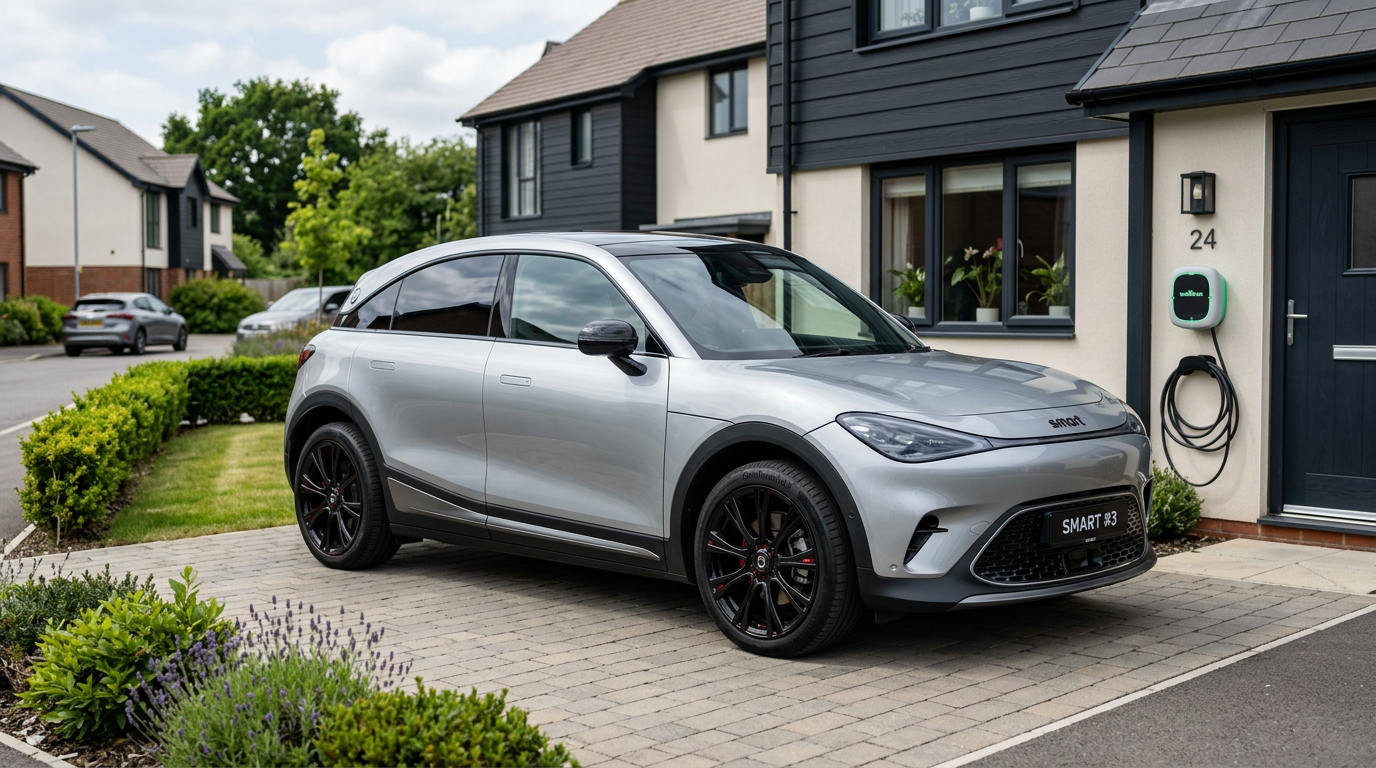
The landscape of the UK electric vehicle (EV) market has shifted dramatically. Gone are the days when 'Smart' meant a tiny two-seater that struggled on the M25. In 2026, the Smart #3 (pronounced 'hashtag three') has established itself as one of the most compelling options for those seeking a used electric coupe-SUV that balances style, performance, and Geely-engineered substance.
If you are browsing the secondary market for a sleek alternative to the Volkswagen ID.5 or the Volvo EC40, this guide will walk you through everything you need to know about buying a used Smart #3 in the UK.
The Smart Evolution: Why the #3 Matters in 2026
Since its launch, the Smart #3 has been the "sportier sibling" to the more upright #1. Built on the Sustainable Experience Architecture (SEA) platform shared with the Lotus Eletre and Zeekr models, it represents a premium shift for the brand.
By 2026, the first wave of three-year PCP (Personal Contract Purchase) and PCH (Personal Contract Hire) deals are maturing, meaning a healthy supply of well-maintained, ex-lease examples are hitting forecourts across the UK. For savvy buyers, this represents a significant saving over the initial £35,000–£45,000 list price.
Battery, Range, and Performance
When looking at a used Smart #3, you will encounter two primary battery sizes. Understanding which one fits your lifestyle is crucial for managing Road Tax (VED) and charging expectations.
Battery Options
- Pro (49kWh LFP Battery): Ideal for urban drivers. It offers a range of approximately 170–190 miles. The Lithium Iron Phosphate (LFP) chemistry is known for its longevity and can be charged to 100% regularly without significant degradation.
- Pro+, Premium, and Brabus (66kWh NCM Battery): These offer a more substantial range of 270–283 miles (WLTP).
Performance Tiers
| Trim Level | Drivetrain | 0-62 mph | Range (WLTP) | Max Charging (DC) |
|---|---|---|---|---|
| Pro | RWD (268hp) | 5.8s | 193 miles | 130kW |
| Pro+ | RWD (268hp) | 5.8s | 270 miles | 150kW |
| Premium | RWD (268hp) | 5.8s | 283 miles | 150kW |
| Brabus | AWD (422hp) | 3.7s | 258 miles | 150kW |
What to Look for When Buying Used
The Smart #3 has proven to be a robust contender, but like any modern EV, there are specific areas to inspect.
1. Software and Infotainment
The Smart #3 relies heavily on its 12.8-inch central touchscreen. Ensure the software has been updated to the latest version. Early models occasionally suffered from "Cheetah" (the animated avatar) glitches or laggy Apple CarPlay/Android Auto integration. Check that the over-the-air (OTA) updates are functioning correctly.
2. Physical Condition and Wheels
The #3 often comes with large 19 or 20-inch alloy wheels. These are prone to kerbing, which can be expensive to refurbish given their intricate designs. On the Brabus trim, check for uneven tyre wear, as the dual-motor setup puts significant torque through the rubber.
3. V5C and Service History
Ensure the V5C logbook is present and the VIN matches the vehicle. While EVs require less maintenance than internal combustion engine (ICE) cars, Smart recommends a check-up every two years or 20,000 miles. A documented service history is vital for maintaining the 8-year/100,000-mile battery warranty.
UK Running Costs in 2026
In 2026, the financial landscape for EVs has changed. Since April 2025, EVs are no longer exempt from Road Tax (VED).
- Standard Rate: Expect to pay the prevailing standard rate for electric vehicles.
- Expensive Car Supplement: Many Smart #3 models (especially Premium and Brabus trims) had a list price of over £40,000 when new. Be aware that you may still be liable for the 'luxury car' supplement until the vehicle is six years old.
- ULEZ and Clean Air Zones: The Smart #3 remains 100% exempt from London’s ULEZ and similar schemes in cities like Birmingham, Bristol, and Glasgow.
PCP and Financing a Used Smart #3
With used EV prices stabilising in 2026, used Smart #3 PCP deals are increasingly popular. Financing a three-year-old car allows you to hedge against future depreciation. At CarsLink.ai, we recommend comparing the Guaranteed Future Value (GFV) across different lenders to ensure you are getting a competitive interest rate.
Given the rapid advancement in battery tech, a lease-purchase or PCP often makes more sense than a straight Hire Purchase (HP) for many UK buyers, providing the flexibility to trade in when the next generation of solid-state batteries eventually arrives.
The Drive: What’s it Like on UK Roads?
The Smart #3 is firmer than the #1, designed to feel more "planted" in corners. On pockmarked UK B-roads, the Pro+ and Premium models offer the best balance of comfort. The Brabus is blisteringly fast—faster than many Porsches off the line—but the suspension can feel a bit stiff over urban speed bumps.
Inside, the cabin feels premium. Look out for the "Halo" panoramic glass roof; it’s a standard feature on most trims and makes the cabin feel much larger than it is. However, remember it does not have a physical blind, though the UV protection is excellent.
Verdict: Should You Buy a Used Smart #3?
The Smart #3 is a standout choice in the UK used EV market of 2026. It offers better tech than the equivalent Mercedes-Benz EQA and more personality than a Tesla Model 3.
Pros:
- Stunning coupe-SUV aesthetics.
- High-quality interior materials.
- Impressive charging speeds (10-80% in under 30 mins on 150kW chargers).
- Strong safety ratings and ADAS features.
Cons:
- Boot space is slightly compromised by the sloping roofline.
- Infotainment is "touch-heavy" with few physical buttons.
- VED "Expensive Car" supplement on higher trims.
Whether you are looking for a nimble city commuter or a stylish long-distance cruiser, the Smart #3 is a sophisticated choice. Ready to start your search? Explore the latest listings and market insights at CarsLink.ai to find the perfect Smart #3 for your driveway.
Are you looking to sell your current car before upgrading to an EV? Visit CarsLink.ai for an instant valuation and to connect with certified dealers across the UK.