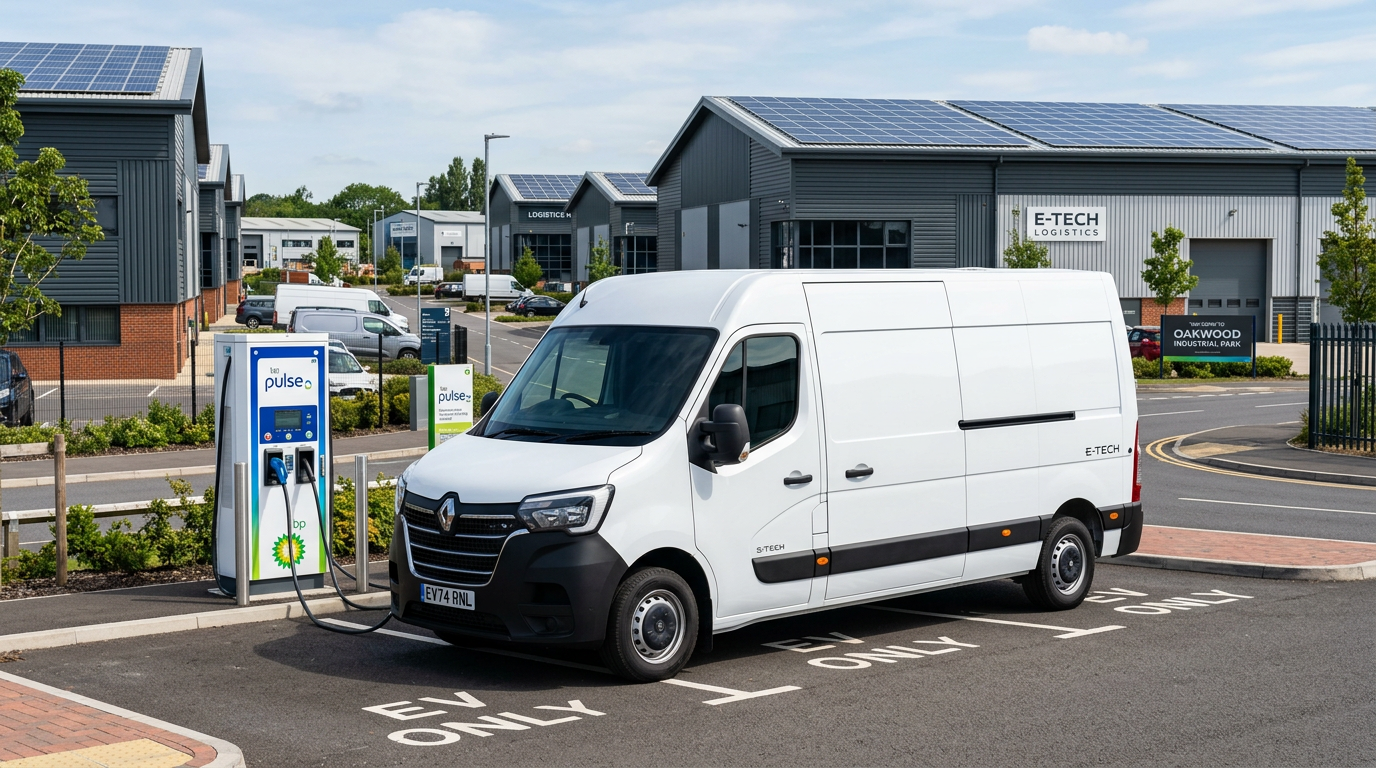
As we move through 2026, the shift towards electric commercial fleets has accelerated from a trend into a business necessity. For fleet operators and independent tradespeople looking at the used market, one vehicle dominates the conversation around heavy-duty electrification: the Renault Master E-Tech.
Known for its versatility and the groundbreaking 52kWh and 87kWh battery options introduced in recent years, the Master E-Tech is a staple on UK roads. However, buying used in 2026 requires a deep understanding of evolving regulations—specifically the 4.25-tonne (4.25t) derogation rules and how actual range holds up after a few years of service.
The Evolution of the Master E-Tech
While early electric Masters featured a modest 33kWh battery, most units found on the used market in 2026 will be the post-2022 52kWh versions or the more recent 2024+ models featuring the high-capacity "OpenR Link" architecture.
For a van buyer looking for value, the 52kWh model offers a realistic urban range of around 100-120 miles. However, for those needing to tackle regional logistics, the 87kWh version (introduced in the "all-new" Master) has become the gold standard, offering up to 285 miles (WLTP).
Key Technical Specifications (Typical 2024-2026 Used Models)
| Feature | 52kWh Model (Mid-Age Use) | 87kWh Model (Newer Used) |
|---|---|---|
| WLTP Range | 126 miles | 285 miles |
| Charging (AC) | 7kW or 22kW | 22kW Standard |
| DC Rapid Charge | No (mostly) / 50kW | 130kW |
| Payload Capacity | Up to 1,300kg | Up to 1,625kg (4.25t) |
| Load Volume | 8m³ to 15m³ | 11m³ to 22m³ |
Navigating the 4.25-Tonne Rule in 2026
One of the most significant advantages of a used Renault Master E-Tech is the ability to bypass the traditional 3.5-tonne Gross Vehicle Weight (GVW) limit without requiring a Category C1 (Heavy Goods Vehicle) licence.
Under UK law, drivers with a standard Category B (car) licence can drive an electric van up to 4,250kg (4.25t), provided they meet certain criteria. This was designed to offset the weight of the heavy batteries, ensuring van payload 2026 remains competitive with diesel equivalents.
Critical Compliance Checklist for 4.25t Vans:
- Training: As of 2026, the 5-hour mandatory training requirement for Category B holders remains a point of scrutiny. Ensure your drivers have completed this before operating a 4.25t Master E-Tech.
- O-Licencing: Unlike 3.5t vans, 4.25t electric vans used for "hire or reward" (carrying goods for others) typically require a Standard National Operator’s Licence.
- MOT and Speed Limiters: These heavy electric vans are subject to 56mph speed limiters and require tachographs if travelling beyond a 100km radius from their base.
- V5C Verification: When browsing CarsLink.ai, always check the V5C logbook to confirm if the vehicle is registered as a 3.5t or has been up-plated to 4.25t.
Range Reality: What to Expect in 2026
By 2026, many used Master E-Techs will have seen three to four years of heavy use. Battery health is paramount. While Renault's battery thermal management is robust, cold weather still impacts the 3.5 tonne electric van range.
- Urban Prime: In stop-start London or Birmingham traffic (fully ULEZ/CAZ compliant), regenerative braking performs exceptionally well. Expect to achieve 90% of the stated WLTP range.
- Motorway Performance: At sustained speeds of 60mph, range can drop by 25-30%. If your route involves the M1 or M6, the 87kWh battery is the only viable used option.
Body Styles: Panel, Crew, and Beyond
The Master E-Tech is available in a staggering array of configurations. In the used market, you will encounter:
- SWB/MWB Panel Vans: Ideal for last-mile delivery.
- LWB/XLWB: Often used for furniture or bulky goods.
- Luton/Tipper/Dropside: These conversions are common but pay close attention to the payload. A 3.5t E-Tech Luton has a significantly lower payload than a diesel equivalent; this is where the 4.25t versions are essential.
Ownership Costs: Tax, ULEZ, and Maintenance
The financial argument for a used Renault Master E-Tech has never been stronger.
- Road Tax (VED): While the exemption for EVs ended in 2025, electric vans still benefit from lower tax bands compared to high-emission diesels.
- Service Requirements: With fewer moving parts than a dCi engine (no timing belts, no oil changes, no AdBlue), maintenance costs are roughly 30-40% lower.
- Clean Air Zones: With every major UK city now enforcing some form of LEZ or ULEZ, the E-Tech offers total freedom of movement without daily charges.
What to Look for When Buying Used
When inspecting a used Master E-Tech, follow this professional checklist:
- Battery Health Report: Demand an official Renault diagnostic report showing the "State of Health" (SOH) of the battery. Anything above 90% for a 3-year-old van is excellent.
- Charging Ports: Inspect the Type 2 and CCS ports for arc damage or loose pins.
- Suspension Wear: Because heavy electric vans operate near their GVW frequently, check for sagging rear leaf springs or worn bushes.
- Tachograph Calibration: If it's a 4.25t model, ensure the tachograph has a valid calibration certificate.
Verdict
The Renault Master E-Tech represents a smart, future-proof investment for UK businesses in 2026. By choosing the right battery size and understanding the 4.25t regulatory landscape, fleet operators can significantly reduce overheads.
Whether you are looking for a Short Wheelbase urban nipper or an XLWB Luton for national deliveries, you can find the latest listings and expert advice on CarsLink.ai.
Are you looking to transition your fleet to electric? Visit CarsLink.ai today to compare the latest used Renault Master E-Tech prices and find the perfect payload-ready van for your business.