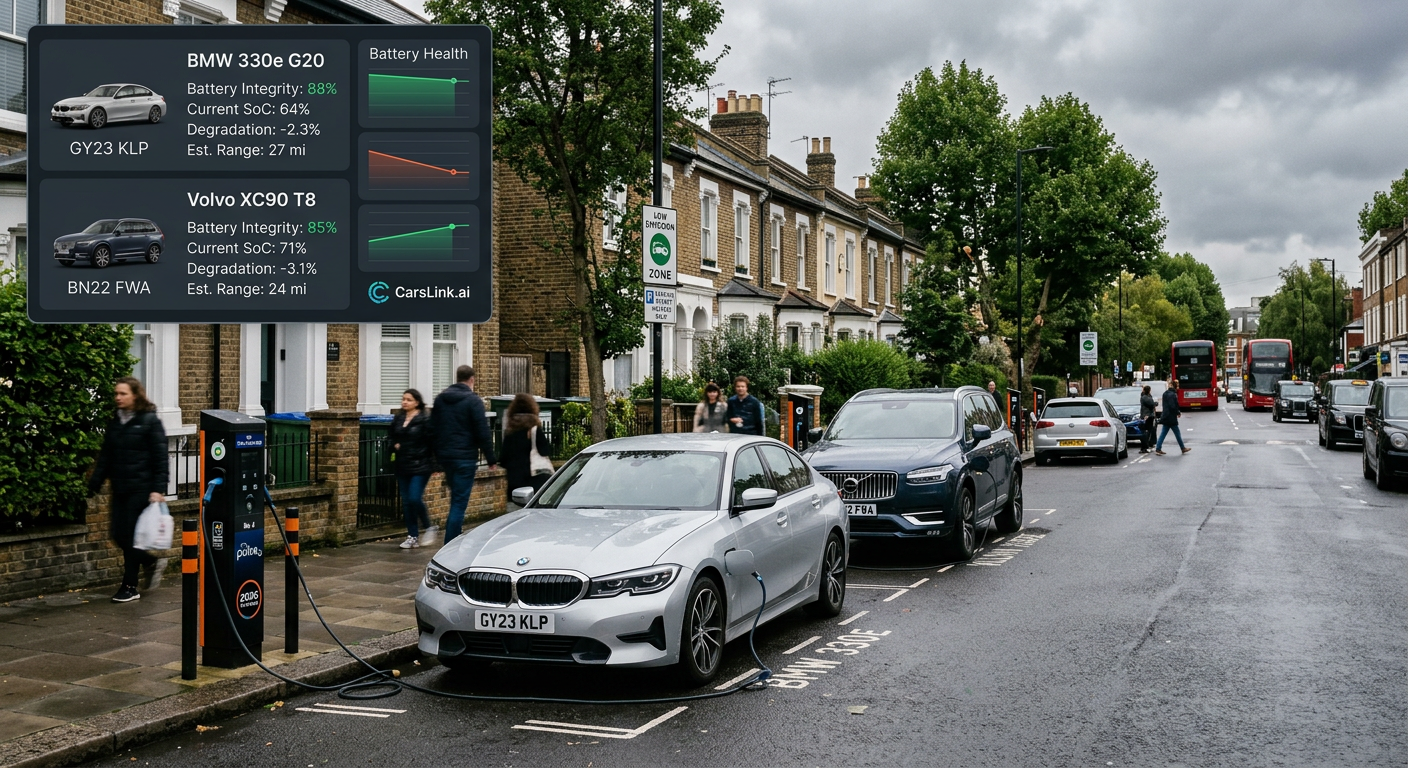
As we navigate midway through 2026, the UK used car market has undergone a significant shift. With the 2030 deadline for the end of new pure petrol and diesel sales looming closer, and the expansion of Clean Air Zones (CAZ) across major cities like Manchester, Bristol, and Birmingham, the used PHEV (Plug-in Hybrid Electric Vehicle) has become the "Goldilocks" choice for many British motorists.
A plug-in hybrid offers the silent, zero-emission benefit of an EV for your daily commute while retaining the long-distance convenience of an internal combustion engine (ICE) for weekend trips to the Highlands or the coast. However, buying a used PHEV in 2026 requires a more nuanced approach than purchasing a traditional petrol car. Battery degradation, evolving road tax (VED) rules, and real-world electric range are now the primary metrics of value.
Why Buy a Used PHEV in 2026?
The 2026 market is currently flooded with high-quality, ex-fleet PHEVs that were first registered between 2022 and 2024. These vehicles often represent incredible value, as many have already taken their steepest depreciation hits.
For the savvy buyer, a used PHEV provides:
- ULEZ and CAZ Compliance: Avoid daily charges in London and other regulated zones.
- Fuel Efficiency: If you can charge at home, your fuel costs for the school run or commute can drop to near zero.
- The Best of Both Worlds: No "range anxiety" on long journeys, but the smooth torque of an electric motor in traffic.
Navigating the 2026 Road Tax (VED) Landscape
One of the most critical changes for PHEV owners in 2026 relates to Road Tax (VED). As of April 2025, the UK government removed the VED exemption for low-emission vehicles.
When browsing CarsLink.ai for your next hybrid, keep these tax brackets in mind:
- The Standard Rate: Most PHEVs registered after April 2017 now pay a standard annual rate, similar to petrol and diesel cars.
- The "Expensive Car" Supplement: This is the "sting in the tail." Vehicles with a list price of over £40,000 when new are subject to an additional supplement for five years (from the second time the vehicle is taxed). many premium PHEVs from BMW, Volvo, and Mercedes-Benz fall into this category.
- Benefit-in-Kind (BiK): If you are a company car driver looking at a used PHEV, remember that BiK rates are tied to the electric-only range. Vehicles reaching over 70 miles of EV range (like the newer Range Rover Sport or Mercedes C-Class) sit in much lower tax bands than older models with 20-30 mile ranges.
The 2026 Used PHEV Hierarchy: Top Picks
By 2026, several models have emerged as the "best used hybrids UK" based on reliability, range, and value.
| Model | Typical EV Range (Real World) | 2026 Appeal |
|---|---|---|
| BMW 330e (G20) | 25–32 miles | The enthusiast's choice; excellent build quality and sharp handling. |
| Mitsubishi Outlander PHEV | 18–22 miles | The budget king; rugged and reliable, though tech feels dated in 2026. |
| Volvo XC90 Recharge | 35–45 miles | The ultimate family SUV; refined and high luxury. |
| Toyota RAV4 Plug-in | 40–45 miles | Exceptional reliability and impressive real-world efficiency. |
| Mercedes-Benz C300e | 55–62 miles | The "Long Range" leader; massive battery for a hybrid. |
Inspecting PHEV Battery Health
In 2026, "battery health" is the new mileage. A 40,000-mile PHEV that was never plugged in may have a "fresher" battery than a 20,000-mile car that was fast-charged daily.
How to check battery health:
- The Dashboard Trip Computer: Look at the "Max Range" when fully charged. Compare this to the manufacturer’s original claims. A 10-15% drop is normal for a 4-year-old car; anything more suggests heavy usage or poor thermal management.
- Service History: Ensure the high-voltage system has been inspected during regular intervals.
- Third-Party Diagnostics: Specialized tools (and some clever smartphone apps) can now read the State of Health (SoH) through the OBD-II port.
- Warranty: Most manufacturers (Toyota, Kia, Hyundai) offer 7 or 8-year warranties on the battery pack. Ensure the V5C details match the service records to keep this warranty valid.
Charging Infrastructure in 2026
The UK's charging network has improved vastly by 2026, with thousands of more on-street chargers and rapid hubs at petrol stations. However, the true value of a PHEV is unlocked through home charging.
If you cannot charge at home or work, a PHEV may actually be more expensive to run than a modern "self-charging" hybrid (HEV) because you'll be lugging around the weight of a heavy battery using only the petrol engine. Use CarsLink.ai to filter for models with 7kW onboard chargers, which allow for faster home charging (approx. 3-5 hours) compared to a standard 3-pin plug.
Essential Buying Checklist for 2026
- Charging Cables: Ensure the car comes with both a Type 2-to-Type 2 cable (for public chargers) and a 3-pin "granny" cable. Replacing these can cost upwards of £200.
- The "Unused Engine" Syndrome: In some PHEVs used purely in EV mode, the petrol engine may not have been cycled often. Check for smooth transitions when the engine kicks in during a test drive.
- Brake Wear: PHEVs use regenerative braking. This is great for efficiency, but it can lead to brake discs corroding from lack of use. Check for "pitting" on the discs.
- Tyre Condition: PHEVs are heavy due to the battery. Check the inner sidewalls for uneven wear, as the extra weight puts more stress on the suspension and rubber.
Verdict: Is a Used PHEV Right for You?
In 2026, a used PHEV is the perfect bridge for those not yet ready to go "Full-EV." They offer a taste of the electric future without the limitations of 2026's still-growing rural charging network. By focusing on models with an electric range that covers your daily mileage, and being mindful of the post-2025 VED rules, you can find a vehicle that is both tax-efficient and a joy to drive.
Whether you're looking for a fuel-sipping commuter or a tax-efficient family SUV, start your search at CarsLink.ai. Our platform helps you compare the latest used PHEV stock across the UK, ensuring you get the best range for your budget.
Ready to make the switch? [Browse our latest PHEV listings on CarsLink.ai today]!