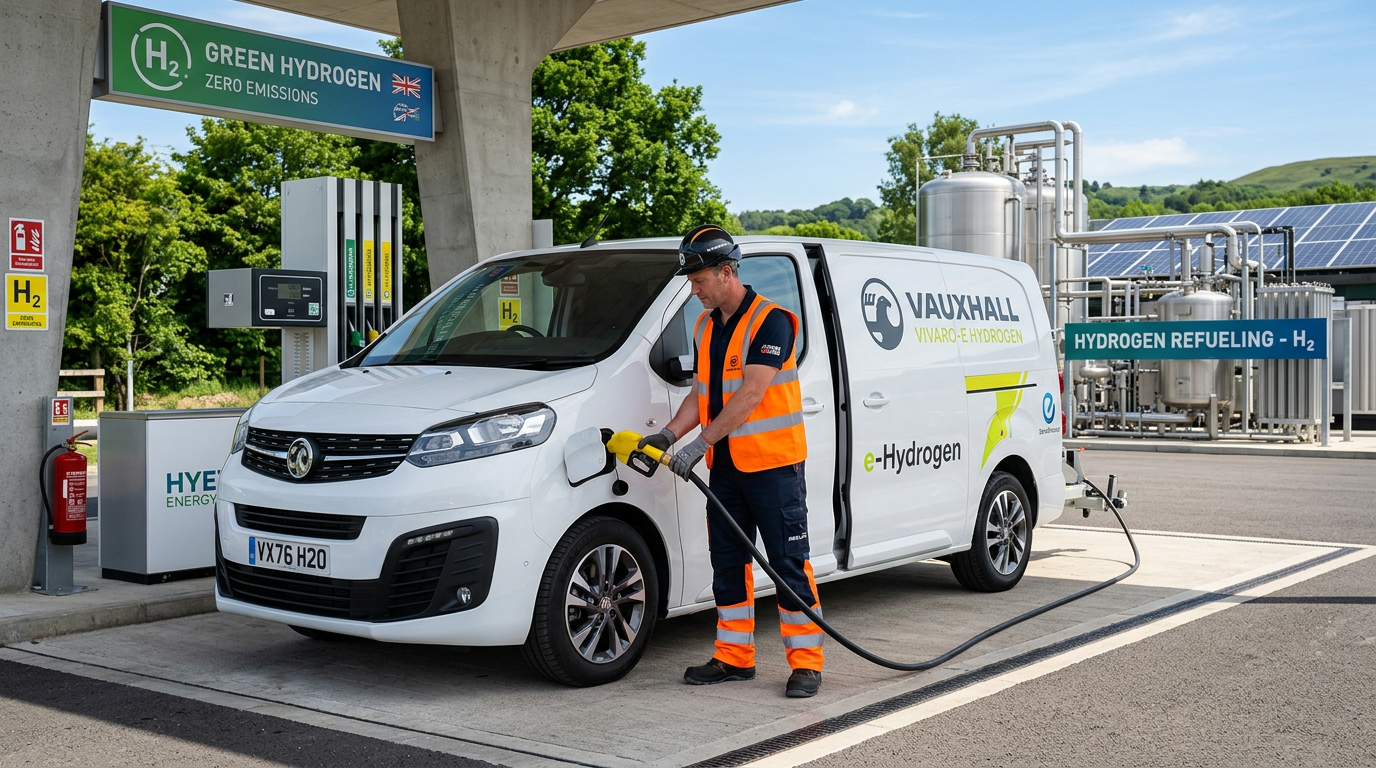
As we move through 2026, the UK commercial vehicle landscape is undergoing its most radical transformation since the introduction of the internal combustion engine. While Battery Electric Vehicles (BEVs) have dominated the headlines, a secondary contender has quietly established a foothold in the pre-owned market: Hydrogen Fuel Cell Vans (FCEVs).
For UK tradespeople and fleet operators, the question is no longer just "Electric or Diesel?" It is now whether the second-hand hydrogen market offers a viable, future-proof alternative for those who find battery limitations a hurdle.
The State of Play: Used Hydrogen Vans in 2026
Two years ago, hydrogen vans were limited to pilot schemes and deep-pocketed logistics firms. Today, the first wave of these vehicles—most notably the Vauxhall Vivaro-e Hydrogen and its Stellantis siblings—are entering the used market.
For a van buyer looking at a three-year-old vehicle, the appeal of hydrogen is simple: it offers the zero-emission benefits of an electric van with the rapid refuelling and payload stability of a diesel.
How Hydrogen Fuel Cell Vans Work
Unlike a BEV, which stores energy in a massive, heavy lithium-ion battery, an FCEV uses a fuel cell stack to convert compressed hydrogen gas into electricity. This powers the motor while emitting nothing but water vapour. Most models, like the Vivaro-e Hydrogen, are "mid-power" plug-in hybrids, featuring a small battery for regenerative braking and peak power, supplemented by hydrogen tanks.
Key Models: What’s on the Market?
If you are browsing CarsLink.ai for a used hydrogen commercial, you are likely to encounter these primary options:
1. Vauxhall Vivaro-e Hydrogen / Citroën ë-Jumpy Hydrogen
Stellantis led the charge in the UK. These vans offer a 400km (approx. 250 miles) range and can be refuelled in just three minutes. Crucially, because the hydrogen tanks are located under the floor, they maintain the same 6.1m³ load volume as their diesel counterparts.
2. Renault Master Van H2-TECH
Larger fleet operators often opt for the Master. With a larger 30kWh battery and hydrogen range extender, it targets the LWB (Long Wheelbase) and Luton sectors, providing up to 500km of range for those carrying high-volume, low-weight goods.
3. First-Generation Conversions
You may also see converted Ford Transits or older Mercedes Sprinters from specialist firms like HV Systems. While these are capable, we recommend used buyers stick to OEM-produced models for easier V5C registration and manufacturer warranty support.
Technical Comparison: Hydrogen vs. Battery Electric (BEV)
| Feature | Hydrogen FCEV (e.g., Vivaro-e H2) | Battery Electric (e.g., Vivaro-e) |
|---|---|---|
| Refuel/Charge Time | 3 - 5 Minutes | 30 - 60 Minutes (Rapid DC) |
| Real-world Range | 220 - 250 Miles | 140 - 180 Miles |
| Payload Impact | Minimal (Lighter than big batteries) | Significant (Heavy battery packs) |
| Euro Emissions | Zero Emission (ULEZ Exempt) | Zero Emission (ULEZ Exempt) |
| Used Availability | Low / Specialist | High / Widespread |
The Infrastructure Hurdle: Commercial Hydrogen in the UK
The biggest barrier for a fleet operator in 2026 remains the Commercial Hydrogen Infrastructure. While the UK government has invested heavily in "hydrogen hubs" in Teesside, the North West, and South Wales, the refuelling network is not yet as ubiquitous as the Electric Forecourt® network.
- Public Refuelling: Currently focused on major trunk roads and industrial estates.
- Back-to-Base: Most successful hydrogen van users in 2026 are those who have installed their own refuelling setups or have a site near a Green Hydrogen UK production facility.
Before committing to a used hydrogen van, check your local proximity to a 700-bar refuelling station. If you are a plumber or sparky working locally within a city like London or Birmingham, the infrastructure may still be a year or two away from being "convenient."
Financial Considerations: Tax, ULEZ, and O-Licence
From a regulatory standpoint, hydrogen vans are treated favourably:
- ULEZ/CAZ: Completely exempt from all UK Clean Air Zone charges.
- Road Tax (VED): Generally enjoy the same low-rate benefits as other zero-emission commercials.
- PCP and Financing: Specialist lenders on platforms like CarsLink.ai are increasingly comfortable with FCEV residual values as the technology matures.
- O-Licence: Remember that while many hydrogen vans sit at the 3.5t mark, some conversions or larger models may push you toward the 4.25t limit. Under current 2026 rules, drivers with a standard Category B licence can often drive these heavier ZEVs (Zero Emission Vehicles) provided they have completed the mandatory additional training, avoiding the need for a full O-Licence for certain weights.
The "Green Hydrogen" Factor
In 2026, the focus has shifted to the source of the fuel. Green Hydrogen UK initiatives ensure that the hydrogen is produced via electrolysis powered by renewables (wind/solar). For trades looking to win government contracts or work for big corporate ESG-driven clients, being able to prove your "well-to-wheel" carbon footprint is zero is a massive competitive advantage.
Is It Time to Switch?
Pros:
- Productivity: No "charging downtime."
- Payload: Better for those carrying heavy tools and materials where battery weight would reduce legal capacity.
- Towing: FCEVs generally handle the range-anxiety of towing better than BEVs.
Cons:
- Price: Even used, FCEV vans carry a premium over used diesel or entry-level BEVs.
- Availability: You won’t find ten of them on every forecourt.
- Refuelling Cost: In 2026, the cost per mile of hydrogen is still slightly higher than home-charged electricity, though it is comparable to public rapid charging rates.
Verdict: The 2026 UK Van Buyer’s Choice
If your business involves high-mileage multi-drop work, or if you frequently travel between cities and cannot afford an hour-long stop to charge, a used hydrogen van is finally a sensible consideration. However, it requires a "location-first" approach—ensure you have a refuelling solution before signing the V5C.
For those who have the infrastructure nearby, the Vauxhall Vivaro-e Hydrogen represents the sweet spot of 2026 technology: reliable, familiar to drive, and ready for the zero-emission future.
Ready to explore the next generation of commercial vehicles? Search the latest listings for zero-emission commercials and hydrogen-ready fleets on CarsLink.ai today.