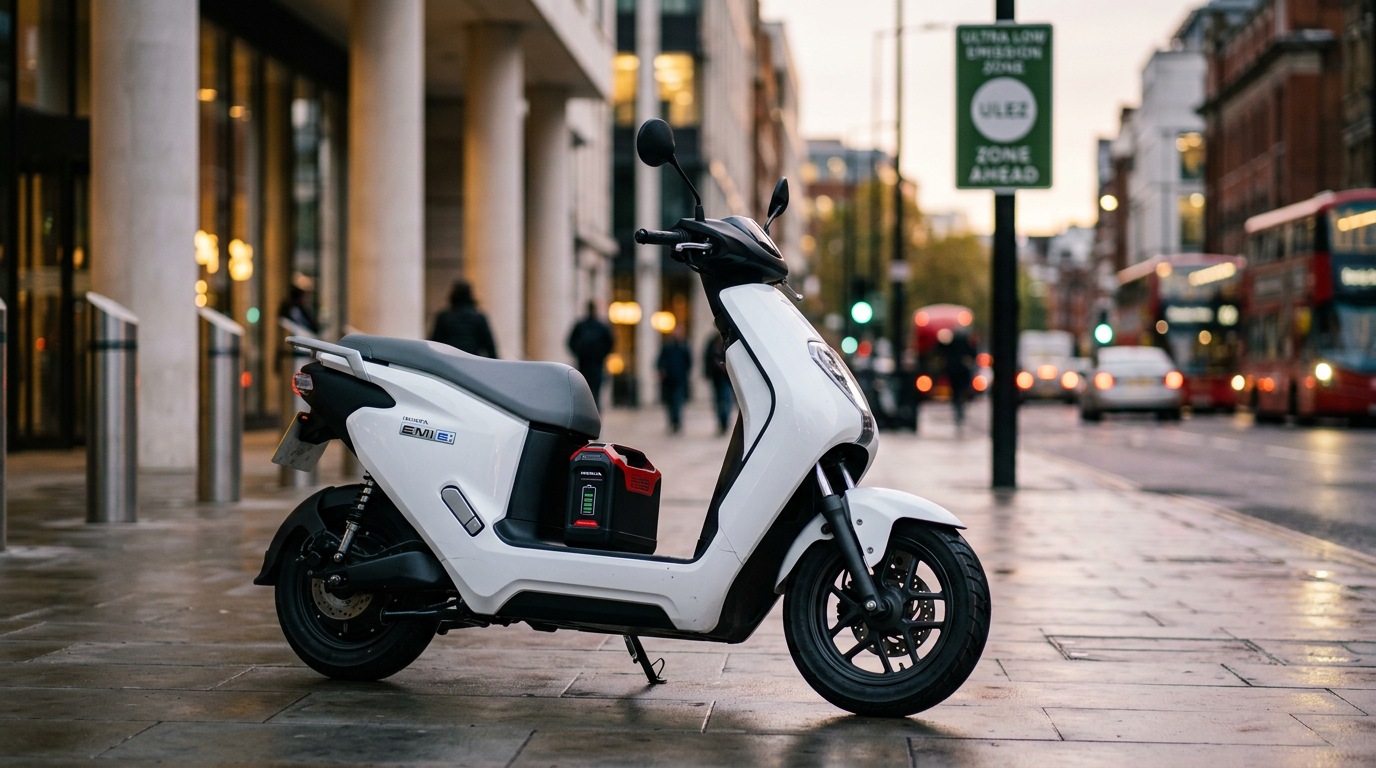
As we navigate through 2026, the shift towards sustainable urban mobility has moved from a trend to a necessity. For many UK city dwellers, the Honda EM1 e: has emerged as the savvy choice for the "last-mile" commute. Launched as Honda’s first foray into the European electric two-wheeler market, it is now entering the used market in significant numbers.
Whether you are a student dodging high insurance premiums or a professional avoiding the expanded London ULEZ (or similar Clean Air Zones in Birmingham and Bristol), this guide covers everything you need to know about buying a used Honda EM1 e: in 2026.
Understanding the Honda EM1 e:
The "EM" stands for Electric Moped, and that is exactly how it is classified under UK law. It serves as an L1e-B category vehicle, meaning it is the electric equivalent of a 50cc petrol moped.
Licence and Legal Requirements
To ride an EM1 e: on UK roads, you must meet one of the following criteria:
- CBT (Compulsory Basic Training): If you are 16 or older, you can ride this with an L-plate after completing a one-day CBT course.
- Full Car Licence: if you passed your driving test before 1st February 2001, you (usually) don't need a CBT. If passed after that date, a CBT is required.
- AM Licence: A specific moped licence.
Because it is electric, the Road Tax (VED) is currently minimal, though you must still "tax" it via the DVLA website annually. By 2026, the Government has adjusted some EV incentives, but the EM1 e: remains one of the cheapest ways to stay mobile.
The Honda Mobile Power Pack e: (The Battery)
The heart of the EM1 e: is the Honda Mobile Power Pack e:. This is a swappable lithium-ion battery. When buying used, the battery is your primary concern.
| Feature | Specification |
|---|---|
| Top Speed | 28 mph (restricted) |
| Range | Approx. 25–30 miles (Mode dependent) |
| Charge Time | 0% to 100% in approx. 6 hours |
| Battery Weight | 10.3 kg |
| Motor Type | In-wheel Hub Motor |
The Subscription vs. Ownership Model
In 2024 and 2025, many Honda EM1 e: units were sold with a battery leasing or subscription scheme to mitigate the high cost of lithium-ion technology. When browsing listings on CarsLink.ai, check whether the battery is included in the sale price or if you are required to take over a monthly lease.
Pro Tip: If the battery is owned outright, ask for a "State of Health" (SOH) report from a Honda dealer. A battery that has been left discharged for months in a freezing garage will have significantly degraded capacity.
What to Check When Buying Used in 2026
1. The Hub Motor
The EM1 e: uses an in-wheel motor. This eliminates chains, sprockets, and oil changes, making it incredibly low maintenance. However, check for any unusual humming or grinding noises. Ensure the rear wheel spins freely when on the centre stand.
2. Physical Condition and "City Scuffs"
Being an urban moped, many used examples will have spent their lives parked on busy London or Manchester pavements. Check for:
- Cracked plastic fairings (replacements can be pricey).
- Scuffed bar ends and brake levers, which indicate a drop.
- Corrosion on the rear twin shocks, especially if the bike was used through UK winters where road salt is prevalent.
3. Service History and V5C
Even though there is no oil to change, the Honda EM1 e: still requires scheduled inspections of the braking system (front disc/rear drum), tyres, and steering head bearings. Ensure the seller has the V5C logbook in their name and that the VIN matches the frame. If the bike is over three years old (some early 2023 models), ensure it has a valid MOT certificate.
The Riding Experience
The EM1 e: is not a long-distance tourer. It is designed for short, sharp bursts. The acceleration to 20 mph is nippy, making it perfect for filtering through stationary traffic. It offers two riding modes: Standard and ECON. In ECON mode, the throttle response is dulled to maximize range, which is vital if your commute is nearing that 25-mile limit.
Running Costs Comparison (2026)
How does the used Honda EM1 e: stack up against a traditional 50cc petrol moped?
- Fuel/Energy: Charging the 1.3kWh battery at home costs pennies compared to a litre of E10 petrol.
- Maintenance: No spark plugs, air filters, or CVT belts to replace.
- Insurance: Generally low, though "delivery use" insurance is significantly higher than social/domestic.
- Depreciation: By 2026, the initial steep depreciation has happened, meaning a used buy represents excellent value for money.
Potential Pitfalls to Avoid
- The "Grey" Import: Stick to UK-spec models sold through Honda UK dealers to ensure the charger and battery interface are compatible with regional safety standards.
- Modified Limits: Avoid bikes where the 28mph restrictor has been tampered with. This invalidates insurance and technically turns the bike into an L3e motorcycle, which requires an A1 licence.
- Forgotten Chargers: The off-board charger is a substantial piece of kit. Ensure it is included in the sale, as buying a replacement from Honda is expensive.
Why Buy a Honda EM1 e: in 2026?
The reliability of the Honda brand is the primary "selling point." While cheaper Chinese electric mopeds flooded the market in the early 2020s, many have suffered from a lack of spare parts and poor dealer support. Choosing a used Honda means you have access to a nationwide network of service centres.
If you are looking for a stress-free, quiet, and eco-friendly way to navigate the city, the EM1 e: is a stellar choice. You can find a range of verified listings and dealer-backed examples on CarsLink.ai to ensure you’re getting a bike that has been properly inspected.
Conclusion
The Honda EM1 e: is the quintessential "no-faff" moped. While the range is modest, it is perfectly suited to the average UK urban commute. By buying a used model in 2026, you avoid the initial "electric premium" while securing a vehicle that is future-proofed against tightening city emissions regulations.
Ready to make the switch to electric? Check the latest listings for the Honda EM1 e: on CarsLink.ai today and start your journey towards a cleaner, quieter commute.