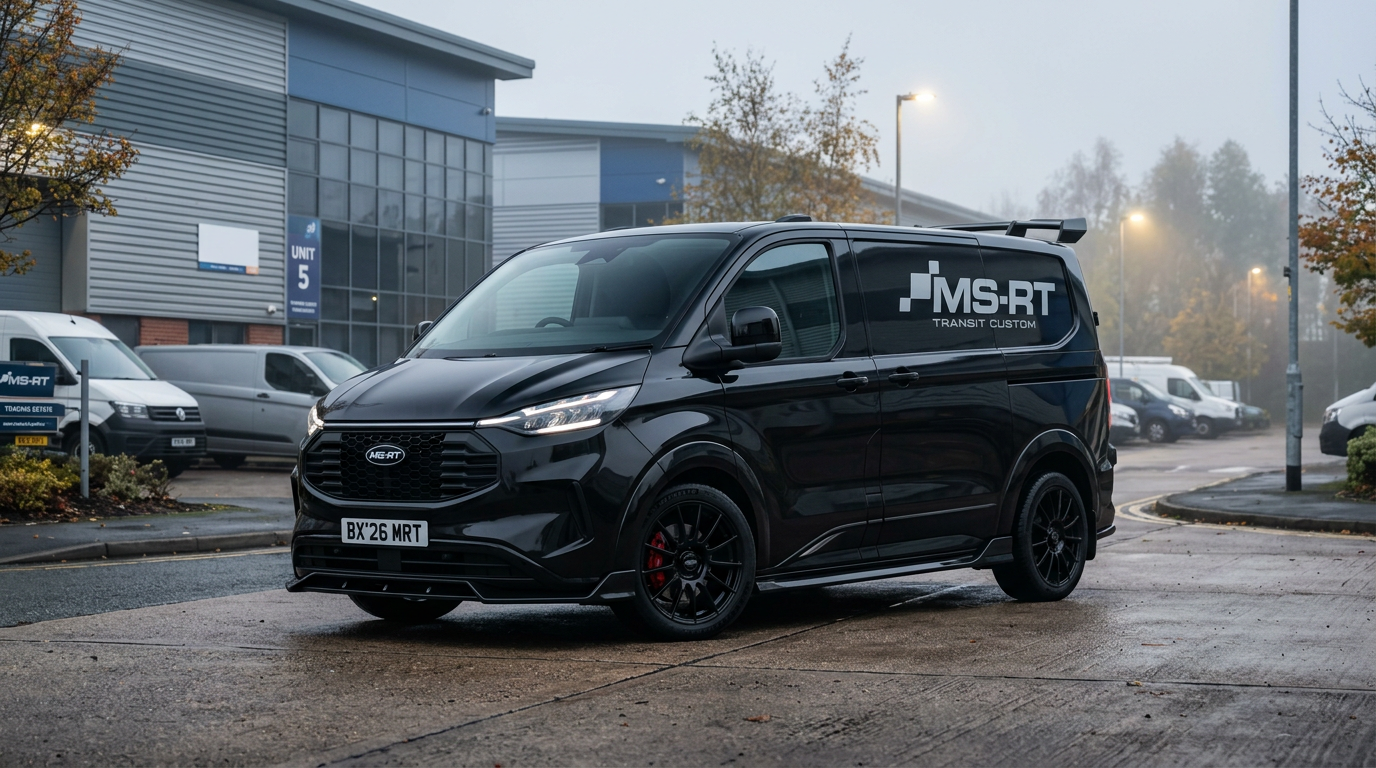
In the UK’s 2026 light commercial vehicle (LCV) market, the desire for vans that work as hard as they look has never been higher. The Ford Transit Custom MS-RT remains the undisputed king of the 'sporty van' segment. Born from a partnership between Ford and rally specialist M-Sport, these vehicles offer an aggressive aesthetic without compromising the class-leading load capacity of the standard Transit Custom.
Whether you are a sole trader looking to enhance your brand image or a fleet manager rewarding a top performer, buying a used MS-RT in 2026 requires a specific understanding of the latest powertrain shifts—specifically the transition from pure EcoBlue diesels to high-performance Plug-in Hybrids (PHEV).
The 2026 Shift: Why MS-RT?
By 2026, the Ultra Low Emission Zone (ULEZ) and various Clean Air Zones (CAZ) across UK cities like Birmingham, Bristol, and Glasgow have become significantly more stringent. The MS-RT is no longer just about wide body kits and OZ Racing alloys; it’s about having a Euro 6e-compliant powerhouse that avoids daily charges while maintaining a massive street presence.
Buying used through platforms like CarsLink.ai allows you to bypass the initial steep depreciation of a new MS-RT while securing a van that still feels cutting-edge.
Powertrain Options: Diesel vs. PHEV
In the 2026 used market, you will primarily find two types of MS-RT Custom models:
1. The 2.0-litre EcoBlue Diesel
The traditional choice. Expect 170PS or 185PS variants paired with either a 6-speed manual or the smooth 6-speed SelectShift automatic.
- Pros: Exceptional towing capacity; better for long-distance motorway hauls.
- Cons: Higher VED (Road Tax) and potential future restrictions in "Zero Emission Zones."
2. The 2.5-litre Petrol PHEV (The Modern Standard)
By 2026, the second-generation MS-RT PHEV is the "smart money" buy. It uses a 2.5-litre Atkinson-cycle petrol engine combined with an electric motor.
- Pros: ULEZ exempt; roughly 30–40 miles of pure electric range; lower Benefit-in-Kind (BiK) for company van drivers.
- Cons: Slightly reduced payload due to battery weight; requires a dedicated charging setup to see real-world MPG benefits.
Specification Comparison
| Feature | EcoBlue Diesel (L1H1) | PHEV Hybrid (L1H1) |
|---|---|---|
| Power | 170 / 185 PS | approx. 232 PS (combined) |
| Payload | ~1,100kg | ~950kg |
| Load Volume | 6.0 m³ | 6.0 m³ |
| Towing Capacity | 2,500kg | 2,000kg |
| Transmission | Manual/Auto | E-CVT |
What to Look for When Buying Used
The MS-RT isn't a standard van, so your inspection checklist shouldn't be standard either.
Bodywork and Kits
The MS-RT features a unique front bumper, side skirts, rear diffuser, and spoiler. These are made from high-quality injection-moulded plastics, but they sit lower than a standard Custom. Check the underside of the front splitter for kerb damage. Replacement MS-RT body parts are significantly more expensive than standard Ford panels.
Wheels and Tyres
Standard MS-RTs come with 19-inch Anthracite OZ Racing alloy wheels. Check for "kerbing" and Ensure the tyres are load-rated for a commercial vehicle. Fitting standard car tyres to a van is an MOT failure and can void your insurance.
Steering and Suspension
The MS-RT handles better than a standard van due to its wider track and, in some cases, Eibach lowering springs. During your test drive, listen for knocks or "clonks" over speed bumps, which could indicate worn bushings or stressed suspension components.
Payload and Practicality
Despite the rally-inspired looks, this is still a tool. The MS-RT is available in Short Wheelbase (SWB/L1) and Long Wheelbase (LWB/L2).
- Panel Van: The most common, offering a 3-seat configuration.
- Double-in-Cab (DCiV): Features a second row of seats. Ideal for those who use the van as a family vehicle on weekends.
Note on O-Licence: If you are operating a fleet and the Gross Vehicle Weight (GVW) exceeds 3.5 tonnes (rare for a Custom, but possible with heavy trailers), ensure you are compliant with Operator Licensing regulations. Most MS-RT Customs sit comfortably in the 3,000kg–3,200kg range.
UK Finance and Value in 2026
In 2026, UK van finance for used MS-RTs has adapted to higher residual values. Because these vans hold their value better than a standard base-trim Transit, Hire Purchase (HP) and Personal Contract Purchase (PCP) monthly payments can be surprisingly competitive.
- PCP: Excellent for those who want to upgrade every 3 years.
- HP: Better for high-mileage users who want to own the asset outright.
- Lease Purchase: Often used by VAT-registered businesses to manage cash flow.
When browsing CarsLink.ai, you can often find MS-RTs that are "VAT Qualifying," which is a vital consideration for businesses looking to reclaim the 20% VAT on the purchase price.
Documentation Checklist
Before handing over any funds, ensure the following are present:
- V5C Logbook: Ensure the "Make/Model" section correctly identifies it as a Ford-approved conversion.
- MS-RT Certificate: Genuine models come with a certificate of authenticity.
- Service History: Digital records are now standard with Ford Pro, but ensure the "heavy-duty" maintenance schedule has been followed.
- MOT: For vans over 3 years old, check the history online for any structural advisories.
Verdict
The Ford Transit Custom MS-RT remains the "Gold Standard" for the UK van buyer who refuses to drive a boring vehicle. In 2026, the PHEV version is the standout choice for urban operators, while the 2.0 EcoBlue remains the king of the motorway. By focusing on models with a full service history and verifying the integrity of the MS-RT styling kit, you can secure a high-performance commercial vehicle that boosts your business image and retains its value.
Looking for your next performance commercial vehicle? Start your search on CarsLink.ai today to find the UK's best deals on used Ford Transit Custom MS-RT models. Whether it’s HP, PCP, or a cash buy, we connect you with the vehicles that power your business.