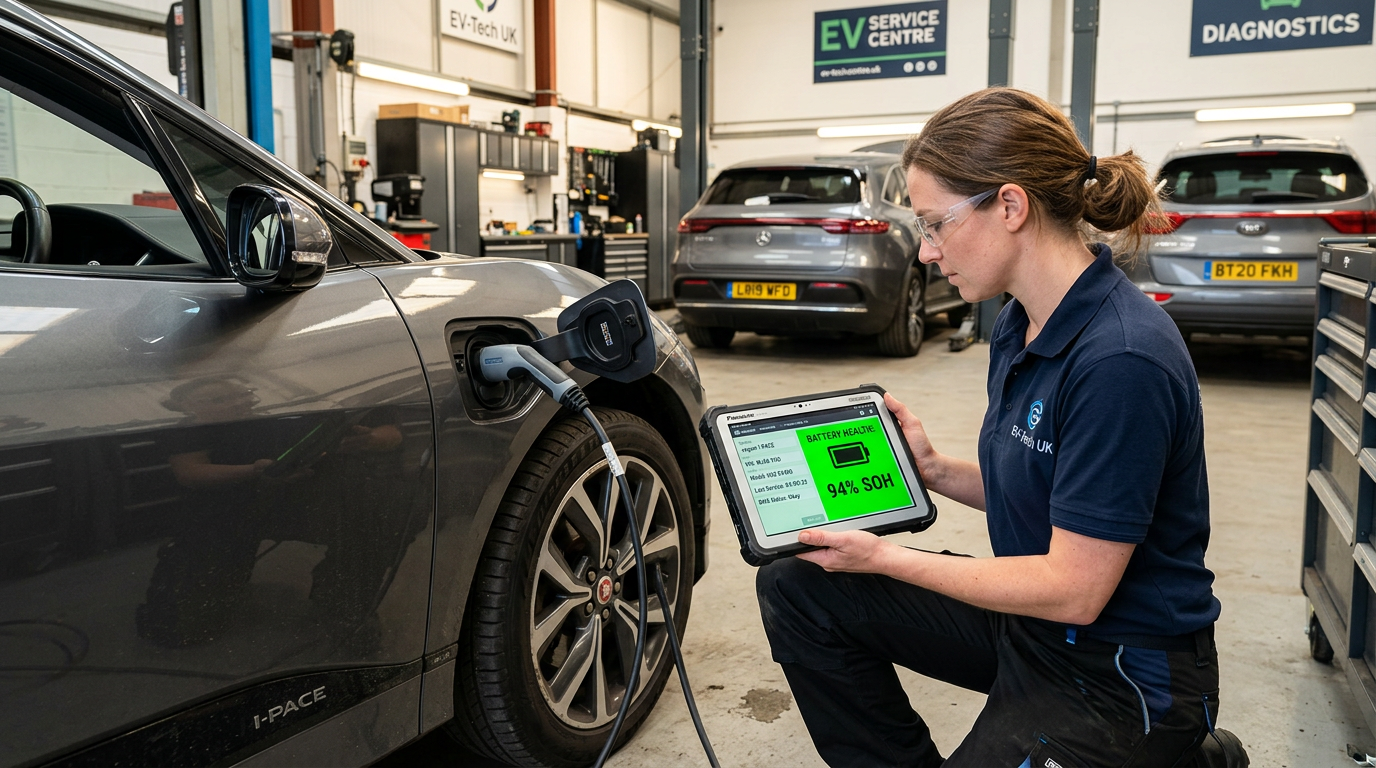
As we move deeper into 2026, the UK’s second-hand car market has undergone a fundamental shift. Electric Vehicles (EVs) now account for a significant portion of used car transactions, with early pioneers like the Tesla Model 3, Hyundai IONIQ 5, and Kia EV6 reaching their second or third owners.
For the savvy buyer, the traditional worry of "mileage" has been replaced by a new, more critical metric: State of Health (SOH). Understanding how much capacity a battery has retained is the difference between a bargain and a costly mistake.
In this guide, we explore how to verify used EV battery health in 2026, the tools available to UK motorists, and why a high mileage reading isn't always a dealbreaker.
What is Battery State of Health (SOH)?
State of Health is a percentage figure that compares the current energy capacity of an EV battery to its capacity when it was brand new. For example, if a car had a 64kWh battery at launch but can now only hold 57.6kWh, its SOH is 90%.
Unlike an internal combustion engine (ICE), where wear is mechanical and often visible through service stamps, battery degradation is chemical. Factors influencing this include:
- Charging habits: Frequent use of high-powered DC rapid chargers.
- Temperature: Excessive exposure to extreme heat or cold.
- Depth of Discharge: Keeping the car at 0% or 100% for long periods.
By 2026, most manufacturers offer an 8-year/100,000-mile warranty, usually guaranteeing at least 70% SOH. Knowing where a vehicle stands within this window is vital for resale value and peace of mind.
How to Verify Battery Health in 2026
Fortunately, the days of "guessing" battery health based on the dashboard range are gone. In 2026, buyers have several reliable methods to verify a battery's condition.
1. Independent Diagnostic Certificates
The most reliable way to check a battery is through a third-party diagnostic service. Companies like Altelium or Aviloo have become the industry standard in the UK.
- Flash Tests: A technician connects a device to the OBD-II port to read the Battery Management System (BMS) data.
- Premium Tests: These involve driving the car from 100% to 10% charge with a data logger attached. This provides a definitive "independent" SOH percentage that is far more accurate than the manufacturer's own dashboard readout.
2. The Dashboard 'Health' Menu
Most EVs manufactured since 2022 (such as the Volkswagen ID. series, Ford Mustang Mach-E, and BMW i4) now feature a dedicated "Battery Health" section within the infotainment system. While useful, remember that these are manufacturer-calculated figures. At CarsLink.ai, we always recommend verifying these figures with an independent report if the car is over four years old.
3. OBD-II Dongles and Apps
For the DIY enthusiast, apps like LeafSpy (for Nissan Leafs) or ABRP (A Better Route Planner) paired with a Bluetooth OBD-II dongle can pull real-time data from the car's computer.
| Tool Type | Accuracy | Cost | Best For |
|---|---|---|---|
| Manufacturer Dashboard | Moderate | Free | Initial viewing |
| OBD-II App (DIY) | High | £20 - £50 | Serious enthusiasts |
| Certified Third-Party Report | Very High | £80 - £150 | High-value purchases / Private sales |
Red Flags When Buying a Used EV
When inspecting a used EV in 2026, keep an eye out for these warning signs that the battery may have been mistreated:
- Rapid Voltage Drop: During a test drive, if the percentage of charge (SoC) drops by several percent during a single hard acceleration, it may indicate one or more "weak cells."
- Discrepancy in "Guess-o-meter": If the car shows 100% charge but the range is significantly lower than the official WLTP rating (accounting for weather), the SOH may be low.
- Lack of Rapid Charging History: Ironically, if a car has never been rapid charged, it might seem good, but batteries benefit from being exercised. However, a car that has lived exclusively on 150kW+ chargers may show faster degradation.
The Role of the V5C and MOT in 2026
As of 2026, there is ongoing discussion about including SOH data on the MOT certificate for EVs. While not yet a legal requirement for all, many forward-thinking dealers now provide a "Battery Health Passport" alongside the V5C logbook.
When buying, ensure the vehicle's service history shows regular thermal management system checks. The coolant used to keep batteries stable needs changing according to manufacturer schedules—neglecting this can lead to accelerated degradation.
Why High Mileage Isn't Always Bad
One of the biggest shifts in the 2026 used market is the realisation that mileage is a secondary concern. An EV with 80,000 miles that was primarily slow-charged at home (AC) will often have a healthier battery than a 30,000-mile car that was exclusively rapid-charged (DC) at motorway services.
Always ask the seller: "How was this car primarily charged?"
Financial Considerations: PCP and Insurance
If you are purchasing via PCP (Personal Contract Purchase) or HP (Hire Purchase), the SOH can affect the car's future residual value (GFV). Lenders are becoming stricter; a car with an SOH below 85% may attract slightly higher monthly payments due to the projected lower resale value.
Furthermore, check if the battery is owned or leased. While battery leasing (common with early Renault Zoes) is rare in 2026, some niche manufacturers still use this model. Ensure the V5C and sales contract explicitly state "Battery Owned."
Conclusion
Verifying used EV battery health is the most important step in your buying journey. By using professional diagnostic tools and looking beyond the odometer, you can secure an electric vehicle that will serve you for years to come.
At CarsLink.ai, we simplify the process by connecting you with reputable dealers who provide transparent battery health data as standard. Whether you're looking for a city runaround or a long-distance cruiser, start your search with the confidence that the "fuel tank" is in top condition.
Ready to find your next electric car? Check out the latest certified used EV listings at CarsLink.ai today.