The Landscape of Used Electric Motorbikes in 2026
The UK motorcycle market has undergone a seismic shift over the last three years. In 2026, the second-hand market for electric motorcycles is no longer a niche curiosity; it is a thriving sector. Whether you are a commuter looking to bypass the latest ULEZ expansion or a weekend rider seeking the instant torque of a motor like the Energica or Zero, buying used is now a viable way to go green.
However, 2026 marks a significant turning point for the financial aspect of ownership. The "free ride" regarding road tax has ended, and as high-voltage batteries reach their 5-8 year marks, the stakes for pre-purchase inspections have never been higher.
Electric Bike VED 2026: The New Tax Reality
For years, electric motorbike riders enjoyed a £0 rate for Vehicle Excise Duty (VED). As of April 2025, that changed, and in 2026, all electric motorcycle owners must budget for annual road tax.
Under the current DVLA rules, most electric motorcycles fall into the same tax bracket as small-capacity petrol bikes. Even though your bike produces zero tailpipe emissions, you must ensure your V5C logbook is up to date and your tax is "paid" (even if the renewal process is online).
| Vehicle Type | VED Rate (2026 Estimate) | Equivalent Engine Size |
|---|---|---|
| Electric Moped/Scooter | £25.00 | Under 125cc |
| Standard Electric (e.g., Maeving RM1) | £25.00 | 125cc - 400cc |
| High-Performance (e.g., Zero SR/F) | £50.00 - £70.00 | Over 600cc |
Note: Always check the latest rates on the GOV.UK website as VED tracking is now harmonised across most EV platforms.
Evaluating EV Motorbike Battery Health
The battery is the most expensive component of an electric bike. Unlike a petrol engine where you can listen for knocks or look for blue smoke, a battery hides its wear. When browsing listings on CarsLink.ai, use this checklist to ensure you aren't buying a spent cell.
1. State of Health (SoH) vs. State of Charge (SoC)
State of Charge is simply how much "fuel" is in the tank right now. State of Health (SoH) is what matters. It represents the total capacity remaining compared to when the bike was new.
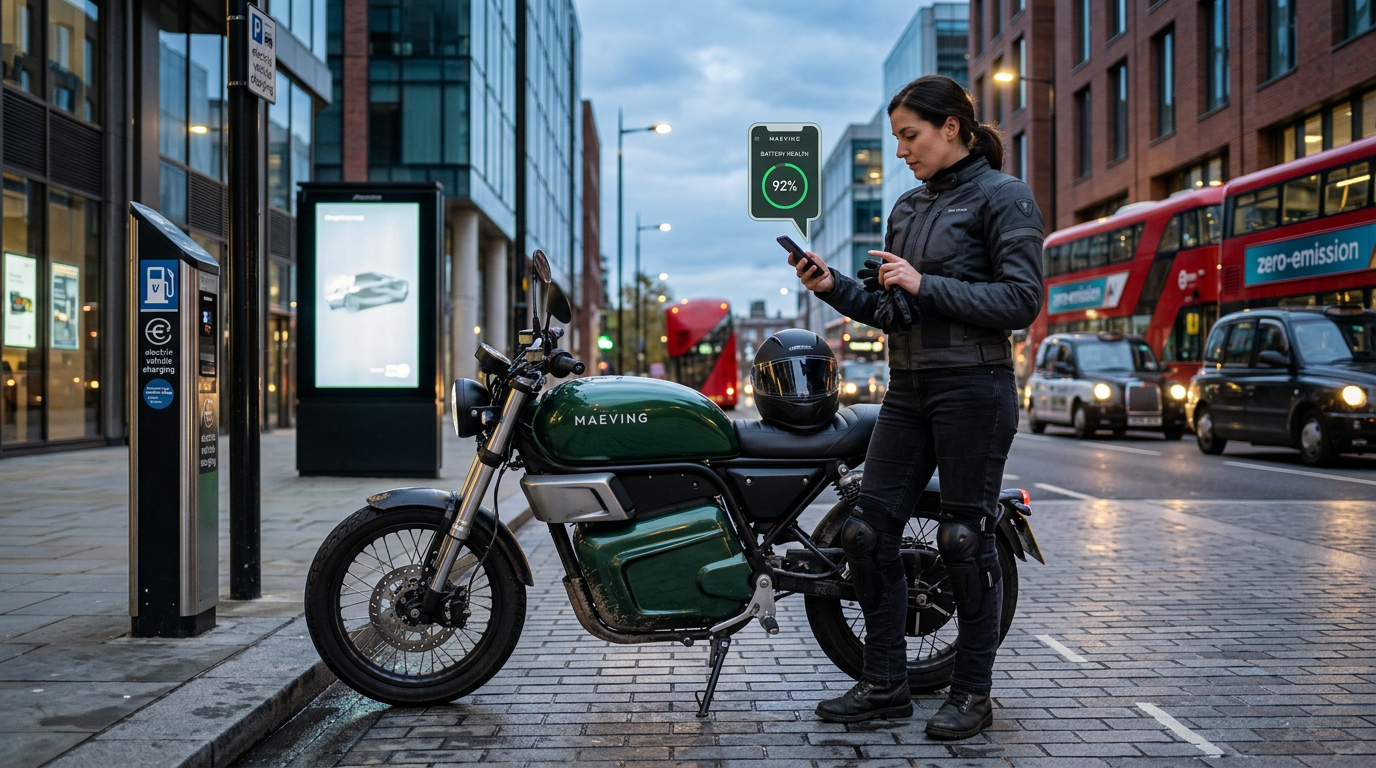
- A "Good" SoH in 2026: For a 3-year-old bike, look for 92% or higher.
- Warning Signs: Anything below 80% suggests the bike has been frequently fast-charged or left at 0% charge for long periods.
2. Charging Cycles
Ask the seller for the total number of charge cycles. Most lithium-ion motorcycle batteries are rated for 1,000 to 1,500 full cycles before significant degradation. A bike with a low odometer reading but high charge cycles may have been used for short, frequent "top-ups" which can sometimes stress the Battery Management System (BMS).
3. The "Cold Start" Test
While electric bikes don't need to "warm up," the battery voltage shouldn't sag significantly under immediate load. If possible, test ride the bike with a high SoC and check if the range estimate drops off a cliff when you open the throttle in a "Sport" mode.
Maeving Used Guide: The British Success Story
The Maeving RM1 and the newer RM1S have become icons of the UK electric scene. In 2026, many of the original 2022/2023 models are hitting the used market as riders upgrade.
What to look for in a used Maeving:
- Removable Batteries: One of the Maeving's biggest selling points. Check the physical casing of the batteries for cracks or signs of being dropped.
- The "S" Upgrade: Many riders are trading in the original RM1 (45mph) for the RM1S (65mph). Ensure the V5C matches the power output; the RM1 is CBT legal (A1 category), whereas the RM1S requires an A2 or full A licence.
- Firmware Updates: Maeving frequently pushes updates to improve throttle maps. Check if the bike has been serviced by Maeving’s mobile technicians recently.
Licensing and the DVSA Motorcycle Test
If you are transitioning from a car to an electric bike in 2026, remember the licensing rules remain strict.
- CBT (Compulsory Basic Training): Allows you to ride electric bikes with a power output up to 11kW (e.g., Super Soco, Maeving RM1). You must display L-plates and cannot carry passengers.
- A1/A2 Licences: Many "middleweight" electric bikes like the BMW CE 04 require an A2 licence.
- The "Automatic" Trap: Most electric bikes are twist-and-go. If you pass your DVSA motorcycle test on an electric bike, your licence will be restricted to automatics only—you won't be able to ride a manual petrol bike without a re-test.
Maintenance: What Doesn't Break?
The beauty of the used electric market is the lack of mechanical complexity. When inspecting a bike found on CarsLink.ai, you can ignore oil leaks, spark plugs, and clutch plates. Instead, focus on:
- Drive Belt Tension: Many electric bikes (Zero, BMW) use carbon belts. These are quieter than chains but expensive to replace (£200+). Check for stones embedded in the belt or fraying.
- Tyre Wear: Electric motors deliver maximum torque instantly. This is fun, but it shreds rear tyres. Check the tread depth against the legal 1mm limit (though 2mm is recommended for safety).
- Regenerative Braking: Ensure the "engine braking" effect feels smooth. If it’s jerky, the hall sensors in the motor might be failing.
Is 2026 the Time to Move to Electric?
With the 2030s approaching and urban charging infrastructure in London, Birmingham, and Manchester better than ever, a used electric motorbike is a savvy investment. You save on "fuel," maintenance is negligible, and you are future-proofed against rising emission-level charges.
When you're ready to make the switch, browse the verified listings on CarsLink.ai—where we help you filter by battery capacity and VED status to find the perfect ride for the modern age.
Looking to sell your electric bike or upgrade to a long-range model? Check out the latest valuations and listings at CarsLink.ai today.