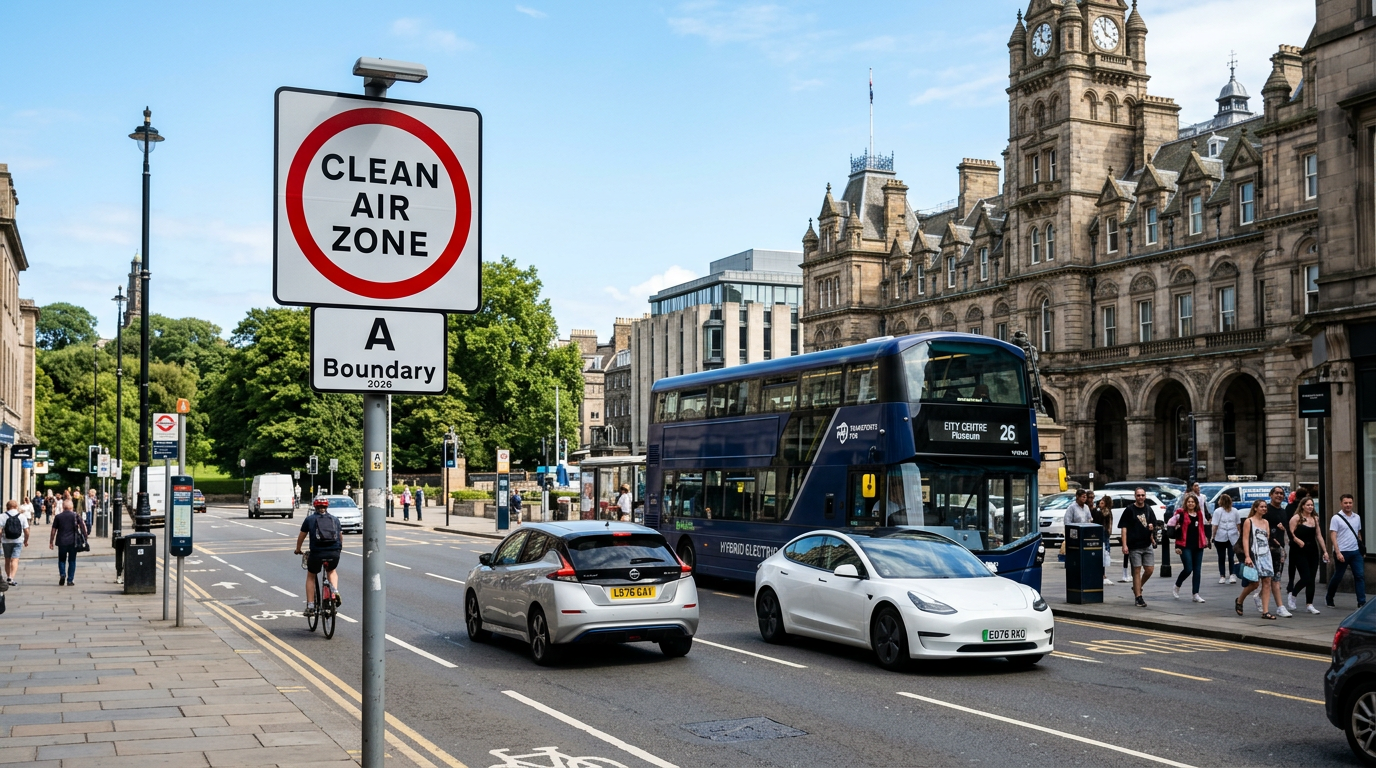
While London’s expanded ULEZ dominated headlines over the past few years, 2026 marks a pivotal shift for the rest of the UK. As of May 2026, the map of Britain’s urban centres has changed significantly. Local authorities, under continued pressure to meet legal air quality targets, have rolled out a new wave of Clean Air Zones (CAZ) and tightened the screws on existing ones.
Whether you are a commuter, a business owner, or a weekend visitor, navigating these zones is no longer just about knowing your Euro standards—it's about understanding a complex patchwork of regional rules and charging structures.
The New Map: Cities Joining the CAZ Club in 2026
By mid-2026, several major urban areas have transitioned from "viewing" periods to active enforcement. Unlike the general London ULEZ, these regional zones often vary between Class C (vans, buses, taxis) and Class D (which includes private cars).
1. The East Midlands Expansion
After years of consultation, the Nottingham-Derby air quality corridor has introduced a unified charging zone. While Nottingham previously relied heavily on its workplace parking levy, 2026 sees the introduction of a Class D CAZ covering the inner ring roads. This means older petrol and diesel cars that aren't Euro 6 (diesel) or Euro 4 (petrol) are now subject to daily charges.
2. The South Coast "Clean Sea-Air" Initiative
Brighton and Southampton have formalised their 2026 boundaries. Brighton’s zone is particularly stringent, focusing on the historic centre and seafront. The city has integrated its CAZ with its "Zero Emission Zone" (ZEZ) pilot, marking one of the most aggressive stances against combustion engines outside of London.
3. Northern Powerhouse Updates: Manchester and Beyond
The Greater Manchester Clean Air Zone, famously paused and redesigned, is now fully operational in its 2026 "Clean Air Plan" format. In Leeds and Sheffield, the boundaries have been subtly expanded to capture emerging high-traffic suburbs, focusing on arterial routes that feed the city centres.
UK CAZ Charges 2026: What Will It Cost You?
The cost of driving a non-compliant vehicle is rising. Inflationary adjustments and the need to fund public transport infrastructure have seen daily rates climb across the board.
| City / Zone | Daily Charge (Private Car - Class D) | Daily Charge (LGC/Van - Class C) |
|---|---|---|
| London (ULEZ) | £15.00 | £15.00 |
| Birmingham | £9.50 | £50.00 (HCV) |
| Bristol | £10.00 | £10.00 |
| Glasgow (LEZ) | Penalty-based (£60+) | Penalty-based (£60+) |
| Nottingham/Derby | £8.00 | £12.50 |
| Brighton | £9.00 | £15.00 |
Note: Charging cycles usually run from midnight to midnight. Failure to pay within the 24-hour window typically results in a Penalty Charge Notice (PCN) of £120, reduced to £60 if paid within 14 days.
How to Check if Your Vehicle is Compliant
Before you set off, you must check your vehicle’s status. The DVLA database is the primary source of truth for enforcement cameras (ANPR). Generally:
- Petrol cars: Must meet Euro 4 standards (generally registered after January 2006).
- Diesel cars: Must meet Euro 6 standards (generally registered after September 2015).
At CarsLink.ai, we recommend checking your V5C logbook for the emission section (V.7 and V.9) or using the official government CAZ checker tool regularly, as some older vehicles that were previously exempt may have their status updated as data accuracy improves.
The Financial Reality of Non-Compliant Car Alternatives
For many, the UK city driving costs in 2026 have made owning an older diesel vehicle unsustainable. If you enter a CAZ just three times a week in Birmingham or Bristol, you could be looking at an annual bill of over £1,500—and that’s on top of road tax (VED) and high fuel prices.
What are the alternatives in 2026?
1. The Switch to EV (Electric Vehicles)
Second-hand EV prices have stabilised in 2026. A three-year-old mid-range electric hatchback is now a viable option for many. Not only do you avoid CAZ charges, but you also benefit from simplified MOTs and lower "fuel" costs if charging at home.
2. Modern Hybrids (Euro 6d)
If you aren't ready for full electric, a Euro 6d-temp or Euro 6d-compliant hybrid avoids all current CAZ charges. These are popular for PCP (Personal Contract Purchase) deals as they hold their residual value better than pure internal combustion engine (ICE) cars in a CAZ-heavy landscape.
3. Public Transport & Scrappages
Several councils, including those in Scotland and the West Midlands, continue to offer "Mobility Credits" if you scrap a non-compliant car. These credits can be used for trains, buses, and bicycle hire schemes.
Dealing with the Paperwork: MOT, Tax, and ULEZ
As we move through 2026, the integration of these zones is becoming more automated.
- Road Tax (VED): Remember that from April 2025, even EVs began paying VED, so don't expect a "free ride" on tax, even if you are CAZ exempt.
- MOT: A failing exhaust system or DPF (Diesel Particulate Filter) issue won't just fail your MOT; it could lead to your vehicle being flagged on emissions sensors being trialled in some cities.
Selling Your Non-Compliant Car: 2026 Outlook
If you live inside or near a new 2026 CAZ, selling your non-compliant vehicle locally might be difficult. Residents are increasingly looking for compliant cars, meaning the market value for older diesels in urban areas has dipped.
However, these vehicles often hold value in rural areas where CAZ restrictions are non-existent. CarsLink.ai provides a seamless way to bridge this gap, helping you find the true market value of your car by connecting with dealers and buyers nationwide, ensuring you aren't penalised just because your local city has changed its rules.
Conclusion
The Clean Air Zone expansion of 2026 is a clear signal: the era of the high-emission urban commute is over. While the charges are a burden, they are also a catalyst for a cleaner, quieter urban environment.
Whether you choose to upgrade to a compliant Euro 6 petrol, leap into the world of EVs, or utilise car-sharing schemes, staying ahead of the legislation is the only way to avoid unexpected hits to your wallet.
Is your car ready for 2026? Check your compliance status and explore your upgrade options at CarsLink.ai. We help you navigate the changing landscape of UK driving with expert car valuations and the latest market insights. Find your next CAZ-ready vehicle today!