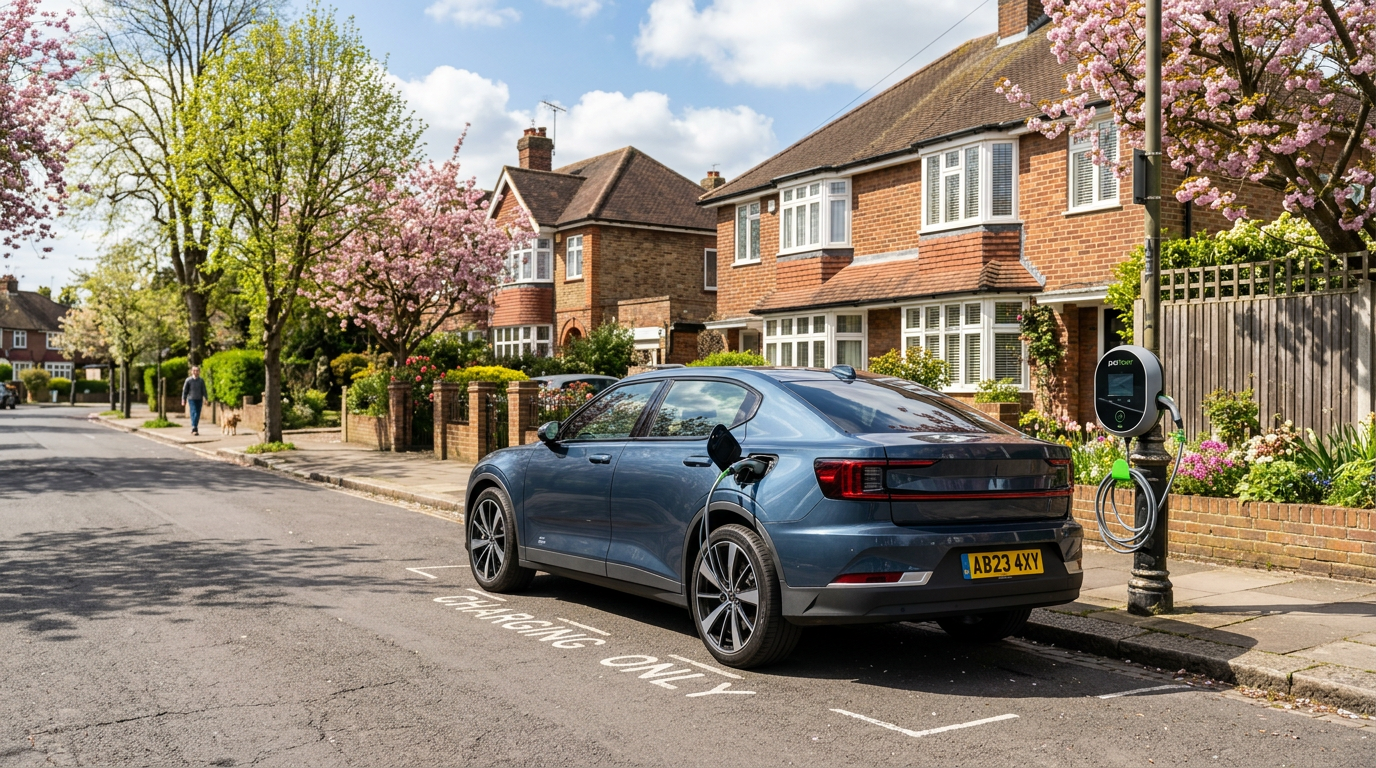
For the past few years, the UK automotive landscape has been defined by a singular, frustrating trend: skyrocketing insurance premiums. Both private buyers and motor traders have felt the pinch, with Electric Vehicle (EV) owners often facing the steepest hikes. However, as we move through the first quarter of 2026, the data reveals a turning point. The volatile "risk premium" associated with EVs is finally beginning to erode, creating a more stable market for motorists across the country.
This stabilisation isn't happening by accident. A combination of improved repair networks, better battery diagnostic technology, and a more mature second-hand market has allowed insurers to price risk with greater precision. If you are currently browsing CarsLink.ai for your next vehicle, understanding these insurance shifts is vital for calculating your total cost of ownership in 2026.
The Cooling of the "EV Tax"
In 2024 and 2025, many UK drivers were shocked to find that switching to an EV resulted in insurance quotes that were 30% to 50% higher than equivalent internal combustion engine (ICE) cars. Insurers argued that high repair costs and a lack of specialist technicians made EVs a high-risk gamble.
By March 2026, the narrative has shifted. The "EV Tax" is fading. According to latest industry data, the gap between insuring a mid-range EV (like a Tesla Model 3 or VW ID.3) and a traditional petrol hatchback has narrowed to within 10%.
Why Premiums Are Stabilising
The stabilisation we are seeing today is driven by three primary factors:
- Salvage and Circular Economy: In previous years, even minor battery casing scratches led to EVs being written off. Today, UK salvage experts and specialist repairers have developed protocols to repair battery modules rather than replacing entire packs.
- Parts Availability: The supply chain shocks of the early 2020s have largely been resolved. Components for popular UK models like the MG4 and Nissan Leaf are now readily available in domestic warehouses.
- Actuarial Data Maturity: Insurers now have over five years of high-volume data on EV driver behaviour and accident patterns. The "fear of the unknown" that inflated premiums in 2024 has been replaced by cold, hard statistics.
Comparing 2026 Insurance Groupings
The Association of British Insurers (ABI) has recalibrated several popular models for 2026. While performance EVs still sit in higher groups (40-50), many "commuter" EVs have been downgraded, leading to lower annual costs.
| Vehicle Model (2026) | Typical Insurance Group | Estimated Annual Premium (Bristol/Manchester) |
|---|---|---|
| Fiat 500e (42kWh) | 14 | £580 |
| MG4 EV (Standard Range) | 21 | £710 |
| Tesla Model 3 Long Range | 46 | £1,150 |
| Volkswagen Golf (1.5 TSI) | 18 | £640 |
| Kia EV6 | 35 | £890 |
Note: Figures based on a 35-year-old driver with 5 years No Claims Bonus (NCB) and clean license.
The Impact of ULEZ and Low-Emission Zones
In 2026, the expansion of Clean Air Zones (CAZ) and the London ULEZ standard has influenced how insurers view vehicle risk. While insurance is primarily about accident risk, the geographic location of the vehicle matters.
We are seeing a trend where EVs registered in major cities like London, Birmingham, and Glasgow are receiving slightly more competitive rates compared to high-emission diesel vehicles. This is partly due to the lower "theft-for-parts" risk associated with older diesel engines, which are increasingly being phased out and are therefore more valuable on the black market for spares.
Advice for Motor Traders and Dealers
For the UK's motor trade, the stabilisation of EV premiums is a significant sales tool. In 2024, many "nearly new" EV sales fell through at the final hurdle when the customer saw the insurance quote.
Traders should now be proactive:
- Highlight Group Ratings: When listing on platforms like CarsLink.ai, ensure you mention the insurance group.
- Telematics Partnerships: Many dealers are now offering "bundled" insurance packages with black-box telematics specifically designed for younger EV drivers to help mitigate the remaining cost gap.
- V5C Transparency: Ensure the V5C reflects accurate battery sizes, as insurers are becoming stricter on "trim-level" discrepancies that can invalidate a policy.
The Cheapest Cars to Insure in 2026
While EVs are stabilising, the overall "cheapest to insure" crown still belongs to a mix of small-displacement petrol hybrids and entry-level electric city cars. If your primary goal is reducing your monthly outgoings, these are the top contenders:
- Dacia Spring (EV): Since its full UK rollout, the Spring has become a darling for insurers. Its low top speed and simple construction keep it in the lowest insurance brackets.
- Hyundai i10 (1.0 MPi): A perennial favourite for low-cost motoring. Despite 2026's tech-heavy market, the simplicity of the i10 keeps premiums around the £450-£500 mark for experienced drivers.
- Volkswagen Polo (Life Trim): With advanced safety tech (AEB and Lane Assist) as standard, the Polo earns high safety ratings which translate to Group 8-12 insurance.
Key Changes to UK Insurance Laws in 2026
It is important to note that the Financial Conduct Authority (FCA) has introduced new "Consumer Duty" updates for 2026. This requires insurers to demonstrate "fair value" specifically for EV policies. If your insurer cannot justify why an EV policy is significantly more expensive than an ICE equivalent, they may face regulatory scrutiny.
Additionally, the "Anti-Geronimo" ruling of late 2025 has streamlined how the DVLA reports minor traffic offences to insurers, leading to a more transparent (if occasionally stricter) pricing model for those with points on their license.
How to Lower Your 2026 Premiums
Regardless of what you drive, several UK-specific strategies remain effective:
- Pay Annually: With PCP and HP interest rates remaining steady around 7-9%, many buyers are tempted to pay insurance monthly. However, "monthly" insurance is essentially a high-interest loan. Paying annually can save the average UK driver £120 per year.
- Review Your Job Title: The way you describe your occupation to the DVLA and your insurer still dictates risk. A "Chef" might pay more than a "Catering Manager."
- Security Upgrades: Ghost immobilisers and Thatcham-approved trackers are becoming mandatory for high-end EVs like the Porsche Taycan or Range Rover Electric to even secure a quote in major UK cities.
Conclusion
The era of the "uninsurable EV" is coming to an end. As we progress through 2026, the UK insurance market is recalibrating to the reality of an electric-first road network. While premiums haven't returned to 2019 levels—and likely never will due to inflation—the volatility has ceased.
Whether you are a first-time EV buyer or a dealer looking to move stock, the outlook is positive. Use tools like CarsLink.ai to compare vehicle specs and find models in lower insurance groups, ensuring your next car is as affordable to protect as it is to drive.
Ready to find your next car? Explore thousands of local UK listings with real-time market data on CarsLink.ai today.,excerpt: