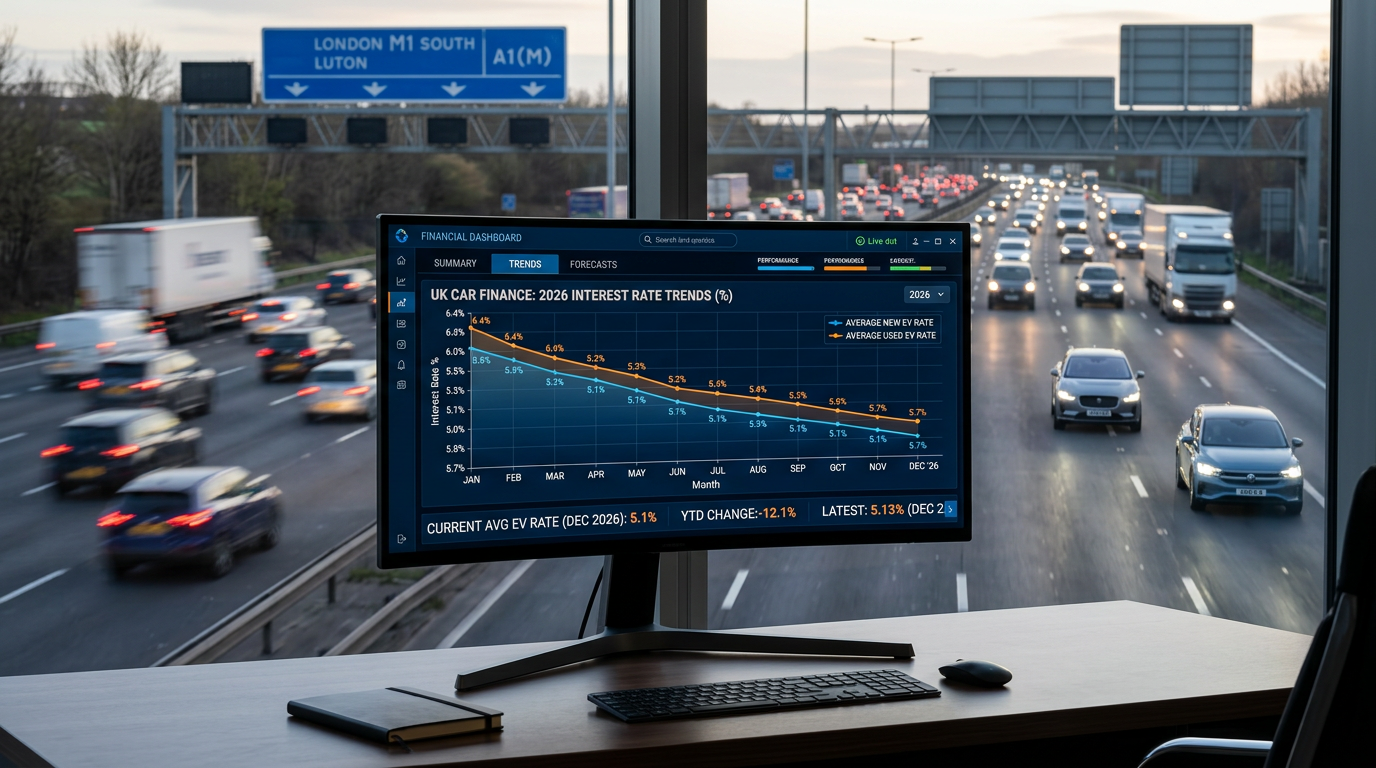
As we move into the second quarter of 2026, the UK automotive market is experiencing a significant shift. After a period of relative volatility in borrowing costs, middle-2026 is shaping up to be a pivotal moment for motorists. Whether you are currently paying off a PCP (Personal Contract Purchase) agreement or you’ve recently taken out an HP (Hire Purchase) loan, the question on everyone’s lips is: is now the time to refinance?
In this guide, we break down the current state of UK car finance trends in May 2026, the impact of recent Bank of England decisions, and how you can potentially save thousands by switching your car loan provider.
The State of UK Car Finance in May 2026
The landscape for car buyers has evolved. Following the stabilization of the Bank of England Base Rate at 3.75% earlier this spring, high-street lenders and specialist motor finance houses have begun to adjust their products.
While the days of 0% interest deals—common in the early 2020s—remain rare and largely restricted to specific EV manufacturer subsidies, the 'settling' of the economy has brought a new wave of competitive fixed-rate car loans in the UK.
Current Average Interest Rates (Representative APR)
| Finance Type | May 2025 (Avg) | May 2026 (Avg) | Trend |
|---|---|---|---|
| New Car PCP | 7.9% | 6.4% | Down |
| Used Car HP | 11.4% | 9.2% | Down |
| Personal Car Loan | 6.5% | 5.8% | Stable |
| Luxury/Supercar Finance | 8.9% | 7.5% | Down |
Why Refinance Your Car Loan Now?
If you took out a car finance agreement between 2023 and early 2025, you are likely sitting on an interest rate significantly higher than today’s market offerings. Refinancing—the process of taking out a new loan to pay off your existing one—could lower your monthly outgoings or reduce the total amount of interest paid over the term.
1. The 'Interest Rate Lag' is Closing
When the Bank of England Base Rate drops, it often takes several months for car finance providers to reflect this in their APRs. By May 2026, the cuts we saw in late 2025 have finally filtered through to consumer products. If your current APR is north of 10%, you could be overpaying.
2. Rising Residual Values for EVs
In 2026, the used Electric Vehicle (EV) market has matured. Unlike the price crashes of previous years, EV residuals are now more predictable. If you are in a PCP deal for a Tesla, Hyundai Ioniq, or Kia EV6, you might find your car is worth more than the 'Guaranteed Minimum Future Value' (GMFV) set two years ago. Refinancing into a lower-rate loan to 'buy out' the balloon payment could be a savvy move.
3. Improved Credit Scores
If you've spent the last 18 months diligently making payments on your 2024 or 2025 plate vehicle, your credit profile has likely improved. Moving from a 'Sub-prime' or 'Mid-tier' lender to a prime lender in 2026 can slash your interest rate by half.
How to Check if You Should Refinance
Before jumping into a new deal, you need to gather specific documents and data:
- Your Settlement Figure: Request this from your current lender. It is the total amount required to close the account today.
- Your V5C Logbook: Lenders will want to verify the vehicle's age and ownership.
- Current MOT Status: Ensure your car has a valid MOT; lenders are increasingly strict about the vehicle's condition before approving a refinance.
- Mileage Check: If you are significantly over your PCP mileage limit, refinancing into a standard personal loan might help you avoid hefty end-of-contract charges.
At CarsLink.ai, we assist users in navigating these complex decisions by providing real-time market data on vehicle valuations and finance trends, ensuring you don't stay locked into an overpriced deal.
Factors Influencing Car Finance Interests Rates in 2026
The Bank of England Influence
The Monetary Policy Committee (MPC) has signalled a "neutral" stance for the remainder of 2026. This means fixed-rate car loans in the UK are currently at their most stable point in three years. Borrowers are no longer rushing to "lock in" rates before they rise, but rather shopping around for the best margins.
ULEZ and Low-Emission Zones
With more UK cities adopting ZEZ (Zero Emission Zones) or expanded ULEZ-style schemes in 2026, the demand for compliant vehicles remains high. Lenders are offering slightly better rates for 'Green' finance—loans specifically for Euro 6 diesel, petrol hybrids, or BEVs.
The Role of PCP Balloons
Many 3-year PCP deals signed in 2023 are reaching their conclusion this month. With the cost of living still a factor for many UK households, paying a £15,000 balloon payment in one go is difficult. Refinancing that balloon payment into a new 3-year HP loan is a popular 2026 trend, allowing drivers to keep their cars without the sting of a lump-sum exit.
Potential Pitfalls to Watch Out For
While the rates look tempting, refinancing isn't always the right move. Watch out for:
- Early Settlement Fees: Check your current contract. Most UK car finance regulated by the Consumer Credit Act allows for early settlement, but there may be small interest penalties (usually 1–2 months' worth).
- Negative Equity: If your car is worth less than the settlement figure (common in some luxury segments), you may need to pay the difference upfront to refinance.
- Total Cost of Credit: Lowering your monthly payment by extending the term (e.g., from 2 years left to 4 years) might cost you more in total interest, even if the APR is lower.
Verdict: Is May 2026 the Time to Act?
For the majority of UK drivers on agreements older than 18 months, May 2026 is an excellent time to audit your car finance. The convergence of lower base rates and a stabilised used car market has created a "Goldilocks" zone for refinancing.
By switching to a modern fixed-rate product, you could reduce your monthly budget or shorten your path to full ownership. Tools like CarsLink.ai can help you track your car’s current market value against your remaining finance, making it easier to spot the perfect moment to switch.
Looking to upgrade or refinance? Stay ahead of the curve with CarsLink.ai. Whether you're checking the latest ULEZ compliance news or looking for the best PCP deals in the UK, we provide the data you need to drive smarter in 2026. Explore our latest guides today!