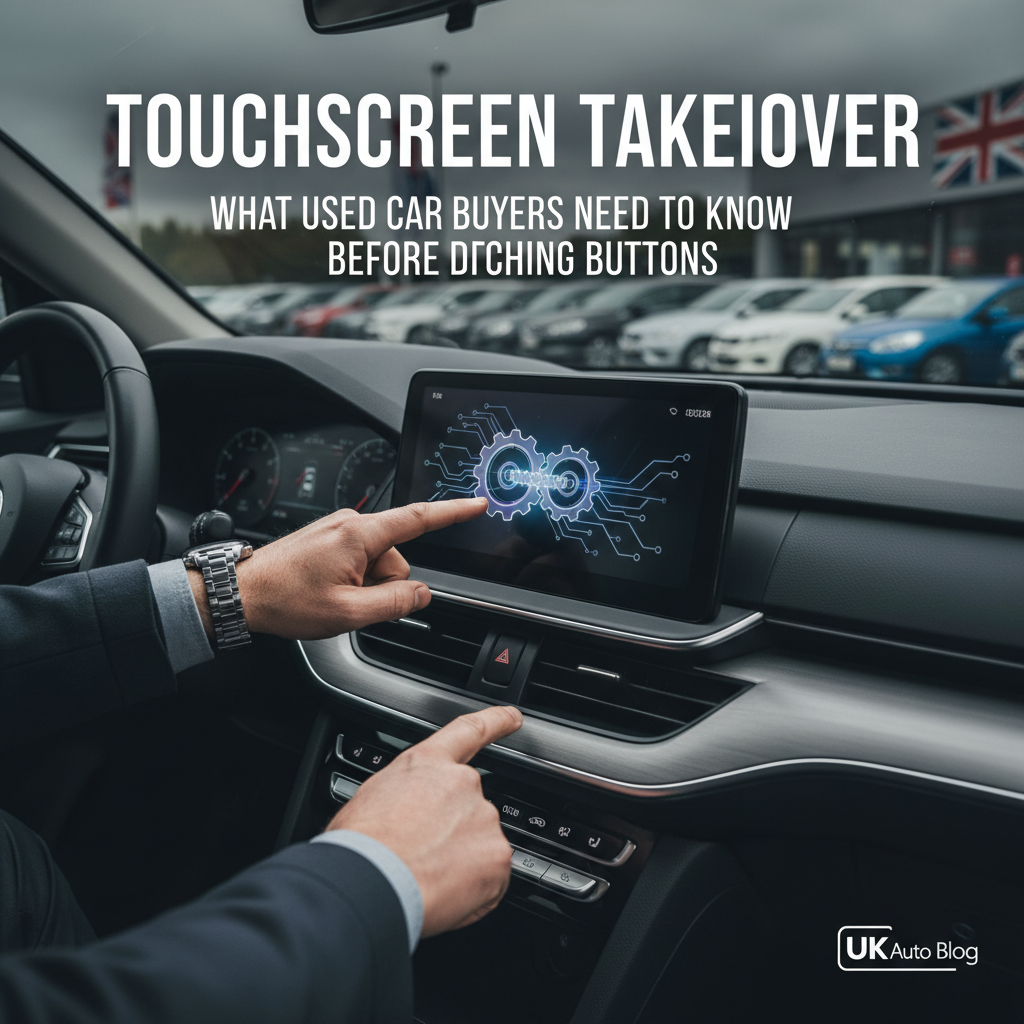
Touchscreen Takeover: What Used Car Buyers Need to Know Before Ditching Buttons
The digital revolution has infiltrated every aspect of our lives, and the automotive world is no exception. Modern car interiors, once a symphony of tactile buttons, dials, and switches, are increasingly dominated by sleek, expansive touchscreens. From climate control to media playback and even fundamental vehicle settings, these glowing panels are now the command centres of our cars.
For used car buyers browsing platforms like CarsLink.ai, this presents a unique dilemma. On one hand, a large, responsive touchscreen can feel modern, sophisticated, and packed with features. On the other, ditching physical buttons introduces a host of practical considerations that could impact your daily driving experience, safety, and even future resale value. Before you commit to a screen-centric cabin, it’s crucial to understand what you’re really getting into.
The Rise of Screen-Only Interiors: Convenience vs. Practicality
The allure of the touchscreen is clear. Manufacturers can create minimalist, uncluttered dashboards, offering a premium aesthetic and endless customisation possibilities. Features that once required a bank of buttons – advanced satellite navigation, streaming services, elaborate vehicle diagnostics – are now seamlessly integrated. Examples like the vast, central display in a Tesla Model 3 or the MBUX system in a Mercedes-Benz A-Class showcase this vision, providing a tablet-like experience that many new buyers find appealing.
However, this convenience often comes with practical downsides for daily use. The fundamental issue is the lack of haptic feedback. When you adjust the radio volume via a physical dial, you can do so by feel, keeping your eyes firmly on the road. With a touchscreen, you often need to precisely locate a virtual button, requiring a glance away from traffic. This split-second distraction, repeated for numerous adjustments throughout a journey, can quickly become frustrating and, more importantly, a safety concern.
Consider the early Volkswagen ID.3, which drew criticism for burying basic climate control functions within multiple touchscreen menus, or some iterations of Peugeot’s i-Cockpit where essential settings require diving deep into the system. While visually appealing, these designs can hinder intuition. Furthermore, screens are prone to fingerprints, glare from sunlight, and can occasionally be slow or unresponsive – issues rarely encountered with a robust physical button.
Essential Checks for Infotainment Systems
When you’re test driving a used car with a prominent touchscreen, treat it as critically as you would the engine or gearbox. Don't just glance at it – engage with it.
Firstly, assess responsiveness. Swipe through menus, pinch to zoom on the map, tap different icons. Does it react instantly, or is there a noticeable lag? A slow system, even in a premium car, will quickly become infuriating. Try navigating through sub-menus quickly, simulating how you might adjust settings on the fly. Does it freeze or stutter?
Next, inquire about software updates. Many modern infotainment systems receive Over-The-Air (OTA) updates, much like your smartphone, offering new features, bug fixes, and security patches. Ask the seller or dealership if the car has received its latest updates and what the update history looks like. For older systems, check if they are still supported and if updates require a visit to a main dealer. An out-of-date system might lack current features or security.
Finally, thoroughly test Apple CarPlay and Android Auto functionality. For many buyers, seamless smartphone integration is non-negotiable. Plug in your phone (or connect wirelessly if supported) and try making a call, playing music, and using a mapping application like Google Maps or Waze. Check for any dropouts, delays in audio, or app crashes. Confirm whether the connection is wired or wireless, as wireless systems offer greater convenience but can sometimes be less stable.
Potential Long-Term Issues and Obsolescence
While a touchscreen might feel cutting-edge today, consider its longevity. These systems are essentially car-specific computers, and like any computer, they can develop issues. A malfunctioning physical button is one thing; an entirely unresponsive screen that controls your climate, navigation, and media is a far more significant headache. Dead pixels, touch sensitivity issues, or a complete system crash are potential electronic failures that can be costly.
Screen repair and replacement costs can be substantial. A cracked screen, whether from an accident or simply poor handling, isn't a cheap fix. Replacement costs for the entire infotainment unit can run into hundreds, if not thousands, of pounds, particularly for integrated systems that include navigation or complex vehicle controls. Independent specialists may offer cheaper repairs, but sourcing parts for specific models can be challenging as the car ages.
Then there's the inevitable march of obsolescence. Technology evolves at a dizzying pace. A premium infotainment system from 2018, while advanced at the time, might feel clunky and outdated compared to a 2023 equivalent. Built-in connectivity services, relying on 3G or 4G networks, might eventually be sunsetted, leaving you with reduced functionality. While physical buttons largely retain their original purpose and feel, a touchscreen's capabilities are intrinsically linked to its software and hardware, both of which have a shelf life.
Safety Implications: Distraction vs. Intuition
Perhaps the most critical consideration for touchscreen-dominated interiors is safety. As mentioned, having to look away from the road to precisely tap a virtual button is a significant distraction. This is amplified on bumpy roads, where accurately hitting a small icon becomes even harder. Essential functions like adjusting climate control, changing volume, operating the demisters, or activating hazard lights should ideally be accessible intuitively, without diverting attention from driving.
While many manufacturers wisely retain physical buttons for crucial safety features like hazard lights, others bury even commonplace functions deep within menus. Before buying, sit in the car (even without driving) and simulate needing to perform these actions quickly. How many taps does it take? How easy is it to find?
Voice control systems are often touted as a solution to reduce distraction, allowing you to keep your hands on the wheel and eyes on the road. However, the effectiveness of these systems varies wildly. Test it thoroughly: can it understand natural speech? Does it correctly interpret commands for navigation, music, or climate? A frustrating voice assistant can be just as distracting as a poorly designed touchscreen.
Resale Value: The Future of Interior Design
Will future used car buyers prefer screen-heavy interiors, or will there be a resurgence in demand for the tactile simplicity of physical buttons? The current trend in new cars suggests that touchscreens are here to stay, meaning that future buyers might expect a degree of digital integration. A well-implemented, responsive, and intuitive touchscreen system, such as those found in higher-end Audis or BMWs (especially when coupled with a rotary controller), is likely to age better and hold its value more effectively than a cheap, laggy, or poorly designed one.
However, there's a growing segment of buyers who prioritise functionality and ease of use over sleek aesthetics. For these individuals, cars with clear, accessible physical buttons for essential functions might actually become more desirable, offering a refreshing contrast to the digital overload. This could particularly apply to entry-level or budget-friendly used cars, where a low-quality touchscreen can actively detract from the driving experience. The impact on resale value will largely depend on the quality of the touchscreen implementation and how well it integrates with the car's overall user experience.
Conclusion
The touchscreen takeover in modern cars presents a compelling blend of cutting-edge technology and potential practical compromises for used car buyers. While they offer a clean aesthetic and a wealth of features, it’s imperative to consider their responsiveness, potential for long-term reliability issues, repair costs, and, crucially, their impact on safety and ease of use while driving.
Before you make a purchase, perform thorough checks during your test drive. Don't be swayed solely by a large, bright screen; instead, assess how it integrates into your driving life. The best infotainment system, whether dominated by touchscreens or retaining a blend of physical controls, is one that enhances your journey without becoming a source of frustration or distraction. For used car buyers, understanding these nuances is key to making an informed decision that you won't regret down the line.