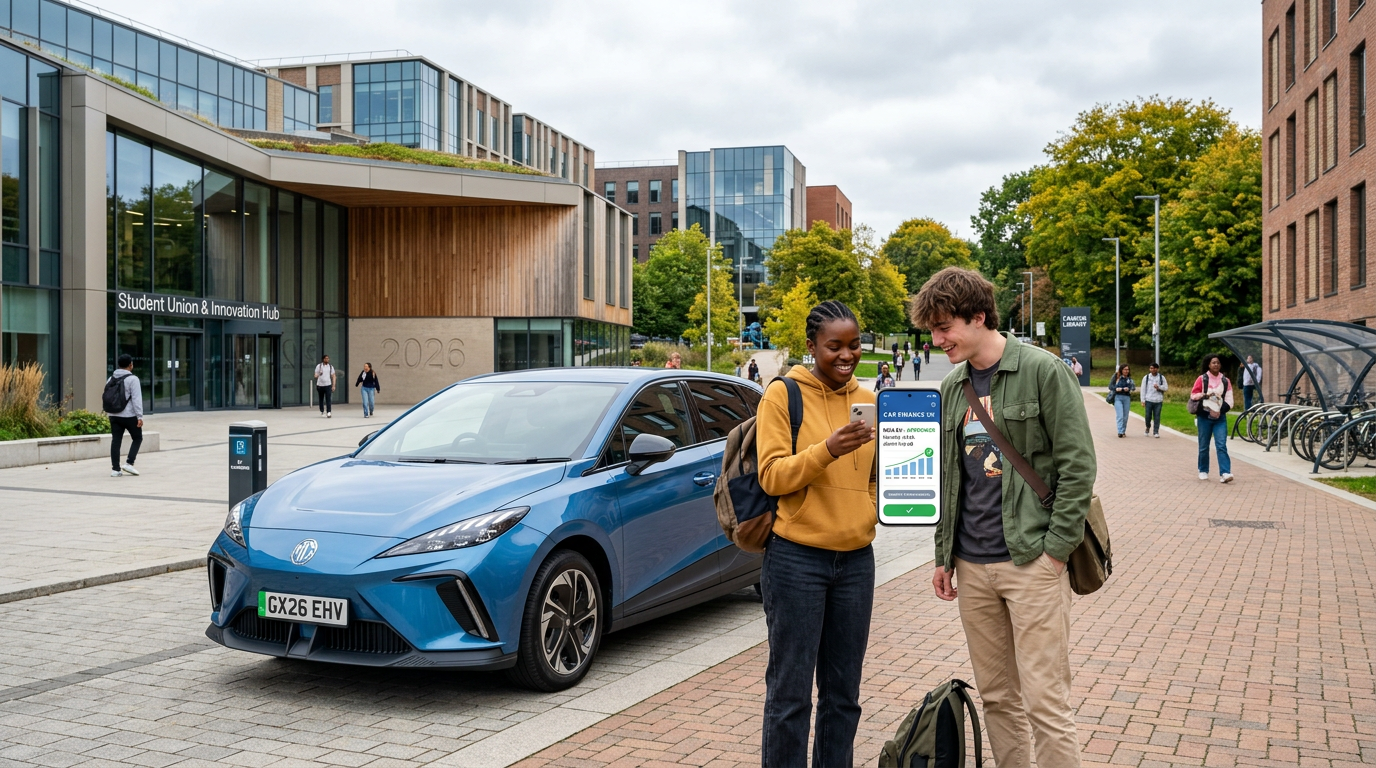
Navigating university life in 2026 is about more than just lectures and student unions. With the expansion of Clean Air Zones (CAZ) across major UK cities and the continued push toward electrification, getting mobile as a student requires a savvy financial strategy.
Whether you’re commuting to a campus in the Midlands or need a reliable runabout for weekend trips home, securing car finance for students in the UK has evolved. While traditional lenders are often wary of those with thin credit files, new fintech solutions and tiered finance products have made the dream of car ownership more attainable.
The Reality of Student Car Finance in 2026
When you apply for car finance, lenders primarily look at two things: your credit score and your affordability. As a student, you likely have a "thin" credit file, meaning you haven't lived at enough addresses or held enough credit accounts for a bank to judge your reliability.
Furthermore, most lenders do not count maintenance loans as "earned income." This is where many students hit a roadblock. However, if you hold a part-time job or have a consistent financial history, several paths remain open.
1. Personal Contract Purchase (PCP) for Young Drivers
PCP for young drivers remains the most popular way to get into a newer, ULEZ-compliant car. In 2026, many students opt for PCP because it offers lower monthly payments compared to a standard loan.
- How it works: You pay a deposit, followed by monthly instalments. At the end of the term (usually 3-4 years), you can pay a "balloon payment" to own the car, trade it in for a new one, or simply hand the keys back.
- The 2026 Twist: With the UK’s 2030 deadline for the end of new petrol/diesel sales approaching, many students are using PCP to "lease" small electric vehicles (EVs) like a used Vauxhall Corsa-e or Renault Zoe, avoiding high fuel costs.
2. Hire Purchase (HP)
If you intend to keep the car until the wheels fall off, Hire Purchase is the straightforward route. You pay for the car in equal instalments, and once the final payment is made, the car is 100% yours. There is no balloon payment, but the monthly costs are higher than PCP.
3. Guarantor Car Finance UK
If your credit score is non-existent, guarantor car finance UK is often the most viable solution. This involves a parent or guardian with a strong credit history co-signing the agreement. If you fail to make a payment, the guarantor is legally responsible. This significantly reduces the risk for the lender and can help you secure a much lower interest rate.
Comparison: Student Finance Options at a Glance
| Feature | Personal Contract Purchase (PCP) | Hire Purchase (HP) | Personal Loan |
|---|---|---|---|
| Ownership | Optional (at the end) | Yes (after final payment) | Yes (immediately) |
| Monthly Cost | Lower | Medium/High | Medium |
| Mileage Limits | Yes | No | No |
| Suitability | New/Nearly new cars | Used cars you want to keep | Private sales |
| Credit Req. | Moderate to High | Moderate | High |
The Total Cost of Ownership: Hidden Student Expenses
Before signing any 2026 finance agreement, you must look beyond the monthly repayment. At CarsLink.ai, we recommend students use a "Total Cost" mindset.
Insurance: The Biggest Hurdle
For a 19-year-old, insurance can often cost more than the car finance itself. In 2026, Black Box (Telematics) insurance is almost mandatory for students to keep premiums under control. Expect to pay anywhere from £1,200 to £2,500 per year depending on your location and the car’s insurance group.
Road Tax (VED) and ULEZ
From April 2025, even electric vehicles began paying Road Tax (VED), so don't assume an EV is "tax-free" anymore. Additionally, ensure your car is Euro 6 (Diesel) or Euro 4 (Petrol) compliant to avoid £12.50 daily charges in London and similar fees in Birmingham, Bristol, and Glasgow.
Maintenance and MOT
If your car is over three years old, it needs an annual MOT. Budget at least £500 a year for servicing and minor repairs to ensure your V5C remains valid and the car stays roadworthy.
5 Tips to Improve Your Finance Approval Odds
- Get on the Electoral Roll: Lenders use this to verify your identity. If you're registered at your parents' house, make sure your application reflects that.
- Part-time Income: Even 10-15 hours a week at a supermarket or cafe proves you have "disposable income" to cover the car.
- The Deposit is King: The more you put down upfront, the less risk the lender takes. Saving £1,000 for a deposit can be the difference between a "Yes" and a "No."
- Check Your Credit File: Use free apps like Experian or ClearScore to check for errors on your file before applying.
- Use a Specialist Broker: Platforms like CarsLink.ai can help connect you with lenders who specialise in young drivers and students, saving you from "hard" credit searches that can damage your score.
Choosing the Right Car for 2026
In 2026, the best cars for students balance insurance groups with fuel efficiency. We recommend:
- Volkswagen Polo (1.0L): Reliable, holds its value, and sits in a low insurance group.
- Toyota Yaris Hybrid: Exceptional fuel economy for city driving and exempt from many CAZ fees.
- Hyundai i10: One of the most affordable cars to finance as a student.
Final Thoughts for Student Buyers
Financing a car at university is a major commitment. It’s not just about the V5C in your name; it’s about managing a multi-year financial contract. Ensure you understand the difference between PCP and HP, and always have a backup plan for months when your student loan is running thin.
By choosing a car with a low insurance group and perhaps considering a guarantor, you can secure the freedom of the road without compromising your studies or your future credit score.
Looking for the best student car deals this term? Visit CarsLink.ai to compare the latest finance rates and find ULEZ-compliant cars perfect for university life.