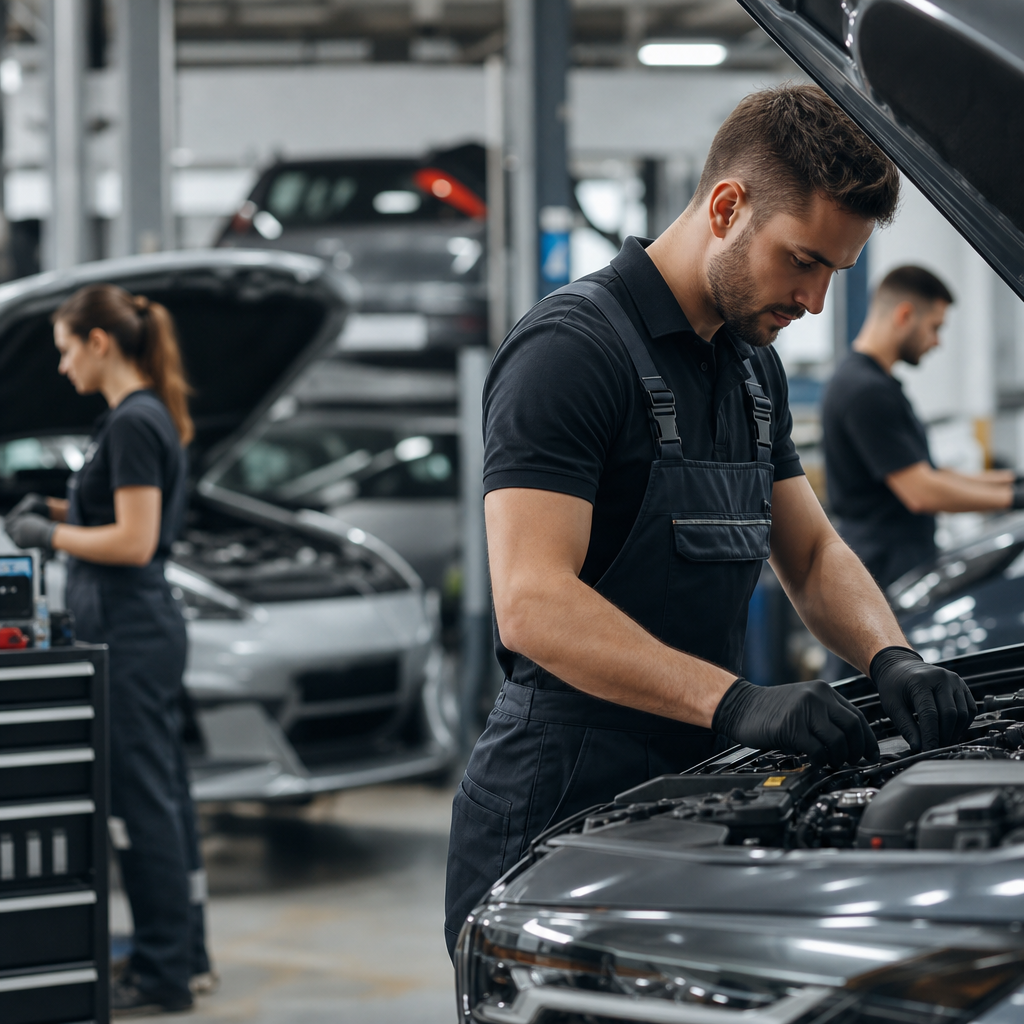
Staffing Up for the Future: Attracting and Retaining Skilled Technicians in the UK Used Car Market
The UK used car market is a vibrant and dynamic sector, playing a crucial role in keeping the nation mobile. With record demand for pre-owned vehicles and the average age of cars on our roads steadily increasing, the need for reliable, high-quality maintenance and repair services has never been greater. However, beneath this bustling activity lies a growing challenge: a significant shortage of skilled automotive technicians. For every used car garage, independent workshop, and dealer forecourt in the country, the ability to attract, train, and retain top talent isn't just an operational concern – it’s a critical determinant of future success and customer satisfaction.
In an era where vehicles are becoming increasingly sophisticated, and the shift towards electrification is accelerating, the skills required to diagnose and repair them are evolving at an unprecedented pace. This article will explore the current skills gap, outline strategies for attracting new talent into the industry, discuss how to retain experienced technicians, and highlight the imperative of adapting workshop skills for the electric and hybrid vehicle revolution.
The Widening Skills Gap: A Looming Crisis for Used Car Garages
The automotive industry has been grappling with a skills shortage for some time, and the used car sector is particularly vulnerable. Many experienced technicians are nearing retirement, taking with them decades of invaluable knowledge and practical expertise. Concurrently, the pipeline of new entrants simply isn't sufficient to fill these departing roles. This deficit is exacerbated by an outdated perception of automotive work – often seen as dirty or purely mechanical – which deters younger generations from considering it as a viable, technology-driven career.
The repercussions of this widening gap are already being felt. Used car garages face longer lead times for bookings, making it harder to manage inventory preparation and timely customer deliveries. This can lead to increased operational costs, decreased customer satisfaction dueability issues, and, ultimately, lost revenue. Modern internal combustion engine (ICE) vehicles are intricate machines, packed with complex electronics, advanced driver-assistance systems (ADAS), and intricate diagnostic requirements. Without technicians specifically trained to tackle these sophisticated systems, garages risk being unable to service a significant portion of the used car fleet effectively. As a result, the challenge is not just about having enough hands on deck, but having skilled hands capable of dealing with the complexities of today's, and tomorrow's, vehicles.
Cultivating New Talent: From Apprentices to Experts
Addressing the skills gap requires a proactive and multi-faceted approach to attract fresh talent into the industry. This begins with modernising the image of automotive careers and establishing clear, attractive pathways for aspiring technicians.
Apprenticeships remain the gold standard for bringing new blood into the workshop. They offer a unique blend of practical, on-the-job training alongside structured academic learning, typically through local Further Education (FE) colleges. For garages, apprenticeships are an investment that pays dividends:
- Moulding Talent: You can train apprentices in your specific methods and standards, fostering loyalty and a deep understanding of your business from day one.
- Government Support: Apprenticeship schemes often come with government funding and incentives, reducing the financial burden on employers.
- Fresh Perspectives: Young apprentices can bring new ideas and an eagerness to learn about emerging technologies.
Garages should actively engage with local schools and colleges, offering work experience placements, facility tours, and career talks to showcase the exciting technological aspects of modern automotive repair. Collaborating with institutions like the Institute of the Motor Industry (IMI) or City & Guilds to establish recognised training programmes can also create a robust pipeline of future technicians. Beyond apprenticeships, creating clear career development paths – from junior technician to master technician, diagnostic specialist, or even workshop manager – demonstrates that automotive repair is a profession with significant growth potential, not just a job.
Retaining Your Stars: Nurturing Experience and Loyalty
Attracting new talent is only half the battle; retaining experienced technicians is equally, if not more, crucial. These individuals possess invaluable diagnostic acumen, problem-solving skills, and a deep understanding of vehicle systems that take years to develop. Losing them represents a significant blow to any workshop.
Competitive Pay and Benefits are non-negotiable in today's market. Skilled technicians are in high demand, and garages must offer salaries and benefits packages that reflect their expertise and the critical role they play. This includes not just base pay, but also pension contributions, health benefits, and performance-related bonuses. Transparency in pay structures and regular reviews ensure technicians feel valued and fairly compensated.
Beyond remuneration, Work-Life Balance has become a significant factor for modern employees. Long hours, inconsistent schedules, and high-pressure environments can lead to burnout. Implementing flexible working hours where possible, ensuring adequate breaks, and managing overtime effectively can significantly improve job satisfaction. A positive and supportive workshop culture, coupled with well-maintained equipment and a safe working environment, also contributes immensely to technician retention.
Finally, Advanced Training and Equipment are vital. Experienced technicians thrive on continuous learning and the challenge of new technologies. Investing in regular professional development courses – covering everything from advanced diagnostics for modern petrol and diesel engines to ADAS calibration – keeps their skills sharp and prevents stagnation. Providing them with the latest diagnostic tools and workshop equipment not only makes their jobs easier and more efficient but also signals your commitment to their professional growth and the future of the business.
The Electric Revolution: Upskilling for the EV Era
Perhaps the most pressing and transformative challenge facing the automotive repair sector is the rapid acceleration of electric and hybrid vehicle adoption. Used EVs and hybrids are becoming increasingly common on forecourts, and their unique maintenance requirements demand a completely different skillset. Garages that fail to adapt will quickly find themselves unable to service a growing segment of the market.
Servicing electric and hybrid vehicles involves working with high-voltage battery systems, sophisticated electric motors, regenerative braking systems, and complex thermal management. The safety implications alone necessitate specialised training. Qualifications such as the IMI Level 2, 3, and 4 in Electric/Hybrid Vehicle Repair and Maintenance are essential for technicians to safely and competently work on these vehicles.
Investing in EV training and the necessary specialist equipment (such as insulated tools, EV diagnostic systems, and charging infrastructure) might seem like a substantial outlay, but it’s an investment in the future viability of your business. Used car buyers increasingly consider EVs, and the availability of reliable, expert servicing will be a major differentiator. Workshops that proactively upskill their teams for the EV era will be well-placed to capture new business, build a reputation as EV specialists, and future-proof their operations against obsolescence. Ignoring this shift is simply not an option.
Conclusion
The future success of the UK used car market hinges not just on stock levels and sales figures, but fundamentally on the skilled individuals who keep these vehicles in prime condition. The challenge of attracting and retaining skilled automotive technicians is significant, exacerbated by an aging workforce and the rapid technological evolution towards electrification.
However, by adopting a proactive strategy – embracing apprenticeships and educational partnerships, offering competitive pay and a supportive work environment, and crucially, investing heavily in advanced training for the electric vehicle revolution – used car garages can transform this challenge into an opportunity. Those who prioritise their people, viewing investment in technician development as an investment in the business itself, will be the ones best positioned to thrive, delivering the high-quality service that UK used car buyers expect and deserve for many years to come.