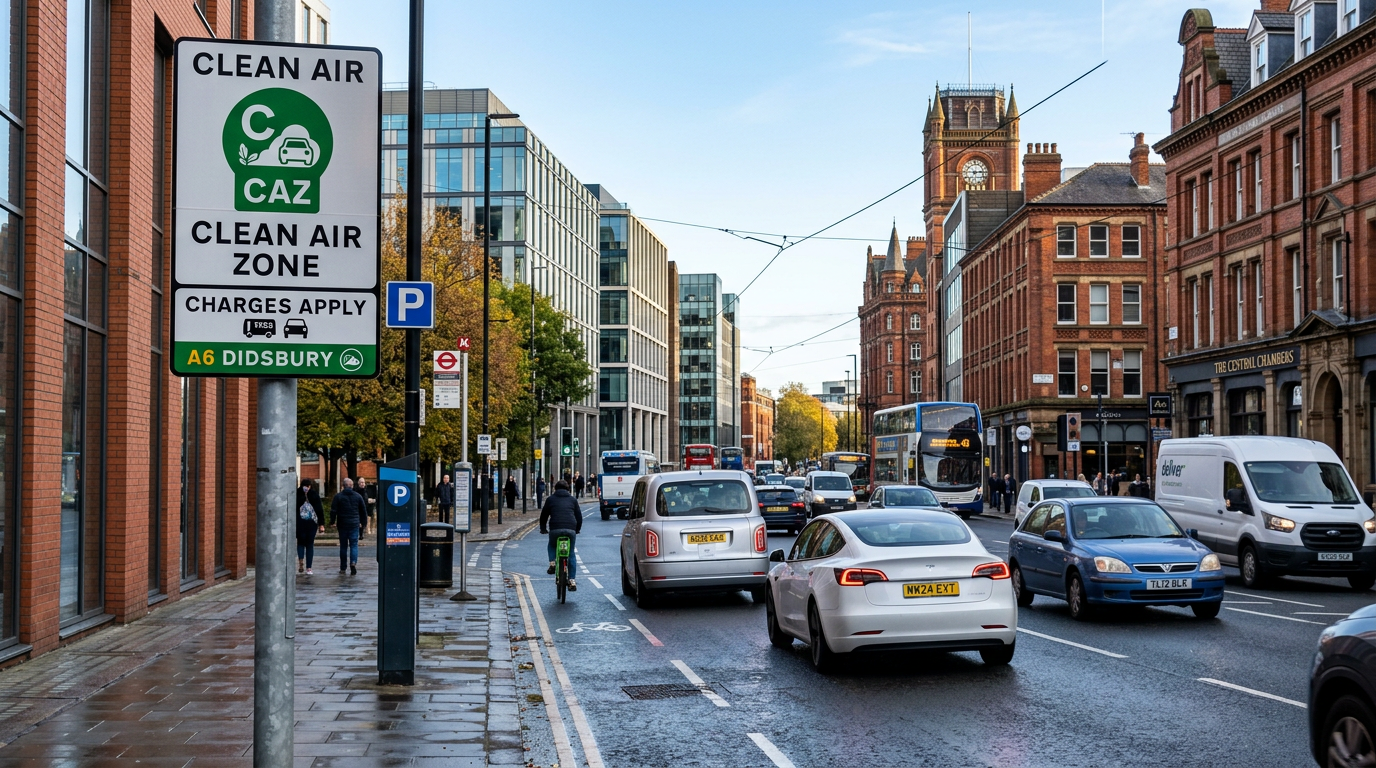
The UK’s road network has undergone a seismic shift over the last few years. As we move deeper into 2026, the legislative landscape for internal combustion engine (ICE) vehicles has never been more challenging. With more cities adopting Clean Air Zones (CAZ) and London’s Ultra Low Emission Zone (ULEZ) reaching its most restrictive phase yet, owners of older petrol and diesel vehicles are facing a critical junction.
If you are currently holding onto a vehicle that doesn't meet the latest standards, you aren't alone. However, the window for securing a high resale value is narrowing. Here is everything you need to know about navigating the market when selling a non-compliant car in 2026.
The State of UK Clean Air Zones in 2026
By mid-2026, the 'Clean Air' movement has expanded far beyond London, Birmingham, and Bristol. We have seen a second wave of "Class D" zones—the most restrictive category—implemented across major hubs like Manchester, Leeds, and Edinburgh.
For the uninitiated, these zones typically charge daily fees for vehicles that do not meet minimum Euro emission standards. In 2026, the standard remains generally fixed, but the enforcement is stricter:
- Petrol Cars: Generally must be Euro 4 (widely available since 2006).
- Diesel Cars: Generally must be Euro 6 (mandatory for new cars since September 2015).
However, some local authorities are now discussing 'Zero Emission Zones' (ZEZ), where even Euro 6 diesels face a daily charge. This has created a "two-tier" car market in the UK: those that can drive freely and those that are taxed at every turn.
The Reality of Euro 6 Diesel Resale Values
Back in 2023 and 2024, a Euro 6 diesel was seen as the "safe bet" for long-distance drivers. In 2026, the narrative has shifted. While Euro 6 diesels remain ULEZ compliant in London (for now), the broader trend toward electrification and the looming 2030/2035 targets have dampened demand.
If you are selling a Euro 6 diesel, you are likely selling to one of three buyers:
- The Rural Commuter: Someone living outside CAZ boundaries who prioritises MPG over local tax.
- The High-Mileage Professional: Motorway drivers who still find diesel more efficient for 20,000+ miles per year.
- The Export Specialist: Many UK diesels are now being shipped to markets where emission regulations are less stringent.
| Car Type | Standard | CAZ Status (Typical) | Demand Level 2026 |
|---|---|---|---|
| Petrol (Pre-2006) | Euro 3 or lower | Non-Compliant | Low / Scrap |
| Petrol (Post-2006) | Euro 4+ | Compliant | High |
| Diesel (Pre-2015) | Euro 5 or lower | Non-Compliant | Very Low |
| Diesel (Post-2015) | Euro 6 | Compliant (Mostly) | Moderate |
Selling a Non-Compliant Car: Your Best Options
Selling a car that attracts a £12.50 or £15 daily charge is difficult in a metropolitan area. Potential buyers will check the DVLA database or the government’s 'Drive in a Clean Air Zone' portal before they even look at your photos.
1. Transparency and Documentation
When listing a non-compliant car, be upfront. Mention the Euro status in your description. Ensure your V5C logbook is present and correct, and provide a full MOT history. In 2026, buyers are wary of hidden costs; showing that the car is mechanically sound can offset some of the "tax anxiety."
2. Targeted Geographical Selling
If you live in London or Birmingham, your local pool of private buyers for an older diesel is small. Consider using platforms like CarsLink.ai. Our smart valuation tools and dealer network help price your vehicle based on national demand, not just your local postcode. A non-compliant car in Bristol might be a perfect workhorse for someone in rural North Wales.
3. Part-Exchange and Scrappage Schemes
Check if your manufacturer is running a "Sustainability Switch" or scrappage scheme. Many brands in 2026 are offering enhanced part-exchange values if you trade in a non-compliant ICE vehicle for a Battery Electric Vehicle (BEV) or a Plug-in Hybrid (PHEV).
Road Tax and Financial Considerations
The Vehicle Excise Duty (VED) rates for older, less efficient cars have seen significant inflationary hikes in the last two years. If your car falls into a high CO2 bracket, the combination of road tax and CAZ charges can exceed £1,500 a year just to keep it on the road.
When selling, make sure to:
- Refund your Road Tax: Once you notify the DVLA of the sale, you will automatically receive a refund for any full remaining months.
- Settle Outstanding Finance: If you have an older car on a PCP or HP agreement, ensure the settlement figure is lower than the current market value. Contact your lender early to avoid surprises.
Is it Better to Scrap or Sell?
By 2026, the "scrap value" of cars has risen slightly due to the demand for recycled battery components and metals, but it rarely beats an outright sale if the car is running. However, if your car requires significant repairs and is non-compliant, a professional car-buying service or a scrappage scheme may be the most "frictionless" way to exit the vehicle.
Making the Jump to Modern Standards
If you're selling a non-compliant car to upgrade, the 2026 market offers incredible value in the three-year-old EV sector. Cars like the Tesla Model 3, VW ID.3, and Hyundai Ioniq 5, which were new in 2023, are now hitting the used market in large numbers, providing a perfect "escape" from CAZ charges.
At CarsLink.ai, we specialise in helping UK motorists transition. Whether you are selling a Euro 5 diesel or a classic petrol engine, our platform connects you with the right data to ensure you don't leave money on the table.
Summary: 2026 Checklist for Sellers
- Check Compliance: Use the GOV.UK vehicle checker to confirm exactly which zones your car is charged in.
- Gather Paperwork: Ensure the V5C, service history, and MOT are ready.
- Go National: Don’t rely on local buyers if you live in a CAZ. Use a national platform to reach rural buyers.
- Price Realistically: Accept that "non-compliant" is now a major depreciation factor.
Ready to see what your car is worth in today's market? Visit CarsLink.ai for an instant valuation and expert advice on selling your car in the Clean Air Zone era.