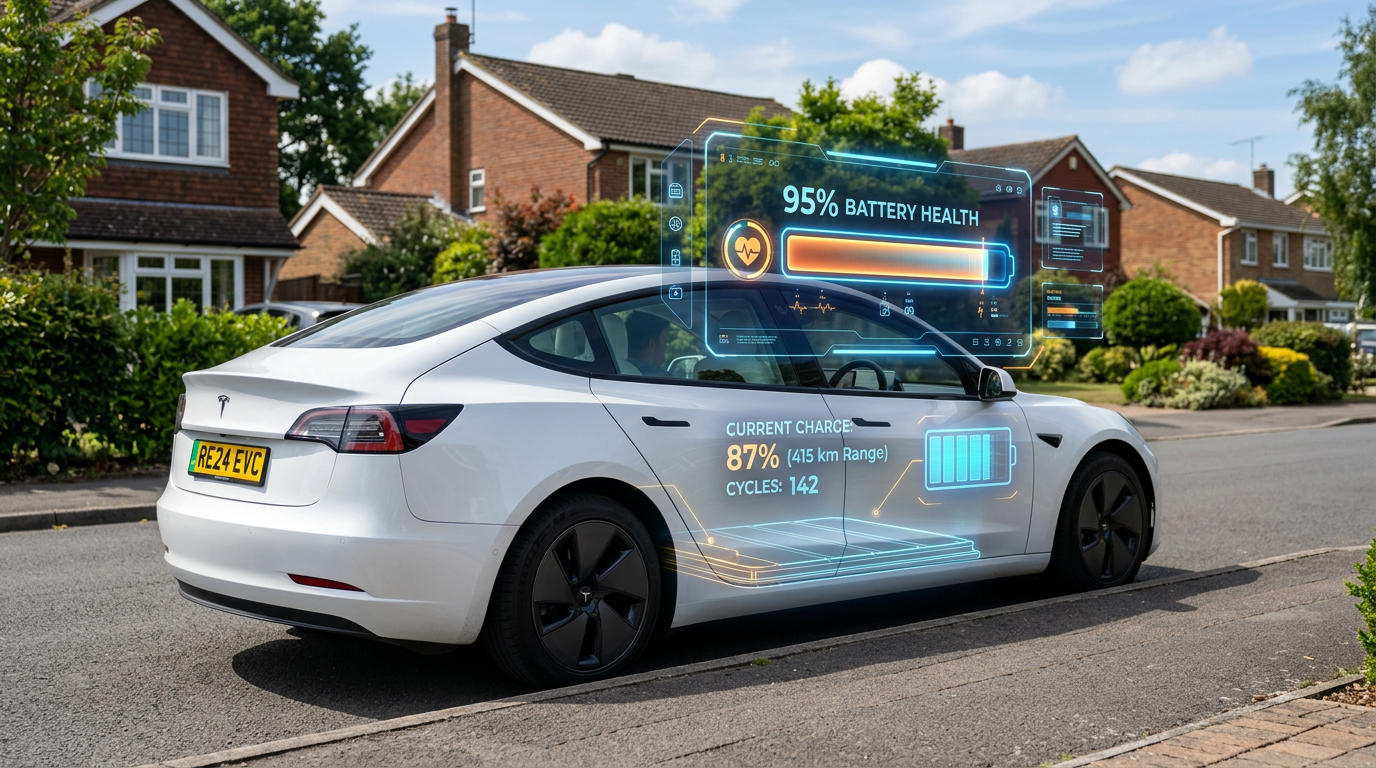
In 2026, the used electric vehicle (EV) market in the UK has reached a pivotal level of maturity. With the final countdown to the 2030 phase-out of new petrol and diesel cars well underway, more drivers than ever are trading in their second or third-hand electric cars.
However, selling an EV privately today is vastly different from selling an internal combustion engine (ICE) vehicle. In the past, a pile of service receipts and a clean MOT were enough to seal a deal. Today, there is one document that carries more weight than any other: the State of Health (SOH) certificate.
If you are planning on selling an EV privately, here is why providing a battery report isn't just a "nice to have"—it’s the cornerstone of your car’s resale value.
The Shift in the 2026 Used EV Market
The UK market is currently flooded with mid-lease returns and early-adopter EVs. Buyers are more educated than ever. They’ve moved past "range anxiety" and are now focused on "degradation anxiety."
When someone buys a used petrol car, they check for oil leaks and cambelt changes. When they buy a used EV, they are essentially buying a battery on wheels. Since the battery pack can account for up to 40% of the vehicle's original value, buyers want scientific proof that it won’t fail any time soon. This is where the EV battery state of health report becomes vital.
What is an SOH Certificate?
A State of Health certificate is a verified report—often generated by a third-party diagnostic tool or a main dealer—that measures the remaining capacity and performance of the traction battery compared to its original "as new" condition.
Key Metrics Included:
- Remaining Capacity Percentage: Usually shown as a percentage (e.g., 94% SOH).
- Cell Voltage Balance: Ensures all cells in the pack are working harmoniously.
- Rapid Charging History: How often the car was "fast-charged," which can impact long-term health.
- Cycle Count: How many full discharge/charge cycles the battery has undergone.
Why SOH Certificates are Non-Negotiable in 2026
1. Defending Your Asking Price
In 2026, we are seeing a "two-tier" pricing structure in the used market. EVs with certified healthy batteries are commanding a 10-15% premium over cars without documentation. If your Tesla Model 3 or Hyundai Ioniq 5 still holds 96% of its original capacity, the SOH certificate allows you to hold firm on your price. Without it, savvy buyers will use "potential degradation" as a leverage point to lowball your offer.
2. Overcoming the "8-Year Warranty" Worry
Most manufacturers provide an 8-year or 100,000-mile battery warranty. As many 2018-2020 era EVs are now hitting that 6-to-8-year age bracket, buyers are nervous about the warranty expiry. A fresh SOH report proves that the battery is nowhere near the typical 70% threshold that usually triggers a warranty claim, providing long-term peace of mind.
3. Transparency for Private Finance (PCP & HP)
Many private buyers in 2026 are using personal loans or third-party hire purchase (HP) to fund their used EV purchase. Lenders are increasingly looking at the asset's viability. If you are selling through platforms like CarsLink.ai, having that battery data ready makes the vehicle far more attractive to a buyer who needs to prove the car's value to their bank or insurance provider.
Comparing Battery Health: Typical 2026 Expectations
Based on current UK data, here is what a typical buyer expects to see on an SOH report for various age ranges:
| Vehicle Age | Expected SOH Range | Market Perception |
|---|---|---|
| 1–2 Years | 97% – 100% | Like New |
| 3–4 Years | 92% – 96% | Excellent |
| 5–7 Years | 85% – 91% | Good / Fair |
| 8+ Years | Below 85% | Value-conscious / Replacement potential |
How to Get an EV Battery Report in the UK
Getting a report is more accessible in 2026 than it used to be. You have three main routes:
- Main Dealer Diagnostic: Most brands (Nissan, VW, Kia) will provide a battery health printout during a standard service for a small fee (£50–£100).
- Mobile Diagnostic Services: Companies now offer mobile technicians who come to your house, plug into the OBDII port, and generate a certificate linked to your V5C and VIN.
- Self-Service Dongles: Advanced OBDII dongles paired with apps like Recurrent or LeafSpy can give you the data, but for a private sale, a certified third-party report carries more weight than a DIY screenshot.
Practical Steps for Selling Your EV Privately
Prepare Your Paperwork
Alongside your SOH certificate, ensure you have your V5C logbook updated and your MOT history visible online. Since 2025, even EVs are subject to changed road tax (VED) rules, so ensure your vehicle is taxed correctly.
Highlight "Battery Care" in Your Listing
When writing your advert, mention your charging habits. Did you mostly use a home Zappi or Wallbox at 7kW? Did you keep the charge between 20% and 80%? Mentioning this alongside your SOH report validates your claim that the car has been well-maintained.
Use the Right Platforms
General marketplaces are great, but specialized platforms understand the nuances of EV sales. Using a tech-forward service like CarsLink.ai ensures your listing reaches buyers who specifically understand the value of a high-SOH battery.
Summary: Don't Sell Without Information
The electric car resale value in 2026 is dictated by data, not just looks. By investing in a professional battery health check before you list your car, you are doing more than just providing information—you are building trust. In a market where buyers are cautious about long-term battery viability, that trust is worth thousands of pounds.
Ready to get the best price for your electric vehicle? Whether you’re upgrading to the latest solid-state battery tech or just changing your lifestyle, ensure your battery report is front and center.
For more advice on navigating the 2026 used car market, visit CarsLink.ai to find the latest valuation tools and dealer-grade insights for private sellers.