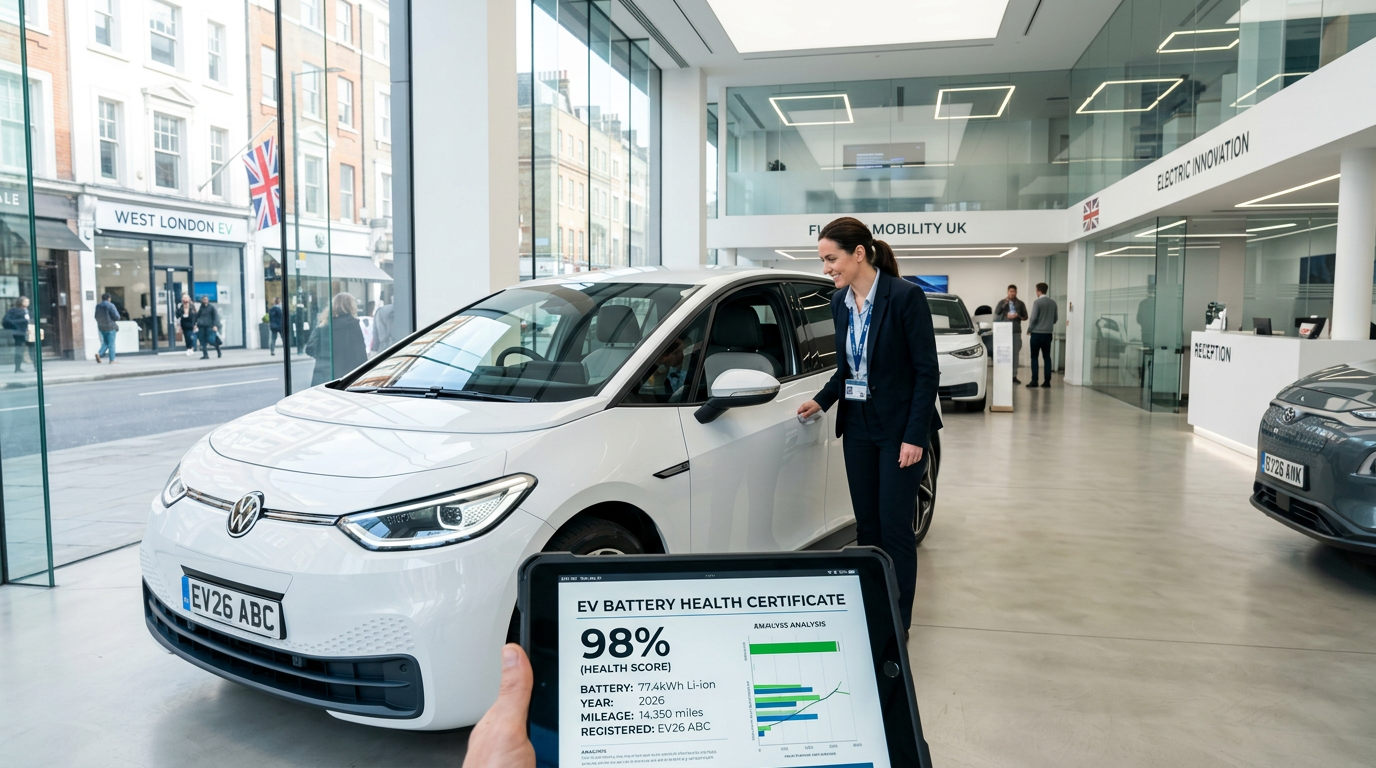
Two years ago, the used electric vehicle (EV) market was a turbulent place. Rapid depreciation and infrastructure concerns dominated the headlines. However, as of May 2026, the landscape has shifted. With the ZEV (Zero Emission Vehicle) mandate now in full swing and the UK government's 2030 phase-out for new ICE vehicles drawing closer, used EVs are no longer a niche curiosity; they are the heart of the secondary car market.
Whether you are looking to upgrade to the latest solid-state battery tech or simply downsizing, getting the best price for your electric car requires a different strategy than selling a traditional petrol or diesel vehicle.
Here are five proven ways to maximise your EV's resale value in 2026.
1. Prioritise a Battery Health Report (SoH)
In 2026, the 'mileage' of an EV is often secondary to its State of Health (SoH). Buyers are savvy; they know that how a car was charged matters more than how many miles it has covered.
A car that has been exclusively rapid-charged to 100% daily will likely have more degradation than a high-mileage vehicle that was mostly charged at home between 20% and 80%.
- The Action: Before listing your car, obtain an independent battery health certificate. Companies now provide a 'health score' that you can present to buyers.
- The Value: A verified SoH of 94% or higher can command a premium of £1,000–£2,000 over an identical car with an unknown battery status.
2. Leverage Your Full Digital Service History
With EVs having fewer moving parts, traditional mechanical failures are rarer. However, software updates and preventative maintenance on thermal management systems are critical.
Ensure your digital service record is fully up to date with the manufacturer. In 2026, many buyers check for:
- Recall Completions: With the influx of new EV brands over the last few years, ensuring all safety and software recalls are logged is vital.
- Coolant Changes: Many EVs require specific battery coolant flushes every 3–5 years. Having proof of this suggests the battery has been well-maintained.
Using a platform like CarsLink.ai can help you aggregate your vehicle's data and history, making it easier to present a transparent 'digital twin' of your car to potential buyers or dealers.
3. Highlight Your VED (Road Tax) and ULEZ Status
Transitioning into 2026, the tax landscape for EVs has changed. Since April 2025, EVs have been subject to Vehicle Excise Duty (VED). While they no longer enjoy a £0 rate, they remain significantly cheaper to tax than many high-emission SUVs.
- Premium Rate Threshold: If your EV had a list price of over £40,000 when new, remind buyers when the 'Premium Rate' supplement (applicable for the first five years) expires.
- Clean Air Zones: With more UK cities implementing schemes similar to London’s ULEZ, highlight that your car remains 100% compliant and exempt from daily charges. This is a massive selling point for commuters in Birmingham, Bristol, and Manchester.
4. Include 'Range-Boosting' Extras
The secondary EV market in 2026 is competitive. To stand out, ensure you include all the original equipment that makes EV ownership easier. Loss of these items can lead to 'haggling' at the point of sale.
| Item | Impact on Resale |
|---|---|
| Type 2 Charging Cable | Essential for public charging. Missing cables can cost £150+ to replace. |
| 3-Pin 'Granny' Charger | Highly valued by buyers without home wallboxes. |
| Heat Pump | If your car has one, shout about it! It preserves range in UK winters—a top priority for 2026 buyers. |
| V2L (Vehicle-to-Load) Adapters | For cars like the Kia EV6 or Hyundai IONIQ 5, including the adapter to power external devices adds 'lifestyle' value. |
5. Choose the Right Selling Method for 2026
The way we sell cars has evolved. While a private sale via classifieds might net the highest raw figure, the UK market in 2026 is heavily skewed toward convenience and security.
- Instant Online Buyers: These platforms use real-time data to offer prices. Because CarsLink.ai connects you with a network of professionals, you often get a more accurate valuation that accounts for specific EV options (like panoramic roofs or upgraded sound systems) that generic algorithms might miss.
- EV-Specific Specialists: There are now dealers who only stock electric cars. They understand battery health and software versions better than a generalist used car lot, often leading to a fairer trade-in value.
- PCP Equity Check: If you are on a Personal Contract Purchase (PCP) plan, check your 'guaranteed future value' (GFV). With the stabilised used EV market in 2026, you may find your car is worth more than the balloon payment, giving you 'equity' to use as a deposit on your next vehicle.
Final Checklist for Selling Your EV
- V5C Logbook: Ensure you have the physical or digital V5C ready.
- Clean the Charge Port: It sounds simple, but a dusty or grimy charge port suggests neglect. Use a soft brush to clean around the pins.
- Charge to 80%: For test drives, ensure the car has at least 80% charge. It shows the battery is holding a charge well and provides enough range for a proper trial.
- Transfer Connectivity: Ensure you know how to 'de-link' your smartphone app (e.g., Tesla App, FordPass) so the new owner can set up their profile immediately.
Summary The used EV market in 2026 is robust and professional. By proving your battery health, maintaining a meticulous digital record, and highlighting the UK-specific tax advantages, you can ensure you get the maximum value for your electric vehicle.
Ready to see what your EV is worth in today's market? Visit CarsLink.ai for a real-time valuation and connect with buyers who value your car's true potential.