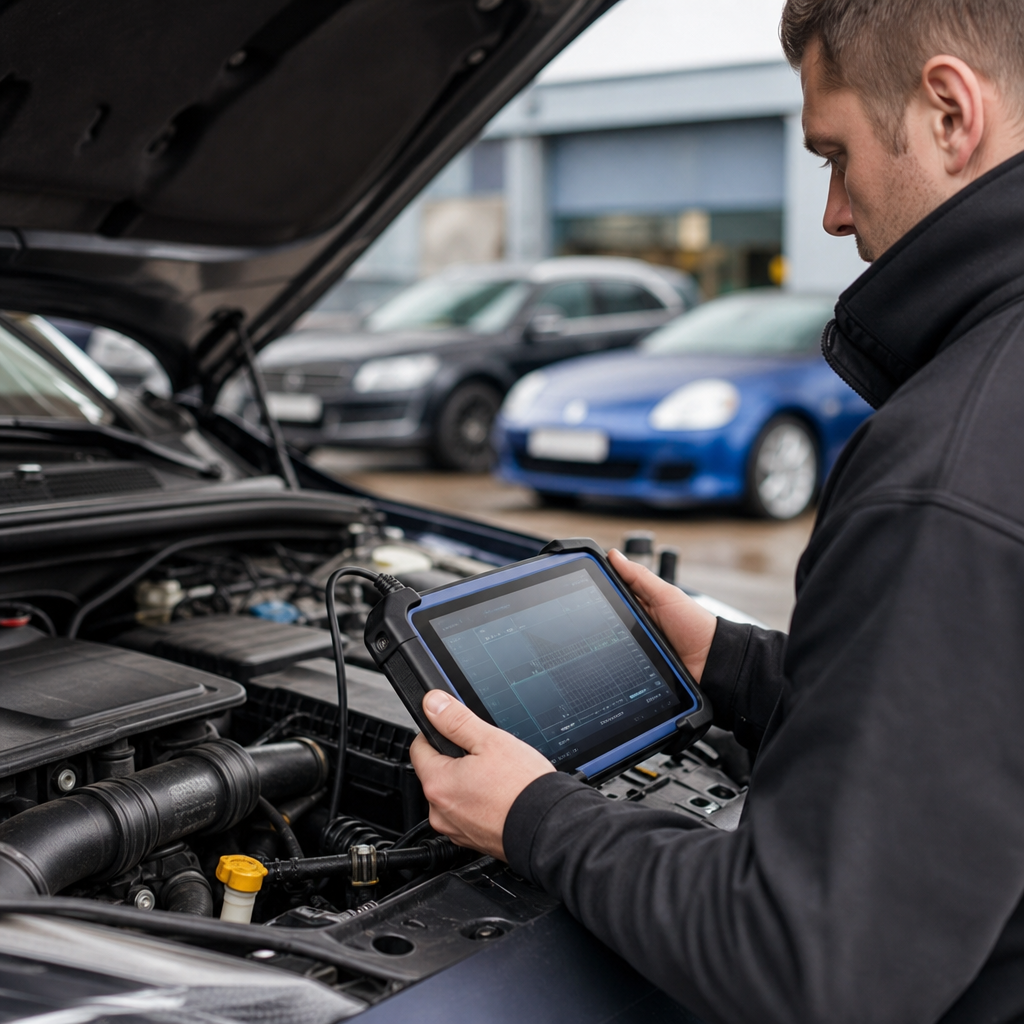
Pre-Purchase Perfection: Essential Diagnostic Tool Checks for UK Used Cars
Buying a used car in the UK can feel like navigating a minefield. While a thorough visual inspection and a comprehensive test drive are non-negotiable, the modern motor vehicle holds many secrets that only digital eyes can see. We're talking about the crucial role of diagnostic tools – your essential safeguard against hidden faults and costly post-purchase surprises. Here at CarsLink.ai, we believe every savvy buyer should understand how to harness these tools, turning what often feels like a gamble into a more informed and confident purchase.
Gone are the days when a quick look under the bonnet and a check of the oil dipstick told you everything you needed to know. Today's cars are sophisticated, rolling computers, with complex electronic control units (ECUs) managing everything from engine performance and braking to airbags and climate control. These systems constantly monitor hundreds of sensors, and when something isn't right, they log a Diagnostic Trouble Code (DTC) in the car's memory. This is where diagnostic tools become your best friend, offering a window into the car's digital health.
What Are Diagnostic Tools and Why Are They Crucial for Used Car Buyers?
At their core, diagnostic tools – often referred to as OBD-II (On-Board Diagnostics, second generation) scanners – are devices that plug into your car's computer system to read these stored DTCs. OBD-II became a mandatory standard for petrol cars sold in the UK and EU from 2001, and for diesels from 2004, meaning virtually every used car you're likely to consider will be compatible.
There's a spectrum of tools available:
- Handheld Code Readers: These are entry-level devices, widely available for as little as £20-£50. They can read and clear basic engine fault codes and often display live data. Perfect for a quick pre-purchase check.
- Smartphone Apps with Bluetooth/Wi-Fi Dongles: A popular and convenient option, these dongles plug into the OBD-II port and transmit data to your smartphone, offering more features than basic readers, sometimes including readiness monitor status and freeze frame data.
- Professional Diagnostic Scanners: These are used by garages and specialist mechanics. They offer deeper access to manufacturer-specific codes, advanced live data, component activation, and coding capabilities. While you might not buy one, asking a seller if they’ve had a professional scan or requesting one as part of a pre-purchase inspection is highly advisable.
Why are they so crucial for used car buyers? Firstly, dashboard warning lights (like the dreaded 'Check Engine' light) only illuminate for active or major faults. Many issues might be logged as 'pending' codes without triggering a light, or a savvy (and dishonest) seller might clear codes just before you view the car. A diagnostic scan can uncover these hidden or recently cleared issues. Secondly, these tools verify the car's electronic health, giving you insights into potential expensive repairs related to the engine, transmission, ABS, airbags, and more. It helps you assess the reliability and safety of the vehicle beyond what you can see with your eyes.
Decoding the Dash: Common Error Codes and Their Significance
Diagnostic Trouble Codes (DTCs) follow a standardised format, usually starting with a letter and followed by four digits (e.g., P0171). The initial letter indicates the system involved:
- P-Codes (Powertrain): These relate to the engine, transmission, and associated emissions systems. They are the most common codes you'll encounter.
- P0171/P0174 (System Too Lean Bank 1/2): Often indicates a vacuum leak, faulty Mass Air Flow (MAF) sensor, or issues with fuel pressure. Can lead to poor running and increased emissions.
- P0420 (Catalyst System Efficiency Below Threshold Bank 1): A common and often expensive one. This typically points to a failing catalytic converter, which is a significant MOT failure item.
- P030X (Cylinder X Misfire Detected): The 'X' denotes the specific cylinder (e.g., P0301 for cylinder 1). Could be a simple spark plug, coil pack, or fuel injector issue, or something more serious internally.
- P0401 (EGR Flow Insufficient): Points to a problem with the Exhaust Gas Recirculation (EGR) valve, which can cause poor engine performance and emissions issues.
- C-Codes (Chassis): These relate to systems like ABS (Anti-lock Braking System), traction control, and stability control.
- C003X (Wheel Speed Sensor Malfunction): Indicates an issue with one of the ABS wheel speed sensors. This will disable ABS and traction control, compromising safety.
- C0040 (Brake Pressure Sensor Malfunction): Another safety-critical fault affecting braking system performance.
- B-Codes (Body): These cover comfort, convenience, and safety features like airbags, central locking, electric windows, and climate control.
- B0001 (Driver Frontal Airbag Circuit Malfunction): Any fault in the airbag system is a major red flag, as it means the safety system may not deploy in an accident. Airbag faults are also an MOT failure.
- B0071 (Seatbelt Pretensioner Circuit Malfunction): Similar to airbags, this affects passenger safety in a collision.
- U-Codes (Network Communication): These indicate issues with communication between various electronic modules in the car. While less common for DIY diagnosis, they can point to complex electrical problems that are often costly to trace and repair.
Remember, a single code might directly point to a faulty component, but sometimes it’s a symptom of a deeper problem. Always research the specific code, and if unsure, seek professional advice.
How to Use or Request a Diagnostic Scan Before Purchase
This is where you put theory into practice. Don't be shy about wanting to scan the car – it's a perfectly reasonable request for any serious buyer.
DIY Scan (using your own handheld reader or app/dongle):
- Locate the OBD-II Port: This is almost always found within reach of the driver's seat, usually under the dashboard, sometimes behind a small flap, or near the steering column. Consult the car's handbook if you can't find it.
- Plug In the Device: Ensure it's securely connected.
- Turn the Ignition On (Engine Off): Most scanners require the ignition to be on for communication.
- Follow Device Instructions: Select "Scan for Codes" or similar.
- Crucially, Check Readiness Monitors: This is the golden rule. Readiness monitors are a set of tests the ECU runs to ensure various emissions-related systems (like the catalytic converter, O2 sensors, EVAP system) are functioning correctly. If a seller has recently cleared fault codes, these monitors will reset to an "incomplete" or "not ready" status. It takes several drive cycles for them to become "ready" again. If you see multiple "incomplete" monitors, it's a massive red flag suggesting codes have been deliberately cleared to hide an issue.
- Note Down All Codes: Even if no warning lights are present, check for 'pending' codes. These are faults that have occurred but haven't yet reached the threshold to trigger a full warning light.
- Check Freeze Frame Data: Many scanners can show "freeze frame" data, which records the engine conditions (RPM, speed, temperature, etc.) at the exact moment a fault code was stored. This can be invaluable for understanding the context of the fault.
Requesting a Professional Scan:
If you don't own a scanner, or want a more in-depth analysis:
- Ask the Seller: Politely enquire if they've had any recent diagnostic scans and ask to see the report.
- Suggest a Pre-Purchase Inspection (PPI): This is highly recommended for any significant used car purchase. A reputable garage performing a PPI will always include a comprehensive diagnostic scan using professional-grade equipment. Be prepared to pay around £100-£200 for this, but it's money well spent if it uncovers a major fault.
- Mobile Mechanic Service: Some mobile mechanics offer diagnostic-only services, which can be a convenient option.
- Be Wary of Refusal: If a seller outright refuses to allow a diagnostic scan or a PPI, consider it a significant warning sign and be prepared to walk away.
Interpreting Results: When to Walk Away vs. Negotiate with Sellers
Understanding the codes is one thing; deciding what to do with that information is another.
When to Walk Away (Red Flags):
- Multiple, Unrelated Active Codes: Especially if they span different critical systems (e.g., engine, ABS, and airbag faults all active). This suggests widespread electrical or electronic issues, which can be notoriously difficult and expensive to diagnose and fix.
- Codes for Major, Expensive Components: Active faults related to the catalytic converter (P0420), transmission control module, significant internal engine issues (e.g., persistent misfires across multiple cylinders), or a persistent airbag system fault. These repairs can easily run into thousands of pounds.
- Readiness Monitors Not Set: As discussed, if several monitors are "incomplete" or "not ready," it's a strong indicator that fault codes were recently cleared to hide an underlying problem. Unless the seller can provide a very compelling and verifiable reason (e.g., battery recently disconnected, specific components replaced), this should be a deal-breaker.
- Codes That Return Immediately: If you clear a minor code during your DIY scan and it reappears instantly, it indicates a persistent and likely active fault.
- Seller's Refusal: If the seller is unwilling to allow a diagnostic check or a PPI, assume they have something to hide.
When to Negotiate (Points for Leverage):
- Minor, Single, Non-Critical Codes: For example, a single oxygen sensor code (P0135 - O2 Sensor Heater Circuit Malfunction), a glow plug fault on an older diesel, or a minor EVAP system leak (P0442). While these still require attention, they are generally less costly to fix.
- 'Pending' Codes: These are faults that have occurred but haven't yet triggered a full warning light. They indicate a potential future issue.
- Intermittent Codes: If a code has been logged but isn't currently active, it might point to an intermittent fault that could be tricky but not always immediately critical.
- Use Repair Costs as Leverage: Research the estimated cost to repair any identified fault. For example, a new O2 sensor might be £100-£200, whereas a catalytic converter could be £500+. Present these figures to the seller and use them to negotiate a lower price.
Your Digital Detective Work Pays Off
Combining a thorough visual inspection and test drive with a comprehensive diagnostic scan gives you the most complete picture of a used car's health. While no tool can guarantee a fault-free future, embracing pre-purchase diagnostic checks empowers you to make a far more informed decision, potentially saving you a significant amount of money and stress further down the line. At CarsLink.ai, we encourage you to be that savvy buyer – armed with knowledge, a keen eye, and a little digital detective work. Happy car hunting!