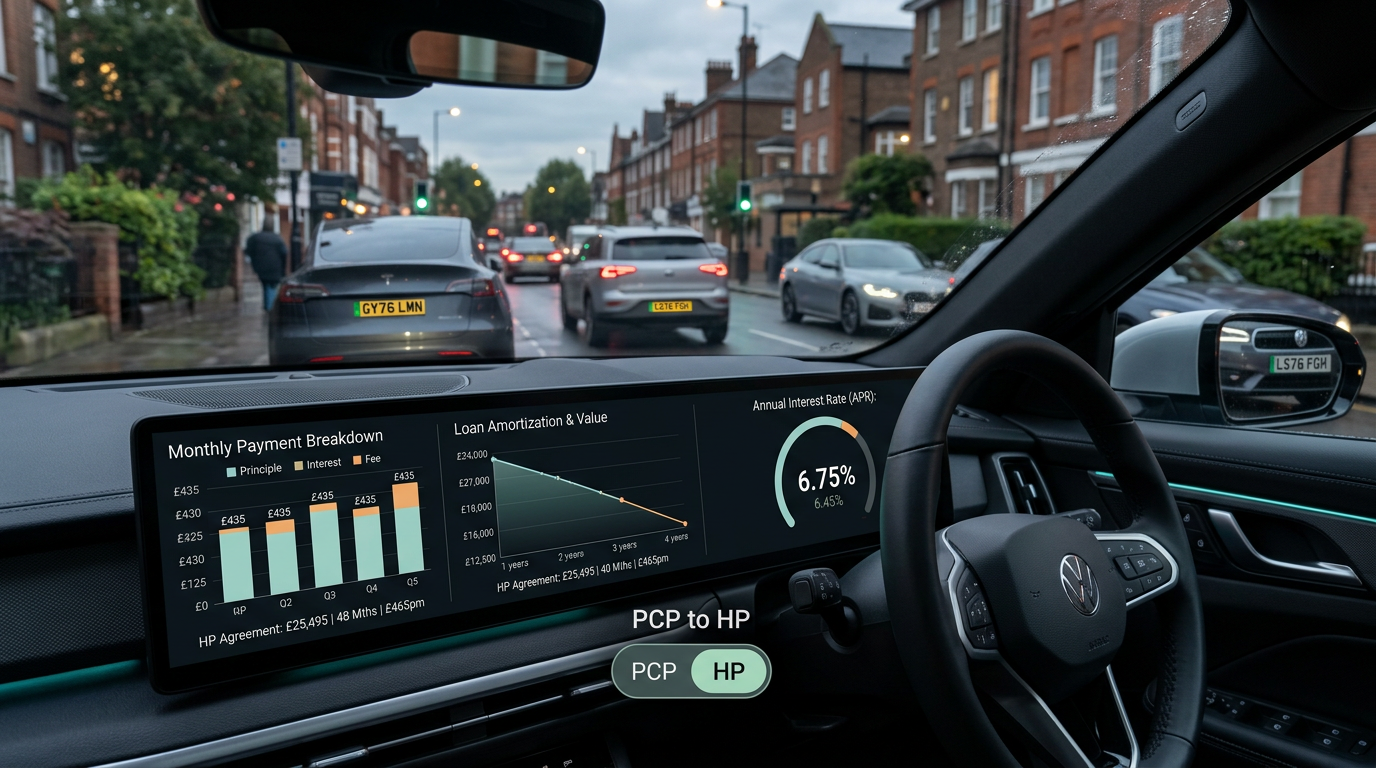
Navigating the 2026 Car Finance Landscape
As we move through the second quarter of 2026, the UK automotive market is experiencing a significant shift. For the past decade, Personal Contract Purchase (PCP) has been the undisputed king of car finance. However, with the stabilization of interest rates following the volatility of 2024-2025 and a cooling used EV market, many drivers are questioning their mid-term strategy.
If you are two years into a four-year PCP deal, you may be sitting on a "Goldilocks" equity position. The question is: should you stick with your current plan, or is now the time for a PCP to HP switch?
Why 2026 is a Turning Point for Refinancing
In 2026, the UK car market is vastly different from the pandemic-impacted years. Supply chains have fully recovered, and the DVLA reports a record number of new electric vehicle (EV) registrations thanks to the strict ZEV mandate requirements.
However, this influx of new vehicles has impacted residual values. If you took out a PCP in 2024, your 'Guaranteed Future Value' (GFV)—the balloon payment—might actually be higher than the car's current projected market value. Conversely, if you drive a high-demand petrol hybrid, you might have significant equity.
Using CarsLink.ai to track your vehicle's real-time valuation is the first step in deciding whether to refinance. If your car is worth more than your settlement figure, you have "positive equity" that can be used as a springboard into a Hire Purchase (HP) agreement.
PCP vs. HP: The 2026 Comparison
To understand if you should switch, we must look at how these products perform in the current economic climate.
| Feature | Personal Contract Purchase (PCP) | Hire Purchase (HP) |
|---|---|---|
| Monthly Payments | Lower (you only pay depreciation) | Higher (you pay the full value) |
| Ownership | Optional (requires balloon payment) | Automatic after final payment |
| Mileage Limits | Strict (excess charges apply) | None |
| Total Interest | Higher (due to deferred capital) | Lower (capital reduces faster) |
| 2026 Outlook | Best for those who want a new car every 3 years | Best for those avoiding "forever debt" |
The Argument for Switching to HP Mid-Term
1. Interest Rate Optimization
Car finance interest rates in the UK have settled after the Bank of England's adjustments. If you signed a PCP deal during a peak-inflation period, you might be stuck with an APR of 11.9% or higher. By refinancing your car loan in the UK now, you may be able to secure a Hire Purchase rate closer to 7.9% or 8.4%, significantly reducing the total cost of credit.
2. Eliminating the "Balloon" Anxiety
The biggest risk with PCP in 2026 is the final balloon payment. As the market fluctuates, there is no guarantee your car will be worth more than the GFV. By switching to HP, you eliminate the gamble. Every monthly payment increases your direct ownership of the asset, rather than just "renting" the depreciation.
3. Freedom from Mileage and Condition Constraints
With the expansion of the ULEZ zones and the shift toward more regional commuting, many drivers find their mileage needs have changed. PCP contracts are notoriously rigid regarding mileage. Switching to HP removes these shackles, allowing you to drive as much as you like without fearing a hefty bill when you hand the keys back.
How to Execute the Switch
If you’ve decided that HP is the better long-term play, here is a step-by-step guide to the transition:
- Request a Settlement Figure: Contact your current lender for a "settlement quote." This is the amount required to end your PCP agreement today.
- Verify Your V5C: Ensure your logbook details are up to date with the DVLA, as any refinancing will require proof of registered keepership.
- Check Your Equity: Compare your settlement figure against the current market value on CarsLink.ai.
- Source an HP Refinance Loan: Many specialist lenders now offer "PCP Refinance" products specifically designed to pay off the balloon/settlement and move the remaining balance into an HP structure.
- Calculate the Total Cost: Ensure the new monthly payment is affordable. While HP is usually higher than PCP, the lack of a final balloon payment means you are building real wealth in the vehicle.
The Role of Road Tax and MOTs in Your Decision
By 2026, all EVs are now subject to Vehicle Excise Duty (Road Tax), ending the "zero-tax" era for electric cars. When calculating whether you can afford an HP switch, don't forget to factor in these rising running costs. If your car is approaching its third birthday, you’ll also need to budget for its first MOT. Moving to HP makes sense if you plan to keep the car for 5-7 years, spreading these maintenance costs over a longer period of ownership.
Is Switching Right for You?
You should stay with PCP if:
- You want a brand-new car every 36 months.
- You are worried about the long-term reliability of current battery technology.
- You prefer the lowest possible monthly outgoings to manage cash flow.
You should switch to HP if:
- You want to own the car outright and stop the cycle of debt.
- You have exceeded your PCP mileage limit.
- You can find a lower interest rate than your original 2024/2025 contract.
- You want to modify the car (PCP contracts usually forbid hardware changes).
Final Thoughts for UK Drivers
The "PCP trap"—the feeling of being forced into a new finance deal because you can't afford the balloon payment—is a real concern for UK motorists in 2026. Taking control of your finance mid-term through a Hire Purchase pivot is one of the smartest financial moves you can make this year. It turns a lifestyle expense into a tangible asset.
Before making any decisions, ensure you have a clear picture of your car's worth. At CarsLink.ai, we provide the data and insights you need to navigate the complexities of 2026 car finance with confidence. Whether you stay, switch, or sell, make sure the numbers work for your future, not just your next monthly payment.
Ready to see where you stand? Visit CarsLink.ai today to get an instant valuation and compare the latest UK refinancing rates tailored for 2026.