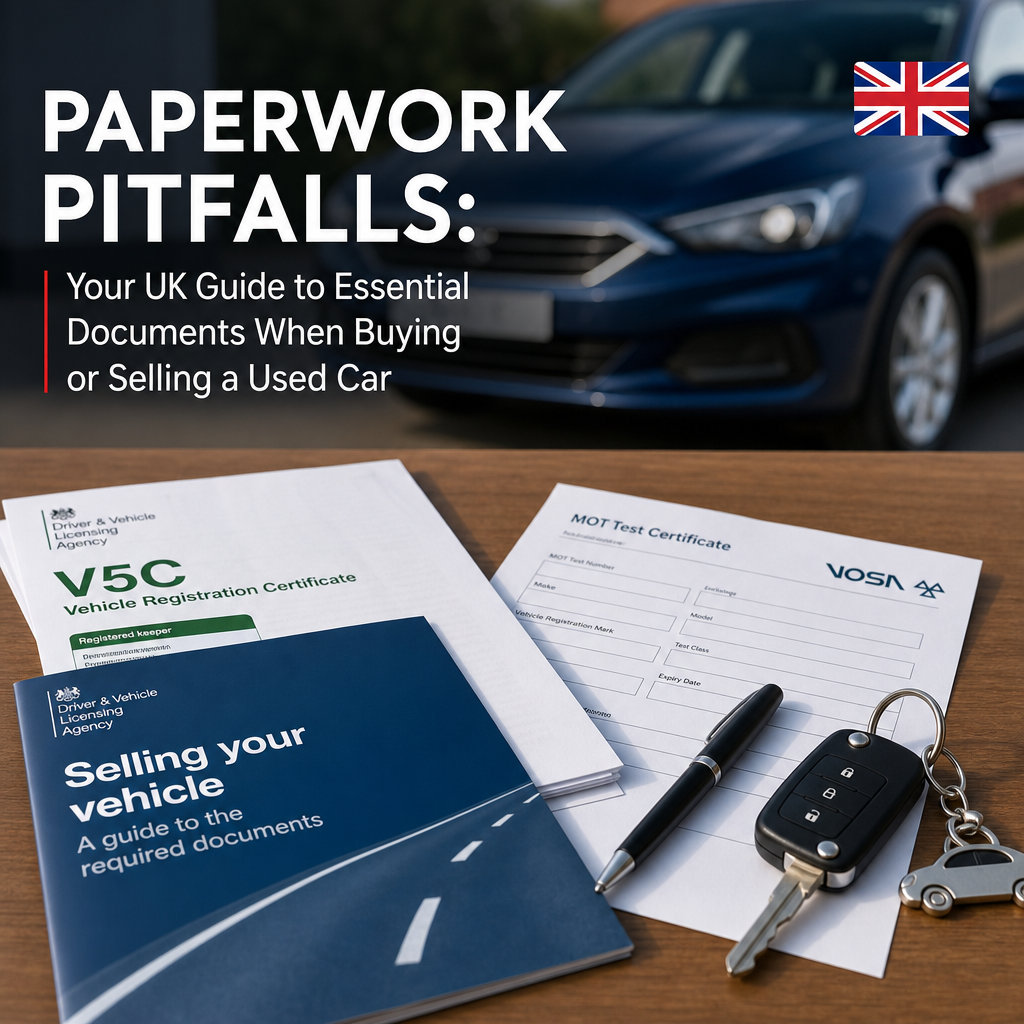
Paperwork Pitfalls: Your UK Guide to Essential Documents When Buying or Selling a Used Car
Navigating the used car market can be both exciting and daunting. While the vehicle itself is the star of the show, the accompanying paperwork plays an equally critical, though often overlooked, role. Ignoring the vital documents, or failing to verify their authenticity, can lead to significant financial loss, legal headaches, and endless frustration for both buyers and sellers.
At CarsLink.ai, we believe that informed decisions lead to smooth transactions. This comprehensive guide will walk you through the essential paperwork involved when buying or selling a used car in the UK, helping you avoid common pitfalls and ensuring a secure, stress-free exchange.
1. Seller's Checklist: Key Documents to Gather
Before you even list your car for sale, gather all relevant documentation. Presenting a well-organised file of paperwork not only speeds up the sale but also instils confidence in potential buyers, often justifying a better asking price.
- V5C Registration Document (Logbook): This is the single most important document. It’s a record of the vehicle's registered keeper, not absolute proof of ownership, but essential for legal transfer. Ensure it's in your name and current address. When selling, you'll fill in the new keeper's details (section 2 and 6) and send the main document to the DVLA. You'll detach and give the 'new keeper supplement' (V5C/2) to the buyer.
- MOT Test Certificate: While buyers can check MOT history online, having the current certificate physically present is a good practice. It proves the vehicle met minimum safety and environmental standards at the time of its last test.
- Service History: A full and verifiable service history is a massive selling point. This typically comes in the form of a stamped service book, detailing routine maintenance by dates and mileage, along with accompanying invoices from garages. Evidence of regular servicing demonstrates that the car has been well-maintained, potentially preventing future mechanical issues.
- Repair Receipts and Invoices: For any significant work done outside of routine servicing – think new cambelt, clutch replacement, gearbox overhaul, or major bodywork repairs – keep the receipts. These provide tangible proof of investment in the car's longevity and condition.
- Original Owner's Manuals: While not strictly essential, having the original handbook, radio codes, and other supplemental manuals adds a touch of professionalism and shows you’ve cared for the vehicle.
- Spare Keys: Crucially, if you have a spare key, make sure it’s present and accounted for. Replacement car keys, especially for modern vehicles with immobilisers, can be incredibly expensive and time-consuming to obtain, and a missing spare key can be a deal-breaker for some buyers.
2. Buyer's Verification: How to Check Key Documents
As a buyer, your diligence in verifying paperwork is paramount. Don't be afraid to ask questions and take your time – a reputable seller will understand.
- V5C Authenticity and Details:
- Seller Verification: Check the name and address on the V5C against the seller's driving licence and a recent utility bill. If they don't match, or the seller claims it's a "friend's car," proceed with extreme caution.
- Document Security Features: Look for the DVLA watermark, the hologram, and ensure the red ink used on the V5C is not faded or smudged.
- VIN Match: Crucially, compare the Vehicle Identification Number (VIN) printed on the V5C with the VIN displayed on the car itself. This can usually be found on the dashboard (visible through the windscreen), on a sticker in the door jamb, or stamped into the engine bay or chassis. If these don't match, walk away immediately.
- Registration Number: Confirm the registration plate on the car matches the V5C.
- Number of Former Keepers: This isn't necessarily a red flag if high, but it's worth noting. More keepers might suggest less continuity in maintenance.
- MOT History: Utilise the free Gov.uk MOT history check (found at
www.gov.uk/check-mot-history). Input the registration number to view the vehicle's complete MOT history, including previous test results, advisories, and mileage recorded at each test. Look for:- Consistent Mileage: Any significant drops in mileage could indicate 'clocking' (mileage fraud).
- Repeated Advisories: Recurring advisories on items like tyres, brakes, or suspension could suggest ongoing issues or deferred maintenance.
- Failure Reasons: Understand why the vehicle failed previous MOTs and if the issues were properly rectified.
- Service Records: Scrutinise the service book and invoices. Are the stamps from legitimate garages? Do the mileages on the service records align with the MOT history? Look for evidence of critical maintenance, such as cambelt changes, which are often time or mileage-sensitive and very expensive if missed. Don't just glance; read through them.
3. The HPI Report & Beyond: Understanding Critical Checks
An HPI check (or similar vehicle history check from providers like Experian AutoCheck) is an absolute non-negotiable for any serious used car buyer. This comprehensive report delves into the car's history beyond what the DVLA provides.
- What an HPI Check Covers:
- Outstanding Finance: This is critical. If the car has outstanding finance against it, the finance company legally owns the car, not the seller. If you buy it, they can repossess it, and you'll lose your money and the vehicle.
- Stolen Vehicle: Confirms if the car has been reported as stolen to the police.
- Write-off Status: Reveals if the car has been declared an insurance write-off. There are different categories:
- Category A (Scrap): Cannot be repaired, must be crushed.
- Category B (Break): Cannot be repaired, body shell must be crushed, but parts can be salvaged.
- Category S (Structurally Damaged): Repairable, but requires professional repair to structural frame or chassis.
- Category N (Non-Structurally Damaged): Repairable, but damage is non-structural (e.g., cosmetic, electrical, suspension). Buying a Cat S or N car is possible, but they are worth significantly less and should be reflected in the price.
- Mileage Discrepancy: Cross-references the recorded mileage with national databases to detect potential 'clocking'.
- Number Plate Changes: Shows if the registration mark has been changed, which can sometimes be a red flag for hiding history.
- VIN/Chassis Number Check: Verifies the VIN against DVLA records for consistency.
- Beyond the HPI: While an HPI check is powerful, it doesn't replace other critical steps:
- Physical Inspection: No amount of paperwork can substitute a thorough inspection of the vehicle's condition, both inside and out. Look for panel gaps, signs of respray, rust, fluid leaks, and interior wear.
- Test Drive: Always take a comprehensive test drive to assess the car's performance, handling, brakes, and listen for any unusual noises.
- Professional Inspection: For peace of mind, especially on higher-value vehicles, consider paying an independent mechanic or a reputable breakdown service (like the AA or RAC) to carry out a pre-purchase inspection.
4. Smooth DVLA Transfer & Road Tax Implications
Once the deal is done, the official transfer process with the Driver and Vehicle Licensing Agency (DVLA) is crucial for both parties.
- Seller's Responsibilities:
- Complete the V5C: Fill in section 2 (new keeper details) and section 6 (declaration of sale and date).
- New Keeper Supplement (V5C/2): Detach this tear-off slip and give it to the buyer. This is their proof of purchase until the new V5C arrives.
- Notify DVLA: You must inform the DVLA of the sale immediately. The quickest and most recommended way is online via the
www.gov.uk/sold-bought-vehiclewebsite. Alternatively, post the completed V5C to the DVLA. Keep proof of postage if you do this. You have 5 days to notify them. - Road Tax Refund: Once you notify the DVLA, any remaining road tax you paid will be automatically refunded to you (usually within 6-8 weeks) as road tax is non-transferable.
- Buyer's Responsibilities:
- Receive V5C/2: Ensure you get the new keeper supplement from the seller. Keep this safe as it's your only official proof that you've acquired the vehicle until your new V5C arrives.
- Tax the Vehicle: You must tax the vehicle immediately before driving it. As road tax is not transferable, the car is untaxed from the moment you take possession. You can tax it online, by phone, or at a Post Office. You will need the 11-digit reference number from the V5C/2.
- New V5C Arrival: Your new V5C document should arrive by post within 3-5 working days. If it doesn't arrive after a couple of weeks, contact the DVLA.
5. Warranty & Extras: Supporting Paperwork
Beyond the core documents, a few other pieces of paperwork can provide additional value and peace of mind.
- Transferable Warranties: If the vehicle is still under its original manufacturer's warranty, check if this is transferable to the new owner. Many are, but it's worth confirming the terms. Similarly, if the seller purchased an aftermarket warranty, enquire if it can be transferred and what the process involves. This can offer valuable protection against unexpected repair costs.
- Key Codes and Immobiliser Information: Some vehicles come with a separate card containing key codes or immobiliser codes. While not used daily, these can be incredibly useful and save significant money if you ever need a replacement key or have issues with the car's security system.
- Locking Wheel Nut Key: If the car has alloy wheels secured with locking wheel nuts, ensure the specific key to remove them is present and easily locatable. This is essential for tyre changes or repairs.
Conclusion
Buying or selling a used car in the UK is a significant transaction, and neglecting the accompanying paperwork is a common and costly mistake. For sellers, having your documents in order demonstrates transparency and care, making your vehicle more appealing. For buyers, meticulously checking and verifying every document safeguards your investment and provides crucial insights into the car's history and condition.
By following this guide from CarsLink.ai, you can navigate the paperwork maze with confidence, ensuring a legal, safe, and stress-free experience for everyone involved. Don't rush, don't compromise, and remember: diligence today saves regret tomorrow.