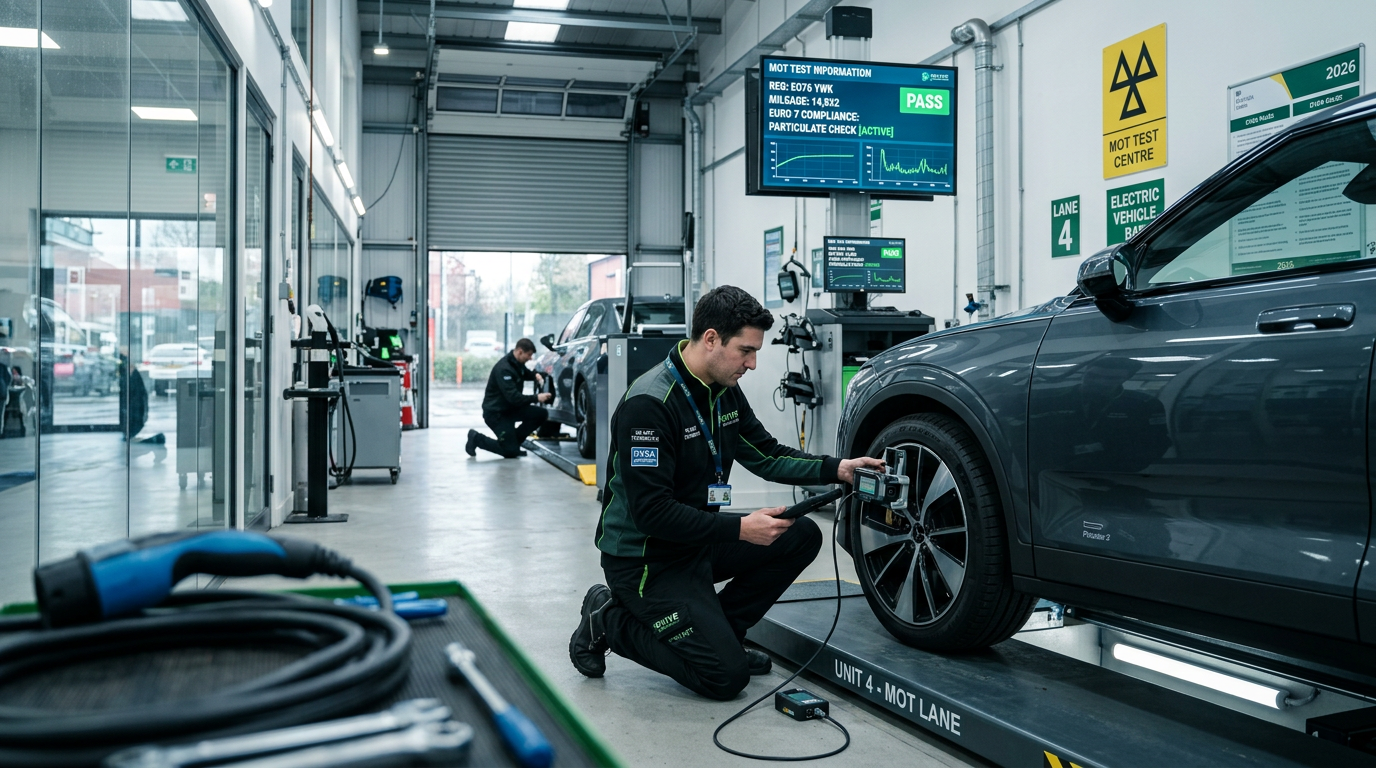
As we navigate through 2026, the UK automotive landscape is undergoing its most significant shift since the 2030 internal combustion engine (ICE) ban was originally proposed. While the headlines have long been dominated by exhaust pipes and EV ranges, a new regulatory frontier has arrived: non-exhaust emissions (NEE).
With the phased introduction of Euro 7 standards and new UK-specific environmental targets, the focus has shifted from what comes out of the tailpipe to what is left on the road surface. For the British motorist, this raises a critical question: will your next MOT include a check for tyre dust?
The Invisible Problem: Why Tyre Emissions Matter in 2026
For decades, we focused on CO2 and NOx. However, as engines have become cleaner and Electric Vehicles (EVs) have become the norm on UK roads, the proportion of particulate matter (PM) coming from tyres and brakes has skyrocketed.
Research from the UK’s Air Quality Expert Group highlights that tyre wear can produce up to 1,000 times more particulate matter than a modern engine’s exhaust. These microplastics and heavy metals enter our waterways and our lungs. In response, the Department for Transport (DfT) and international regulators have introduced the first-ever limits on tyre abrasion rates.
Euro 7 and the 'Tyre Tax' Debate
The term "UK Tyre Tax 2026" has been circulating in the tabloids, but what does it actually mean? It isn’t a direct levy at the petrol station or a line item on your road tax (VED) renewal—at least not yet. Instead, it refers to the increased costs of compliance.
The New Labelling System
Starting this year, all new tyres sold in the UK must carry an enhanced EU/UKCA label that includes an Abrasion Grade.
- Grade A: Low wear, high durability.
- Grade E: High particulate shedding.
Manufacturers must now pay "Extended Producer Responsibility" fees based on the environmental impact of the tyre. These costs are inevitably being passed down to the consumer, leading to an average price increase of 12-15% for budget tyres that fail to meet high durability standards.
Will Your MOT Include a Dust Check?
The short answer for 2026 is no, not a direct measurement.
The DVLA and the DVSA have clarified that MOT stations are not currently equipped with sensors to measure "floating dust" or particulate shedding in real-time. However, the MOT test is evolving in two key ways:
- Strict Tread Depth and Compound Monitoring: There is a proposal under review to increase the minimum legal tread depth from 1.6mm to 2mm. The logic is that as tyres wear down, they shed more microplastics more rapidly.
- Verified Replacement Parts: For cars registered after January 2026, fitting non-compliant, unrated "ultra-budget" tyres may result in an MOT advisory or failure if the tyre does not meet the minimum Euro 7 abrasion standards for that vehicle's weight class.
Car Ownership Costs: The EV Paradox
One of the ironies of the 2026 market is that EV owners are feeling the pinch of tyre emissions more than most. While EVs produce zero tailpipe emissions, their significant weight (due to battery packs) and high instantaneous torque mean they can wear through tyres 20-30% faster than a lighter petrol car.
If you are looking to manage your car ownership costs this year, selecting the right rubber is more important than ever. At CarsLink.ai, we’ve noticed a surge in buyers looking for "EV-Ready" tyres that balance rolling resistance for range with high-abrasion resistance to avoid frequent replacements.
Comparative Costs: Premium vs. Eco-Tyres in 2026
| Tyre Category | Avg. Cost (2026) | Expected Lifespan | Particulate Rating |
|---|---|---|---|
| Premium Eco (Euro 7 Grade A) | £160 - £210 | 30,000 miles | Low |
| Standard Mid-Range | £110 - £140 | 22,000 miles | Moderate |
| Budget (Non-Compliant Legacy) | £75 - £95 | 12,000 miles | High |
Note: Prices are estimates for a standard 18-inch rim.
How to Prepare for the New Regulations
If you are planning to buy a car or replace your tyres this year, here is how to navigate the 2026 rules:
- Check the V5C: Modern vehicle logs may soon include a "Particulate Category" similar to the current CO2 bands. This could eventually influence your ULEZ or Clean Air Zone charges.
- Invest in Grade A/B Tyres: While the upfront cost is higher, you will avoid potential future "polluter pays" fees that local councils are considering for city centre access.
- Maintain Correct Pressures: Under-inflated tyres shed significantly more dust. Modern TPMS (Tyre Pressure Monitoring Systems) are now a critical part of your MOT; ensure they are functioning correctly.
- Use Data Tools: Before buying your next vehicle, use CarsLink.ai to check the total cost of ownership, including the specific tyre requirements for heavier SUV and EV models.
The Future: Towards a "Dust Tax"?
The buzz around a "Tyre Tax" isn't entirely unfounded. The Treasury is currently looking for ways to plug the £30 billion hole left by dwindling Fuel Duty revenues. A "Tyre Duty" based on the abrasion rating at the point of sale is a proposal currently sitting on the Chancellor’s desk for the 2027 budget.
By 2028, we expect to see the first "Smart MOTs" where the onboard diagnostic (OBD) system reports on the torque-to-wear ratio, potentially penalizing drivers with aggressive driving styles that contribute to higher particulate pollution.
Summary
While a "dust check" isn't a physical part of the 2026 MOT yet, the regulations surrounding Euro 7 emissions have made tyre choice a critical financial decision. High-particulate tyres are becoming more expensive to buy and could soon limit where you can drive.
As we move deeper into 2026, staying informed on the intersection of environmental policy and vehicle maintenance is the only way to keep your motoring costs under control.
Thinking of upgrading to a cleaner, more efficient vehicle? Visit CarsLink.ai today to compare the latest models, check ULEZ compliance, and find the best financing deals on EVs and Hybrids that meet the new 2026 standards.