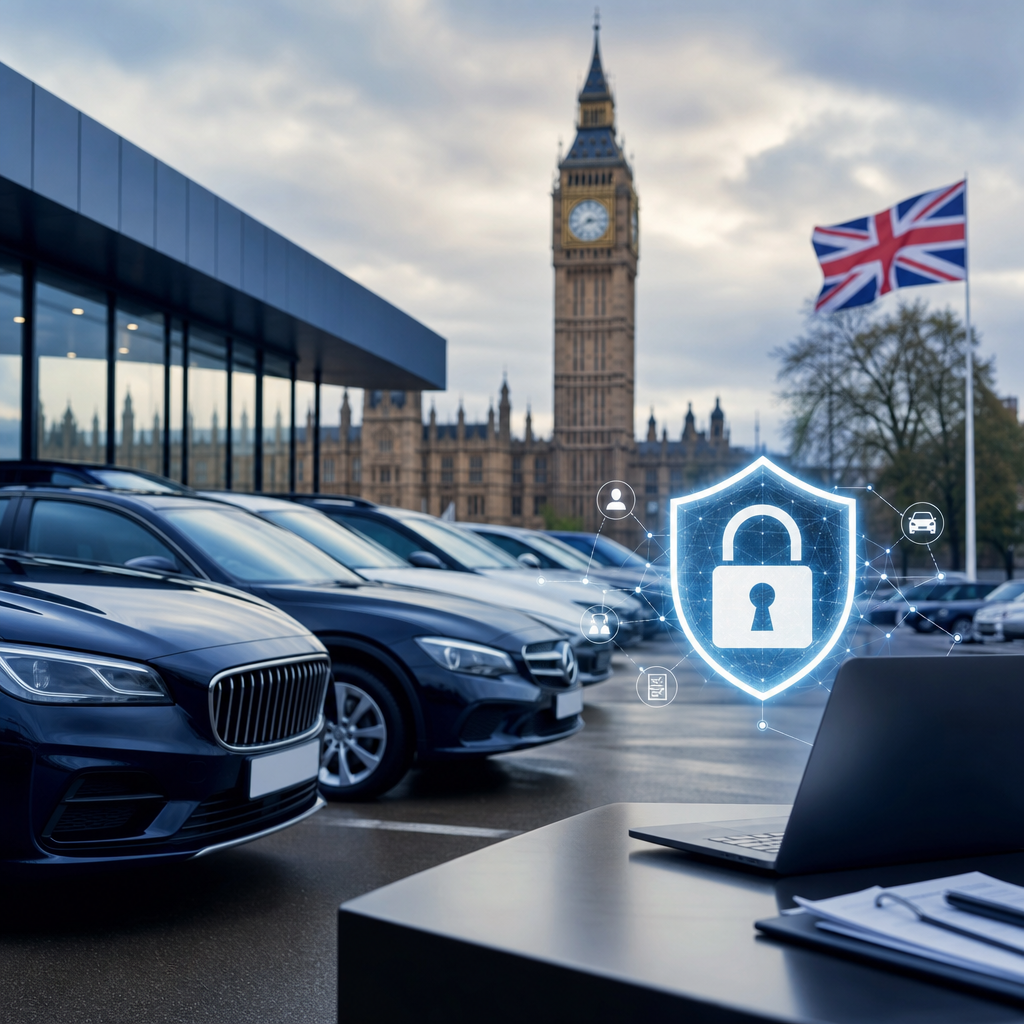
Navigating the UK's Evolving Data Protection: What Used Car Dealerships Need to Know
In today's digital-first world, data is the lifeblood of nearly every business, and used car dealerships are no exception. From handling driving licences for test drives to processing intricate finance applications and sending out service reminders, dealerships routinely collect and manage a wealth of personal customer information. This data isn't just a string of facts; it represents individuals who place their trust in your business.
As a UK used car dealership, staying ahead of data protection regulations isn't merely about avoiding hefty fines; it's about building and maintaining customer trust, safeguarding your reputation, and demonstrating professionalism. With the UK's data protection landscape continually evolving, understanding your obligations under the UK General Data Protection Regulation (UK GDPR) and the Data Protection Act 2018 (DPA 2018) is paramount. This guide will walk you through the essential aspects of data protection, helping your dealership navigate this complex but crucial area with confidence.
Understanding the UK's Data Protection Landscape
The cornerstone of data protection in the UK is the UK General Data Protection Regulation (UK GDPR), which came into effect post-Brexit, largely mirroring the EU GDPR. This robust framework dictates how personal data must be processed, stored, and protected. Its core principles are vital for dealerships:
- Lawfulness, Fairness, and Transparency: Personal data must be processed lawfully, fairly, and in a transparent manner. Customers should know what data is collected and why.
- Purpose Limitation: Data should only be collected for specified, explicit, and legitimate purposes. For example, collecting a driving licence for a test drive is legitimate; using that data to sign them up for unrelated marketing without consent is not.
- Data Minimisation: Only collect data that is adequate, relevant, and limited to what is necessary for the processing purpose. Do you really need their full medical history for a finance application? Likely not.
- Accuracy: Data must be accurate and kept up to date. Dealerships should have processes to correct or erase inaccurate data.
- Storage Limitation: Personal data should be kept for no longer than is necessary for the purposes for which it is processed. This means establishing clear data retention policies.
- Integrity and Confidentiality (Security): Data must be processed in a manner that ensures appropriate security, including protection against unauthorised or unlawful processing and against accidental loss, destruction, or damage, using appropriate technical or organisational measures.
- Accountability: Dealerships are responsible for, and must be able to demonstrate compliance with, these principles.
Complementing UK GDPR is the Data Protection Act 2018 (DPA 2018). While UK GDPR sets the general framework, the DPA 2018 applies and adapts these rules for specific UK contexts, such as national security and immigration, and also covers areas like data processing by intelligence services. For dealerships, the DPA 2018 acts as the domestic 'filling in' of UK GDPR, providing the legal basis for how the general principles are applied within the UK.
The Information Commissioner's Office (ICO) is the independent authority tasked with upholding information rights in the public interest, promoting openness by public bodies, and data privacy for individuals. They are your go-to resource for guidance and the body responsible for enforcing these regulations. Ignoring their guidelines or the regulations themselves can lead to severe consequences.
Best Practices for Secure Data Handling
Effective data protection begins with robust practices for collecting, storing, and using customer data. This isn't just about avoiding breaches; it's about embedding data privacy into your dealership's culture.
Data Collection
- Minimisation is Key: Only ask for data that is genuinely necessary for the task at hand. For a test drive, you need a driving licence and perhaps proof of address for insurance. For a finance application, you'll need financial details. Avoid collecting extraneous information 'just in case'.
- Transparency: Always be clear with customers about why you are collecting their data and how it will be used. This should be communicated through a clear, concise privacy policy, readily available both online and in your showroom.
- Lawful Basis: Every piece of personal data you process must have a lawful basis. This could be:
- Contract: Necessary for fulfilling a contract (e.g., selling a car, arranging finance).
- Legitimate Interest: Where processing is necessary for your legitimate interests, provided it doesn't override the customer's rights (e.g., fraud prevention).
- Consent: Explicit permission from the customer (e.g., for marketing communications).
- Legal Obligation: Required by law (e.g., anti-money laundering checks).
Data Storage
- Physical Security: Hard copies of documents (driving licences, finance applications, sales contracts) should be stored in locked cabinets within secure premises. When no longer needed, they must be shredded securely, not just binned.
- Digital Security: Implement strong technical measures for electronic data:
- Encryption: Encrypt sensitive customer data, especially when stored on computers, servers, or transmitted across networks.
- Access Controls: Limit access to customer data strictly to employees who need it to perform their job functions. Use strong, unique passwords and multi-factor authentication where possible.
- Secure Systems: Ensure your CRM systems, dealer management systems, and any other software handling customer data are regularly updated, patched, and protected by robust firewalls and antivirus software.
- Regular Backups: Implement a comprehensive backup strategy for all digital data, ensuring backups are stored securely, ideally off-site or in the cloud with appropriate security.
- Data Retention Policies: Don't keep data indefinitely. Establish clear, documented policies on how long different types of data are retained. For example, finance application data might be kept for a set period post-sale, warranty details for the warranty duration, and general sales enquiries for a shorter period.
Data Usage & Third-Party Sharing
- Purpose Limitation: Use data only for the purpose for which it was originally collected and for which you have a lawful basis. Don't repurpose sales lead data for unrelated marketing campaigns without fresh consent.
- Staff Training: Regularly train all staff – from sales associates to service technicians and administrative personnel – on data protection principles, company policies, and how to identify and report potential data breaches or security risks. This includes awareness of phishing scams and social engineering tactics.
- Vetting Third Parties: Dealerships often share data with finance companies, warranty providers, or repair shops. Before sharing, conduct due diligence on these third parties to ensure they are also compliant with data protection regulations. Put in place Data Processing Agreements (DPAs) that clearly outline their responsibilities for data security and processing.
Consent Management and Marketing Communications
One of the most common areas where dealerships encounter data protection challenges is marketing. Getting it right ensures you engage customers effectively without infringing on their privacy rights.
- The Gold Standard of Consent: Under UK GDPR, consent for marketing must be:
- Freely Given: Not coerced or tied to the provision of a service.
- Specific: Customers must understand exactly what they are consenting to (e.g., "marketing emails about new stock" versus "general marketing").
- Informed: Explain what type of communications they will receive and how often.
- Unambiguous: Requires a clear affirmative action (e.g., ticking an unticked box, not a pre-ticked one).
- Granularity: Offer customers choices. Don't just have one "I agree to marketing" box. Allow them to opt-in for different types of communications, such as:
- Service and MOT reminders
- New stock alerts for specific makes/models
- Special offers and promotions
- Easy Withdrawal: Customers must be able to withdraw their consent at any time, easily and without detriment. This means an obvious 'unsubscribe' link in every marketing email and a clear process for opting out of other communications. Honour unsubscribe requests promptly.
- Legitimate Interest for Existing Customers: While consent is ideal for broad marketing, for existing customers, you might be able to rely on 'legitimate interest' for certain communications. For example, sending a service reminder or an MOT due date notification for a car they bought from you could fall under legitimate interest, as it's a service directly related to their purchase. However, always conduct a Legitimate Interest Assessment (LIA) to ensure this doesn't override the customer's rights and freedoms. For general promotional marketing, specific consent is usually the safer and required route.
- Record Keeping: Crucially, you must keep clear records of when, how, and for what purposes each customer gave (or withdrew) their consent. This provides vital evidence if ever challenged.
Consequences of Non-Compliance and Ensuring Protection
The repercussions of failing to comply with data protection regulations can be severe, extending far beyond financial penalties.
Consequences of Non-Compliance
- Hefty Fines: The ICO has the power to issue significant fines. For serious breaches of UK GDPR, these can be up to £17.5 million or 4% of your annual global turnover, whichever is higher. Even less severe infringements can incur fines up to £8.7 million or 2% of global annual turnover.
- Reputational Damage: A data breach or a publicised non-compliance issue can severely erode customer trust and damage your dealership's brand image, leading to a loss of business that is often more impactful than a fine.
- ICO Action: Beyond fines, the ICO can issue enforcement notices, requiring you to change your data processing practices, or even ban you from processing data altogether.
- Legal Action: Individuals affected by a data breach or misuse may have the right to claim compensation for damages.
Ensuring Your Dealership is Protected
Proactive measures are your best defence.
- Data Protection Officer (DPO): While most small to medium used car dealerships may not be legally required to appoint a DPO, it's good practice to designate a senior individual responsible for data protection compliance. They should understand the regulations, oversee policies, and act as a point of contact for the ICO.
- Regular Audits: Conduct internal and, periodically, external audits of your data processing activities. Review your privacy policy, data retention schedules, security measures, and consent management processes to ensure they remain compliant and effective.
- Comprehensive Documentation: Maintain clear, written records of all your data protection policies, procedures, impact assessments, and staff training. This demonstrates your accountability.
- Robust Data Breach Protocol: Have a clear, actionable plan in place for how to respond to a data breach. This should include:
- Identification: How to recognise a breach.
- Containment: Steps to limit the damage.
- Assessment: Determining the scope and risk of the breach.
- Notification: If the breach poses a risk to individuals' rights and freedoms, you must report it to the ICO within 72 hours of becoming aware of it. If the risk is high, you must also inform the affected individuals directly.
- Review: Learning from the incident to prevent future occurrences.
- Staff Awareness & Training: Data protection is an ongoing responsibility. Regularly refresh staff training on best practices, common threats (like phishing), and the importance of privacy. Foster a culture where data security is everyone's responsibility.
- Data Protection Impact Assessments (DPIAs): For any new projects, technologies, or processes that are likely to result in a high risk to individuals' data protection rights (e.g., implementing a new customer tracking system), conduct a DPIA to assess and mitigate those risks.
Conclusion
Navigating the UK's data protection landscape might seem daunting, but for used car dealerships, it's an indispensable part of modern business. By understanding your obligations under UK GDPR and the DPA 2018, implementing robust secure data handling practices, managing consent effectively, and preparing for potential challenges, your dealership can not only avoid costly penalties but also cultivate deeper trust with your customers. In an industry built on relationships and reliability, demonstrating a strong commitment to data privacy is a powerful way to enhance your reputation and secure your place in the competitive UK used car market. It's not just compliance; it's smart business.