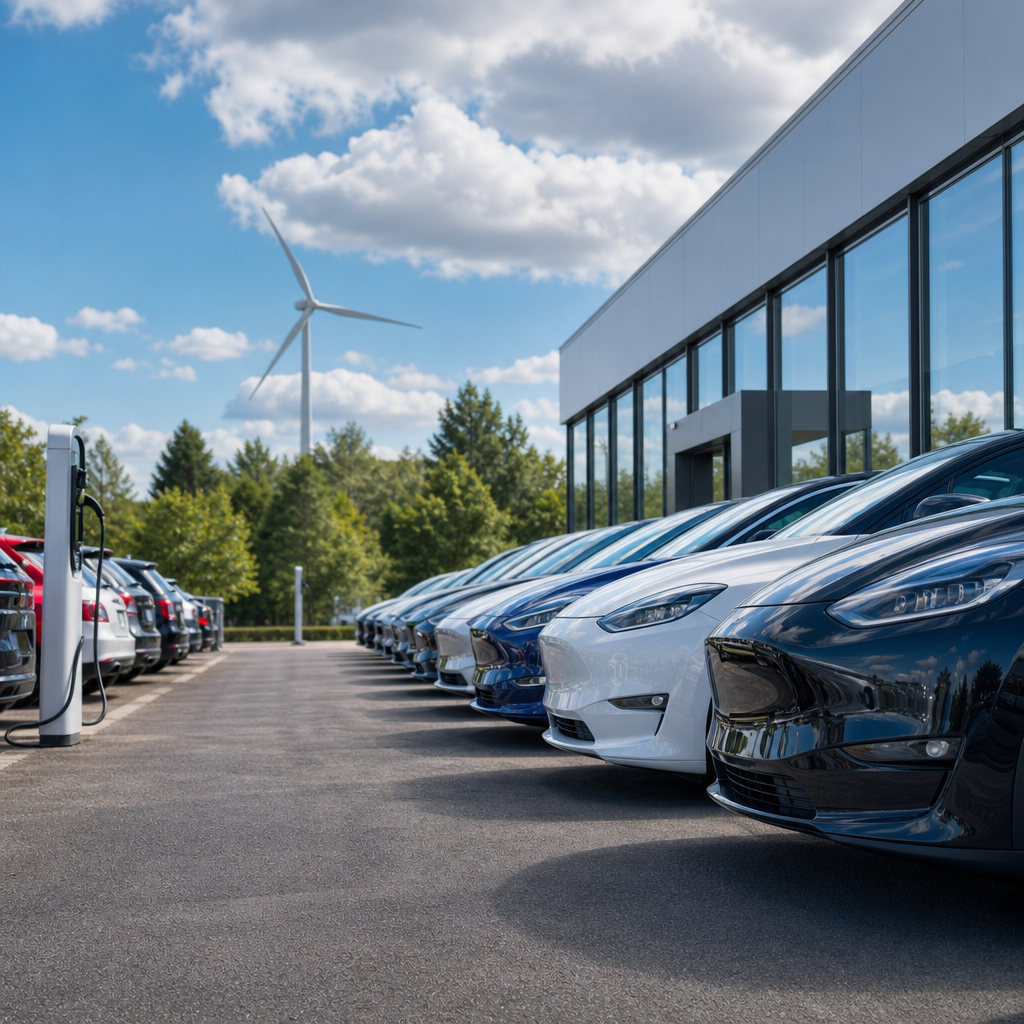
Navigating Net Zero: New UK Regulations Dealers Must Know for Used Vehicle Sales
The UK automotive landscape is undergoing its most significant transformation in decades, driven by the government's ambitious Net Zero targets. While much of the focus often falls on new vehicle sales, the ripple effects of these environmental policies will profoundly impact the used car market, requiring dealers to adapt quickly and strategically. For those operating within the UK used car sector, understanding the upcoming regulations isn't just about compliance; it's about future-proofing your business, maintaining profitability, and effectively serving a changing customer base.
At CarsLink.ai, we believe in arming our partners with the insights needed to thrive. This article will break down the crucial new regulations, their direct implications for your inventory, operations, and customer interactions, ensuring you're well-equipped to navigate the green transition.
The Road Ahead: Understanding Key UK Environmental Policies
The cornerstone of the UK's automotive decarbonisation strategy is the Zero Emission Vehicle (ZEV) Mandate, which came into force in January 2024. This isn't a ban on petrol or diesel cars yet, but a powerful lever to force manufacturers to sell an increasing proportion of zero-emission vehicles (ZEVs) – primarily battery electric vehicles (BEVs) – each year.
- ZEV Mandate Mechanics: Starting at 22% of new car sales in 2024, the mandate dictates that a rising percentage of a manufacturer's total new vehicle sales in the UK must be ZEVs. This target incrementally increases annually, reaching 80% by 2030 and 100% by 2035. Manufacturers failing to meet their targets face hefty fines, creating a strong incentive to push EV sales.
- Impact on Future Used Stock: While directly targeting new car sales, the ZEV mandate will inevitably reshape the used market. As new ICE (Internal Combustion Engine) vehicle production is systematically scaled back to meet ZEV targets, the long-term supply of newer, low-mileage petrol and diesel cars will diminish. Conversely, the mandate will drive a substantial increase in the volume of used EVs entering the market in the coming years, offering a wider choice and potentially more competitive pricing.
- Other Relevant Policies: Don't forget the continued expansion of Clean Air Zones (CAZ) and Ultra Low Emission Zones (ULEZ) across major UK cities. These schemes, penalising older, more polluting vehicles, directly influence consumer demand and residual values for certain ICE models, particularly older diesels and some petrol cars. While the 2030 ban on the sale of new petrol and diesel cars has been pushed back to 2035, the trajectory is clear, signalling a definitive shift away from fossil fuels.
Inventory Management in a Shifting Landscape
For used car dealers, the ZEV mandate and other environmental policies create a complex, evolving challenge for inventory sourcing and valuation. Proactive adaptation is key.
- Sourcing Strategy Overhaul: As new ICE production winds down, sourcing high-quality, desirable used petrol and diesel vehicles will become more competitive. Dealers may need to diversify their sourcing channels, potentially looking further afield or exploring new partnerships to secure the best stock. Simultaneously, dealers must actively build relationships to source used EVs. This might involve direct purchases from private sellers, fleet operators, or auction houses specialising in electric models. Understanding the various EV models, battery sizes, and charging capabilities will be crucial for effective acquisition.
- Stock Valuation – The Electric Variable: Valuing used EVs presents unique considerations. While depreciation on some early EV models was steep, the market is maturing. Factors like battery health (often guaranteed for 8 years/100,000 miles by manufacturers), charging speed capabilities, range, and access to home charging points significantly influence resale value. Dealers will need reliable tools and expertise to accurately assess battery degradation and factor this into pricing. For ICE vehicles, vigilance is required regarding their suitability for expanding CAZ/ULEZ zones, as non-compliant vehicles may see accelerated depreciation in affected areas.
- The Hybrid Bridge: Plug-in Hybrids (PHEVs) and Mild Hybrids (MHEVs) will continue to play a crucial role as bridging technologies. They offer a stepping stone for customers wary of a full EV switch but wanting to reduce emissions and fuel costs. Maintaining a balanced stock profile that includes these options can help cater to a broader customer base during the transition.
Operational Adaptations and Compliance Costs
Beyond inventory, the shift to electric vehicles necessitates significant operational changes and upfront investment for dealerships.
- Charging Infrastructure Investment: This is perhaps the most immediate and visible operational cost. Dealers will need to install adequate charging points – not just for customer test drives, but crucially for maintaining a charged EV inventory. Consider a mix of slower AC chargers for overnight top-ups and potentially a faster DC rapid charger for quick demonstrations or customer convenience. The cost of installation, grid connection upgrades, and ongoing electricity consumption must be factored into budgets.
- Staff Training – A Dual Mandate:
- Sales Staff: Your sales team needs comprehensive training on EVs. This includes understanding battery technology, charging networks (Type 2, CCS, CHAdeMO), range calculations, available government grants (though these are dwindling), and crucially, how to address common customer concerns like 'range anxiety' or battery degradation. They must be equipped to explain the total cost of ownership benefits, including lower running costs and reduced Vehicle Excise Duty (VED).
- Technicians: Servicing EVs requires a completely different skillset. Technicians must be trained in high-voltage safety procedures, diagnostics for electric powertrains, battery management systems, and EV-specific repair techniques. This often means investing in specialised IMI-accredited courses and potentially new tools and equipment to safely work on high-voltage systems.
- Dealership Energy Efficiency: As electricity consumption increases with charging infrastructure, reviewing your dealership's overall energy efficiency can offset some costs and align with the Net Zero ethos. Consider LED lighting, solar panel installation, and efficient heating/cooling systems.
Guiding Customers Through the Green Transition
One of the most valuable services a used car dealer can offer during this period of change is expert guidance. Customers are often confused by the myriad of terms, regulations, and technological shifts.
- Communicating Vehicle Suitability and Taxes:
- CAZ/ULEZ Compliance: Be explicit about whether a specific petrol or diesel vehicle is compliant with current and planned Clean Air Zones. Provide resources or direct customers to official government checkers. Failing to do so can lead to buyer remorse and reputational damage.
- VED and Benefit-in-Kind (BIK): Clearly explain the tax benefits of EVs. Fully electric vehicles currently attract zero VED, and their BIK rates for company car drivers are significantly lower than ICE equivalents, making them a very attractive proposition for businesses and employees. Ensure your sales team can articulate these financial advantages.
- Addressing EV Concerns and Highlighting Benefits:
- Range Anxiety: Discuss typical real-world ranges for different models and help customers understand their daily driving needs. Highlight the growing public charging infrastructure and the convenience of home charging.
- Charging Infrastructure: Guide customers on different charging types (home, public, rapid), connector types, and estimated charging times. Point them to apps or websites for locating public chargers.
- Battery Degradation: Reassure customers about manufacturer warranties and the typically slow rate of degradation for modern EV batteries. Offer to provide battery health reports where available.
- Resale Value: While historically a concern, the increasing demand for used EVs, driven by the ZEV mandate, is stabilising and improving residual values.
- The Upsides: Emphasise the lower running costs (cheaper "fuel" and often reduced maintenance), quieter driving experience, instant torque, and environmental benefits of going electric. Frame the purchase as a smart, future-proof investment.
Conclusion
The journey to Net Zero is an inevitable one, and its influence on the used car market will only intensify. While the new UK regulations, particularly the ZEV Mandate, present clear challenges in terms of inventory management, operational investment, and staff training, they also unlock significant opportunities.
Used car dealers who proactively adapt their business models, invest in the necessary infrastructure and training, and position themselves as trusted advisors on the electric transition will not only comply with the new rules but will thrive. By embracing the shift, understanding the nuances of electric vehicles, and clearly communicating the benefits and practicalities to consumers, dealers can build a resilient, future-ready business in the evolving landscape of UK automotive sales. The future is electric, and for forward-thinking dealers, it's a future worth investing in.