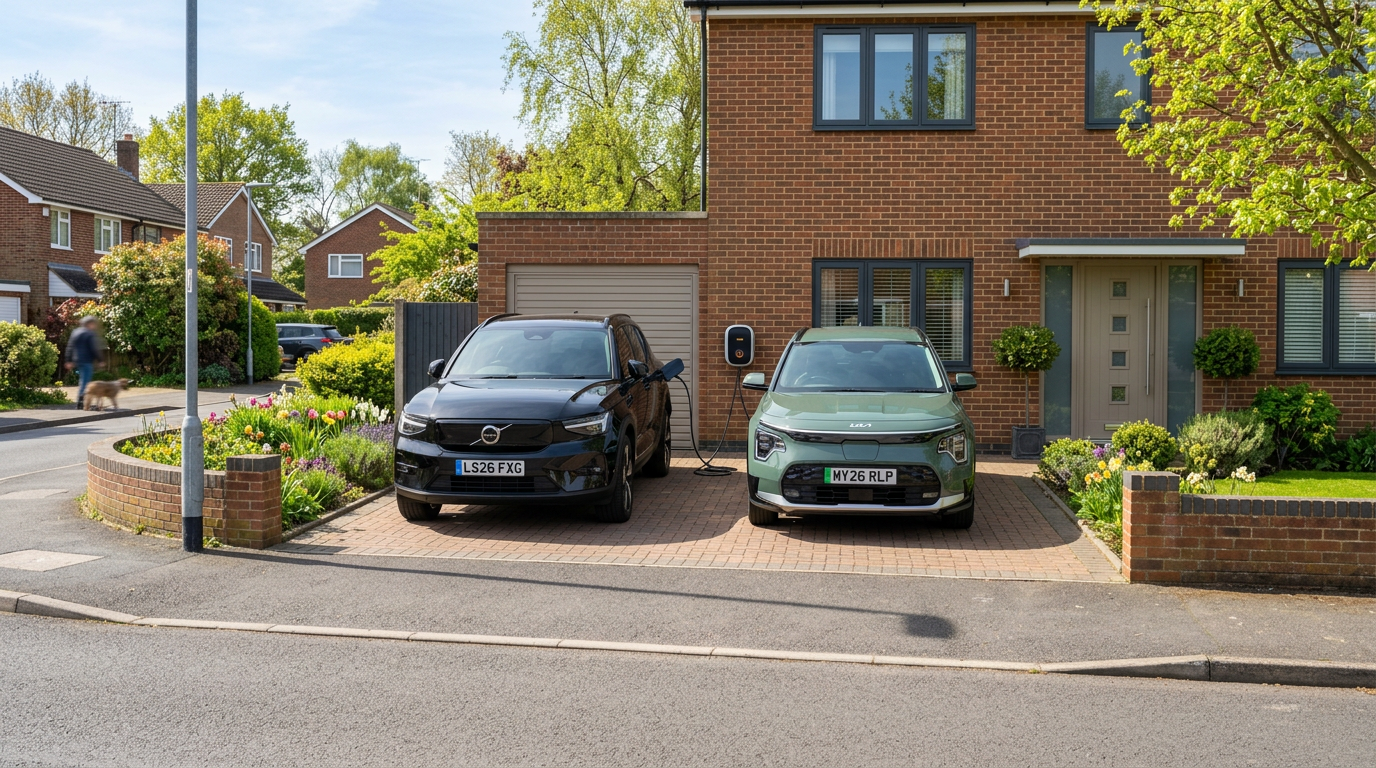
As we navigate the spring of 2026, the UK automotive landscape has shifted dramatically. With the Zero Emission Vehicle (ZEV) mandate now in full swing and the second-hand market for electric vehicles (EVs) reaching maturity, how we protect our vehicles is changing. For households with two or more vehicles, the age-old question remains: is a multi-car insurance policy still the gold standard for saving money, or has the complexity of modern driving—from EV battery risks to ULEZ expansions—made individual policies more attractive?
The short answer is that while bundling remains a powerhouse for convenience, the "loyalty tax" and the rise of specialist EV coverages are forcing savvy UK motorists to look closer at the fine print.
The State of UK Car Insurance in 2026
Insurance premiums in 2026 have stabilised after the volatility of 2024-2025, but they remain at a historic high. The average comprehensive policy now sits around £950, driven largely by the high cost of ADAS (Advanced Driver Assistance Systems) repairs and the specialised labour required for EV drivetrains.
In this environment, multi-car insurance 2026 trends suggest that while insurers are offering "bundled discounts" of up to 15-20%, these savings are often offset if one vehicle in the household has a significantly higher risk profile—such as a learner driver or a high-performance EV.
Why Multi-Car Policies Still Dominate
For the traditional UK household—perhaps a Volvo XC40 for the school run and a Volkswagen ID.3 for the commute—multi-car policies offer three primary benefits:
- Uniform Renewal Date: One payment, one date, one set of paperwork (V5C and MOT reminders usually come as part of the app service now).
- Shared No Claims Discount (NCD) Protection: Many 2026 policies now allow NCD to be mirrored across vehicles, even if they aren't earned on both.
- Stacked Discounts: Most big-name UK insurers (Admiral, Direct Line, Aviva) apply a percentage discount for every additional vehicle added to the "garage."
The EV Factor: Battery Insurance and Specialist Covers
The biggest disruptor in 2026 is EV battery insurance UK 2026. As more households move to a "mixed fleet" (one ICE or Hybrid and one full EV), standard multi-car policies are being put to the test.
Traditional bundled policies often treat an EV like a high-end petrol car, but this can lead to gaps in coverage. Specialist 2026 policies now specifically include:
- Battery Degradation & Damage: Coverage if the battery is damaged in a minor collision that wouldn't total a traditional car.
- Charging Cable Theft: A rising issue in urban areas like London, Manchester, and Birmingham.
- Wallbox Liability: Protection if someone trips over your charging cable while it’s plugged into the mains across a pavement.
If your multi-car provider doesn't offer these specific EV modules, you might be better off separating your policies or searching for a specialist EV-friendly multi-car provider through tools like CarsLink.ai, which can help you identify vehicles with the best insurance group ratings before you buy.
Comparative Costs: Bundled vs. Individual (2026 Estimates)
To illustrate the potential savings, let’s look at a typical UK household profile: Two drivers (aged 45 and 42) living in a semi-urban area (e.g., Bristol or Leeds), with a 2023 Tesla Model 3 and a 2022 Ford Puma.
| Policy Type | Est. Annual Premium (ICE) | Est. Annual Premium (EV) | Total Cost |
|---|---|---|---|
| Separate Policies | £650 | £1,100 | £1,750 |
| Standard Multi-Car | N/A | N/A | £1,520 |
| Specialist EV Multi-Car | N/A | N/A | £1,580 |
Note: Data based on average 2026 market rates for Insurance Groups 20 and 35.
While the standard multi-car policy is the cheapest UK car insurance 2026 option on paper, the "Specialist EV" version often provides better value when you consider the cost of an uninsured battery replacement (often exceeding £12,000).
The "Young Driver" Complication
A common trap for UK families in 2026 is adding a teenager or young adult to a multi-car policy. While it seems convenient, the "black box" (telematics) requirements for drivers under 25 have become stricter. If a young driver on a multi-car policy triggers a "red event" for speeding or night driving, it can occasionally impact the premium of the lead policyholder or even lead to the cancellation of the entire household bundle.
In 2026, we recommend a "split-bundle" approach: keep the parents on a multi-car policy and put the young driver on a standalone telematics policy. This protects the parents' NCD and ensures that if the teen's insurance is cancelled, the whole family isn't left stranded without cover.
Navigating ULEZ and Road Tax Changes
As of April 2025, EVs began paying Vehicle Excise Duty (VED) for the first time. In 2026, this has become a standard part of the car ownership budget. When looking for bundled car insurance UK, check if your insurer offers "Total Mobility" packages. Some modern 2026 policies now integrate your road tax payments and even ULEZ daily charges into a single monthly subscription fee, simplifying the "admin tail" of running multiple cars.
5 Questions to Ask Your Insurer in 2026
Before renewing your multi-car policy this year, ensure you ask the following:
- Does the policy cover EV battery health and accidental damage?
- Is there an "uninsured driver promise" for all vehicles in the bundle?
- Can we have different voluntary excesses for each car? (An older runabout doesn't need a £500 excess).
- Are the "courtesy cars" provided like-for-like? (Crucial if you rely on an EV and cannot go back to petrol).
- Is there a discount for low-mileage vehicles? If one car in the bundle is only for weekend use, it should be significantly cheaper to insure.
Verdict: Is Bundling Still Best?
For the majority of UK households, multi-car insurance 2026 remains the most cost-effective and time-efficient way to stay road-legal. The consolidated renewal date alone saves hours of administrative headache. However, the one-size-fits-all approach is dead.
If your fleet includes a high-value EV or a driver under 25, the "bundled" price might not be the best value. Always compare the total cost of a bundle against two or three highly-tailored individual policies.
Finding the right car with a low insurance group rating is the first step to saving money. Whether you’re looking for a fuel-efficient hybrid or a family-friendly SUV, use CarsLink.ai to browse the latest UK inventory. Our AI-driven search filters can help you find vehicles in lower insurance groups, ensuring that your 2026 multi-car bundle stays as affordable as possible.
Ready to find your next car? Search the UK's most intelligent car marketplace at CarsLink.ai today.