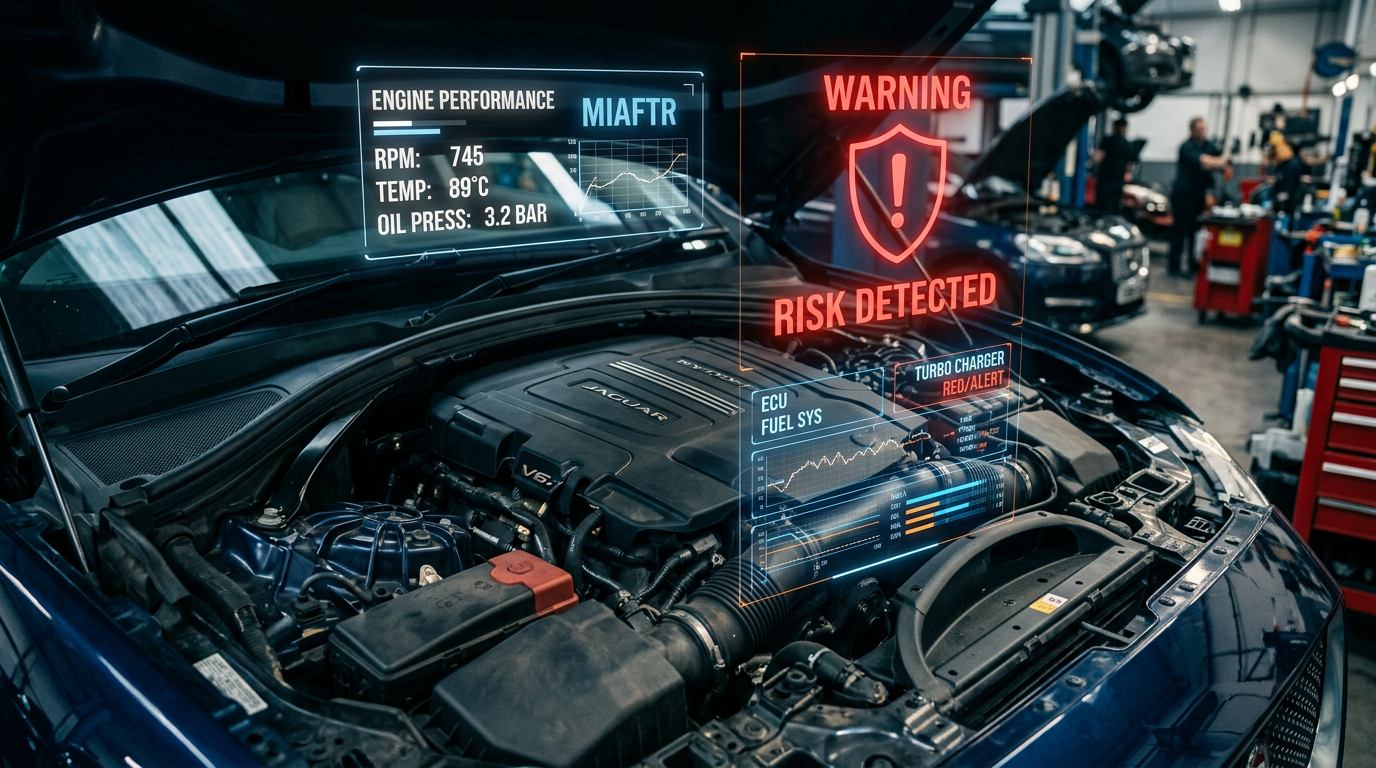
In the UK used car market of 2026, data is more accessible than ever, yet thousands of buyers still fall victim to "ghost" write-offs. While most consumers are familiar with basic HPI-style checks, there is a deeper layer of data that often remains untouched: the Motor Insurance Anti-Fraud and Theft Register (MIAFTR).
Understanding how to navigate MIAFTR data is the difference between buying a safe, reliable vehicle and unknowingly putting a dangerous, structurally compromised "zombie car" on your driveway. In this deep dive, we explore why standard checks sometimes fail and how advanced provenance tools can reveal the truth.
What is MIAFTR?
The Motor Insurance Anti-Fraud and Theft Register is a central database managed by MIB (Motor Insurers' Bureau). It contains records of vehicles that have been declared a total loss (write-off) or have been reported stolen.
Unlike the DVLA database, which primarily tracks taxation and registration details, MIAFTR is populated directly by insurance companies. In 2026, with the rise of complex ADAS (Advanced Driver Assistance Systems) and expensive EV battery packs, vehicles are being written off more frequently due to high repair costs, making this register more vital than ever.
Why Standard Provenance Checks Miss Total Losses
Most entry-level car history checks pull data from the DVLA. However, there is often a significant "data lag" or a complete "data gap" between an accident happening and the V5C being updated with a marker.
The "Self-Insured" Loophole
Large fleet operators, some car rental firms, and local authorities often "self-insure." If one of their vehicles is involved in a major collision, they may dispose of it via salvage auctions without ever recording it on MIAFTR. While no check can find a record that wasn't created, a sophisticated MIAFTR check cross-references multiple industry sources to spot inconsistencies that standard checks ignore.
The Processing Delay
It can take several weeks for an insurance company to process a claim and register the total loss. During this window, unscrupulous sellers may try to offload the damaged vehicle before the "Category" marker appears on the logbook. Advanced tools used by CarsLink.ai leverage real-time data feeds to catch these entries faster than traditional consumer reports.
Understanding Insurance Write-Off Categories in 2026
The UK system moved away from the old Category C and D labels years ago, focusing instead on structural integrity. Here is a refresher on what you’ll find on a MIAFTR report today:
| Category | Definition | Can it be returned to the road? |
|---|---|---|
| Category A (Scrap) | Severe damage; no salvageable parts. | No. Must be crushed. |
| Category B (Break) | Severe structural damage; parts can be salvaged. | No. Chassis must be destroyed. |
| Category S (Structural) | Damage to the chassis/frame that is repairable. | Yes, if professionally repaired. |
| Category N (Non-Structural) | Cosmetic or electrical damage; structural integrity intact. | Yes. |
Note for 2026: We are seeing an increase in Category N write-offs for electric vehicles. If an EV’s battery casing is even slightly dented, insurers often write the car off due to the astronomical cost of battery replacement and safety liability, even if the car looks pristine.
The Danger of "V-Check" Discrepancies
A "Total Loss" marker on MIAFTR doesn't just affect the car's safety—it nukes its resale value. A Category S vehicle is typically worth 25% to 50% less than a non-damaged equivalent.
When you run a deep used car provenance check, you are looking for:
- Stolen/Recovered status: Even if the car wasn't crashed, a theft record stays on MIAFTR and can make the car uninsurable for certain providers.
- Salvage Auction History: If the car appears on MIAFTR, deep-dive checks can often find the original "salvage listing" photos. Seeing the car smashed in an auction yard is the ultimate proof that a seller's "minor car park dent" story is a lie.
- Unrecorded Total Losses: Comparing the mileage on a MIAFTR entry versus the current MOT history can reveal if a car was hidden away for a year while being shoddily repaired in a "back-street" garage.
How to Conduct a MIAFTR Deep Dive
To ensure you aren't buying a hidden write-off, follow these steps:
1. Verify the VIN (Vehicle Identification Number)
Sellers often give the registration of a "clean" car but sell a "cloned" damaged one. Always check that the VIN on the dashboard/chassis matches the V5C and the digital report.
2. Check for Previous Subrogation
In 2026, some insurers use third-party "subrogation" handlers to manage salvage. These records can sometimes hit the total loss register before the main insurance file is closed. Ensure your check covers these third-party databases.
3. Review the "Condition Alert"
A professional check will flag if a vehicle has been handled by a salvage agent like Copart or BCA. If a car has been through these channels, it is almost certainly a total loss, regardless of what the V5C says.
The Impact on Insurance and Road Tax
If you unknowingly buy a Category S or N car that hasn't been declared:
- Insurance Voidance: If you have an accident and the insurer discovers the prior unrecorded write-off, they may refuse to pay out.
- MOT Standards: A structural write-off must be repaired to a high standard to pass a modern MOT, especially regarding the calibration of LiDAR and radar sensors used in modern safety tech.
At CarsLink.ai, we provide dealers and buyers with the tools to see beyond the surface, integrating comprehensive MIAFTR data to ensure every transaction is transparent.
Summary: Don't Rely on the V5C Alone
The V5C logbook is a registration document, not a proof of quality. By the time a "Category" marker is printed on a new logbook, the car might have already changed hands three times.
To protect your investment in 2026:
- Always run a dedicated MIAFTR check.
- Look for "Salvage History" photos.
- Check the battery health and sensor alignment if it's an EV/Hybrid write-off.
Buying a car? Don't leave it to chance. Use CarsLink.ai for the UK's most comprehensive vehicle provenance reports, including deep-layer MIAFTR data and real-time total loss alerts. Scan the plate, know the truth, and drive with confidence.