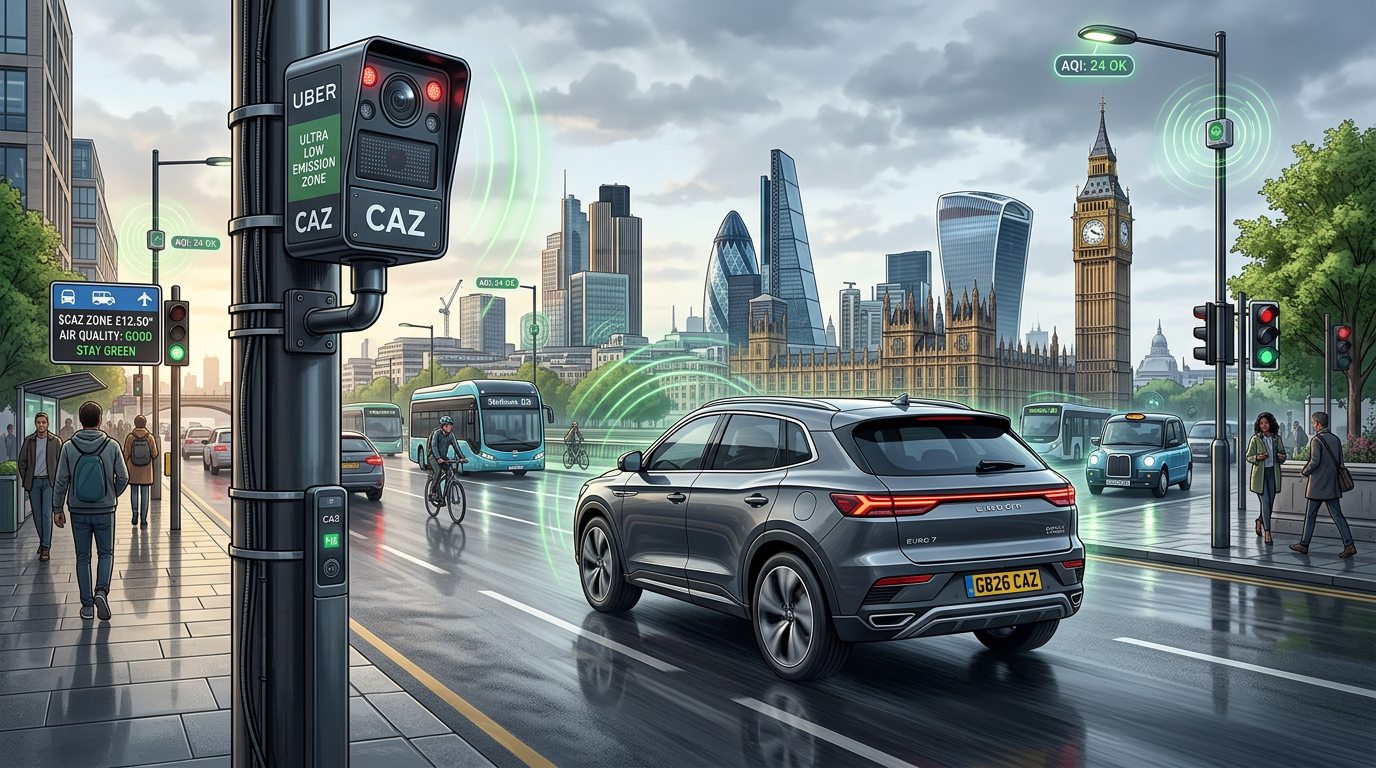
The 2026 Landscape: Beyond the Traditional ULEZ
As of May 2026, the London Clean Air Zone (CAZ) landscape has shifted dramatically. While the Ultra Low Emission Zone (ULEZ) headline grabbers of 2023 are now old news, a new tier of restrictions is beginning to bite. For many motorists, the primary concern is no longer just whether their car is "Euro 6," but whether it meets the stringent Euro 7 diesel compliance standards that are now surfacing in local authority policy discussions.
Transport for London (TfL) and the Mayor’s office have tightened the grip on air quality. While most of Greater London remains under the 2023 boundary, the 2026 London CAZ Expansion refers to the implementation of "Net Zero Corridors" and the tightening of the daily charge for older, high-emitting vehicles.
At CarsLink.ai, we’ve seen a 40% uptick in users asking one vital question: Is my Euro 7 diesel actually future-proof?
Understanding Euro 7: The New Benchmark
The roll-out of Euro 7 emission standards was designed to be the final chapter for internal combustion engines (ICE) before the 2035 ban on new petrol and diesel sales. Euro 7 doesn't just look at tailpipe NOx (Nitrogen Oxides); it monitors:
- Particulate Matter (PM10 and PM2.5): Including brake and tyre wear.
- Real-world Driving Emissions (RDE): Ensuring the car performs as cleanly on the M25 as it does in a lab.
- On-board Monitoring (OBM): Systems that alert the DVLA or local councils if the car's emissions systems fail in real-time.
Comparison: Euro 6d vs. Euro 7 Diesel
| Feature | Euro 6d (Final temp) | Euro 7 (2026 Standard) |
|---|---|---|
| NOx Limit (Diesel) | 80mg/km | 60mg/km |
| Carbon Monoxide | 500mg/km | 450mg/km |
| Brake Particles | Not Regulated | Mandatory Limits |
| Compliance Lifespan | 100,000 miles | 200,000 miles |
The 2026 London CAZ Expansion: What’s New?
The 2026 changes aren't just about geography; they are about classification. While Euro 6 diesels (registered after Sept 2015) are currently ULEZ exempt, several "Zero Emission Zones" (ZEZs) have sprouted within the City of London and Westminster.
In these micro-zones, even a Euro 6 diesel may face a Clean Air Zone charge. However, Euro 7 diesels—equipped with 48V mild-hybrid tech and advanced SCR (Selective Catalytic Reduction)—currently enjoy a "grace status" in these areas that Euro 6 models have lost.
Road Tax (VED) and the 2026 Diesel Penalty
From April 2025, the UK government equalised Road Tax (VED) for electric vehicles and ICE cars. However, for 2026, there is an additional surcharge for diesels that do not meet the "RDE2" or the newer Euro 7 standards. If your V5C logbook doesn't confirm Euro 7 status, your annual tax bill could be significantly higher than a petrol-hybrid equivalent.
Is Euro 7 Diesel "Future-Proof"?
The term "future-proof" is relative in the 2020s. If you are looking to buy a car today that will remain legal and cost-effective to drive in London until the early 2030s, a Euro 7 diesel is a strong contender, but it comes with caveats.
The Pros:
- Efficiency over Long Distances: For high-mileage drivers moving between London and the North, the fuel economy of a Euro 7 diesel still beats a heavy EV.
- Advanced Filtration: With tyre and brake wear now being monitored, Euro 7 cars are designed to be the cleanest "hardware" ever produced.
- Resale Value: As older Euro 6 cars are pushed out of the city, demand for the "cleanest possible diesel" remains high on the used market.
The Cons:
- Political Volatility: TfL targets can change. While Euro 7 is the gold standard now, the push for "Total Zero" means even these cars may face daily charges by 2030.
- AdBlue Dependency: Euro 7 engines use significant amounts of AdBlue. Failure to keep this topped up can result in an "engine-start prevention" mode, much stricter than in previous years.
Navigating the Market with CarsLink.ai
Whether you are a private buyer or a fleet manager, navigating Low Emission Zones UK 2026 requires precision. At CarsLink.ai, our valuation and data tools allow you to check the specific Euro-rating of any vehicle using just the registration number. We help you cross-reference the V5C data with the latest TfL and local authority databases to ensure you aren't buying a "compliance headache."
What Should Buyers Do Now?
If you are currently driving a Euro 5 or an early Euro 6 diesel, your window for a high-value part-exchange is closing. As 2026 progresses, the market "delta" between Euro 6 and Euro 7 will widen.
- Check your V5C: Look for the "exhaust emissions" section.
- Audit your London Routes: Are you entering the new ZEZs or just the standard ULEZ?
- Consider PCP vs. HP: With the 2035 ban looming, a PCP (Personal Contract Purchase) might be safer than Hire Purchase, as it protects you against a sudden drop in diesel residual values.
Conclusion
The 2026 London CAZ expansion marks a shift from "getting the old dirty cars off the road" to "only allowing the cleanest possible technology." A Euro 7 diesel is currently the pinnacle of internal combustion technology and remains a viable, compliant choice for those who aren't ready to go fully electric. However, the definition of "clean" is a moving target. Staying informed and using tools like CarsLink.ai to track market trends and compliance status is the only way to truly future-proof your mobility.
Ready to upgrade to a zone-compliant vehicle? Check the latest Euro 7 listings and compliance reports on CarsLink.ai today.