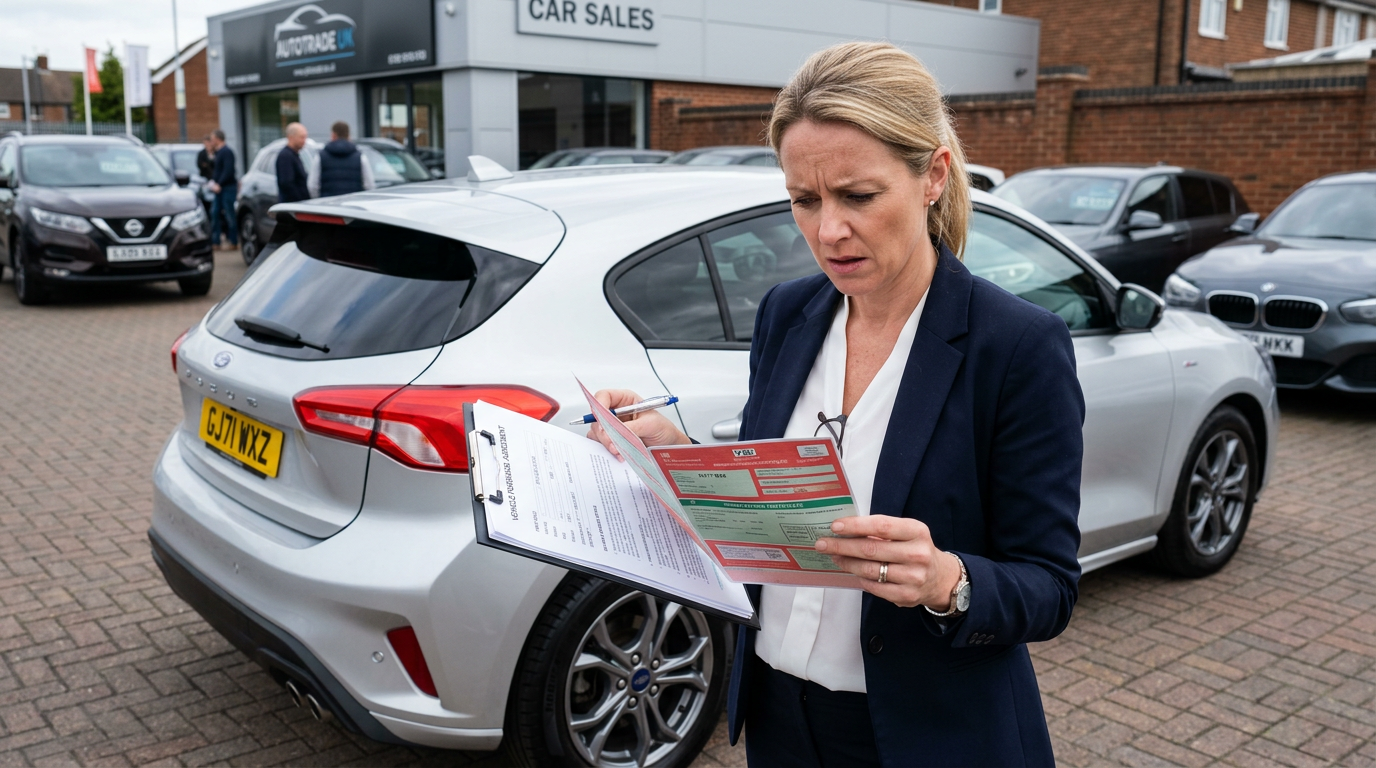
In 2026, the UK used car market remains as vibrant as ever, but a digital-first landscape hasn't entirely eliminated an age-old problem: unpaid finance. Despite the prevalence of instant HPI and Experian checks, thousands of motorists every year discover that the 'bargain' they bought privately is still legally owned by a finance company.
Under normal English law (Nemo Dat Quod Non Habet), you cannot sell something you do not own. However, for motorists, there is a powerful legal shield: The Hire Purchase Act 1964. Understanding your rights as an 'innocent purchaser' is crucial if you find yourself facing a repossession notice for a car you thought was yours.
What is the Hire Purchase Act 1964?
Most consumer laws have been consolidated into the Consumer Rights Act 2015, but Part III of the Hire Purchase Act 1964 remains specifically in force to protect private car buyers.
Essentially, this Act provides a way for a private purchaser to obtain 'Good Title' to a vehicle, even if it has an outstanding Hire Purchase (HP) or Personal Contract Purchase (PCP) agreement. Usually, the finance company owns the car until the final payment is made. If the seller hasn't cleared the debt, they don't own the car, and shouldn't be able to sell it. The 1964 Act creates an exception to protect the unsuspecting public.
The Criteria for 'Innocent Buyer Status'
To successfully claim protection under the Hire Purchase Act 1964, you must prove you meet two specific criteria at the point of sale:
- You must be a Private Purchaser: This protection does not apply to motor dealers or trade buyers. If you buy cars to sell them on, you are expected to have the professional tools to detect finance.
- You must have acted in 'Good Faith' and without 'Notice': This means you genuinely believed the seller had the right to sell the car and you had no knowledge of the outstanding finance.
The Problem of 'Notice' in 2026
In 2026, the definition of 'Notice' is stricter than it was decades ago. If you buy a vehicle at a price significantly below market value or ignore a 'finance outstanding' warning on a digital history check, a court may rule that you did not act in good faith.
At CarsLink.ai, we always recommend running a comprehensive provenance check before any transaction. While the Act protects you if you miss something, intentionally ignoring red flags could invalidate your status as an innocent purchaser.
How the Title Transfers
If the conditions are met, a minor legal miracle occurs. Even though the seller didn't own the car, the 'Good Title' passes from the finance company to the innocent private buyer. The finance company loses its right to repossess the vehicle and must instead pursue the original debtor (the seller) for the remaining funds.
| Scenario | Title Transfer? | Why? |
|---|---|---|
| Private Buyer vs Private Seller | Yes | Protected under Section 27 of the Act. |
| Trade Buyer vs Private Seller | No | Trade buyers are expected to verify title. |
| Private Buyer vs Trade Seller | Yes | Usually covered by Consumer Rights Act 2015. |
| Conditional Sale Agreement | Yes | Treated the same as Hire Purchase under the 1964 Act. |
What to Do If a Finance Company Contacts You
If you receive a letter or a knock on the door from a recovery agent claiming the car has unpaid finance, stay calm. Do not voluntarily hand over the keys immediately if you believe you have innocent purchaser rights.
1. Gather Your Evidence
You will need to prove the legitimacy of the sale. Collect:
- The original advertisement (take screenshots of online listings).
- The receipt or bill of sale signed by the seller.
- Evidence of payment (bank transfer records are far better than cash).
- A copy of the V5C logbook (though remember, the V5C proves the keeper, not the owner).
- Historical HPI or data checks performed at the time of purchase.
2. Formally Assert Your Rights
Write to the finance company's legal department. Explicitly state that you are claiming 'Good Title' under Part III of the Hire Purchase Act 1964. Provide the evidence gathered above. Once you have asserted this, the finance company should halt repossession efforts while they investigate.
3. Contact the Financial Ombudsman Service (FOS)
If the finance company refuses to acknowledge your title and continues to threaten repossession, you can escalate the matter to the Financial Ombudsman. They handle many 'innocent purchaser' disputes and can penalize firms that act aggressively against valid claims.
Common Pitfalls: Logbooks and 'Logbook Loans'
It is a common myth that having the V5C (logbook) means you own the car. The DVLA clearly states on every V5C: "This document is not proof of ownership."
Furthermore, Bill of Sale loans (often called Logbook Loans) are different from Hire Purchase. These are governed by the Victorian-era Bills of Sale Acts. While the innocent buyer protections are slightly different here, modern regulations since 2014 have brought these more in line with consumer protections, but they remain a legal minefield.
Why 'Innocent Purchaser' Cases are Rising in 2026
With the cost of living and car prices remaining high, more people are attempting to sell vehicles privately to maximize their return, sometimes "forgetting" their balloon payments on PCP deals.
Automotive platforms like CarsLink.ai simplify the buying process by providing transparency, but if you are venturing into the private market (e.g., Facebook Marketplace or Autotrader), the 1964 Act is your ultimate safety net.
Summary: Protecting Your Asset
The Hire Purchase Act 1964 remains one of the most vital pieces of legislation for the UK motorist. It ensures that the burden of a seller's debt doesn't permanently fall on an honest buyer.
Key Takeaways:
- Always pay via bank transfer to leave a paper trail.
- Always keep a copy of the original advert.
- Never buy a car that seems "too good to be true" without a professional check.
- If challenged, cite the 1964 Act immediately.
Buying a used car should be an exciting milestone, not a legal nightmare. By staying informed and using trusted resources like CarsLink.ai, you can navigate the 2026 market with confidence.
Disclaimer: This article provides general information and does not constitute legal advice. If you are facing vehicle repossession, consult with a qualified legal professional or Citizens Advice.